From Surf Wiki (app.surf) — the open knowledge base
Summer solstice
Astronomical phenomenon
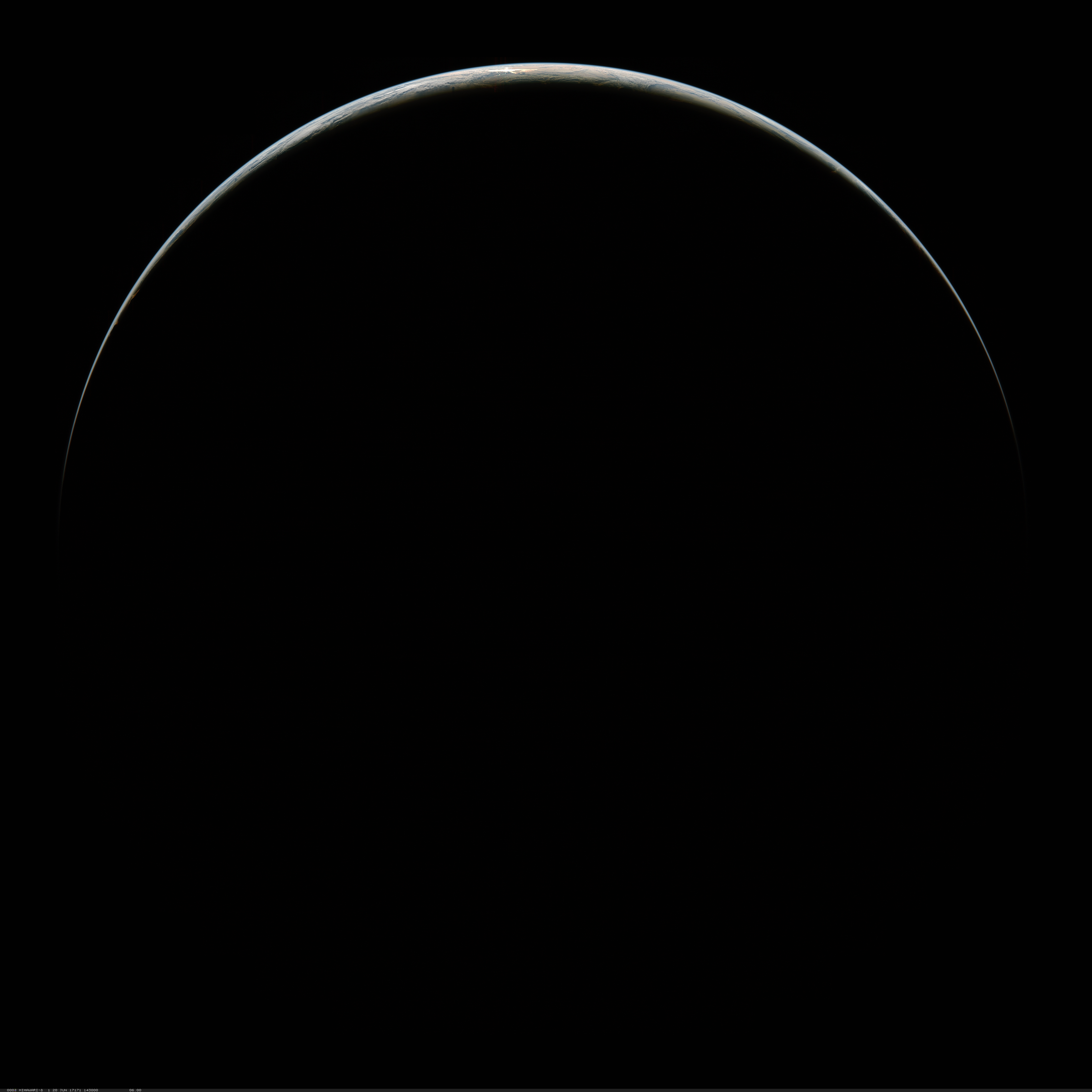
Astronomical phenomenon
| Field | Value |
|---|---|
| holiday_name | Summer solstice |
| image | Summer Solstice Sunrise over Stonehenge 2005.jpg |
| caption | Sunrise at Stonehenge in England during the summer solstice in the Northern Hemisphere |
| observedby | Various cultures |
| date | June 20 or June 21 |
| (Northern Hemisphere) | |
| type | Cultural, astronomical |
| significance | Beginning of lengthening nights and shortening days |
| nickname | Midsummer; the Longest Day; the Shortest Night; Estival solstice |
| duration | 1 day |
(Northern Hemisphere)
and December 21 or December 22 (Southern Hemisphere)
The summer solstice or estival solstice occurs when one of Earth's poles has its maximum tilt toward the Sun. It happens twice yearly, once in each hemisphere (Northern and Southern). The summer solstice is the day with the longest period of daylight and shortest night of the year in that hemisphere, when the sun is at its highest position in the sky. At either pole there is continuous daylight at the time of its summer solstice. The opposite event is the winter solstice.
The summer solstice occurs during the hemisphere's summer. In the Northern Hemisphere, this is the June solstice (20 or 21 June) and in the Southern Hemisphere, this is the December solstice (21 or 22 December). Since prehistory, the summer solstice has been a significant time of year in many cultures, and has been marked by festivals and rituals. Traditionally, in temperate regions (especially Europe), the summer solstice is seen as the middle of summer and referred to as "midsummer"; although today in some countries and calendars it is seen as summer's beginning.
On the summer solstice, Earth's maximum axial tilt toward the Sun is 23.44°. Likewise, the Sun's declination from the celestial equator is 23.44°. In areas outside the tropics, the sun reaches its highest elevation angle at solar noon on the summer solstice.

Although the summer solstice is the longest day of the year for that hemisphere, the dates of earliest sunrise and latest sunset vary by a few days. This is because Earth orbits the Sun in an ellipse, and its orbital speed varies slightly during the year.
Culture
Main article: Midsummer
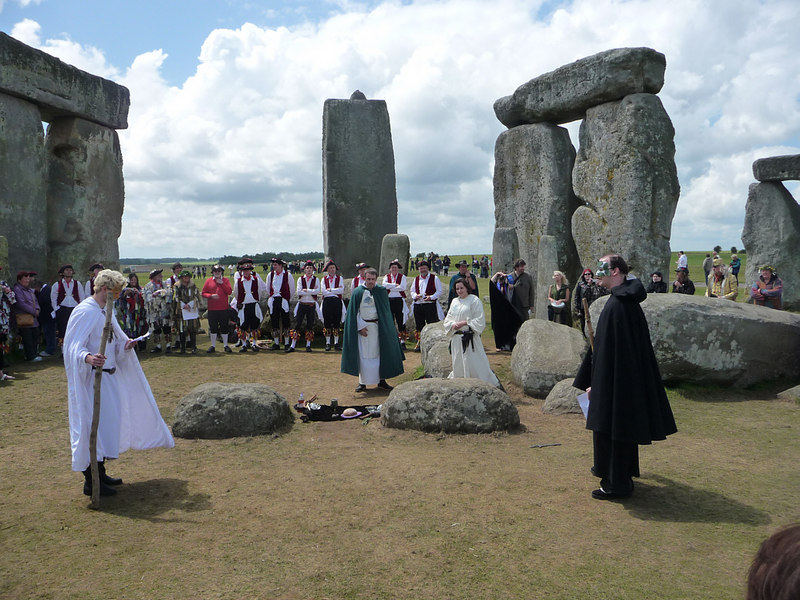
There is evidence that the summer solstice has been culturally important since the Neolithic era. Many ancient monuments in Europe especially, as well as parts of the Middle East, Asia and the Americas, are aligned with the sunrise or sunset on the summer solstice (see archaeoastronomy). The significance of the summer solstice has varied among cultures, but most recognize the event in some way with holidays, festivals, and rituals around that time with themes of fertility.
In the Julian calendar of the Roman Empire, the date of the summer solstice was 24 June, and Marcus Terentius Varro wrote in the 1st century BC that the Romans saw this as the middle of summer. The Julian calendar had a flaw in that the solstices and equinoxes gradually fell on earlier dates. At the First Council of Nicaea (325), the Christian Church set the date of the spring equinox to 21 March, for the purpose of calculating Easter. This also brought the date of the summer solstice forward to 20 June.
The summer solstice was seen as the middle of summer in Anglo-Saxon England and called 'midsummer'. Some Anglo-Saxon calendars placed midsummer on the older date of 24 June while others place it on 20 June.
Elsewhere in northern Europe, traditionally the summer solstice is also seen as the middle of summer and it was reckoned as the night of 23–24 June. The summer solstice continues to be seen as the middle of summer in many European cultures, but in some cultures or calendars it is seen as summer's beginning. In Sweden, midsummer is one of the year's major holidays when the country closes down as much as during Christmas.
Observances
;Traditional festivals
-
Saint John's Eve (Europe), including:
- Golowan (Cornwall)
- Jaanipäev (Estonia)
- Jāņi (Latvia)
- Joninės (Lithuania)
- Jónsmessa (Iceland)
- Juhannus (Finland)
-
Kupala Night (Slavic peoples)
-
Shën Gjini–Shën Gjoni, Festa e Malit/Bjeshkës, Festa e Blegtorisë, etc. (Albanians)
-
Summer Solstice at Stonehenge United Kingdom
-
Tiregān (Iran)
-
Xiazhi (China)
-
Yhyakh (Yakuts)
;Modern observances
- Day of Private Reflection (Northern Ireland)
- Fête de la Musique, also known as World Music Day
- Fremont Solstice Parade (Fremont, Seattle, Washington, United States)
- International Yoga Day
- National Indigenous Peoples Day (Canada)
- Santa Barbara Summer Solstice Parade (Santa Barbara, California, United States)
In folk music
- "Oh at Ivan, oh at Kupala" (Ukr. Ой на Івана, ой на Купала) - Ukrainian folk song.
- "Kupalinka" - (Belar. Купалінка) - Belarusian folk song
- "There is a lake behind the hill" (Lith. Už kalnelio ežerėlis) - Lithuanian folk song.
Length of the day on northern summer solstice
Notes
References
References
- "US Naval Observatory: Sunrise and Sunset Times Near the Solstices".
- "The Long Story (USNO explanation)".
- (2021). "The Oxford Handbook of Light in Archaeology". Oxford University Press.
- (2005). "Exploring Ancient Skies: An Encyclopedic Survey of Archaeoastronomy". [[Springer Publishing]].
- "Summer solstice celebrations of Christianity, Judaism, Neopaganism, etc". Religioustolerance.org.
- (1976). "Time and the Calendars". Manchester University Press.
- (2012). "Time in Roman Religion: One Thousand Years of Religious History". Routledge.
- (2005). "Ritual and the Rood: Liturgical Images and the Old English Poems of the Dream of the Rood Tradition". University of Toronto Press.
- (2015). "The Old English Metrical Calendar (Menologium)". [[Boydell & Brewer]].
- {{OEtymD. midsummer
- "The Astronomical vs. Meteorological Seasons".
This article was imported from Wikipedia and is available under the Creative Commons Attribution-ShareAlike 4.0 License. Content has been adapted to SurfDoc format. Original contributors can be found on the article history page.
Ask Mako anything about Summer solstice — get instant answers, deeper analysis, and related topics.
Research with MakoFree with your Surf account
Create a free account to save articles, ask Mako questions, and organize your research.
Sign up freeThis content may have been generated or modified by AI. CloudSurf Software LLC is not responsible for the accuracy, completeness, or reliability of AI-generated content. Always verify important information from primary sources.
Report