From Surf Wiki (app.surf) — the open knowledge base
Sulpicia Lepidina
Early 2nd century wife of a Roman prefect
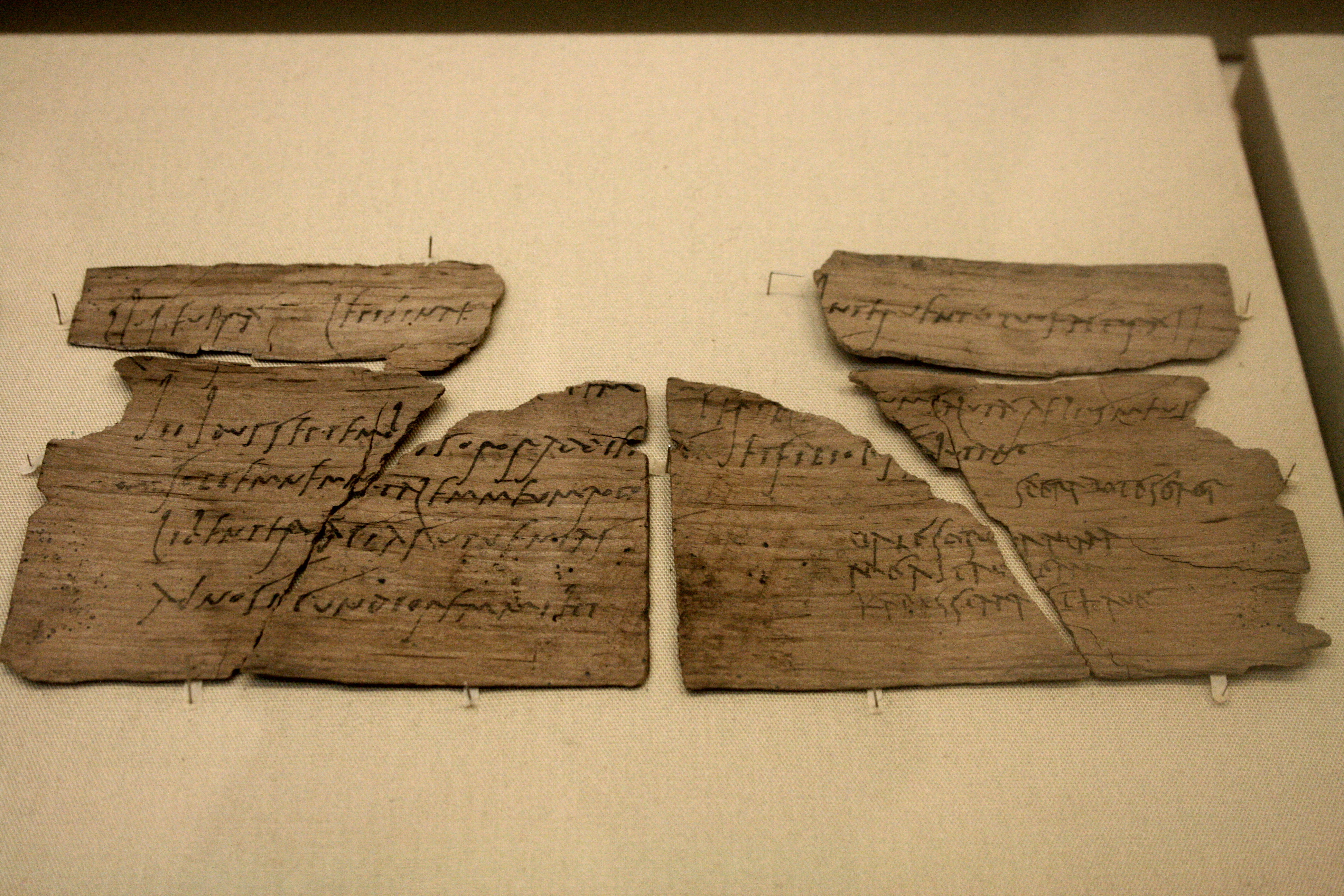
Early 2nd century wife of a Roman prefect
Sulpicia Lepidina was the wife of Flavius Cerialis, Prefect of the Ninth Cohort of Batavians, stationed at Vindolanda in Roman Britain in the early 2nd century AD. She is known from her correspondence, including a birthday invitation she received from Claudia Severa.
Description
Sulpicia Lepidina received two letters from Claudia Severa, wife of Aelius Brocchus, commander of a nearby fort. One of the letters from Severa is an invitation to a birthday party, which is perhaps the best-known of the Vindolanda tablets now at the British Museum.{{cite news |author-link = Harry Mount The invitation is partly written by a scribe and partly by Severa herself. Along with another tablet (a fragment with a closure written in Severa's hand), the invitation is thought to be the oldest extant writing by a Roman woman found in Britain, or perhaps anywhere. The subject-matter of the letters is social and personal, and Severa calls Lepidina her sister.
Sulpicia Lepidina also received a letter from another woman. While the name of the woman is difficult to read, the subject matter is legible. In this letter the woman, thought to be called Paterna, speaks either of remedies that she plans to bring to Lepidina, or else two ancillae, enslaved girls, free from fever, are to be brought, one for Lepidina and one for someone whose name is lost from the text. The text of this tablet is too damaged to be able to determine which of these translations is correct.
The letters were written in ink on wooden tablets found during excavations at Vindolanda in the 1970s. Vindolanda was a Roman fort built where two streams conjoined and, as a result, the floors of the fort were thick with mosses, bracken and straw. The Vindolanda tablets were found in this thick carpet and filled-in ditches. Their preservation was due to the waterlogged soil conditions on parts of the Vindolanda site.
Notes
References
References
- [[Alan Bowman (classicist). Alan Bowman]] and David Thomas, ''Vindolanda: the Latin writing tablets'' London: [[Society for the Promotion of Roman Studies]], 1983, pp. 256
- "Vindolanda Tablet 294 Leaf No. 1 (front)".
- "Tab.Vindol. 294. Correspondence of Sulpicia Lepidina {{!}} Roman Inscriptions of Britain".
- Hirst, K. Kris. "What Did Roman Soldiers at Hadrian's Wall Report in their Letters Home".
- Vindolanda was previously known by the name of the nearby farm Chesterholm, and is situated just south of the Roman [[Stanegate]] road, 2 miles (3 km) SW of the fort of [[Housesteads Roman Fort. Housesteads]] on [[Hadrian's Wall]] in [[Northumberland]], [[England]]
- Aelius Brocchus is deduced to be the prefect (commander) of an unknown fort within easy reach of Vindolanda
- The body of the letter would usually be written by a slave, the sender adding a salutation and signature at the end.
- The tablets are of thin wood, about the size of a postcard. Many are fragmentary and all are difficult to read and decipher. On many the ink faded on exposure to the air, and special techniques have to be used to read the text.
This article was imported from Wikipedia and is available under the Creative Commons Attribution-ShareAlike 4.0 License. Content has been adapted to SurfDoc format. Original contributors can be found on the article history page.
Ask Mako anything about Sulpicia Lepidina — get instant answers, deeper analysis, and related topics.
Research with MakoFree with your Surf account
Create a free account to save articles, ask Mako questions, and organize your research.
Sign up freeThis content may have been generated or modified by AI. CloudSurf Software LLC is not responsible for the accuracy, completeness, or reliability of AI-generated content. Always verify important information from primary sources.
Report