From Surf Wiki (app.surf) — the open knowledge base
Sulbutiamine
Chemical compound
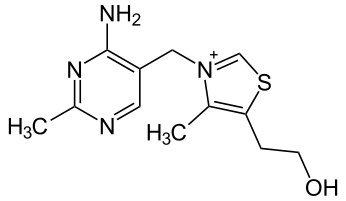
Chemical compound
| Drugs.com =
| elimination_half-life = 5 hours
Sulbutiamine sold under the brand names Arcalion, Enerion, and Sulbuxin is a synthetic derivative of thiamine (vitamin B1). In France, it is used to treat symptoms of weakness or fatigue. In Uruguay, it is prescribed when there is thiamine deficiency, mainly in patients with asthenia, overwork, apathy, depressive states, memory disorders, and iatrogenic disorders of wakefulness. It is also sold as a dietary supplement. Sulbutiamine was discovered in Japan as part of an effort to develop useful thiamine derivatives.
Uses
Sulbutiamine is used to treat asthenia (weakness), though is not clear if it is effective in alleviating drowsiness. It is also used to treat thiamine deficiency and poor concentration. Being a potent cholinergic, sulbutiamine is a popular nootropic, with users reporting enhanced memory, focus, and improved mood and motivation. Endurance athletes may use it to try to enhance their performance.
Adverse effects
Adverse effects found in clinical trials are usually limited to headache and gastrointestinal discomfort when high doses are used. While daily use can result in tolerance and paradoxical drowsiness, increasing the dose is strongly discouraged and side effects can include diarrhea, bladder infections, bronchitis, back pain, abdominal pain, insomnia, constipation, gastroenteritis, headache, vertigo, and sore throat.
History
Efforts to develop thiamine derivatives with better bioavailability than thiamine were conducted in the 1950s, mainly in Japan. These efforts led to the discovery of allicin (diallyl thiosulfinate) in garlic, which became a model for medicinal chemistry efforts to create other thiamine disulfides. The results included sulbutiamine, fursultiamine (thiamine tetrahydrofurfuryl disulfide) and benfotiamine. These compounds are hydrophobic, easily pass from the intestines to the bloodstream, and are reduced to thiamine by cysteine or glutathione.
It was first marketed in France by Servier in 1973 under the brand name Arcalion. The drug registration went through a validation procedure in France in the 1980s, which found that the use for treatment of fatigue was not supported by data.
Research
Because thiamine deficiency causes problems with memory and other cognitive functions, thiamine and analogs like sulbutiamine have been studied in clinical trials in the 1980s and 1990s for age-associated cognitive decline.
Sulbutiamine has been explored in clinical trials as a potential treatment for chronic fatigue syndrome (CFS). Studies have also been undertaken to assess its impact on reversing age-related changes in the circadian system.
The pharmacology of sulbutiamine has been studied in various mice and rats; as of 2014 it appeared that sulbutiamine might be more effective in raising thiamine phosphate levels in the brain than benfotiamine and fursultiamine, but this has not been fully verified.
In an uncontrollled clinical trial, sulbutiamine was reported to be effective in reducing fatigue in patients with multiple sclerosis.
References
References
- "Ficha de sulbuxin 200 mg comprimido recubierto de Uruguay 🥇".
- "Fiche info - Araclion 200 mg". Base de données publique des médicaments: ANSM of HAS et UNCAM..
- (1997). "High Cost, Low Efficiency Medicines". Economic and Political Weekly.
- (2010). "Advances in sports drug testing: an overview". Drug Testing and Analysis.
- (2020). "Role of the Synthetic B1 Vitamin Sulbutiamine on Health". Journal of Nutrition and Metabolism.
- (October 2011). "Complementary and alternative medicine for patients with chronic fatigue syndrome: a systematic review". BMC Complementary and Alternative Medicine.
- (2014). "Handbook of vitamins". CRC Press.
- (June 2008). "Benfotiamine, a synthetic S-acyl thiamine derivative, has different mechanisms of action and a different pharmacological profile than lipid-soluble thiamine disulfide derivatives". BMC Pharmacology.
- (1997). "Economic and Political Weekly, Volume 32". Sameeksha Trust.
- (April 1996). "Cognition enhancers in age-related cognitive decline". Drugs & Aging.
- (1995). "Animal Behavior Abstracts, Volume 23". Cambridge Scientific Extracts.
- (2011). "Issues in Neuroscience Research and Application: 2011 Edition". Scholarly Editions.
- (August 2017). "Sulbutiamine shows promising results in reducing fatigue in patients with multiple sclerosis". Multiple Sclerosis and Related Disorders.
This article was imported from Wikipedia and is available under the Creative Commons Attribution-ShareAlike 4.0 License. Content has been adapted to SurfDoc format. Original contributors can be found on the article history page.
Ask Mako anything about Sulbutiamine — get instant answers, deeper analysis, and related topics.
Research with MakoFree with your Surf account
Create a free account to save articles, ask Mako questions, and organize your research.
Sign up freeThis content may have been generated or modified by AI. CloudSurf Software LLC is not responsible for the accuracy, completeness, or reliability of AI-generated content. Always verify important information from primary sources.
Report