From Surf Wiki (app.surf) — the open knowledge base
Suicide methods
Means by which a person dies by suicide

Means by which a person dies by suicide
A suicide method is any means by which a person may choose to end their life. Suicide attempts do not always result in death, and a non-fatal suicide attempt can leave the person with serious physical injuries, long-term health problems, or brain damage.
Worldwide, three suicide methods predominate, with the pattern varying in different countries: these are hanging, pesticides, and firearms. Some suicides may be preventable by removing the means. Making common suicide methods less accessible leads to an overall reduction in the number of suicides.
Method-specific ways to do this might include restricting access to pesticides, firearms, and commonly used drugs. Other important measures are the introduction of policies that address the misuse of alcohol and the treatment of mental disorders. Gun-control measures in a number of countries have seen a reduction in suicides and other gun-related deaths. Other preventive measures are not method-specific; these include support, access to treatment, and calling a crisis hotline. There are multiple talk therapies that reduce suicidal thoughts and behaviors regardless of method, including dialectical behavior therapy (DBT).
Purpose of study
The study of suicide methods aims to identify those commonly used, and the groups at risk of suicide; making methods less accessible may be useful in suicide prevention. Limiting the availability of means such as pesticides and firearms is recommended by a World Health Report on suicide and its prevention. The early identification of mental disorders and substance abuse disorders, follow-up care for those who have attempted suicide, and responsible reporting by the media are all seen to be key in reducing the number of deaths by suicide. National suicide prevention strategies are also advocated using a comprehensive and coordinated response to suicide prevention. This needs to include the registration and monitoring of suicides and attempted suicide, breaking figures down by age, sex, and method.
Such information allows public health resources to focus on the problems that are relevant in a particular place, or for a given population or subpopulation. For instance, if firearms are used in a significant number of suicides in one place, then public health policies there could focus on gun safety, such as keeping guns locked away, and the key inaccessible to at-risk family members. If young people are found to be at increased risk of suicide by overdosing on particular medications, then an alternative class of medication may be prescribed instead, a safety plan and monitoring of medication can be put in place, and parents can be educated about how to prevent the hoarding of medication for a future suicide attempt.
Media reporting

Media reporting of the methods used in any given suicide is "strongly discouraged" by the World Health Organization, government health agencies, universities, and the Associated Press among others. Detailed descriptions of suicides or the personal characteristics of the person who died contribute to copycat suicides (suicide contagion). Dramatic or inappropriate descriptions of individual suicides by mass media has been linked specifically to copycat suicides among teenagers. Writing for The New Yorker about celebrity suicides, Andrew Solomon wrote that "You who are reading this are at statistically increased risk of suicide right now." In one study, changes in how news outlets reported suicide reduced suicides by a particular method.
Media reporting guidelines also apply to "online content including citizen-generated media coverage". The Recommendations for Reporting on Suicide, created by journalists, suicide prevention groups, and internet safety non-profit organizations, encourage linking to resources such as a list of suicide crisis lines and information about risk factors for suicide, and reporting on suicide as a multi-faceted, treatable health issue.
Method restriction
Method restriction, also called lethal means reduction, is an effective way to reduce the number of suicide deaths in the short and medium term. Method restriction is considered a best practice supported by "compelling" evidence. Some of these actions, such as installing barriers on bridges and reducing the toxicity in gas, require action by governments, industries, or public utilities. At the individual level, method restriction can be as simple as asking a trusted friend or family member to store firearms until the crisis has passed. According to Danuta Wasserman, professor in psychiatry and suicidology at Karolinska Institute, choosing not to restrict access to suicide methods is unethical.
Method restriction is effective and prevents suicides. It has the largest effect on overall suicide rates when the method being restricted is common and no direct substitution is available.** If the method being restricted is uncommon, or if a substitute is readily available, then it may be effective in individual cases but not produce a large-scale reduction in the number of deaths in a country.
Method substitution is the process of choosing a different suicide method when the first-choice method is inaccessible. In many cases, when the first-choice method is restricted, the person does not attempt to find a substitute. Method substitution has been measured over the course of decades, so when a common method is restricted (for example, by making domestic gas less toxic), overall suicide rates may be suppressed for many years. If the first-choice suicide method is inaccessible, a method substitution may be made which may be less lethal, tending to result in fewer fatal suicide attempts.
In an example of the curb cut effect, changes unrelated to suicide have also functioned as suicide method restrictions. Examples of this include changes to align train doors with platforms, switching from coal gas to natural gas in homes, and gun control laws, all of which have reduced suicides despite being intended for a different purpose.
List
Suffocation
Suffocation, as a classification of suicide method, includes strangulation and hanging.
Suicide by suffocation involves restricting breathing or the amount of oxygen taken in, causing asphyxia and eventually hypoxia. It is not possible to die simply by holding the breath, since a reflex causes the respiratory muscles to contract, forcing an in-breath, and the re-establishment of a normal breathing rhythm. Therefore, inhaling an inert gas such as helium or nitrogen, or a toxic gas such as carbon monoxide, is used to bring about unconsciousness. Certain devices such as exit bags are designed to be used with this method, and provide a way for the carbon dioxide to passively escape, which prevents the panic, sense of suffocation and struggling before unconsciousness, known as the hypercapnic alarm response caused by the presence of high carbon dioxide concentrations in the blood. , organizations supporting a right to die promoted death by helium inhalation, although most cases using this method in the US were people with psychiatric conditions.
Hanging
Main article: Suicide by hanging

Hanging is a common method of suicide. Hanging involves the use of a ligature such as a rope or cord attached to an anchor point with the other end used to form a noose placed around the neck. The cause of death will either be due to strangulation or a broken neck. About half of attempted suicides by hanging result in death. People who favor this method are usually unaware that it is often a "slow, painful, and messy method that [needs] technical knowledge".
Hanging is the prevalent means of suicide in impoverished pre-industrial societies, and is more common in rural areas than in urban areas.
Hanging was the most common method in traditional Chinese culture, In the Chinese culture, suicide by hanging was used as an act of revenge by women and of defiance by powerless officials, who used it as a "final, but unequivocal, way of standing still against and above oppressive authorities".
Drowning
Main article: Drowning

Suicide by drowning is the act of deliberately submerging oneself in water or other liquid to prevent breathing. It accounts for less than 2% of all suicides in the United States.{{cite web | access-date = 2009-07-06
About 2% to 3% of suicides by drowning involve driving a vehicle into a body of water.
Poisoning
Main article: Suicide by poisoning
Suicide by poisoning, also called self-poisoning, is usually classed as a drug overdose when drugs such as painkillers or recreational drugs are used. The use of pesticides to self-poison is the most common method used in some countries. Poisoning through the means of toxic plants is usually slow and painful.
, worldwide, around 30% of suicides were from pesticide poisonings. It was the leading suicide method in developing countries, with about half of suicide deaths in India involving poisoning, and most of those involving pesticides. Method restriction is an effective way to reduce suicide by pesticide poisoning. In the UK (England and Wales) until 2013, a drug overdose was the most common suicide method in women. In 2019 the percentage was 16% in males. Self-poisoning accounts for the highest number of non-fatal suicide attempts. In the United States about 60% of suicide attempts and 14% of suicide deaths involve drug overdoses. The risk of death in suicide attempts involving overdose is about 2%. Overdose attempts using painkillers are among the most common, due to their easy availability over-the-counter. A particular type of poisoning involves the inhalation of high levels of carbon monoxide (CO). Death usually occurs through hypoxia. A nonfatal attempt can result in memory loss and other symptoms.
Shooting


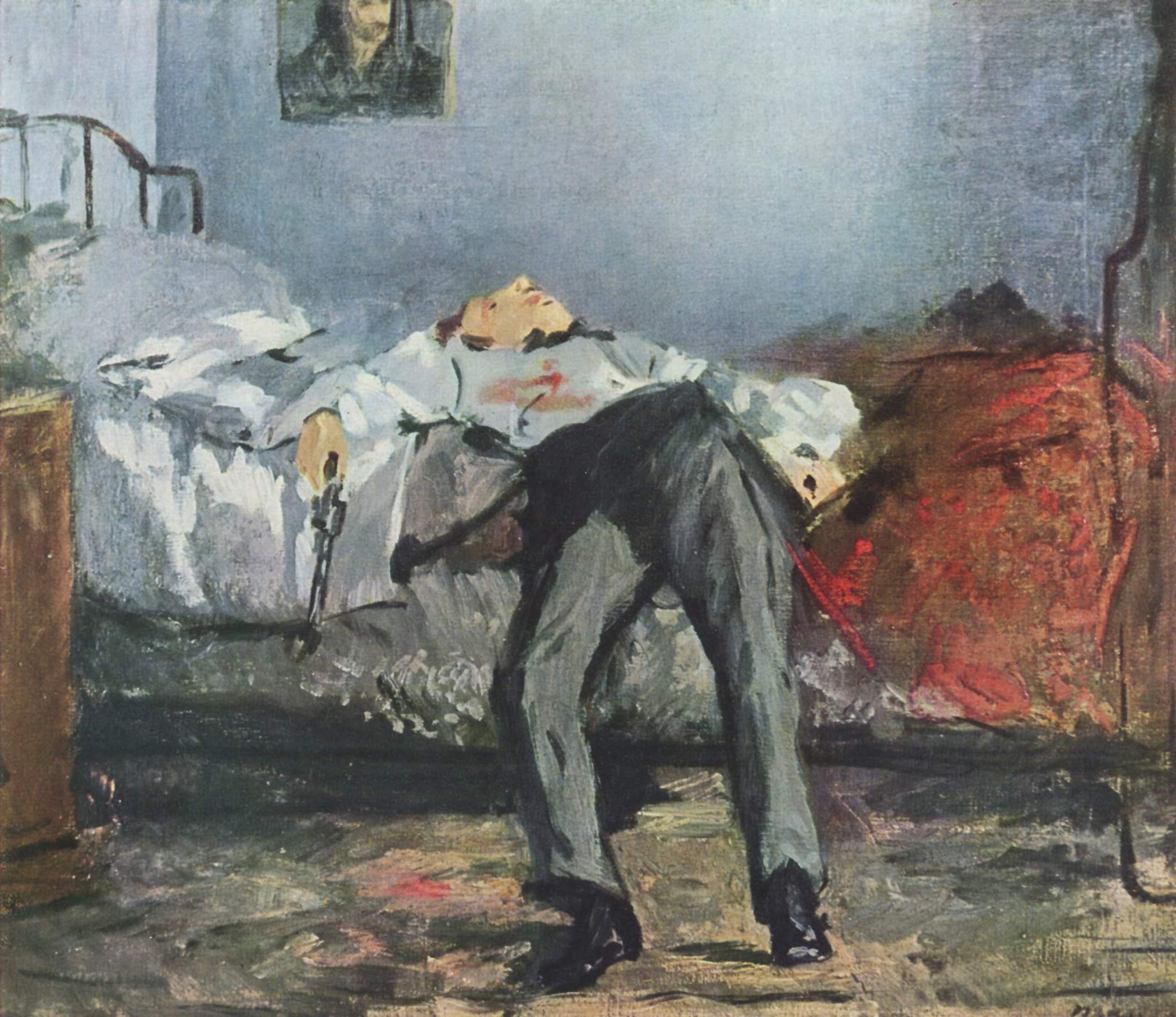
In the United States, suicide by firearm is the most lethal method of suicide, resulting in a fatality 90% of the time, Worldwide, firearm prevalence in suicides varies widely, depending on the acceptance and availability of firearms in a culture. The use of firearms in suicides ranges from less than 10% in Australia, to 50.5% in the U.S., where it is the most common method of suicide.
Generally, the bullet will be aimed at point-blank range. Surviving a self-inflicted gunshot may result in severe chronic pain as well as reduced cognitive abilities and motor function, subdural hematoma, foreign bodies in the head, pneumocephalus and cerebrospinal fluid leaks. For temporal bone directed bullets, temporal lobe abscess, meningitis, aphasia, hemianopsia, and hemiplegia are common late intracranial complications. As many as 50% of people who survive gunshot wounds directed at the temporal bone suffer facial nerve damage, usually due to a severed nerve.
Gun control
Reducing access to guns at a population level decreases the risk of suicide by firearms. Fewer people die from suicide overall in places with stricter laws regulating the use, purchase, and trading of firearms. Suicide risk goes up when firearms are more available.
Gun control is a primary method of reducing suicide by people who live in a home with guns. Prevention measures include simple actions such as locking all firearms in a gun safe or installing gun locks. Some people self-impose a barrier to using the keys to unlock their guns, such as by asking a friend to keep the keys in a different place, or by freezing them in an ice cube. This prevents spur-of-the-moment access to their own guns. Some stores that sell guns provide temporary storage as a service; in other cases, a trusted friend or family member will offer to store the guns until the crisis has passed. When a person is going through a crisis, red flag laws in some places allow family members to petition the courts to have firearms temporarily removed and stored elsewhere.
More firearms are involved in suicide than are involved in homicides in the United States. A 1999 study of California and gun mortality found that a person is more likely to die by suicide if they have purchased a firearm, with a measurable increase of suicide by firearm beginning at most a week after the purchase and continuing for six years or more.
Among developed countries, the United States has the highest number of firearms in circulation and one of the highest suicide rates, and when gun ownership rises so too does suicide involving the use of a firearm. A 2004 report by the National Academy of Sciences found an association between estimated household firearm ownership and gun suicide rates, though a study by two Harvard researchers did not find a statistically significant association between household firearms and gun suicide rates, except in the suicides of children aged 5–14. Another study found that gun prevalence rates were positively associated with suicide rates among people aged 15 to 24, and 65 to 84, but not among those aged 25 to 64. Access to firearms is associated with a higher risk of suicide, especially for people keeping loaded guns in the home. Numerous ecological and time series studies have also shown a positive association between gun ownership rates and suicide rates. This association tends to only exist for firearm-related and overall suicides, not for non-firearm suicides. Studies consistently find a relationship between gun ownership and gun-related suicides, with few exceptions. A 2016 study found a positive association between gun ownership and both gun-related and overall suicides among men, but not among women; gun ownership was only strongly associated with gun-related suicides among women. During the 1980s and early 1990s, there was a strong upward trend in adolescent suicides with a gun, as well as a sharp overall increase in suicides among those age 75 and over.
Firearm-related suicides declined in Australia after the introduction of nationwide gun control. The same study found no evidence of substitution to other methods. In Canada, gun suicides declined after gun control, but other methods rose, leading to no change in the overall rates. Similarly, in New Zealand, gun suicides declined after more legislation, but overall suicide rates did not change; this might be due to the highly stringent firearm storage laws and very low prevalence of handgun ownership in New Zealand. A study about Canada found no significant correlations between provincial firearm ownership and overall provincial suicide rates.
Jumping
Main article: Suicide by jumping from height
Jumping is the most common method of suicide in Hong Kong, accounting for 52.1% of all reported suicide cases in 2006 and similar rates for the years before that. The Centre for Suicide Research and Prevention of the University of Hong Kong believes that it may be due to the abundance of easily accessible high-rise buildings in Hong Kong. In the United States, jumping is among the least common methods of suicide (less than 2% of all reported suicides in 2005). Between 1937 and 2012, there were around 2,000 suicides at the Golden Gate Bridge. Jumping deaths are often impulsive, and one study of the Golden Gate Bridge demonstrated that more than 90% of people interrupted in a suicide attempt ultimately died by natural or accidental causes, with only 6% dying in a subsequent suicide attempt.
Many jumping deaths could be prevented through the construction of fencing or other safety equipment. For example, suicide by jumping into a volcanic crater is a rare method of suicide. Mount Mihara in Japan briefly became a notorious suicide site during the Great Depression following media reports of a suicide there. Copycat suicides in the ensuing years prompted the erection of a protective fence surrounding the crater. Similarly, in New Zealand, secure fencing at the Grafton Bridge substantially reduced the rate of suicides. Chest-high barriers are more effective than waist-high barriers because they require more time and effort to climb over.
Constructing barriers is not the only option, and it can be expensive. Other method-specific prevention actions include making staff members visible in high-risk areas, using closed-circuit television cameras to identify people in inappropriate places or behaving abnormally (e.g., lingering in a place that people normally spend little time in), and installing awnings and soft-looking landscaping, which deters suicide attempts by making the place look ineffective.
Another factor in reducing jumping deaths is to avoid suggesting in news articles, signs, or other communication that a high-risk place is a common, appropriate, or effective place for dying by jumping from. The efficacy of signage is uncertain, and may depend on whether the wording is simple and appropriate.
Cutting and stabbing
Main article: Cutting, Stabbing
A fatal self-inflicted wound to the wrist is termed a deep wrist injury, and is often preceded by several tentative surface-breaking attempts known as hesitation wounds, indicating indecision or a self-harm tactic. For every suicide by wrist cutting, there are many more nonfatal attempts, so that the number of actual deaths using this method is very low.
Wounds from suicide attempts involve the non-dominant hand, with damage often done to the median nerve, ulnar nerve, radial artery, palmaris longus muscle, and flexor carpi radialis muscle. Such injuries can severely affect the function of the hand, and the inability caused to carry out work or interests increases the risk of further attempts.
Seppuku is a form of Japanese ritual suicide by disembowelment. While reserved for samurai in their code of honour, a feminine counterpart of female ritual suicide also exists (sometimes incorrectly referred to in western understanding as jigai), which involves cutting the jugular vein. While seppuku requires the assistance of another samurai, jigai can be performed on the self. Seppuku is painful and slow - neither method is common in the modern day.
Starvation and dehydration
A classification has been made of Voluntarily Stopping Eating and Drinking (VSED) which is often resorted to by those with a terminal illness. This includes fasting and dehydration, and has also been referred to as autoeuthanasia. It has been used by assisted dying activists, such as Wendy Mitchell, as a means of death in places where assisted suicide is not available.
Starvation
Fasting to death has been used by Hindu, Buddhist, and Jain ascetics and householders, as a ritual method of suicide known as "prayopavesa" in Hinduism, Vatakkiruttal in Tamil tradition, "sokushinbutsu" historically in Buddhism, and as "sallekhana" in Jainism. Cathars also fasted to death after receiving the consolamentum sacrament, in order to die while in a morally perfect state. The method is also used in passive senicide and associated with the political protest of the hunger strike such as the 1981 Irish hunger strike in which ten prisoners died.
Dehydration
Death from dehydration can take from several days to a few weeks. This means that unlike many other suicide methods, it cannot be accomplished impulsively. Those who die by terminal dehydration typically lapse into unconsciousness before death, and may also experience delirium and deranged serum sodium.
Terminal dehydration has been described as having substantial advantages over physician-assisted suicide with respect to self-determination, access, professional integrity, and social implications. Specifically, a patient has a right to refuse treatment and it would be a personal assault for someone to force water on a patient, but such is not the case if a doctor merely refuses to provide lethal medication. But it also has distinctive drawbacks as a humane means of voluntary death. One survey of hospice nurses found that nearly twice as many had cared for patients who chose voluntary refusal of food and fluids to hasten death as had cared for patients who chose physician-assisted suicide. They also rated fasting and dehydration as causing less suffering and pain and being more peaceful than physician-assisted suicide. Other sources note very painful side effects of dehydration, including seizures, skin cracking and bleeding, blindness, nausea, vomiting, cramping and severe headaches.
Collision with or of a vehicle
Another suicide method is to lie down, or throw oneself, in the path of a fast-moving vehicle, either on the road or onto railway tracks. Nonfatal attempts may result in profound injuries, such as multiple bone fractures, amputations, concussion and severe mental and physical handicapping.
Road
Main article: Vehicular suicide
Some people use intentional car crashes as a suicide method. This especially applies to single-occupant, single-vehicle wrecks, although some suicidal drivers cause head-on collisions. Even single-vehicle collisions may harm other road users; for example, a driver who brakes abruptly or swerves to avoid a suicidal person may collide with something else on the road, resulting in harm to the driver or others. Both the innocent driver and bystanders may be traumatized by the experience, even if everyone survives. Being victimized by a suicidal pedestrian is recognized as an occupational hazard for professional drivers, especially if they operate heavy vehicles.
The real percentage of suicides among motor vehicle fatalities is not reliably known and likely varies by the ease of accessing a car and the ease of accessing other methods. Suicidal intent is often inferred from the circumstances, such as the driver being alone in the vehicle, driving at a high speed, without normal use of a seat belt, under circumstances that do not normally result in fatal wrecks (e.g., a straight road and good weather conditions). Somewhere between 1% and 10% of all crashes (fatal and non-fatal combined) likely result from suicidal intent. In addition to a vehicle being used as a method (e.g., deliberately causing a wreck), a vehicle may be the location of a suicide attempt using another method (e.g., while the suicidal person is inside a parked car).
People who attempt vehicular suicide or murder–suicides tend to be adult men who recently experienced a stressful event. They tend to be impulsive, to have previously attempted suicide, and to have a history of reckless driving. Suicidal drivers are unlikely to be drunk at the time, though in the case of vehicle–pedestrian collisions, it may be difficult to determine whether an intoxicated pedestrian had suicidal intent or was non-suicidal but was so drunk as to be unable to recognize and respond to a dangerous situation.
Rail

Air
Toward the end of the 20th century, one or two pilots in the US died by suicide by aircraft each year. The pilot was usually flying alone at the time, and was using alcohol or drugs about half the time. In the rare case of a pilot engaging in murder–suicide, the number of innocent people is sometimes very high. On 24 March 2015, a Germanwings co-pilot deliberately crashed Germanwings Flight 9525 into the French Alps to kill himself, killing 149 people with him. Suicide by pilot has also been proposed as a potential cause for the disappearance and following destruction of Malaysian Airlines Flight 370 in 2014, with supporting evidence being found in a flight simulator application used by the flight's pilot.
Disease
There have been documented cases of gay men deliberately trying to contract a disease such as HIV/AIDS as a means of suicide.
Electrocution
Main article: Suicide by electrocution
Suicide by electrocution involves using a lethal electric shock, and is a rarely used method. This causes arrhythmias of the heart, meaning that the heart does not contract in synchrony between the different chambers, essentially causing elimination of blood flow. Furthermore, depending on the current, burns may also occur.
Fire
Self-immolation is suicide usually by fire. This method of suicide is rare due to it being long and painful. If the attempt is intervened, severe burns and scar tissue will prevail with subsequent emotional impact.
It has been used as a protest tactic, by Thích Quảng Đức in 1963 to protest the South Vietnam's anti-Buddhist policies; by Malachi Ritscher in 2006 to protest the United States' involvement in the Iraq War; by Mohamed Bouazizi in 2011 in Tunisia which gave rise to the Tunisian Revolution; by Aaron Bushnell in 2024 to protest the United States' support for Israel in the Israel–Hamas war; and historically as a ritual known as sati where a Hindu widow would immolate herself in her husband's funeral pyre.
Hypothermia
Hypothermia is a rare method of suicide. Between 1991 and 2014 in the United States, there were eight cases in the scientific literature, and they usually involved some other factor like drugs.
Assisted suicide
Main article: Assisted suicide
Indirect
Indirect suicide is the act of setting out on an obviously fatal course without directly carrying out the act upon oneself. Indirect suicide is differentiated from legally defined suicide by the fact that the person does not directly cause the action meant to kill them, but rather expects and allows the action to happen to them. Examples of indirect suicide include a soldier enlisting in the army with the intention and expectation of being killed in combat, or provoking an armed law enforcement officer into using lethal force against them. The latter is generally called "suicide by cop".
Evidence exists for suicide by capital crime in colonial Australia. Convicts seeking to escape their brutal treatment would murder another individual. This was felt necessary due to a religious taboo against direct suicide. A person committing suicide was believed to be destined for hell, whereas a person committing murder could be absolved of their sins before execution. In its most extreme form, groups of prisoners on the extremely brutal penal colony of Norfolk Island would form suicide lotteries. Prisoners would draw straws with one prisoner murdering another. The remaining participants would witness the crime, and would be sent away to Sydney, as capital trials could not be held on Norfolk Island, thus earning a break from the Island. There is uncertainty as to the extent of suicide lotteries. While surviving contemporary accounts claim that the practice was common, such claims are probably exaggerated.
Rituals{{anchor|Ritual_suicide}}
Ritual suicide is performed in a specifically prescribed way, often as part of a cultural or religious practice. Suicide by hanging was traditionally practiced in China and the Sinosphere as a means of ensuring that one's ghost would be able to haunt and torment the powerful but unjust. Self-immolation was practiced similarly in India and spread with Dharmic religions. Some forms of suicide involve or are understood as martyrdom and are undertaken ritualistically. Sallekhana is the practice of ritualized starvation following Jain practices. Romans who considered themselves dishonored would "fall on their sword", ritualistically transfixing themselves on their swords; the similar medieval Japanese practice became known as seppuku or harakiri for samurai. Female ritual suicide (incorrectly referred to in some English sources as jigai) was carried out in Japan by wives of samurai who had committed seppuku or otherwise brought dishonour.
References
References
- (11 September 2019). "Preventing Suicide {{!}}Violence Prevention{{!}}Injury Centerf".
- (9 September 2019). "Suicide: one person dies every 40 seconds".
- "Worrying trends in U.S. suicide rates".
- "Suicide".
- (2016). "What Do We Know About the Association Between Firearm Legislation and Firearm-Related Injuries?". Epidemiologic Reviews.
- (25 April 2019). "Suicide Risk and Protective Factors{{!}}Suicide{{!}}Violence Prevention{{!}}Injury Center".
- (1 March 2010). "Dialectical Behaviour Therapy in Adolescents for Suicide Prevention: Systematic Review of Clinical-Effectiveness". CADTH Technology Overviews.
- National Institute of Mental Health: Suicide in the U.S.: Statistics and Prevention [https://web.archive.org/web/20090212185027/http://www.nimh.nih.gov/health/publications/suicide-in-the-us-statistics-and-prevention/index.shtml#DB-Therapy]
- (2012-06-23). "Means restriction for suicide prevention". Lancet.
- (2016-03-19). "Suicide and suicidal behaviour". Lancet.
- Berk, Michele. (2019-03-12). "Evidence-Based Treatment Approaches for Suicidal Adolescents: Translating Science Into Practice". American Psychiatric Pub.
- "First WHO report on suicide prevention calls for coordinated action to reduce suicides worldwide".
- "Campaign materials – handouts".
- (May 9, 2019). "Media coverage of Robin Williams' suicide in the United States: A contributor to contagion?". PLOS ONE.
- "Reporting on Suicide: Recommendations for the Media".
- (June 9, 2018). "Anthony Bourdain, Kate Spade, and the Preventable Tragedies of Suicide". New Yorker.
- Wasserman, Danuta. (2016-01-14). "Suicide: An unnecessary death". Oxford University Press.
- "Online Media".
- (2016). "QuickStats: Age-Adjusted Suicide Rates for Females and Males, by Method – National Vital Statistics System, United States, 2000 and 2014". Centers for Disease Control and Prevention.
- "Suicides in the UK".
- Kurzban, Robert. (7 February 2011). "Why Can't You Hold Your Breath Until You're Dead?".
- "Deaths Involving the Inadvertent Connection of Air-line Respirators to Inert Gas Supplies".
- Goldstein. (December 2008). "Carbon monoxide poisoning". Journal of Emergency Nursing.
- (2016). "The Peaceful Pill Handbook". Exit International US Limited.
- Howard M, Hall M, Jeffrey D et al., "[http://deepblue.lib.umich.edu/bitstream/handle/2027.42/78181/heliumsuicide.pdf;jsessionid=D092B0E3A7286434E6064E09D10618C8?sequence=1 ''Suicide by Asphyxiation due to Helium Inhalation''], Am J Forensic Med Pathol 2010; accessed 12 May 2014
- (2014-06-04). "Associations between changes in the pattern of suicide methods and rates in Korea, the US, and Finland". International Journal of Mental Health Systems.
- (2000). "Comprehensive Textbook of Suicidology". Guildford Press.
- Lee, Jonathan H.X.. (2011). "Encyclopedia of Asian American Folklore and Folklife". [[ABC-CLIO]].
- Lee, Evelyn. (1997). "Working with Asian Americans: A Guide for Clinicians". [[Guilford Press]].
- (August 1973). "Suicide among Chinese in San Francisco.". American Journal of Public Health.
- (2022-07-21). "Pre-Existing Medical Conditions: A Systematic Literature Review of a Silent Contributor to Adult Drowning". International Journal of Environmental Research and Public Health.
- (3 December 2019). "Suicide Case-Fatality Rates in the United States, 2007 to 2014". Annals of Internal Medicine.
- (April 2023). "An overview of suicides related to motor vehicles". Medicine, Science and the Law.
- "Poisoning methods". Ctrl-c.liu.se.
- "Poison - Animal, Zootoxins, Biochemistry".
- (September 2006). "Deaths from pesticide poisoning: a global response". The British Journal of Psychiatry.
- (2024). "Suicidal Ideation". StatPearls Publishing.
- (2022). "Pesticide Poisoning Among Children in India: The Need for an Urgent Solution". Global Pediatric Health.
- (October 2021). "Association Between Means Restriction of Poison and Method-Specific Suicide Rates: A Systematic Review". JAMA Health Forum.
- "Suicides in England and Wales – Office for National Statistics".
- Brock, Anita. (6 November 2003). "Trends in suicide by method in England and Wales, 1979 to 2001". Health Statistics Quarterly.
- (August 2002). "The neuropsychiatry of carbon monoxide poisoning in attempted suicide". Journal of Psychosomatic Research.
- (December 2000). "Suicide Acts in 8 States: Incidence and Case Fatality Rates by Demographics and Method". American Journal of Public Health.
- (10 June 2016). "Firearm Ownership and Suicide Rates Among US Men and Women, 1981–2013". American Journal of Public Health.
- (March 2016). "Violent Death Rates: The US Compared with Other High-income OECD Countries, 2010". The American Journal of Medicine.
- "Suicide rate by firearm".
- "NIMH » Suicide".
- (21 March 2024). "A review of suicide statistics in Australia". Government of Australia.
- (28 November 2012). "U.S.A. Suicide: 2010 Official Final Data". American Association of Suicidology.
- Backous, Douglas. (5 August 1993). "Temporal Bone Gunshot Wounds: Evaluation and Management". [[Baylor College of Medicine]].
- (1 October 2016). "Prevention of Firearm Suicide in the United States: What Works and What Is Possible.". The American Journal of Psychiatry.
- Reisch, Thomas. (2013). "Change in Suicide Rates in Switzerland Before and After Firearm Restriction Resulting From the 2003 "Army XXI" Reform.". [[American Journal of Psychiatry]].
- Rosenbaum, Janet. (2012). "Gun utopias? Firearm access and ownership in Israel and Switzerland.". [[Journal of Public Health Policy]].
- (October 2015). "The Association Between State Laws Regulating Handgun Ownership and Statewide Suicide Rates". American Journal of Public Health.
- (November 2003). "State firearm laws and rates of suicide in men and women". [[American Journal of Preventive Medicine]].
- (2016). "Relationships between firearm availability and suicide: The role of psychology". Professional Psychology: Research and Practice.
- (21 January 2014). "The Accessibility of Firearms and Risk for Suicide and Homicide Victimization Among Household Members". Annals of Internal Medicine.
- (13 January 2016). "Are We Missing Something Pertinent? A Bias Analysis of Unmeasured Confounding in the Firearm-Suicide Literature". Epidemiologic Reviews.
- Rabin, Roni Caryn. (2020-11-17). "'How Did We Not Know?' Gun Owners Confront a Suicide Epidemic". The New York Times.
- (2024-06-10). "She's Fighting to Save America's 'Last Best Place' From Suicide". The New York Times.
- (September 2019). "Gun retailers as storage partners for suicide prevention: what barriers need to be overcome?". Injury Prevention.
- (January 2013). "Suicide, Guns, and Public Policy". American Journal of Public Health.
- (15 May 2008). "Guns and suicide: A fatal link". Harvard T.H. Chan School of Public Health.
- (2020). "Handgun Ownership and Suicide in California". The New England Journal of Medicine.
- Committee on Law and Justice. (2004). "Firearms and Violence: A Critical Review". National Academy of Science.
- (1992). "Suicide in the home in relation to gun ownership". New England Journal of Medicine.
- (2001). "Firearm Prevalence and the Risk of Suicide: A Review". Harvard Health Policy Review.
- (September 2001). "Suicide and Firearm Prevalence: Are Youth Disproportionately Affected?". Suicide and Life-Threatening Behavior.
- (1 May 2003). "Firearms Availability and Suicide: Evidence, Interventions, and Future Directions". American Behavioral Scientist.
- (March 2014). "Firearms and suicides in US states". International Review of Law and Economics.
- (April 2015). "Firearms and suicide in US cities". Injury Prevention.
- (23 August 2013). "Firearms and Suicide in the United States: Is Risk Independent of Underlying Suicidal Behavior?". American Journal of Epidemiology.
- (1 June 2006). "The association between changes in household firearm ownership and rates of suicide in the United States, 1981–2002". Injury Prevention.
- (April 2007). "Household Firearm Ownership and Rates of Suicide Across the 50 United States". The Journal of Trauma: Injury, Infection, and Critical Care.
- (13 March 2017). "The Association Between Gun Ownership and Statewide Overall Suicide Rates". Suicide and Life-Threatening Behavior.
- (November 2013). "Firearm possession and violent death: A critical review". Aggression and Violent Behavior.
- (2000). "Gun Violence: The Real Costs". Oxford University Press.
- (1997). "Fatal Firearm Injuries in the United States, 1962–1994: Violence Surveillance Summary Series, No. 3". National Center for Injury and Prevention Control.
- (1 December 2006). "Australia's 1996 gun law reforms: faster falls in firearm deaths, firearm suicides, and a decade without mass shootings". Injury Prevention.
- (October 2004). "Gun Control and Suicide: Possible Impact of Canadian Legislation to Ensure Safe Storage of Firearms". Archives of Suicide Research.
- (April 2008). "Changes in Suicide Methods in Quebec between 1987 and 2000: The Possible Impact of Bill C-17 Requiring Safe Storage of Firearms". Suicide and Life-Threatening Behavior.
- (2005). "Current trends in youth suicide and firearms regulations". Canadian Journal of Public Health.
- (26 June 2016). "Firearms Legislation and Reductions in Firearm-Related Suicide Deaths in New Zealand". Australian & New Zealand Journal of Psychiatry.
- (26 June 2016). "Access to Firearms and the Risk of Suicide: A Case Control Study". Australian & New Zealand Journal of Psychiatry.
- (2020). "Effect of firearms legislation on suicide and homicide in Canada from 1981 to 2016". PLOS ONE.
- (2006). "Method Used in Completed Suicide". HKJC Centre for Suicide Research and Prevention, University of Hong Kong.
- (9 August 2009). "遭家人責罵:掛住上網媾女唔讀書 成績跌出三甲 中四生跳樓亡". [[Apple Daily]].
- Anderson, Scott. (6 July 2008). "The Urge to End It". [[The New York Times]].
- Cedric A. Mims. (1998). "When we die". Robinson.
- (1961). "Traitor within: our suicide problem". Doubleday.
- (August 2015). "A systematic review of the literature on safety measures to prevent railway suicides and trespassing accidents.". Accident Analysis and Prevention.
- International Parking & Mobility Institute. (2019). "Suicide in Parking Facilities: Prevention, Response, and Recovery".
- (May 2019). "The Reason Matters: Deep Wrist Injury Patterns Differ with Intentionality (Accident versus Suicide Attempt).". Plastic and Reconstructive Surgery. Global Open.
- (1991). "The Injury Fact Book". Oxford University Press.
- (October 2004). "Spaghetti wrist: management and outcome". Journal of the College of Physicians and Surgeons Pakistan.
- Wudunn, Sheryl. (1999-03-24). "Manager Commits Hara-Kiri to Fight Corporate Restructuring". The New York Times.
- "The Gory Way Japanese Generals Ended Their Battle on Okinawa".
- (Mar 2014). "A peculiar case of suicide enacted through the ancient Japanese ritual of Jigai". The American Journal of Forensic Medicine and Pathology.
- (September 2018). "Voluntarily Stopping Eating and Drinking: A Practical Approach for Long-Term Care Facilities.". Journal of Palliative Medicine.
- (21 June 2008). "Dutch doctors publish guide to "careful suicide".". BMJ (Clinical Research Ed.).
- Docker C, ''The Art and Science of Fasting'' in: Smith C, Docker C, Hofsess J, Dunn B, Beyond Final Exit 1995
- Sundara, A.. "Nishidhi Stones and the ritual of Sallekhana".
- (2009-08-25). "Hinduism – Euthanasia and Suicide". [[BBC]].
- Greer, John Michael. (2003). "The New Encyclopedia of the Occult". [[Llewellyn Publications]].
- (5 September 2016). "Science, hospice, and terminal dehydration". American Journal of Hospice and Palliative Medicine.
- (27 December 1993). "Patient Refusal of Hydration and Nutrition". Archives of Internal Medicine.
- (2004). "Voluntary Death: A Comparison of Terminal Dehydration and Physician-Assisted Suicide". Annals of Internal Medicine.
- (24 July 2003). "Death by Voluntary Dehydration – What the Caregivers Say". New England Journal of Medicine.
- Arehart-Treichel, Joan. (16 January 2004). "Terminally Ill Choose Fasting Over M.D.-Assisted Suicide". Psychiatric News.
- (7 October 2010). "Voluntarily Stopping Eating and Drinking: A Legal Treatment Option at the End of Life".
- (12 November 2003). "A 'Painless' Death?".
- Ricardo Alonso-Zaldivar. (26 January 2005). "Suicide by Train Is a Growing Concern". Los Angeles Times.
- (2019-11-17). "Suicide by crashing into a heavy vehicle: Professional drivers' views". Traffic Injury Prevention.
- (30 November 2012). "Car accidents as a method of suicide: a comprehensive overview.". Forensic Science International.
- (2005). "Suicide by Aircraft: A Comparative Analysis". Aviation, Space, and Environmental Medicine.
- (2016-04-01). "Suicide and Murder-Suicide Involving Aircraft". Aerospace Medicine and Human Performance.
- (26 March 2015). "Germanwings Co-Pilot Deliberately Crashed Airbus Jet, French Prosecutor Says". The New York Times.
- (26 March 2015). "Germanwings Flight 4U9525: Co-pilot put plane into descent, prosecutor says". [[CBC News]].
- (16 April 2015). "Flight MH370: Could it have been suicide?". BBC News.
- (23 July 2016). "MH370 pilot flew 'suicide route' on a simulator 'closely matching' his final flight". The Independent.
- (1985). "Contracting AIDS as a means of committing suicide". The American Journal of Psychiatry.
- (1986). "The acquired immune deficiency syndrome (AIDS) and suicidal behavior in alcohol-dependent homosexual men". The American Journal of Psychiatry.
- (2000). "Comprehensive textbook of suicidology". Guilford Press.
- (January 2000). "Suicide by electrocution with low-voltage current.". Journal of Forensic Sciences.
- Fahim, Kareem. (21 January 2011). "Slap to a Man's Pride Set Off Tumult in Tunisia". The New York Times.
- Kavi, Aishvarya. (February 25, 2024). "A man set himself on fire outside the Israeli Embassy in Washington, the police said.". [[The New York Times]].
- Sophie Gilmartin (1997), [https://www.jstor.org/stable/25058378 ''The Sati, the Bride, and the Widow: Sacrificial Woman in the Nineteenth Century''], Victorian Literature and Culture, Cambridge University Press, Vol. 25, No. 1, p. 141, Quote: "Suttee, or sati, is the obsolete Hindu practice in which a widow burns herself upon her husband's funeral pyre..."
- (1 September 2015). "Suicide by Hypothermia: A Report of Two Cases and 23-Year Retrospective Review". Academic Forensic Pathology.
- Hughes, Robert. (1988). "The Fatal Shore, The Epic Story of Australia's Founding". Vintage Books.
- Kleine, Christoph. (2006). "Asceticism and Its Critics". [[Oxford University Press]].
- Pierre, Joseph M.. (2015-03-22). "Culturally sanctioned suicide: Euthanasia, seppuku, and terrorist martyrdom". World Journal of Psychiatry.
This article was imported from Wikipedia and is available under the Creative Commons Attribution-ShareAlike 4.0 License. Content has been adapted to SurfDoc format. Original contributors can be found on the article history page.
Ask Mako anything about Suicide methods — get instant answers, deeper analysis, and related topics.
Research with MakoFree with your Surf account
Create a free account to save articles, ask Mako questions, and organize your research.
Sign up freeThis content may have been generated or modified by AI. CloudSurf Software LLC is not responsible for the accuracy, completeness, or reliability of AI-generated content. Always verify important information from primary sources.
Report