From Surf Wiki (app.surf) — the open knowledge base
Sugiyama Waichi
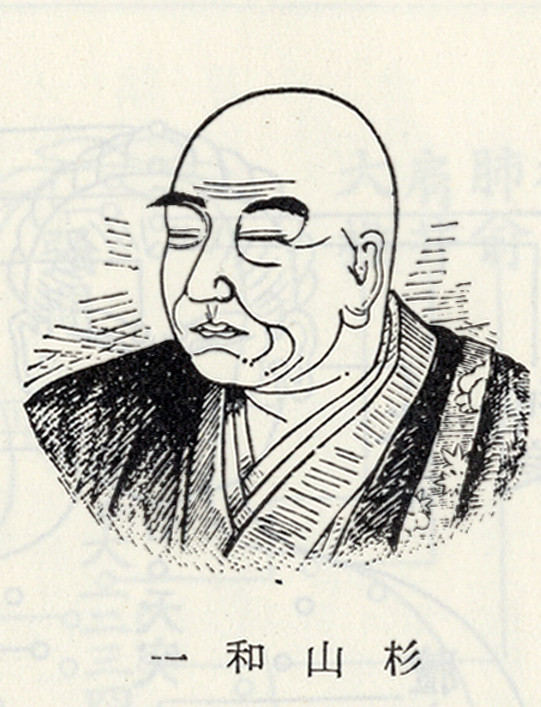

Sugiyama Waichi (1614–1694) was a Japanese acupuncturist, widely regarded as the "Father of Japanese Acupuncture".
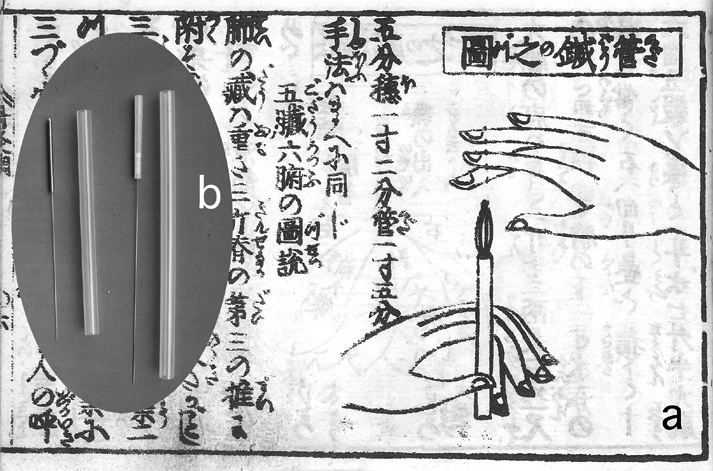
An eye-disease in infancy blinded Sugiyama from a very early age. At the age of ten he moved from Kyoto to Edo (Tokyo) to study massage and other therapeutic techniques under Ryomei Irie, one of the most famous medical practitioners of the era. His apprenticeship was short; Irie quickly dismissing him as "dull". On his way back to Kyoto, Sugiyama fasted and prayed for 100 days in a Cave, where he reputedly discovered the secret of the shinkan ("insertion tube") after pricking himself on a needle wrapped in a leaf.
His development of the shinkan, combined with his use of extremely fine gold and silver needles, allowed for comparatively painless acupuncture, and resulted in considerable expansion of the art; for this reason he is often referred to as the "father of Japanese acupuncture". He started around forty-five schools teaching massage and acupuncture to other blind people, resulting in the prevalent association in Japan between blindness and physical therapy. After Sugiyama effected a cure for a neurotic disease afflicting shōgun Tokugawa Tsunayoshi his work received official state endorsement, which greatly increased the popularity of his schools.
Sugiyama's grave can be found in the graveyard of the Miroku-Temple in Tokyo (Sumida-ku).
Sugiyama's teachings were recorded by his disciples and printed for the first time in 1880: Ryōji no taigaishū, Senshin no yōshū, and Igaku setsuyōshū.
Much of Japanese acupuncture has been influenced by the study of the Nan Jing the Chinese Medical Classic.
References
References
- (1964). "We Japanese: being descriptions of many of the customs, manners, ceremonies, festivals, arts and crafts of the Japanese, besides numerous other subjects". Fujiya Hotel.
- Carl Dubitsky. (1 May 1997). "Bodywork Shiatsu: Bringing the Art of Finger Pressure to the Massage Table". Inner Traditions * Bear & Company.
- (1 December 1992). "The Pain Clinic IV: Proceedings of the Fourth International Symposium, Kyoto, Japan, 1990". VSP.
- (1 May 1998). "Japanese Acupuncture: A Clinical Guide". Paradigm Publications.
- Dr. DoAnn T. Kaneko. (2006). "Shiatsu Anma Therapy. DoAnn's Short & Long Forms". HMAUCHI.
- (3 January 2007). "Thieme Almanac 2007: Acupuncture and Chinese Medicine". Thieme.
- Baracco, Luciano. (2011). "National Integration and Contested Autonomy: The Caribbean Coast of Nicaragua". Algora Publishing.
This article was imported from Wikipedia and is available under the Creative Commons Attribution-ShareAlike 4.0 License. Content has been adapted to SurfDoc format. Original contributors can be found on the article history page.
Ask Mako anything about Sugiyama Waichi — get instant answers, deeper analysis, and related topics.
Research with MakoFree with your Surf account
Create a free account to save articles, ask Mako questions, and organize your research.
Sign up freeThis content may have been generated or modified by AI. CloudSurf Software LLC is not responsible for the accuracy, completeness, or reliability of AI-generated content. Always verify important information from primary sources.
Report