From Surf Wiki (app.surf) — the open knowledge base
Subsequent Nuremberg trials
1946–1949 trials of Nazi leadership

1946–1949 trials of Nazi leadership
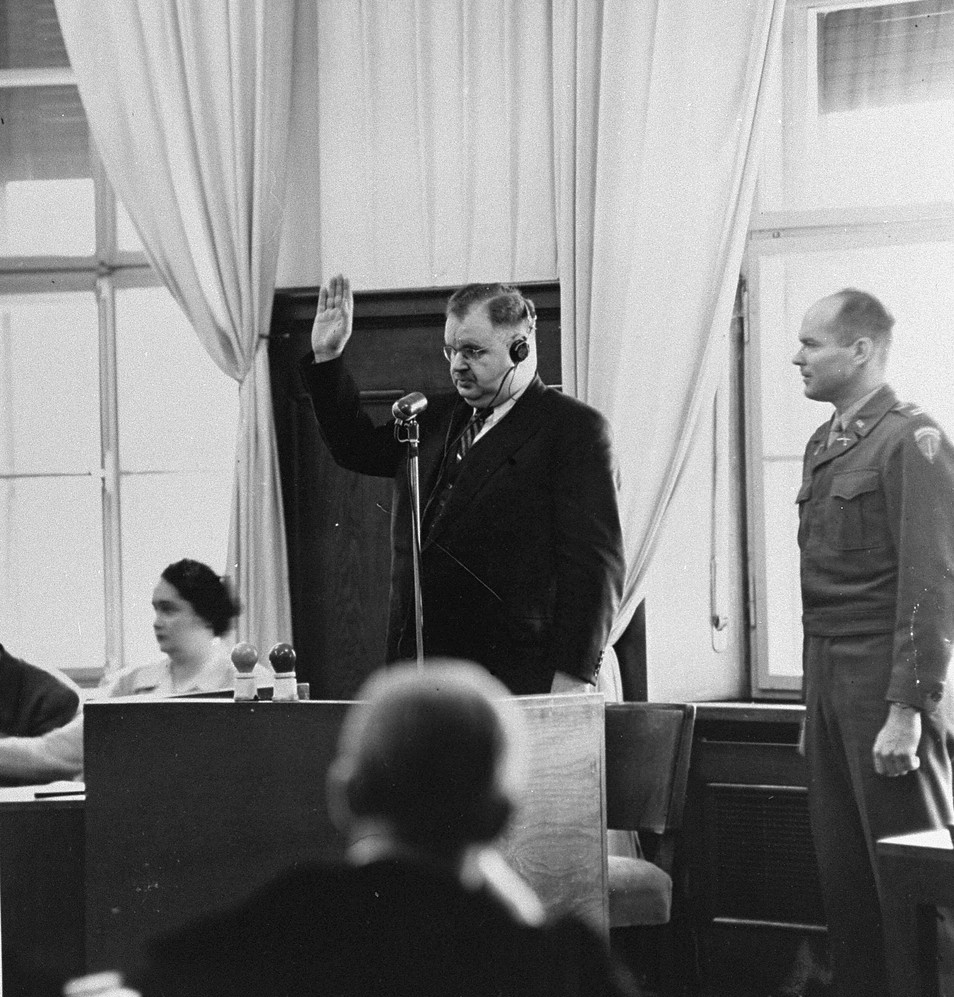
The subsequent Nuremberg trials (also Nuremberg Military Tribunals; 1946–1949) were twelve military tribunals for war crimes committed by the leaders of Nazi Germany (1933–1945). The Nuremberg Military Tribunals occurred after the Nuremberg trials, held by the International Military Tribunal, which concluded in October 1946. The subsequent Nuremberg trials were held by U.S. military courts and dealt with the cases of crimes against humanity committed by the business community of Nazi Germany, specifically the crimes of using slave labor and plundering occupied countries, and the war-crime cases of Wehrmacht officers who committed atrocities against Allied prisoners of war, partisans, and guerrillas.
Background
The Allies had initially planned to convene several international trials for war crimes at the International Military Tribunal, but failed because the Allies could not agree upon the proper legal management and disposition of military and civilian war criminals; however, the Control Council Law No. 10 (20 December 1945) of the Allied Control Council empowered the military authorities of every occupation zone in Germany to place on trial people and soldiers suspected of being war criminals. Based on this law, the U.S. authorities proceeded after the end of the initial Nuremberg Trial against the major war criminals to hold another twelve trials in Nuremberg. The judges in all these trials were American, and so were the prosecutors; the chief of counsel for the prosecution was Brigadier General Telford Taylor. In the other occupation zones, similar trials took place.
Trials
The twelve U.S. trials after the Nuremberg Military Tribunals (NMT) took place from 9 December 1946 to 13 April 1949. The trials were as follows:
| # | Designations | Dates | Defendants | |
|---|---|---|---|---|
| 1 | Doctors' Trial | 9 December 1946 – 20 August 1947 | 23 Nazi physicians of the Aktion T4 | |
| 2 | Milch Trial | 2 January – 14 April 1947 | Field Marshal Erhard Milch of the Luftwaffe | |
| 3 | Judges' Trial | 5 March – 4 December 1947 | 16 Nazi German "racial purity" jurists | |
| 4 | Pohl Trial | 8 April – 3 November 1947 | Oswald Pohl and 17 SS officers | |
| 5 | Flick Trial | 19 April – 22 December 1947 | Friedrich Flick and 5 directors of his companies | |
| 6 | IG Farben Trial | 27 August 1947 – 30 July 1948 | 24 directors of IG Farben, maker of Zyklon B | |
| 7 | Hostages Trial | 8 July 1947 – 19 February 1948 | 12 German generals of the Balkan Campaign | |
| 8 | RuSHA Trial | 20 October 1947 – 10 March 1948 | 14 racial cleansing and resettlement officials | |
| 9 | Einsatzgruppen Trial | 29 September 1947 – 10 April 1948 | 24 officers of Einsatzgruppen | |
| 10 | Krupp Trial | 8 December 1947 – 31 July 1948 | 12 directors of the Krupp Group | |
| 11 | Ministries Trial | 6 January 1948 – 13 April 1949 | 21 officials of Reich ministries | |
| 12 | High Command Trial | 30 December 1947 – 28 October 1948 | 13 generals and 1 admiral of the High Command |
Result
The Nuremberg process initiated 3,887 cases of which about 3,400 were dropped. 489 cases went to trial, involving 1,672 defendants. A total of 1,416 of them were found guilty; fewer than 200 were executed, and another 279 defendants were sentenced to life in prison. By the 1950s almost all of them had been released.
Many of the longer prison sentences were reduced substantially by an amnesty under the decree of high commissioner John J. McCloy in 1951, after intense political pressure. Ten outstanding death sentences from the Einsatzgruppen Trial were converted to prison terms. Many others who had received prison sentences were released outright.
Criticism
Some of the Nuremberg Military Tribunals have been criticised for their conclusion that "morale bombing" of civilians, including its nuclear variety, was legal, and for their judgment that, in certain situations, executing civilians in reprisal was permissible.
Judges
| Judge | Position | Designations | Previous or Current Position |
|---|---|---|---|
| Hu C. Anderson | Presiding Judge | Krupp Trial | President of the Tennessee Court of Appeals |
| Walter B. Beals | Doctors' Trial | Justice of the Washington Supreme Court | |
| Mallory B. Blair | Judge | Judges' Trial | Judge of the Third Court of Appeals of Texas |
| James T. Brand | Associate Justice of the Supreme Court of Oregon | ||
| George J. Burke | Hostages Trial | Former Prosecuting Attorney of Washtenaw County, Michigan | |
| Edward F. Carter | Associate Justice of the Nebraska Supreme Court | ||
| William C. Christianson | Presiding Judge | Ministries Trial | Associate Justice of the Minnesota Supreme Court |
| Judge | Flick Trial | Minnesota Supreme Court Justice | |
| Johnson T. Crawford | RuSHA Trial | Judge of the Oklahoma Court of Appeals | |
| Doctors' Trial | |||
| Edward J. Daly | Krupp Trial | Associate Justice Connecticut Supreme Court | |
| Richard D. Dixon | Alternate judge | Flick Trial | North Carolina Superior Court Judge |
| Judge | Einsatzgruppen Trial | ||
| Winfield B. Hale | High Command Trial | Judge Tennessee Court of Appeals | |
| Justin W. Harding | Bar of the State of Ohio | ||
| Alternate judge | Judges' Trial | ||
| Paul M. Hebert | Judge | IG Farben Trial | Dean of the Law School of Louisiana State University |
| Robert F. Maguire | Ministries Trial | Master in Chancery United States District Court for the District of Oregon | |
| Carrington T. Marshall | Presiding Judge | Judges' Trial | Chief Justice of the Supreme Court of Ohio |
| Clarence F. Merrell | Alternate judge | IG Farben Trial | Lawyer from Indiana (friend of Judge Shake) |
| James Morris | Judge | Justice of the North Dakota Supreme Court | |
| Michael Musmanno | Presiding Judge | Einsatzgruppen Trial | Military Governor of an Occupied District in Italy |
| Judge | Milch Trial | ||
| Pohl Trial | |||
| Daniel T. O'Connell | RuSHA Trial | Associate Justice of the Massachusetts Supreme Judicial Court | |
| Fitzroy Donald Phillips | Milch Trial | Judge North Carolina Superior Court | |
| Pohl Trial | |||
| Leon W. Powers | Ministries Trial | Justice of the Iowa Supreme Court | |
| Frank Richman | Flick Trial | Indiana Supreme Court Justice | |
| Harold Sebring | Doctors' Trial | Justice of the Florida Supreme Court | |
| Charles B. Sears | Presiding Judge | Flick Trial | Chief Judge of the New York Court of Appeals |
| Curtis Grover Shake | IG Farben Trial | Chief Judge of the Indiana Supreme Court | |
| John J. Speight | Judge | Einsatzgruppen Trial | Lawyer from Alabama |
| Alternate judge | Milch Trial | ||
| Pohl Trial | |||
| Victor C. Swearingen | Doctors' Trial | Special Assistant to the Attorney General of the United States | |
| Robert M. Toms | Presiding Judge | Milch Trial | Judge of the Circuit Court for Wayne County, Michigan |
| Pohl Trial | |||
| Charles F. Wennerstrum | Hostages Trial | Chief Justice of the Iowa Supreme Court | |
| William J. Wilkins | Judge | Krupp Trial | King County Superior Court Judge |
| Lee B. Wyatt | Presiding Judge | RuSHA Trial | Associate Justice of the Supreme Court of Georgia |
| John C. Young | High Command Trial | Former Chief Justice Colorado Supreme Court |
References
References
- "Nuremberg Trials". A&E Television Networks.
- [[Kevin Jon Heller]]. (2011). "The Trials. Introduction: the indictments, biographical information, and the verdicts". Oxford University Press.
- (April 2009). "Red Orchestra: The Story of the Berlin Underground and the Circle of Friends Who Resisted Hitler". Random House.
- Heller, Kevin Jon. (2011). "The Nuremberg Military Tribunals and the Origins of International Criminal Law". [[Oxford University Press]].
This article was imported from Wikipedia and is available under the Creative Commons Attribution-ShareAlike 4.0 License. Content has been adapted to SurfDoc format. Original contributors can be found on the article history page.
Ask Mako anything about Subsequent Nuremberg trials — get instant answers, deeper analysis, and related topics.
Research with MakoFree with your Surf account
Create a free account to save articles, ask Mako questions, and organize your research.
Sign up freeThis content may have been generated or modified by AI. CloudSurf Software LLC is not responsible for the accuracy, completeness, or reliability of AI-generated content. Always verify important information from primary sources.
Report