From Surf Wiki (app.surf) — the open knowledge base
STS-80
1996 American crewed spaceflight and longest duration Space Shuttle mission
1996 American crewed spaceflight and longest duration Space Shuttle mission
| Field | Value |
|---|---|
| name | STS-80 |
| image | Wake Shield Facility on STS-80 (STS080-708-084).jpg |
| image_caption | The Wake Shield Facility takes flight for a third time, after being deployed by Columbia Canadarm |
| insignia | Sts-80-patch.png |
| spacecraft | |
| mission_type | Research |
| operator | NASA |
| orbits_completed | 279 |
| distance_travelled | 11000000 km |
| mission_duration | |
| payload_mass | 13006 kg |
| launch_date | UTC (2:55:47pmEST) |
| launch_site | Kennedy, LC-39B |
| landing_date | UTC (6:49:04amEST) |
| landing_site | Kennedy, SLF Runway 33 |
| crew_size | 5 |
| crew_members | |
| crew_photo | STS-80_crew.jpg |
| crew_photo_caption | From left: Rominger, Jernigan, Musgrave, Jones and Cockrell |
| apsis | gee |
| orbit_reference | Geocentric |
| orbit_regime | Low Earth |
| orbit_periapsis | 318 km |
| orbit_apoapsis | 375 km |
| orbit_period | 91.5 min |
| orbit_inclination | 28.45 degrees |
| programme | Space Shuttle program |
| previous_mission | STS-79 |
| next_mission | STS-81 |
STS-80 was a Space Shuttle mission flown by Space Shuttle Columbia. The launch was originally scheduled for October 31, 1996, but was delayed to November 19 for several reasons. Likewise, the landing, which was originally scheduled for December 5, was pushed back to December 7 after bad weather prevented landing for two days.
It was the longest Shuttle mission ever flown at 17 days, 15 hours, and 53 minutes.
Although two spacewalks were planned for the mission, they were both canceled after problems with the airlock hatch prevented astronauts Tom Jones and Tammy Jernigan from exiting the orbiter.
Crew
Flight Engineer
Crew seat assignments
| title=STS-80 | url=http://spacefacts.de/mission/english/sts-80.htm | url-status=live | archive-url=https://web.archive.org/web/20180520023309/http://www.spacefacts.de/mission/english/sts-80.htm | archive-date=May 20, 2018 | access-date=January 3, 2018 | publisher=Spacefacts}} | Launch | Landing | 1 | 2 | 3 | 4 | 5 | 6 | 7 |
|---|---|---|---|---|---|---|---|---|---|---|---|---|---|---|---|
| [[File:Space Shuttle seating plan.svg | 150px]] | ||||||||||||||
| Seats 1–4 are on the flight deck. | |||||||||||||||
| Seats 5–7 are on the mid-deck. | |||||||||||||||
| Cockrell | |||||||||||||||
| Rominger | |||||||||||||||
| Musgrave | Jernigan | ||||||||||||||
| Jones | |||||||||||||||
| Jernigan | Musgrave | ||||||||||||||
| Unused | |||||||||||||||
| Unused |
Musgrave was supposed to sit in Seat 5 during landing, however, he actually stood on the flight deck behind Cockrell in Seat 1 throughout re-entry and landing to film the spacecraft's reentry through the overhead windows.
Mission highlights
- The mission deployed two satellites and successfully recovered them after they had performed their tasks.
- Orbiting and Retrievable Far and Extreme Ultraviolet Spectrometer-Shuttle Pallet Satellite II (ORFEUS-SPAS II) was deployed on flight day one. It was captured on flight day sixteen.
- The Wake Shield Facility-3 was deployed on flight day 4, and was recaptured three days later.
- The mission was the longest mission in Space Shuttle history.
- On this mission, Story Musgrave became the only person to fly on all five Space Shuttles – Challenger, Atlantis, Discovery, Endeavour, and Columbia.
- Musgrave also tied a record for spaceflights, and set a record for being the oldest man in space.
- Two spacewalks were planned for the mission but were canceled after astronauts Tom Jones and Tammy Jernigan discovered the outer hatch of the airlock was jammed. The jam was attributed to a loose screw that may have fell during its installation.
Mission payload
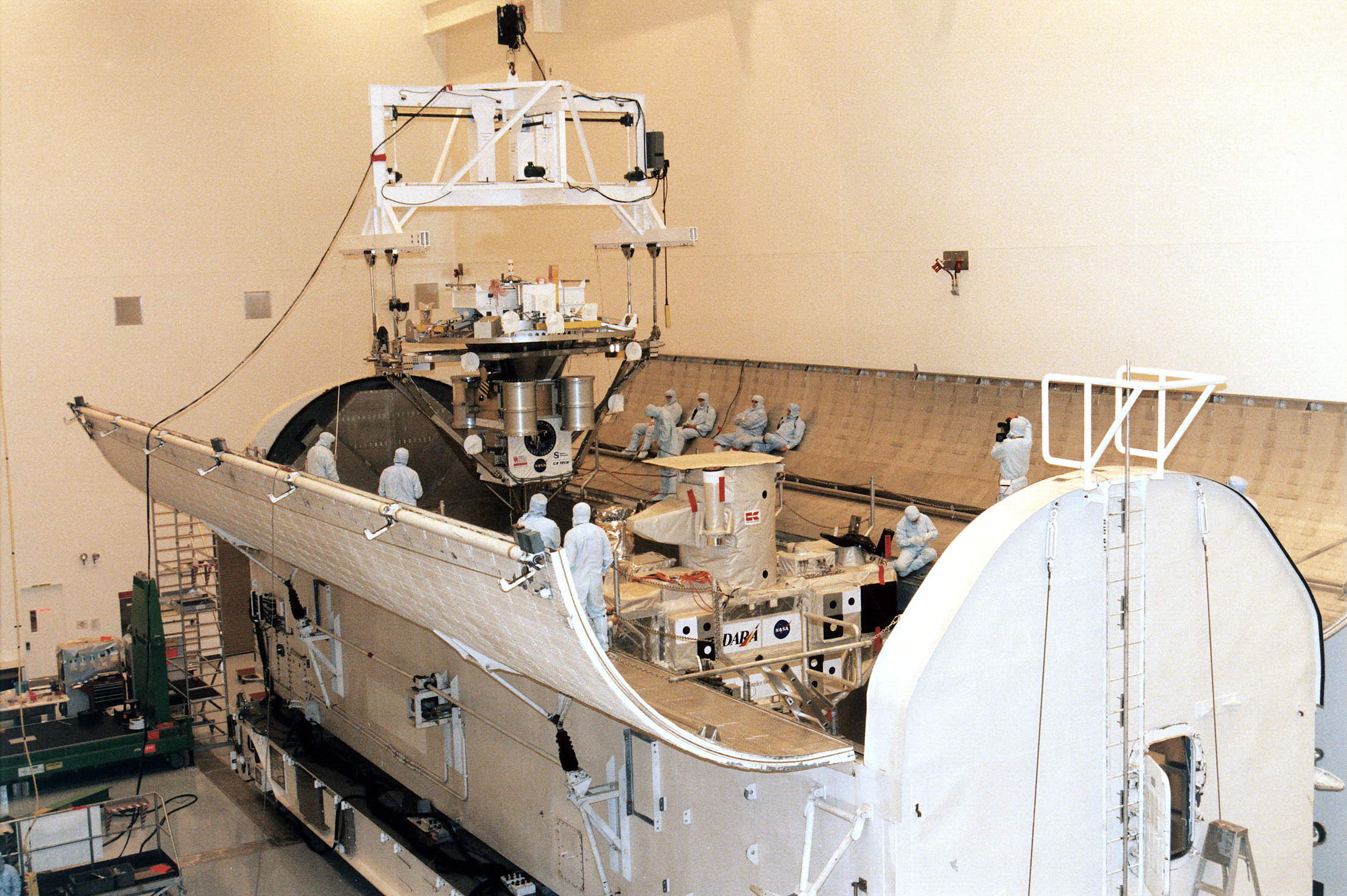
Columbia brought with it two free floating satellites, both of which were on repeat visits to space. Also, a variety of equipment to be tested on two planned spacewalks was part of the payload. These would have been used to prepare for construction of the International Space Station. Included in the Shuttle's payload were:
- Orbiting and Retrievable Far and Extreme Ultraviolet Spectrometer-Shuttle Pallet Satellite II (ORFEUS-SPAS II)
- Far Ultraviolet (FUV) Spectrograph
- Extreme Ultraviolet (EUV) Spectrograph
- Interstellar Medium Absorption Profile Spectrograph (IMAPS)
- Surface Effects Sample Monitor (SESAM)
- ATV Rendezvous Pre-Development Project (ARP)
- Student Experiment on ASTRO-SPAS (SEAS)
- Wake Shield Facility (WSF-3)
- NIH-R4
- Space Experiment Module (SEM)
- EDTF-5EVA Development Flight Tests (EDTF-5)
- Crane
- Battery Orbital Replacement Unit
- Cable Caddy
- Portable Work Platform
- Portable Foot Restraint Work Station (PFRWS)
- Temporary Equipment Restraint Aid (TERA)
- Articulating Portable Foot Restraint
- Body Restraint Tether (BRT)
- Multi-Use Tether (MUT)
- Visualization in an Experimental Water Capillary pumped Loop (VIEW-CPL)
- Biological Research In Canister (BRIC)
- Commercial Materials Dispersion Apparatus Instrumentation Technology Associates Experiment (CCM-A) (formerly STL/NIH-C-6)
- Commercial MDA ITA Experiment (CMIX-5)
Scientific projects

Columbia carried into orbit two satellites that were released and recaptured after some time alone. The first was the Orbiting and Retrievable Far and Extreme Ultraviolet Spectrometer-Shuttle Pallet Satellite II (ORFEUS-SPAS II). The main component of the satellite, the ORFEUS telescope, had two spectrographs, for far and extreme ultraviolet.
Another spectrograph, the Interstellar Medium Absorption Profile Spectrograph, was also on board the satellite. Several payloads not relevant to astronomy rounded out the satellite. It performed without problems for its flight, taking 422 observations of almost 150 astronomical bodies, ranging from the Moon to extra-galactic stars and a quasar. Being the second flight of ORFEUS-SPAS II allowed for more sensitive equipment, causing it to provide more than twice the data of its initial run.
Also deployed from Columbia was the Wake-Shield Facility (WSF), a satellite that created an ultra-vacuum behind it, allowing for the creation of semiconductor thin films for use in advanced electronics. WSF created seven films before being recaptured by Columbia's robotic arm after three days of flight.
Another inclusion was a Space Experiment Module (SEM). This was the first flight of the program. Among the experiments conducted were analysis of bacteria growth on food in orbit, crystal growth in space, and microgravity's effect on a pendulum.
NIH.R4 was an experiment conducted for the National Institute of Health and Oregon Health Sciences University. Biological Research in Canister (BRIC) explored gravity's effects on tobacco and tomato seedlings. Visualization in an Experimental Water Capillary Pumped Loop (VIEW-CPL) was conducted to test a new idea in thermal spacecraft management. The Commercial MDA ITA Experiment were a variety of experiments submitted by high school and middle school students sponsored by Information Technology Associates.
Mission background

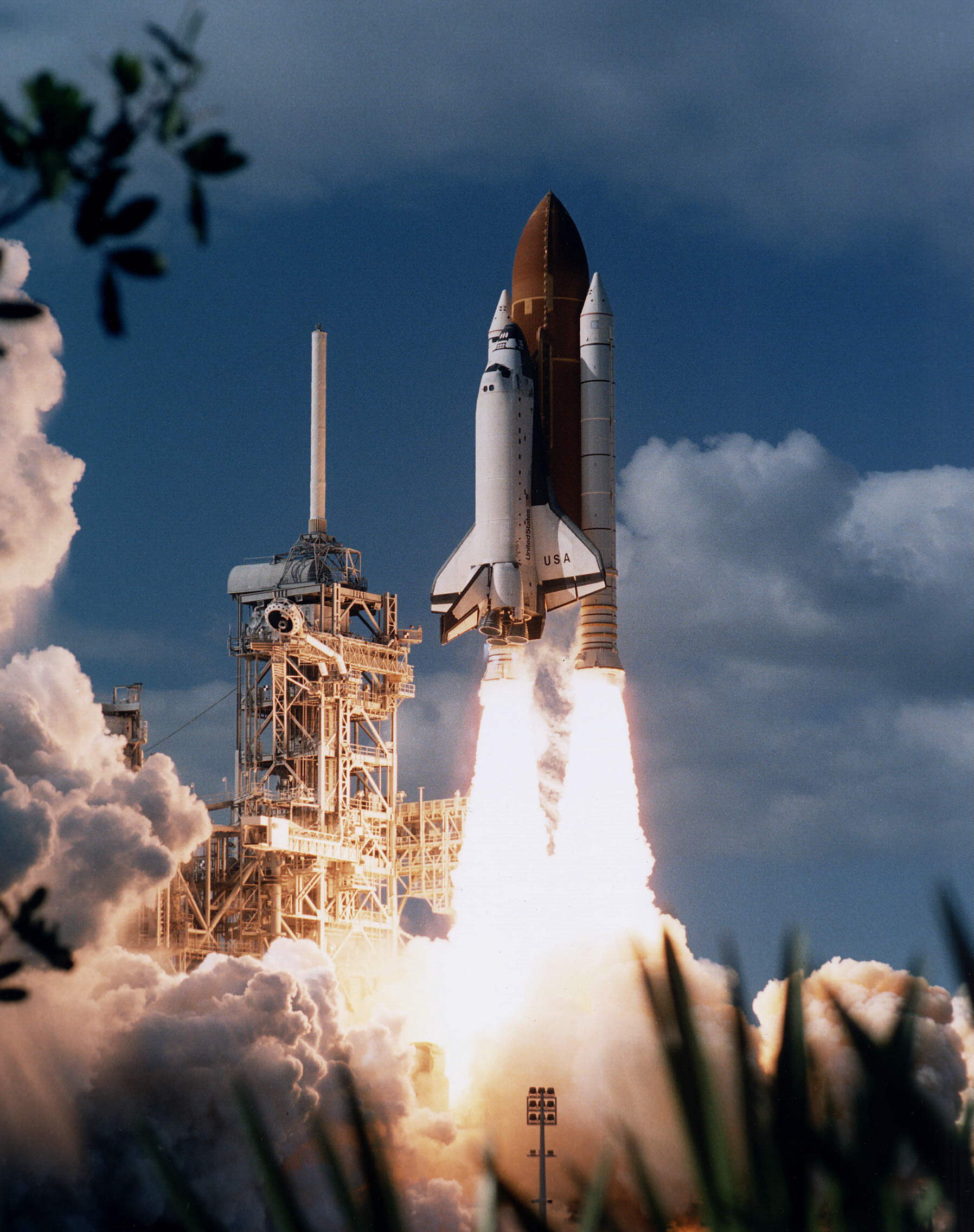
Astronauts were selected for the mission on January 17, 1996. Stacking of the Solid Rocket Boosters (SRBs) began September 9, 1996. On September 18, the launch date was bumped back from no earlier than (NET) October 31 to November 8. Payload doors were closed on September 25. The following day, the External fuel tank was mated to the SRBs inside the Vehicle Assembly Building.
Further progress was delayed while two windows on the orbiter were replaced; NASA feared that they might be susceptible to breakage after seven and eight flights. Columbia was rolled over to the VAB on October 9 to begin final assembly preparations.
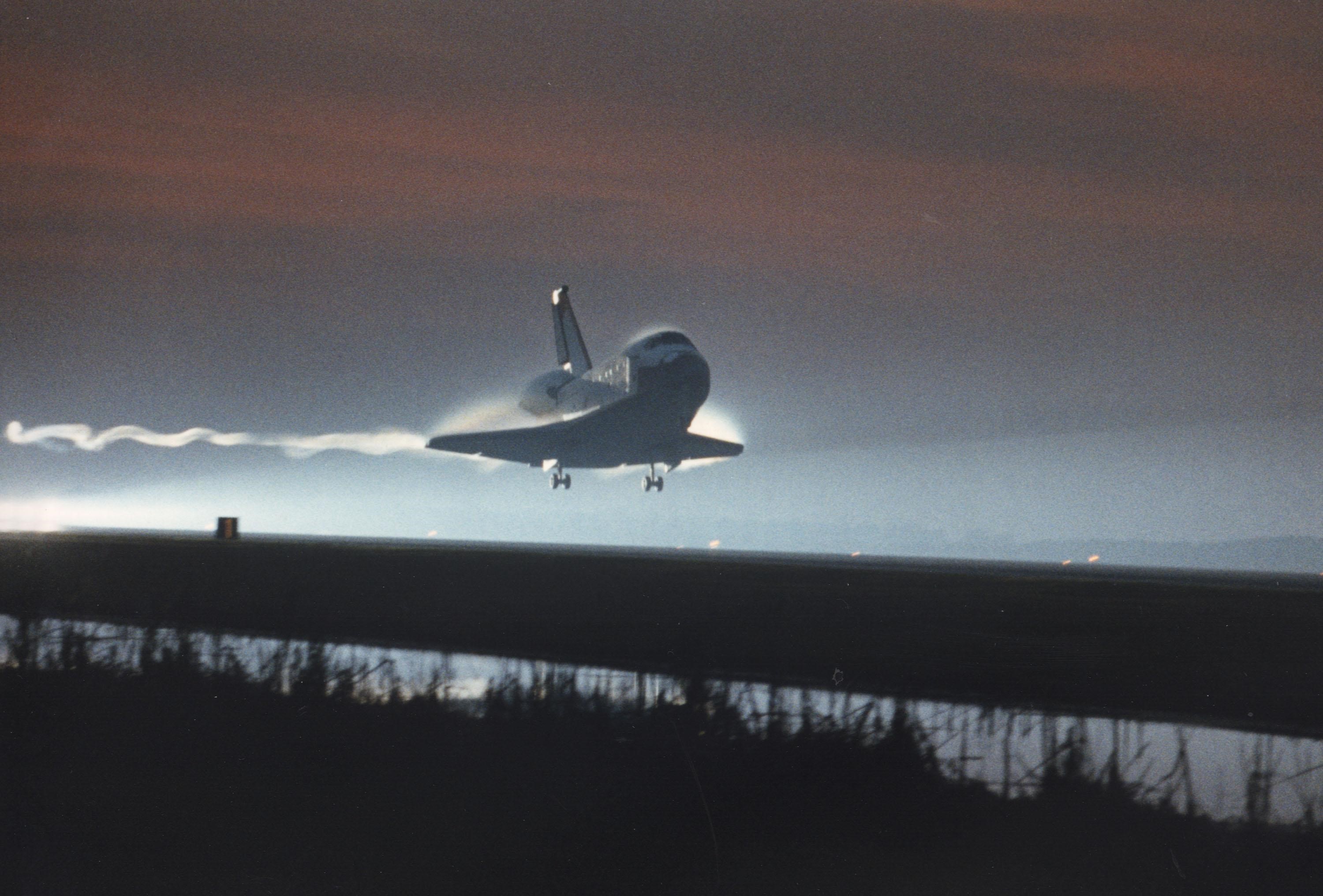
STS-80 Landing]] On October 11, Columbia was mated with the external fuel tank, and the payload was delivered and transferred. Rollout to Pad 39B occurred on October 16, which was followed by flight readiness checks of the main propulsion system.
After a Flight Readiness Review on October 28, an additional FRR was requested to further analyze the Redesigned Solid Rocket Motor (RSRM) due to nozzle erosion that occurred on STS-79; on the 29th, a fuel pump failed, delaying the fueling process of Columbia. The erosion problem led to a week long delay instituted on November 4. A launch date of November 15 was set, contingent on a successful Atlas launch two days prior. The forecast of bad weather pushed the launch back even further, to a date of November 19.
During landing, Jones planned to use a video camera to capture footage of the plasma tube trailing behind the orbiter from the overhead windows. He asked Musgrave to assist with the recording, with the expectation that he would take his seat on the mid-deck once the orbiter reached entry interface. Instead, Musgrave elected to remain standing on the flight deck behind Commander Cockrell (in Seat 1) throughout re-entry and landing. Jones estimated that the 61-year-old Musgrave would have experienced 1.7 times the normal force of Earth's gravity for five to ten continuous minutes after 18 days of near weightlessness.
Wake-up calls
NASA began a tradition of playing music to astronauts during the Gemini program, which was first used to wake up a flight crew during Apollo 15. Each track is specially chosen, often by their families, and usually has a special meaning to an individual member of the crew, or is applicable to their daily activities.
| Flight Day | Song | Artist/Composer |
|---|---|---|
| Day 2 | "I Can See For Miles" | The Who |
| Day 3 | "Theme From Fireball XL5" | Barry Gray |
| Day 4 | "Roll With the Changes" | REO Speedwagon |
| Day 5 | "Reelin' and Rockin'" | Chuck Berry |
| Day 6 | "Roll with It" | Steve Winwood |
| Day 7 | "Good Times Roll" | The Cars |
| Day 8 | "Red Rubber Ball" | Cyrkle |
| Day 9 | "Alice's Restaurant" | Arlo Guthrie |
| Day 10 | "Some Guys Have All the Luck" | Robert Palmer |
| Day 11 | "Changes" | David Bowie |
| Day 12 | "Break on Through (To the Other Side)" | The Doors |
| Day 13 | "Shooting Star" | Bad Company |
| Day 14 | "Stay" | Jackson Browne |
| Day 15 | "Return to Sender" | Elvis Presley |
| Day 16 | "Should I Stay or Should I Go" | The Clash |
| Day 17 | "Nobody Does It Better" | Carly Simon |
| Day 18 | "Please Come Home for Christmas" | Sawyer Brown |
References
References
- "STS-80". NASA.
- (December 7, 1996). "STS-80 Day 19 Highlights". NASA.
- "STS-80 Mission Control Center Status Report #27". NASA.
- "STS-80". Spacefacts.
- (November 20, 1996). "STS-80 Day 2 Highlights". NASA.
- (December 4, 1996). "STS-80 Day 16 Highlights". NASA.
- (March 11, 2008). "CNN Student News One-Sheet: Space Shuttle Facts". CNN.
- "Story Musgrave 6-time Space Shuttle Astronaut simulates Space Flight | Hubble Space Telescope | Space Exploration". Space Story.
- "STS-124 Shuttle Report | Current Space Demographic Data". Spaceflight Now.
- "Retired astronaut slams Glenn space try".
- NASA. "So Close Yet So Far: The Jammed Airlock Hatch of STS-80".
- (29 August 2010). "Shuttle Orbiter Airlock Hatch Failure Caused By Loose Screw On STS-80 Prevented Two Planned Mission EVAs". [[Kennedy Space Center]].
- (November 8, 2011). "Space Experiment Module (SEM)". NASA.
- [http://www.gsfc.nasa.gov/goddardnews/20011102/20011102payloads3.html Goddard News – Top Feature] {{webarchive. link. (October 3, 2006)
- "SEM 1 on STS-80". Musc.edu.
- "KSC Fact Sheet "STS-80/Columbia – ORFEUS-SPAS-2/Wake Shield Facility-3"". NASA.
- "ITA student program". Itaspace.com.
- (November 13, 1996). "13 November 1996 Shuttle Status Report". NASA.
- (September 1, 2011). "Space Shuttle Missions Summary". NASA.
- (1996-11-18). "November 18, 1996 Shuttle Status Report". NASA.
- Jones, Thomas. (2006). "Sky Walking". HarperCollins.
- "10 September 1996 Shuttle Status Report". NASA.
- "18 September 1996 Shuttle Status Report". NASA.
- "25 September 1996 Shuttle Status Report". NASA.
- "26 September 1996 Shuttle Status Report". NASA.
- "4 October 1996 Shuttle Status Report". NASA.
- (October 10, 1996). "10 October 1996 Shuttle Status Report". NASA.
- "11 October 1996 Shuttle Status Report". NASA.
- "16 October 1996 Shuttle Status Report". NASA.
- "29 October 1996 Shuttle Status Report". NASA.
- "4 November 1996 Shuttle Status Report". NASA.
- (November 12, 1996). "12 November 1996 Shuttle Status Report". NASA.
- (November 14, 1996). "14 November 1996 Shuttle Status Report". NASA.
- Lenehan, Anne E.. (2004). "Story: The Way of Water". Soundscape Software Pty Ltd.
- Fries, Colin. (June 25, 2007). "Chronology of Wakeup Calls". NASA.
- Fries, Colin. (March 13, 2015). "Chronology of Wakeup Calls (STS-80 listed)". NASA.
This article was imported from Wikipedia and is available under the Creative Commons Attribution-ShareAlike 4.0 License. Content has been adapted to SurfDoc format. Original contributors can be found on the article history page.
Ask Mako anything about STS-80 — get instant answers, deeper analysis, and related topics.
Research with MakoFree with your Surf account
Create a free account to save articles, ask Mako questions, and organize your research.
Sign up freeThis content may have been generated or modified by AI. CloudSurf Software LLC is not responsible for the accuracy, completeness, or reliability of AI-generated content. Always verify important information from primary sources.
Report