From Surf Wiki (app.surf) — the open knowledge base
Stramenopile
Clade of eukaryotes
Clade of eukaryotes
File:Stramenopiles diversity.png|260px
rect 0 0 1100 875 Kelp rect 1100 0 2200 875 Oomycete rect 2200 0 3300 875 Bicosoecid
rect 0 875 1100 1750 Diatom rect 1100 875 2200 1750 Labyrinthulomycetes rect 2200 875 3300 1750 Opaline
rect 0 1750 1100 2625 Yellow-green algae rect 1100 1750 2200 2625 Golden algae rect 2200 1750 3300 2625 Silicoflagellate
- Opalozoa
- Sagenista
- Gyrista
- Bigyromonada
- Ochrophyta
- Pseudofungi
- Kaonashia
- Platysulcus
- Stramenopila Alexopoulos et al., 1996
- Straminopiles Vørs, 1993
- Heterokonta Cavalier-Smith, 1986
- Heterokontophyta van den Hoek et al., 1995
- Straminipila Dick, 2001
- Stramenipila Dick, 2001, orth. var.
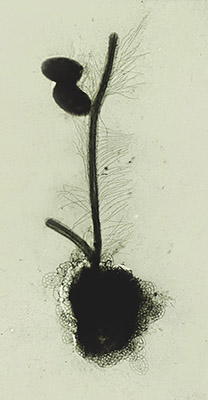
The stramenopiles, also called heterokonts, are protists distinguished by the presence of stiff tripartite external hairs. In most species, the hairs are attached to flagella, in some they are attached to other areas of the cellular surface, and in some they have been secondarily lost (in which case relatedness to stramenopile ancestors is evident from other shared cytological features or from genetic similarity). Stramenopiles represent one of the three major clades in the SAR supergroup, along with Alveolata and Rhizaria.
Stramenopiles are eukaryotes; most are single-celled, but some are multicellular including some large seaweeds, the brown algae. The group includes a variety of algal protists, heterotrophic flagellates, opalines and closely related proteromonad flagellates (all endobionts in other organisms); the actinophryid Heliozoa, and oomycetes. The tripartite hairs characteristic of the group have been lost in some of the included taxa – for example in most diatoms.
Many stramenopiles are unicellular flagellates, and most others produce flagellated cells at some point in their lifecycles, for instance as gametes or zoospores. Most flagellated heterokonts have two flagella; the anterior flagellum has one or two rows of stiff hairs or mastigonemes, and the posterior flagellum is without such embellishments, being smooth, usually shorter, or in a few cases not projecting from the cell.
The term 'heterokont' is used both as an adjective, indicating that a cell has two dissimilar flagella, and as the name of a taxon. The groups included in that taxon have however varied widely, creating the 'heterokont problem', now resolved by the definition of the stramenopiles.
Nomenclature
The term 'stramenopile' was introduced by D. J. Patterson in 1989, defining a group that overlapped with the ambiguously defined heterokonts. The name "stramenopile" has been discussed by J. C. David. Patterson's term was formalized as a taxonomic name, Stramenopiles, in 2005 by the International Society of Protistologists. It has since been the most widely accepted name for this group of organisms. Several alternative names have been proposed since Patterson's publication, such as Straminipila, Straminopiles, and Stramenopila, which is the valid name under the PhyloCode.
The heterokont problem
The term 'heterokont' is used as both an adjective – indicating that a cell has two dissimilar flagella – and as the name of a taxon. The taxon 'Heterokontae' was introduced in 1899 by Alexander Luther for algae that are now considered the Xanthophyceae. But the same term was used for other groupings of algae. For example, in 1956, Copeland used it to include the xanthophytes (using the name Vaucheriacea), a group that included what became known as the chrysophytes, the silicoflagellates, and the hyphochytrids. Copeland also included the unrelated collar flagellates (as the choanoflagellates) in which he placed the bicosoecids. He also included the not-closely related haptophytes. The consequence of associating multiple concepts to the taxon 'heterokont' is that the meaning of 'heterokont' can only be made clear by making reference to its usage: Heterokontae sensu Luther 1899; Heterokontae sensu Copeland 1956, etc. This contextual clarification is rare, such that when the taxon name is used, it is unclear how it should be understood. The term 'heterokont' has lost its usefulness in critical discussions about the identity, nature, character and relatedness of the group. The term 'stramenopile' sought to identify a clade (monophyletic and holophyletic lineage) using the approach developed by transformed cladists of pointing to a defining innovative characteristic or apomorphy.
Over time, the scope of application has changed, especially when in the 1970s ultrastructural studies revealed greater diversity among the algae with chromoplasts (chlorophylls a and c) than had previously been recognized. At the same time, a protistological perspective was replacing the 19th century one based on the division of unicellular eukaryotes into animals and plants. One consequence was that an array of heterotrophic organisms, many not previously considered as 'heterokonts', were seen as related to the 'core heterokonts' (those having anterior flagella with stiff hairs). Newly recognized relatives included the parasitic opalines, proteromonads, and actinophryid Heliozoa. They joined other heterotrophic protists, such as bicosoecids, labyrinthulids, and oomycete fungi, that were included by some as heterokonts and excluded by others. Rather than continue to use a name whose meaning had changed over time and was hence ambiguous, the name 'stramenopile' was introduced to refer to the clade of protists that had tripartite stiff (usually flagellar) hairs and all their descendants. Molecular studies confirm that the genes that code for the proteins of these hairs are exclusive to stramenopiles.
Characteristics
The presumed apomorphy of tripartite flagellar hairs in stramenopiles is well characterized. The basal part of the hair is flexible and inserts into the cell membrane; the second part is dominated by a long stiff tube (the 'straw' or 'stramen'); and finally the tube is tipped by many delicate hairs called mastigonemes. The proteins that code for the mastigonemes appear to be exclusive to the stramenopile clade, and are present even in taxa (such as diatoms) that no longer have such hairs.
Most stramenopiles have two flagella near the apex. They are usually supported by four microtubule roots in a distinctive pattern. There is a transitional helix inside the flagellum where the beating axoneme with its distinctive geometric pattern of nine peripheral couplets around two central microtubules changes into the nine-triplet structure of the basal body.
Plastids
Many stramenopiles have plastids which enable them to photosynthesise, using light to make their own food. Those plastids are coloured off-green, orange, golden or brown because of the presence of chlorophyll a, chlorophyll c, and fucoxanthin. This form of plastid is called a stramenochrome or chromoplast. The most significant autotrophic stramenopiles are the brown algae (wracks and many other seaweeds), and the diatoms. The latter are among the most significant primary producers in marine and freshwater ecosystems. Most molecular analyses suggest that the most basal stramenopiles lacked plastids and were accordingly colourless heterotrophs, feeding on other organisms. This implies that the stramenopiles arose as heterotrophs, diversified, and then some of them acquired chromoplasts. Some lineages (such as the axodine lineage that included the chromophytic pedinellids, colourless ciliophryids, and colourless actinophryid heliozoa) have secondarily reverted to heterotrophy.
Ecology
Some stramenopiles are significant as autotrophs and as heterotrophs in natural ecosystems; others are parasitic. Blastocystis is a gastrointestinal parasite of humans; opalines and proteromonads live in the intestines of cold-blooded vertebrates and have been described as parasitic; oomycetes include some significant plant pathogens such as the cause of potato blight, Phytophthora infestans. Diatoms are major contributors to global carbon cycles because they are the most important autotrophs in most marine habitats. The brown algae, including familiar seaweeds like wrack and kelp, are major autotrophs of the intertidal and subtidal marine habitats. Some of the bacterivorous stramenopiles, such as Cafeteria, are common and widespread consumers of bacteria, and thus play a major role in recycling carbon and nutrients within microbial food webs.
Evolution
External
Stramenopiles are most closely related to alveolates and Rhizaria, all of which have tubular mitochondrial cristae and collectively form the SAR supergroup, whose name is formed from their initials. The ancestor of the SAR supergroup appears to have captured a unicellular photosynthetic red alga, and many stramenopiles, as well as members of other SAR groups such as the Rhizaria, still have plastids which retain the double membrane of the red alga and a double membrane surrounding it, for a total of four membranes. In addition, species of Telonemia, the sister group to SAR, exhibit heterokont flagella with tripartite mastigonemes, implying a more ancient origin of stramenopile characteristics.
Internal
The following cladogram summarizes the evolutionary relationships between stramenopiles. The phylogenetic relationships of Bigyra vary greatly from one analysis to the next: it has been recovered as either monophyletic or paraphyletic. When paraphyletic, the branching order of the bigyran groups also varies: in some studies, Sagenista is sister to the remaining lineages, while in others Opalozoa is sister to the other lineages. Nonetheless, Platysulcea is consistently recovered as the sister clade to all other stramenopiles. In addition, a flagellate species discovered in 2023, Kaonashia insperata, remains in an uncertain phylogenetic position, but more closely related to Gyrista than to other clades.
Classification
The classification of the stramenopiles according to Adl et al. (2019), with additions from newer research:
- Platysulcea
- Bigyra
- Opalozoa
- Nanomonadea
- Opalinata [=Slopalinida ]
- Bicosoecida
- Sagenista
- Labyrinthulomycetes
- Pseudophyllomitidae
- Opalozoa
- Gyrista
- Bigyromonada
- Developea
- Pirsoniales
- Pseudofungi
- Hyphochytriales
- Peronosporomycetes [=Oomycetes ]
- Actinophryidae
- Ochrophyta
- Chrysista
- Chrysoparadoxophyceae
- Chrysophyceae
- Chloromorophyceae (nomen dubium)
- Eustigmatophyceae
- Olisthodiscophyceae
- Phaeophyceae
- Phaeosacciophyceae
- Phaeothamniophyceae
- Raphidophyceae
- Schizocladiophyceae
- Synchromophyceae [=Picophagea ]
- Xanthophyceae [Heterokontae ; Heteromonadea ; Xanthophyta ]
- Diatomista
- Bolidophyceae
- Diatomeae [=Bacillariophyta ]
- Dictyochophyceae
- Pelagophyceae
- Pinguiophyceae
- Chrysista
- Bigyromonada
Notes
References
References
- (17 February 2009). "Encyclopedia of Microbiology".
- Patterson, D.J.. (1989). "The chromophyte algae: Problems and perspectives". Clarendon Press.
- (2023). "''Kaonashia insperata'' gen. et sp. nov., a eukaryotrophic flagellate, represents a novel major lineage of heterotrophic stramenopiles". Journal of Eukaryotic Microbiology.
- (1996). "Introductory Mycology". Wiley.
- (1993). "Marine heterotrophic amoebae, flagellates and heliozoa from Belize (Central America) and Tenerife". Journal of Eukaryotic Microbiology.
- David, J.C.. (2002). "A preliminary catalogue of the names of fungi above the rank of order". Constancea.
- Cavalier-Smith, T.. (1999). "Progress in Phycological Research". Elsevier.
- (1995). "Algae An Introduction to Phycology". Cambridge University Press.
- Dick, M.W.. (2013). "Straminipilous Fungi: Systematics of the Peronosporomycetes Including Accounts of the Marine Straminipilous Protists, the Plasmodiophorids and Similar Organisms". Springer.
- [http://www.mycobank.org/BioloMICS.aspx?Link=T&TableKey=14682616000000067&Rec=469798&Fields=All "Stramenipila M.W. Dick (2001)"]. [[MycoBank]]. International Mycological Association.
- Patterson, David J.. (1999). "The Diversity of Eukaryotes". The American Naturalist.
- David, J. C.. (2002). "A preliminary catalogue of the names of fungi above the rank of order". Constancea.
- "RegNum {{!}} Search: Index".
- Luther, Alexander F.. (1899). "Über Chlorosaccus eine neue Gattung der Süsswasseralgen nebst einiger Bemerkungen zur Systematik verwandter Algen". [[Norstedts förlag.
- Copeland, H. F.. (1956). "The Classification of Lower Organisms". Pacific Books.
- Blackwell, W. H.. (2009). "Chromista revisited: A dilemma of overlapping putative kingdoms, and the attempted application of the botanical code of nomenclature". Phytologia.
- Patterson, Colin. (1982). "Problems in Phylogenetic Reconstruction". Academic Press.
- (2019). "Characterisation of Stramenopile-specific mastigoneme proteins in Phytophthora parasitica". Protoplasma.
- Bouck, G. Benjamin. (1 August 1971). "The structure, origin, and composition of the tubular mastigonemes of the ''Ochromonas'' flagellum". Journal of Cell Biology.
- (2011). "Identification of a Mastigoneme Protein from Phytophthora nicotianae". Protist.
- (2009). "Encyclopedia of Microbiology". Elsevier.
- (2014). "Proteomics Analysis of Heterogeneous Flagella in Brown Algae (Stramenopiles)". Protist.
- (1994). "The stramenopiles from a molecular perspective: 16S-like rRNA sequences from Labyrinthuloides minuta and Cafeteria roenbergensis". Phycologia.
- (2017). "Are Thraustochytrids algae?". Fungal Biology.
- (10 August 2016). "A Phylogenomic Framework to Study the Diversity and Evolution of Stramenopiles (=Heterokonts)". Molecular Biology and Evolution.
- (2014). "Update on the pathogenic potential and treatment options for Blastocystis sp". Gut Pathogens.
- Olsen, O. Wilford. (1986). "Animal Parasites: their life cycles and ecology". Dover.
- Nowicki, Marcin. (17 August 2011). "Potato and tomato late blight caused by ''Phytophthora infestans'': An overview of pathology and resistance breeding". [[American Phytopathological Society]].
- (2003). "Role of diatoms in regulating the ocean's silicon cycle". Global Biogeochemical Cycles.
- (2011-08-09). "Brown algae". Current Biology.
- Guiry, Wendy. (7 April 2011). "Cafeteria T.Fenchel & D.J.Patterson 1988".
- (1988). "''Cafeteria roenbergensis'' nov. gen., nov. sp., a heterotrophic microflagellate from marine plankton". Marine Microbial Food Webs.
- Krylov, M. V.; Dobrovolskii, A. A.; Issi, I. V.; Michaelevich, B. I.; Podlipaev, S. A.; Reshetnyak, V. V.; Seravin, L. N.; et al. 1980. New concepts for the system of unicellular organisms. Trudy Zoologischkei Institut Akademiya Nayuk, SSSR 94:122–132.
- (August 2008). "Phylogenomics reveals a new 'megagroup' including most photosynthetic eukaryotes". Biology Letters.
- (2013). "International Review of Cell and Molecular Biology". [[Elsevier]].
- (2022). "On the origin of TSAR: morphology, diversity and phylogeny of Telonemia". The Royal Society.
- (2013). "Phylogeny of Heterokonta: Incisomonas marina, a uniciliate gliding opalozoan related to Solenicola (Nanomonadea), and evidence that Actinophryida evolved from raphidophytes". European Journal of Protistology.
- {{cite Q. Q123562228
- {{cite Q. Q124719861
- (2019). "Revisions to the Classification, Nomenclature, and Diversity of Eukaryotes". Journal of Eukaryotic Microbiology.
- (2019). "Taxon-rich Multigene Phylogenetic Analyses Resolve the Phylogenetic Relationship Among Deep-branching Stramenopiles". Protist.
- (2017). "Pseudophyllomitus vesiculosus (Larsen and Patterson 1990) Lee, 2002, a Poorly Studied Phagotrophic Biflagellate is the First Characterized Member of Stramenopile Environmental Clade MAST-6". Protist.
- (2019). "The golden paradox – a new heterokont lineage with chloroplasts surrounded by two membranes". Journal of Phycology.
- (2018). "Sequence analysis confirms a new algal class". Vie et Milieu/Life & Environment.
- (21 July 2021). "Olisthodiscophyceae, the 17th heterokont algal class". Journal of Phycology.
- (2 March 2021). "''Olisthodiscus'' represents a new class of Ochrophyta". Journal of Phycology.
- (December 2020). "Multigene Phylogeny, Morphological Observation and Re-examination of the Literature Lead to the Description of the Phaeosacciophyceae Classis Nova and Four New Species of the Heterokontophyta SI Clade". Protist.
- Cavalier-Smith, Thomas. (January 2018). "Kingdom Chromista and its eight phyla: a new synthesis emphasising periplastid protein targeting, cytoskeletal and periplastid evolution, and ancient divergences". Protoplasma.
- {{cite Q. Q22065654
This article was imported from Wikipedia and is available under the Creative Commons Attribution-ShareAlike 4.0 License. Content has been adapted to SurfDoc format. Original contributors can be found on the article history page.
Ask Mako anything about Stramenopile — get instant answers, deeper analysis, and related topics.
Research with MakoFree with your Surf account
Create a free account to save articles, ask Mako questions, and organize your research.
Sign up freeThis content may have been generated or modified by AI. CloudSurf Software LLC is not responsible for the accuracy, completeness, or reliability of AI-generated content. Always verify important information from primary sources.
Report