From Surf Wiki (app.surf) — the open knowledge base
STOL
Class of airplanes that are designed to takeoff and land in a short distance
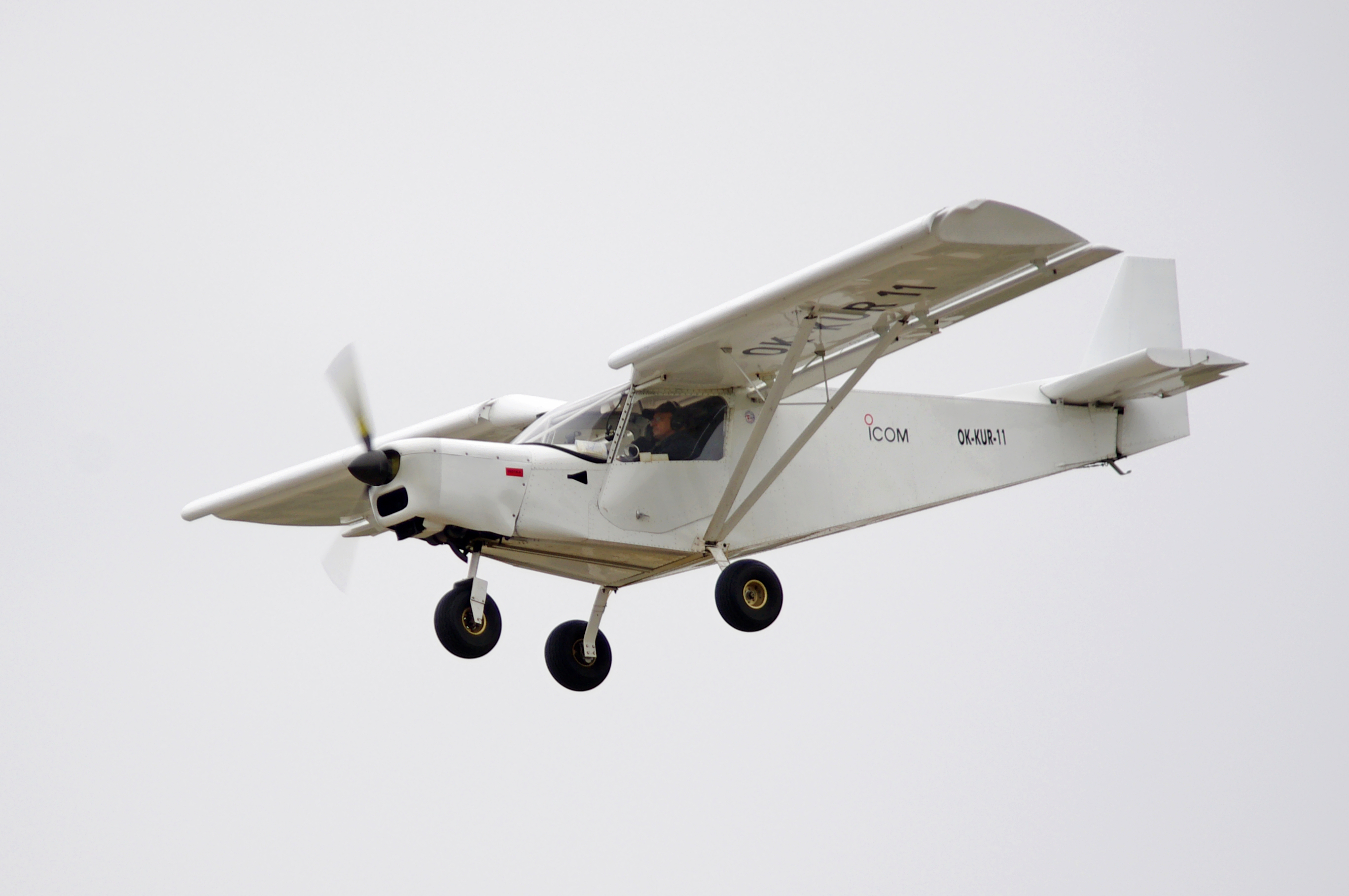
Class of airplanes that are designed to takeoff and land in a short distance
A short takeoff and landing (STOL) aircraft is a fixed-wing aircraft that can take off and land on runways that are much shorter than the typical ones needed for conventional take-off and landing. STOL-capable aircraft are usually light aircraft (mostly propeller-driven utility aircraft, sporters or motor gliders) with a high lift-to-drag ratio and typically also a high aspect ratio, allowing them to achieve minimum takeoff speed (i.e. liftoff speed or VLOF) much more quickly and thus requiring a shorter accelerating run before taking off (takeoff roll); and perform landing at a lower minimum steady flight speed (VS0) and thus also a shorter decelerating run (rollout).
Gyrocopters, despite being rotary-wing aircraft, need a forward motion to drive air flow past autorotating rotor blades to generate lift and thus still mandate runways (albeit a very short one) for takeoff and landing. They are therefore also considered STOL aircraft, as they cannot perform vertical takeoff and landing like helicopters.
STOL aircraft, including those used in scheduled passenger transport operations, can be operated from STOLport airfields that feature dedicated short runways. They can also operate on improvised airstrips with unpaved runways (e,g. dirt roads or bulldozed grassfield tracks) and/or harsher conditions, such as remote airfields built in high altitude alpine regions, deserts or on snow/ice fields.
Design
.jpg)
STOL aircraft come in configurations such as bush planes, autogyros, and taildraggers, and those such as the de Havilland Canada Dash-7 that are designed for use on conventional airstrips. The PAC P-750 XSTOL, the Daher Kodiak, the de Havilland Canada DHC-6 Twin Otter and the Wren 460 have STOL capability, needing a short ground roll to get airborne, but are capable of a near-zero ground roll when landing.
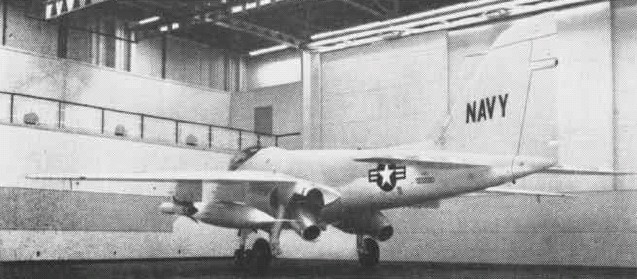
For any plane, the required runway length is a function of the square of the stall speed (minimum flying speed), and much design effort is spent on minimizing this number. For takeoff, large power/weight ratios and low drag help the plane to accelerate for flight. For landing, the length is minimized by strong brakes, low landing speed, and thrust reversers or spoilers. Overall STOL performance is set by the longer of the runway needed to land or take off.
.jpg)
Of equal importance to runway length is the ability to clear obstacles, such as hills, beyond the runway. For takeoff, large power/weight ratios and low drag increase the rate of climb – required to clear obstacles. For landing, high drag allows the plane to descend steeply without building speed, which would require a longer ground run. Drag is increased by use of flaps on the wings and by forward slip (causing the plane to fly somewhat sideways to increase drag).
Typically, a STOL aircraft has a large wing for its weight. These wings may use aerodynamic devices like flaps, slots, slats, and vortex generators. Typically, achieving excellent STOL performance reduces maximum speed, but not payload ability. The payload is critical, because many small, isolated communities rely on STOL aircraft as their only link to the outside world for passengers or cargo; examples include many communities in the Canadian north and Alaska.
Most STOL aircraft can land either on- or off-airport. Typical off-airport landing areas include snow or ice (using skis), fields or gravel riverbanks (often using special fat, low-pressure tundra tires), and water (using floats): these areas are often short and obstructed by trees or hills. Wheel skis and amphibious floats combine wheels with skis or floats, allowing landing on snow/water.
In 2025 the Electra prototype aircraft demonstrated take-off in less than 35 mph combining eight electric motors along the front edge of its wings with large flaps at the rear edge to exploit the blown lift effect.
Kits

A number of aircraft modification companies offer STOL kits for improving short-field performance.
- Crosswinds STOL of Wasilla, Alaska, sells STOL kits for light aircraft, including leading edge cuffs, tip spill plates, inboard flap extensions and STOL fences. The company offers kits for Piper PA-12, PA-14, PA-18, PA-20 and 22, Bellanca Champion Model 7 series, Cessna 170B, 180 and 185.
- Horton, Inc, of Wellington, Kansas, offers STOL kits under the brand name Horton STOL-Craft, emphasizing that the modifications increase safety by allowing forced landings to occur at lower speeds and thus improve survivability. The Horton modifications include a drooped leading edge cuff, conical cambered wingtips, control surface gap seals and wing fences. The company says: "On an average you can expect to get a 4-7 knot reduction in stall speeds. Flying at these lower stall speeds you can reduce the take-off and landing distances by 10%". Horton STOL kits are available for several Cessna and Piper PA-28 models.
- Micro AeroDynamics markets vortex generator modification kits for "STOL benefits". The Micro kits are small vortex generators that are glued to the wing leading edge, as well as the underside of the elevator and on the fin. Kits are available for a large number of light aircraft types.
- Sierra Industries sells Robertson STOL kits, marketed under the name R/STOL, incorporate a drooped leading edge cuff, wing fences, drooping ailerons and an automatic trim system. The company says that installation "allows 15 to 25 MPH slower approaches and requires up to 40% less runway distance". R/STOL kits are available for various Cessna models.
- Stolairus Aviation of Kelowna, British Columbia, has developed STOL Kits for the de Havilland Canada DHC-2 Beaver and de Havilland Canada DHC-3 Otter to increase lift and reduce stall speeds. The DHC-2 Beaver STOL Kit includes a contoured leading edge, flap-gap seals, wing fences and drooped wingtips. The DHC-3 Otter STOL Kit includes a contoured leading edge and drooped wingtips.
STOLport
CESTOL
Cruise-efficient short takeoff and landing (CESTOL) have very short runway requirements and cruise speeds greater than Mach 0.8.
Definitions
Many definitions of STOL have been used over time and for regulatory and military purposes. These include:
Some manufacturers market their products as STOL without specifying that the aircraft meets an accepted functional definition.
References
References
- "Axisymmetric and Non-Axisymmetric Exhaust Jet Induced-Effects on a Vistol Vehicle Design". Grumman Aerospace Corporation.
- (2015-12-02). "What's the definition of STOL in aviation?".
- Denker, John S. "11 Slips, Skids, and Snap Rolls". See How It Flies. Av8n.com. Archived from the original on Nov 11, 2023.
- "Powered Lift: Novel GTRI Design Would Let Commercial Jets Use Smaller Airports While Reducing Noise". [[Georgia Tech Research Institute]].
- Time-Life editors 1983, p. 34
- "Bush Flying". US Centennial of Flight Commission. Archived from the original on 24 July 2008. Retrieved 14 July 2008.
- "Alaska". World Atlas. Retrieved 14 July 2008.
- Ridden, Paul. (2025-08-13). "Hybrid-electric short takeoff and landing plane shows promise".
- Crosswinds S.T.O.L. Inc.. (2011). "Crosswinds STOL Inc.".
- Horton, Inc.. "Description of the Horton STOL Kit".
- Horton, Inc.. "Frequently Asked Questions About the Horton STOL Kit".
- Horton, Inc.. "Horton STOL Kit Pricing".
- Micro AeroDynamics Inc. (2009). "Micro Vortex Generators for Single and Twin Engine Aircraft".
- Sierra Industries. (2007). "Sierra R/STOL High Lift Systems for Piston Engine Aircraft".
- Sierra Industries. (2007). "Sierra R/STOL Performance Comparison Charts".
- Sierra Industries. (2007). "Modifications - Sierra R/STOL High Lift Systems for Piston Engine Aircraft".
- [http://www.stolairus.com "DHC-2 Beaver."] Stolairus Retrieved: February 2, 2012.
- Hange, Craig E. (2005-04-25). "Short Field Take-Off and Landing Performance as an Enabling Technology for a Greener, More Efficient Airspace System". [[Ames Research Center]], [[NASA]].
- (May 2011). "Novel Design". Aerospace Manufacturing and Design.
- "Department of Defense Dictionary of Military and Associated Terms (JP 1-02)". [[United States Department of Defense]].
- Crane, Dale: ''Dictionary of Aeronautical Terms, third edition'', page 492. Aviation Supplies & Academics, 1997. {{ISBN. 1-56027-287-2
- Transport Canada. (November 2009). "Glossary for Pilots and Air Traffic Services Personnel (TP 1158E)".
- Transport Canada. (September 2009). "Aeronautics Act - November 2007 Consolidation".
- Arizona Department of Transportation. "Appendix B".
- US House of Representatives Committee of Science and Technology. (July 1984). "Statement of John Kern, Deputy Director of Flight Operations, FAA".
- McGraw-Hill Dictionary of Scientific & Technical Terms. (2003). "STOL aircraft".
- Columbia Encyclopedia. "short takeoff and landing aircraft".
- Maiersperger, Walter P., Lieutenant Colonel, USAF (Ret). (March–April 1968). "What is STOL?".
- Fisher Flying Products. "Horizon 1".
This article was imported from Wikipedia and is available under the Creative Commons Attribution-ShareAlike 4.0 License. Content has been adapted to SurfDoc format. Original contributors can be found on the article history page.
Ask Mako anything about STOL — get instant answers, deeper analysis, and related topics.
Research with MakoFree with your Surf account
Create a free account to save articles, ask Mako questions, and organize your research.
Sign up freeThis content may have been generated or modified by AI. CloudSurf Software LLC is not responsible for the accuracy, completeness, or reliability of AI-generated content. Always verify important information from primary sources.
Report