From Surf Wiki (app.surf) — the open knowledge base
Statocyst
Balancing organ in certain aquatic invertebrate animals
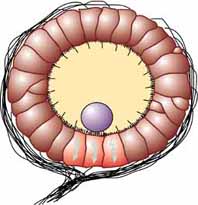
Balancing organ in certain aquatic invertebrate animals

The statocyst is a balance sensory receptor present in some aquatic invertebrates, including bivalves, cnidarians,{{Cite journal | last1 = Spangenberg | first1 = D. B. | title = Statolith formation in Cnidaria: effects of cadmium on Aurelia statoliths | journal = Scanning Electron Microscopy | issue = 4 | pages = 1609–1618
In other words, the statolith shifts as the animal moves. Any movement large enough to throw the organism off balance causes the statolith to brush against tiny bristles which in turn send a message to the brain to correct its balance.
It may have been present in the common ancestor of cnidarians and bilaterians.
Hearing
In cephalopods like squids, statocysts provide a cochlea-like mechanism to hear. As a result, the longfin inshore squid for instance can hear low-frequency sounds between 30 and 500 Hz when the water temperature is above 8 C.
References
References
- (2009). "Statocyst structure in the Anomalodesmata (Bivalvia)". Journal of Zoology.
- (1997). "The role of Ca2+ in deflection-induced excitation of motile, mechanoresponsive balancer cilia in the ctenophore statocyst.". Journal of Experimental Biology.
- (1997). "Ultrastructure of the statocysts in the apodous sea cucumber ''Leptosynapta inhaerens'' (Holothuroidea, Echinodermata)". Acta Zoologica.
- (2009). "The cephalopod statolithan—introduction to its form". Journal of the Marine Biological Association of the United Kingdom.
- (2004). "Dual Sensory-Motor Function for a Molluskan Statocyst Network". Journal of Neurophysiology.
- (1960). "The response patterns of single receptors in the crustacean statocyst". Proceedings of the Royal Society B: Biological Sciences.
- (1990). "Organization of statocysts in the Otoplanidae (Plathelminthes): An ultrastructural analysis with implications for the phylogeny of the Proseriata". Zoomorphology.
- "Catenulida".
- (1998). "Control of spatial orientation in a mollusc". Nature.
- (2007). "Ultrastructural aspects of the 'statocyst' of ''Xenoturbella'' (Deuterostomia) cast doubt on its function as a georeceptor". Tissue and Cell.
- "Scientists Find that Squid Can Detect Sounds".
- (2 February 2011). "How Squid Hear: It's All in the Motion of the Ocean".
- "Squid shown to be able to hear".
This article was imported from Wikipedia and is available under the Creative Commons Attribution-ShareAlike 4.0 License. Content has been adapted to SurfDoc format. Original contributors can be found on the article history page.
Ask Mako anything about Statocyst — get instant answers, deeper analysis, and related topics.
Research with MakoFree with your Surf account
Create a free account to save articles, ask Mako questions, and organize your research.
Sign up freeThis content may have been generated or modified by AI. CloudSurf Software LLC is not responsible for the accuracy, completeness, or reliability of AI-generated content. Always verify important information from primary sources.
Report