From Surf Wiki (app.surf) — the open knowledge base
Stanford Stadium
College stadium in California, USA
College stadium in California, USA
| Field | Value | |||||||
|---|---|---|---|---|---|---|---|---|
| name | Stanford Stadium | |||||||
| nickname | The Farm | |||||||
| logo_size | 40 | |||||||
| image_size | 300 | |||||||
| caption | The new Stanford Stadium | |||||||
| mapframe | yes | |||||||
| mapframe-zoom | 13 | |||||||
| pushpin_map | USA#USA California | |||||||
| pushpin_relief | yes | |||||||
| pushpin_label | Stanford | |||||||
| pushpin_map_caption | Location in the United States##Location in California | |||||||
| address | 625 Nelson Road | |||||||
| location | Stanford University | |||||||
| Stanford, California, United States | ||||||||
| coordinates | ||||||||
| broke_ground | ||||||||
| (original stadium) | ||||||||
| November 26, 2005 | ||||||||
| (current stadium) | ||||||||
| opened | ||||||||
| (original stadium) | ||||||||
| September 16, 2006 | ||||||||
| (current stadium) | ||||||||
| renovated | 1985, 1995 | |||||||
| demolished | 2005 | |||||||
| owner | Stanford University | |||||||
| operator | Stanford University | |||||||
| surface | Natural grass | |||||||
| architect | Hoover and Associates | |||||||
| (2006 renovation) | ||||||||
| general_contractor | Vance Brown Builders | |||||||
| (2006 renovation) | ||||||||
| tenants | Stanford Cardinal football (NCAA) | |||||||
| (1921–present) | ||||||||
| San Francisco 49ers (NFL) (1989, single game) | ||||||||
| San Jose Earthquakes (MLS) | ||||||||
| (2011–present) (selected matches) | ||||||||
| Stanford Cardinal softball (NCAA) (2025) | ||||||||
| public_transit | Stanford | |||||||
| (game days only) | ||||||||
| construction_cost | $90 million (2006) | |||||||
| $200,000 (1921) | ||||||||
| seating_capacity | 50,424 (2013–present) | |||||||
| * 50,360 (2011–12)<ref>{{cite web | title | Stanford University Directory | url=http://www.sportsnetwork.com/merge/tsnform.aspx?c=tampabaytimes&page=cfoot/teams/direct602.htm | work=Sports Network | access-date=July 24, 2013 | url-status=dead | archive-url=https://web.archive.org/web/20141019003654/http://www.sportsnetwork.com/merge/tsnform.aspx?c=tampabaytimes&page=cfoot%2Fteams%2Fdirect602.htm | archive-date=October 19, 2014}} |
| website |
Stanford Stadium new.jpg | mapframe-zoom = 13 Stanford, California, United States (original stadium) November 26, 2005 (current stadium) (original stadium) September 16, 2006 (current stadium) (2006 renovation) (2006 renovation) (1921–present) San Francisco 49ers (NFL) (1989, single game) San Jose Earthquakes (MLS) (2011–present) (selected matches) Stanford Cardinal softball (NCAA) (2025) (game days only) $200,000 (1921) Former capacity:
- 50,360 (2011–12)
- 50,000 (2006–10)
- 85,500 (1992–2005)
- 86,019 (1987–91)
- 84,892 (1982–86)
- 86,352 (1973–81)
- 87,206 (1971–72)
- 90,000 (1935–70)
- 89,000 (1927–34)
- 70,200 (1925–26)
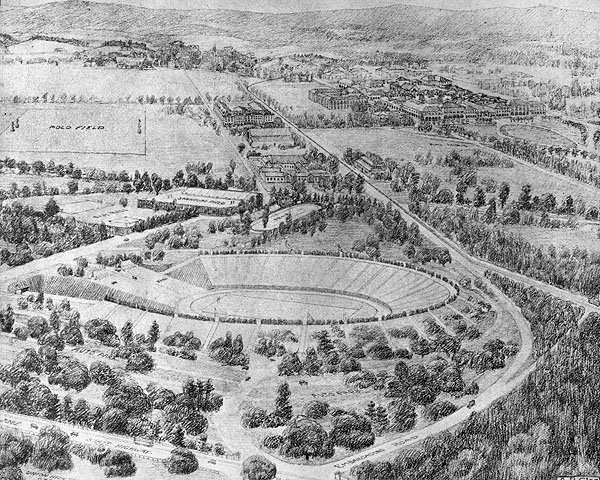
- 60,000 (1921–24) Stanford Stadium is an outdoor college football stadium located on the campus of Stanford University in Stanford, California, United States. It is the home of the Stanford Cardinal and hosts the university's commencement exercises. Opened in 1921 as a football and track and field stadium, it was an earthen horseshoe with wooden bleacher seating and flooring upon a steel frame. Its original seating capacity was 60,000, which grew to 89,000 by 1927 as a nearly enclosed bowl.
Immediately following the 2005 season, the stadium was demolished and rebuilt as a dual-deck concrete structure, without a track. Today, it seats 50,424. The natural grass playing field runs northwest to southeast, at an approximate elevation of 60 ft above sea level.
Early history
Stanford Stadium was built in five months in 1921 and opened its gates on November 19, replacing Stanford Field. The first game was against rival California, who defeated Stanford 42–7 in the Big Game. Seating capacity was originally 60,000, with a 66-row, U-Shaped structure second only to the Yale Bowl in size at the time.
In 1925, 10,200 seats were added to the stadium, nearly enclosing the horseshoe while still keeping the overall height of the facility intact. In 1927, fourteen additional rows of seating were added, In 1932, the stadium hosted the USA Outdoor Track and Field Championships. In 1935, Stanford Stadium set a record (for the time) for single-game attendance, with 94,000 spectators filling it for a 13–0 victory over California.
NFL
On December 14, 1982, it was announced that Stanford Stadium would host Super Bowl XIX in 1985 to become the first Super Bowl hosted in the Bay Area; its stadium capacity of over 80,000 exceeded both of the stadiums inhabited by Bay Area teams of the time in Candlestick Park (60,000+) and Oakland Coliseum (53,000+). Renovations at the cost of over $2 million (with a significant portion given by the NFL) were done to improve the facilities (ranging from the water systems to the renovation of Row 80 to a renovated ticket office) prior to the Super Bowl being played. A portable lighting system was also brought in for the game, which would start at 3pm local time.
In January 1985, Super Bowl XIX was held in Stanford Stadium, with the Bay Area's own San Francisco 49ers defeating the Miami Dolphins, 38–16.
As of 2025, Stanford Stadium is one of two venues (the Rose Bowl being the other) to host a Super Bowl without previously serving as the home stadium of a National Football League (NFL) or American Football League (AFL) team, and Super Bowl XIX is one of only three Super Bowls where the host region saw its team win (the others being Super Bowl LV and Super Bowl LVI, where the Tampa Bay Buccaneers and the Los Angeles Rams respectively became the first two teams to play and win a Super Bowl at their home stadiums).
On October 22, 1989, the San Francisco 49ers played a home game at the stadium against the New England Patriots, as Candlestick Park had suffered serious damage following the Loma Prieta earthquake five days earlier.
Soccer
The stadium has hosted soccer matches for the 1984 Summer Olympics as one of three venues outside southern California for that Olympics, the 1994 FIFA World Cup, and the 1999 FIFA Women's World Cup.
Major League Soccer's San Jose Earthquakes have hosted one match at the stadium each year since 2011. The first year's opponent was the New York Red Bulls; since 2012, the Earthquakes have used the stadium to host their home leg of the California Clásico versus the Los Angeles Galaxy.
; 1994 FIFA World Cup matches
| Date | Time | |||||
|---|---|---|---|---|---|---|
| (UTC−7) | Team #1 | Result | Team #2 | Round | Attendance | |
| June 20, 1994 | 13:00 | 2–0 | Group B | 81,061 | ||
| June 24, 1994 | 13:00 | 3–0 | 83,401 | |||
| June 26, 1994 | 13:00 | 0–2 | Group A | 83,401 | ||
| June 28, 1994 | 13:00 | 6–1 | Group B | 74,914 | ||
| July 4, 1994 | 12:35 | 1–0 | Round of 16 | 84,147 | ||
| July 10, 1994 | 12:35 | 2–2 (a.e.t.) | ||||
| (4–5 pen.) | Quarter-final | 83,500 |
; 1999 FIFA Women's World Cup match
| Date | Time | |||||
|---|---|---|---|---|---|---|
| (UTC−7) | Team #1 | Result | Team #2 | Round | Attendance | |
| July 4, 1999 | 13:30 | **** | 2–0 | Semi-final | 73,123 |
Other international soccer matches
| Date | Competition | Team | Res | Team | Crowd |
|---|---|---|---|---|---|
| December 14, 1996 | 1998 FIFA World Cup Qualifying (CONCACAF) | **** | 2–1 | 40,527 | |
| March 16, 1997 | 3–0 | 28,898 |
Softball
With Stanford extensively renovating its softball park, Boyd & Jill Smith Family Stadium, after the 2024 season, the university moved home softball games to Stanford Stadium for the 2025 season. The Cardinal set a new NCAA single-game attendance record on April 19, 2025 when 13,207 attended Stanford's rivalry game against California.
Other notable events
Other high-profile events hosted at Stanford Stadium include Herbert Hoover's acceptance speech for the 1928 Republican Presidential nomination and the 1962 edition of the long-running (1958–1985) series of track meets between the United States and the Soviet Union. Coldplay played at the stadium on May 31 and June 1, 2025 as part of their Music of the Spheres World Tour, making them the first act to hold two shows there on a single tour.
Modern renovations

The stadium has undergone a number of significant renovations since the 1920s. In 1960, a press box was added, while the first, and last synthetic athletics track was installed in 1978 (replacing the cinder track that had been used for many years).
In 1985, prior to Super Bowl XIX, the press box was renovated, new locker rooms were installed, a ticket complex and dressing room for game officials were added, and the number of restrooms were increased.
In 1994, prior to the 1994 FIFA World Cup, the lower level of the press box was expanded and aluminum benches were installed throughout the stadium. The crown of the playing surface was also reduced.
In 1995, a $10 million gift from Los Angeles insurance executive and 1935 Stanford graduate Louis W. Foster enabled further updates to the stadium, including widening the concourse, improving the restrooms, and replacing the remaining wooden seats. In honor of his gift, Stanford named the playing surface the Louis W. Foster Family Field at Stanford Stadium.
2005–2006 demolition and reconstruction
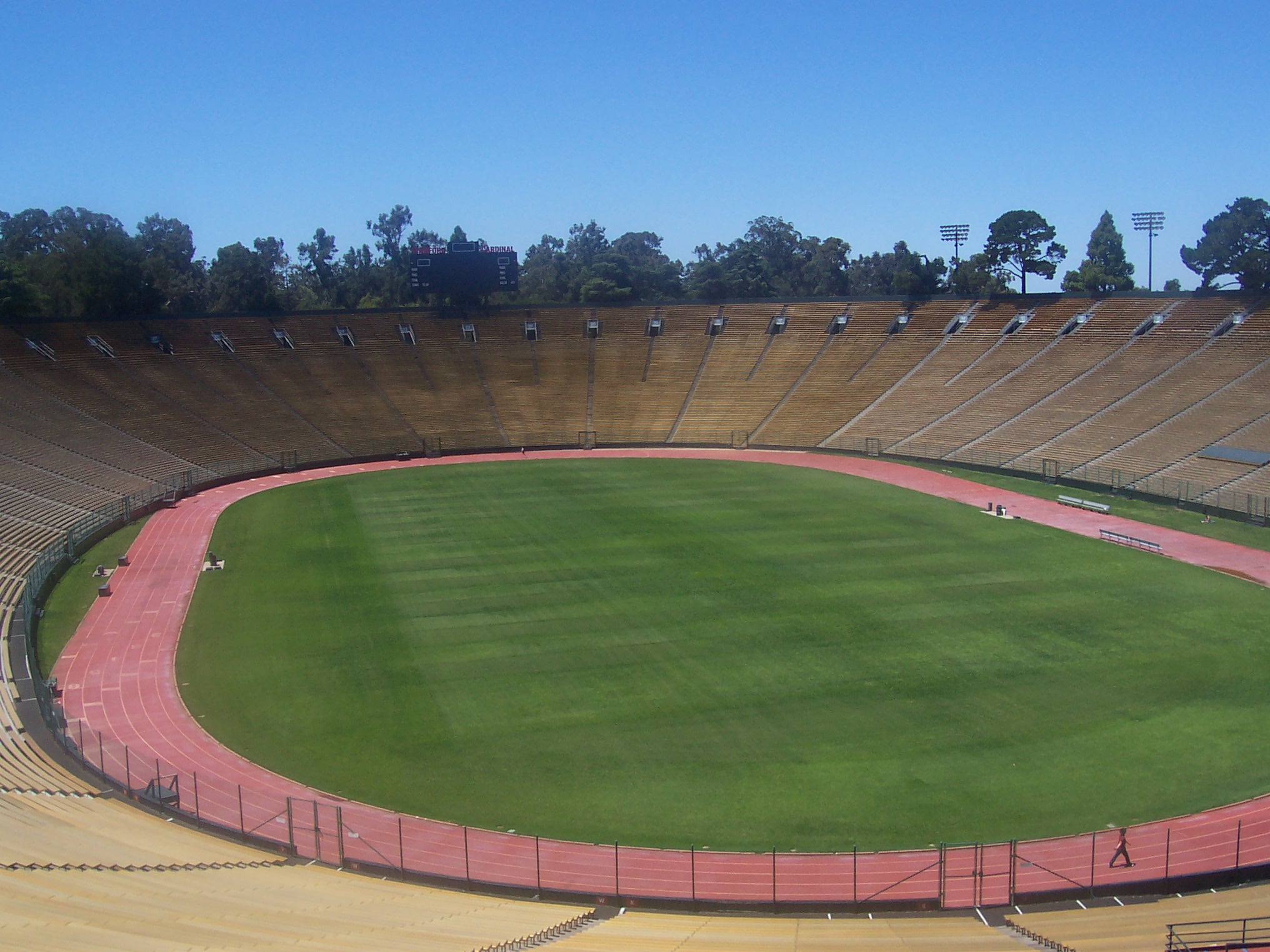
In June 2005, the university board of trustees authorized plans for the stadium's demolition and reconstruction that would remove the track, reduce the stadium capacity, and bring it up to date with present standards for sporting venues. Various justifications for the renovation included poor sightlines in the existing stadium (rendering the bottom 14 rows unusable), long stairways, and lack of adequate restroom facilities. The track around the stadium had previously created a large distance between the field and the spectators.
The capacity of the new stadium was set to be approximately 50,000 seats, which were made by Ducharme Seating. The reduction in capacity was a strategic decision by Stanford's Athletics Program to boost season ticket sales and create a more intimate playing atmosphere without sacrificing the ability to host large world-class events, such as the FIFA World Cup, in the future. This was partially the result of San Francisco's failure to secure a bid for the 2012 Olympics, which would have featured a renovated Stanford Stadium as the main Olympic Venue.
Construction began minutes after the Cardinal's last home game of the 2005 football season, a 38–31 loss to Notre Dame on November 26. Bulldozers began tearing out the natural field turf in a ceremony held while attendees were still in the stadium for the game. Construction proceeded quickly through the winter and spring with the goal of opening in time for Stanford's game against San Jose State on September 9, 2006, but the game had to be relocated to San Jose State's Spartan Stadium due to an unusually wet winter and resulting construction delays. In the summer of 2006, a construction worker fell 23 ft to his death.
The stadium opened on September 16, 2006 with Stanford losing to Navy 37–9. The Stanford Band was not present at the stadium opening since they were not permitted to play at any athletic events in the month of September due to accusations of vandalism to a temporary trailer which formerly served as their rehearsal facility. Instead, the Navy band performed at halftime and played throughout the game.
The facility now has a rectangular shape, occupies 18.4 acre with a footprint of 601128 sqft, and has a playing surface 29 ft below ground level. The stadium has 43 rows on the sides, 22 rows on the ends, and 30 rows below the skybox. The skybox also has 437 spectator seats, more than double the number of the previous press box.
In 2013, Stanford upgraded its scoreboards with twin HD video boards. Also, a 1673 foot ribbon board was added, which displays out-of-town scores and real-time statistics.
References
References
- (May 31, 1921). "Break Ground for Stanford's Stadium". [[The Bakersfield Californian]].
- "1921 Stanford Cardinal Schedule and Results". Sports-reference.com.
- "Stanford Stadium". Stanford Cardinal.
- Murphy, Dave. (December 3, 2005). "The Inside Dirt / Stanford Stadium Remodel Gets Down to Earth". [[San Francisco Chronicle]].
- "Special Events".
- "Stanford University Directory". Sports Network.
- (August 3, 1921). "Stanford Stadium nears completion". Spokane Daily Chronicle.
- Purdy, Mark. (January 15, 1985). "Stanford Stadium: a shallow, undistinguished dish". Beaver County Times.
- (January 18, 1985). "Stanford Stadium, then and now". The Ledger.
- (September 3, 1921). "Work of excavation on Stanford Stadium is nearing completion". Berkeley Daily Gazette.
- (May 24, 1927). "Stanford Stadium to have addition". Berkeley Daily Gazette.
- (February 2002). "San Francisco Football Stadiums". College Football Historical Society.
- Wiley, Don C.. (November 21, 1921). "Bears defeat Stanford Indians 42–7 and win Coast grid title". Berkeley Daily Gazette.
- (June 13, 1921). "Huge Stanford Stadium, with seating of 60,000...". Berkeley Daily Gazette.
- "Stanford Stadium". Ballparks.com.
- (November 21, 1927). ""Big Game" sets new records in crowds, thrills". Berkeley Daily Gazette.
- Dufresne, Chris. (January 15, 1985). "It’s Hardly Superdome, but It’ll Do: Stanford Stadium, 64, Has Had a Face-Lift for NFL’s Big Game". The Los Angeles Times.
- [http://www.la84foundation.org/6oic/OfficialReports/1984/1984v1pt1.pdf 1984 Summer Olympics official report] Volume 1. Part 1. pp. 129–31.
- (April 19, 2025). "Stanford softball draws NCAA record crowd to football stadium".
- (August 11, 1928). "Colorful throng out for Hoover". Spokane Daily Chronicle.
- Stevenson, Jack. (July 23, 1962). "U.S.A. track team runs past Russians at Stanford meet". The Daily Record.
- (July 23, 1962). "Yank men tally best score; Russ jumper breaks record". Spokane Daily Chronicle.
- (2024). "Stanford Stadium Concert History".
- "Stanford Stadium". Stanford University.
- (February 7, 1994). "Foster gives $10 million to renovate Stanford Stadium". Stanford University.
- (July 12, 2006). "Construction worker dies after falling". Stanford University.
- Wilner, Jon. (November 16, 2008). "USC 45, Stanford 23: The Tactics, the Turnovers and That Strange Final Sequence". [[San Jose Mercury News]].
This article was imported from Wikipedia and is available under the Creative Commons Attribution-ShareAlike 4.0 License. Content has been adapted to SurfDoc format. Original contributors can be found on the article history page.
Ask Mako anything about Stanford Stadium — get instant answers, deeper analysis, and related topics.
Research with MakoFree with your Surf account
Create a free account to save articles, ask Mako questions, and organize your research.
Sign up freeThis content may have been generated or modified by AI. CloudSurf Software LLC is not responsible for the accuracy, completeness, or reliability of AI-generated content. Always verify important information from primary sources.
Report