From Surf Wiki (app.surf) — the open knowledge base
Stamp hinge
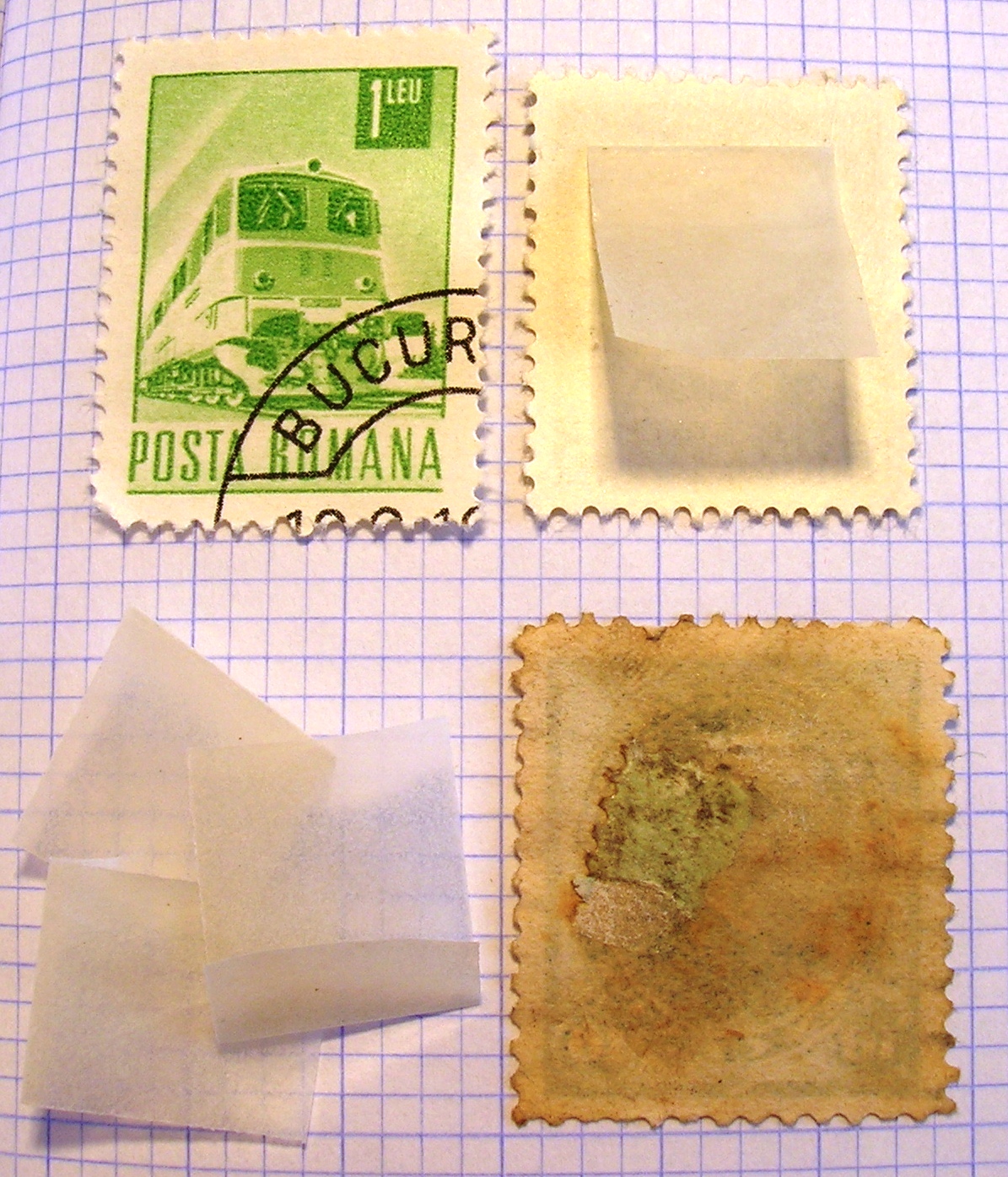
Use
The short end is moistened and affixed to the stamp, the long end is likewise affixed to the page. The hinge keeps the stamp on the page while still allowing it to be lifted to examine the back, for instance to see the watermark or expert marks.
Abbreviation
Collectors categorise their stamps as follows:
- MUH/MNH – Mint Unhinged/Never Hinged
- H – Hinged
- LH – Lightly Hinged
- HH – Heavily Hinged
- HR – Hinge Remnant (portion of the hinge could not be removed and remains on the stamp)
Risks
The best stamp hinges are designed to be "peelable", meaning that the stamp may be removed from the page, and the hinge from the stamp, without damage to either. Not all makers of hinge have this property, and the backs of many stamps have "hinge remnants", where the hinge has torn away rather than releasing the stamp. This is especially common for mint stamps, where the stamp's own gum adheres tightly to the hinge. Some old stamps may have multiple hinge remnants layered on top of each other. Conversely, careless removal of a hinge may take away a layer of the stamp's paper, resulting in a type of stamp thin known as a hinge thin. The thinner paper will be noticeable when the stamp is held up to the light and is considered a serious fault in a stamp.
Even with the use of peelable hinges and care to minimize the moisture used, the hinge will leave a visible disturbance in the gum of an unused stamp. While this was formerly a matter of indifference, since about the middle of the 20th century many collectors have come to prefer "unhinged stamps" showing no trace of hinging.
Collectors preferring unhinged stamps typically use pocket-like or sleeve-like hingeless mounts, often for higher-value or unused stamps.
Re-gumming
Main article: Regummed stamp
Since the time that unhinged stamps became popular, considerable numbers of old stamps with intact gum have appeared on the market, raising suspicion that many of these have been regummed.
References
References
- [[James A. Mackay. Mackay, James]]. ''Stamp Collecting: Philatelic Terms Illustrated''. 4th edition. London: Stanley Gibbons, 2003, p.68. {{ISBN. 0-85259-557-3
- "Matthew Crandell - Stamp Terminology".
- (1983). "Beginner's Guide to Stamp Collecting". Arco Publishing.
- (2014). "The Complete Guide to Stamps and Stamp Collecting". Southwater.
This article was imported from Wikipedia and is available under the Creative Commons Attribution-ShareAlike 4.0 License. Content has been adapted to SurfDoc format. Original contributors can be found on the article history page.
Ask Mako anything about Stamp hinge — get instant answers, deeper analysis, and related topics.
Research with MakoFree with your Surf account
Create a free account to save articles, ask Mako questions, and organize your research.
Sign up freeThis content may have been generated or modified by AI. CloudSurf Software LLC is not responsible for the accuracy, completeness, or reliability of AI-generated content. Always verify important information from primary sources.
Report