From Surf Wiki (app.surf) — the open knowledge base
SS Lazio
Association football club in Italy

Association football club in Italy
| Field | Value |
|---|---|
| clubname | Lazio |
| image | S.S. Lazio badge.svg |
| fullname | Società Sportiva Lazio S.p.A. |
| nickname | I Biancocelesti (The White and Sky Blues) |
| I Biancazzurri (The White and Blues) | |
| Le Aquile (The Eagles) | |
| Gli Aquilotti (The Young Eagles) | |
| founded | , as Società Podistica Lazio |
| ground | Stadio Olimpico |
| capacity | 70,634 |
| owner | Claudio Lotito (66.70%) |
| chairman | Claudio Lotito |
| manager | Maurizio Sarri |
| mgrtitle | Head coach |
| league | |
| season | |
| position | |
| website | |
| pattern_la1 | _lazio2526h |
| pattern_b1 | _lazio2526h |
| pattern_ra1 | _lazio2526h |
| pattern_sh1 | _lazio2526h |
| pattern_so1 | _lazio2526hl |
| leftarm1 | 88bff7 |
| body1 | 88bff7 |
| rightarm1 | 88bff7 |
| pattern_la2 | _lazio2526a |
| pattern_b2 | _lazio2526a |
| pattern_ra2 | _lazio2526a |
| pattern_sh2 | _lazio2526a |
| pattern_so2 | _lazio2526al |
| shorts2 | 37434d |
| socks2 | 37434d |
| pattern_la3 | _lazio2526t |
| pattern_b3 | _lazio2526t |
| pattern_ra3 | _lazio2526t |
| pattern_sh3 | _lazio2526t |
| pattern_so3 | _lazio2526tl |
| shorts3 | FFFFFF |
| socks3 | FFFFFF |
| current | 2025–26 SS Lazio season |
I Biancazzurri (The White and Blues) Le Aquile (The Eagles) Gli Aquilotti (The Young Eagles)
Società Sportiva Lazio (; ; Lazio Sport Club) is an Italian professional sports club based in Rome, most known for its football activity. The society, founded in 1900, plays in the Serie A and have spent most of their history in the top tier of Italian football. Lazio were Italian champions in 1974 and 2000. They have won the Coppa Italia seven times, the Supercoppa Italiana five times, and both the UEFA Cup Winners' Cup and UEFA Super Cup on one occasion. They also won the 1968–69 Serie B. Lazio share the 70,634 capacity Stadio Olimpico with Roma.
The club's earliest major honour was a domestic cup win in 1958. In 1974, they won their first Serie A title. The 1990s were the most successful period in Lazio's history: they reached the UEFA Cup final in 1998; won the UEFA Cup Winners' Cup and UEFA Super Cup in 1999; and clinched the Serie A title in 2000. Due to a severe economic crisis in 2002 that forced the departure of president Sergio Cragnotti and the selling of several star players, Lazio's success in the league declined. In spite of the lower funds, the club has won four Coppa Italia titles since then: 2004, 2009, 2013 and 2019. Current president Claudio Lotito took charge of the club in 2004 following a two-year vacancy in the position.
Lazio's traditional kit colours are sky blue shirts and white shorts with white socks; these reflect Rome's ancient Hellenic legacy. Sky blue socks have also been interchangeably used as home colours. Lazio share a long-standing and fierce rivalry with Roma, against whom they have contested the Derby della Capitale ("Derby of the capital city") since 1929.
Despite initially not having any parent–subsidiary relation with the male and female professional team (that was incorporated as S.S. Lazio S.p.A.), the founding of Società Sportiva Lazio allowed the club to participate in over 40 different sports disciplines in total.
History

Società Podistica Lazio was founded on 9 January 1900 in the Prati district of Rome. Until 1910, the club played at an amateur level until it officially joined the league competition in 1912 as soon as the Italian Football Federation began organising championships in the center and south of Italy, and reached the final of the national championship playoff three times, but never won, losing in 1913 to Pro Vercelli, in 1914 to Casale and in 1923 to Genoa 1893. In 1927, Lazio was the only major Roman club which resisted the Fascist regime's attempts to merge all the city's teams into what would become Roma the same year. The club played in the first organised Serie A in 1929 and, led by legendary Italian striker Silvio Piola, achieved a second-place finish in 1937 – its highest pre-war result.
The 1950s produced a mix of mid and upper table results, with a Coppa Italia win in 1958. Lazio was relegated for the first time in 1961 to Serie B, but returned in the top flight two years later. After a number of mid-table placements, another relegation followed in 1970–71. Back to Serie A in 1972–73, Lazio immediately emerged as surprise challengers for the Scudetto to Milan and Juventus in 1972–73, only losing out on the final day of the season, with a team comprising captain Giuseppe Wilson, as well as midfielders Luciano Re Cecconi and Mario Frustalupi, striker Giorgio Chinaglia, and head coach Tommaso Maestrelli. Lazio improved such successes the following season, ensuring its first title in 1973–74. However, tragic deaths of Re Cecconi and Scudetto trainer Maestrelli, as well as the departure of Chinaglia, would be a triple blow for Lazio. The emergence of Bruno Giordano during this period provided some as he finished League top scorer in 1979, when Lazio finished eighth.

Lazio were forcibly relegated to Serie B in 1980, due to a remarkable scandal concerning illegal bets on their own matches, along with Milan. They remained in Italy's second division for three seasons, in what would mark the darkest period in Lazio's history. They would return in 1983 and manage a last-day escape from relegation the following season. The 1984–85 season would prove harrowing, with a pitiful 15 points and bottom place finish.
In 1986, Lazio was hit with a nine-point deduction (a true back in the day of the two-point win) for a betting scandal involving player Claudio Vinazzani. An epic struggle against relegation followed the same season in Serie B, with the club led by trainer Eugenio Fascetti only avoiding relegation to the Serie C after play-off wins over Taranto and Campobasso. This would prove a turning point in the club's history, with Lazio returning to Serie A in 1988 and, under the careful financial management of Gianmarco Calleri, the consolidation of the club's position as a solid top-flight club.

The arrival of Sergio Cragnotti in 1992 changed the club's history, due to his long-term investments in new players to make the team a Scudetto competitor. A notable early transfer during his tenure was the capture of English midfielder Paul Gascoigne from Tottenham Hotspur for £5.5 million. Gascoigne's transfer to Lazio is credited with the increase of interest in Serie A in the United Kingdom during the 1990s. Cragnotti repeatedly broke transfer records in pursuit of players who were considered major stars – Juan Sebastián Verón for £18 million, Christian Vieri for £19 million and breaking the world transfer record, albeit only for a matter of weeks, to sign Hernán Crespo from Parma for £35 million.
Lazio were Serie A third in 1995 and 1996, and fourth in 1997, then losing the championship just by one point to Milan on the last championship's match in 1999 before, with the likes of Siniša Mihajlović, Alessandro Nesta, Marcelo Salas and Pavel Nedvěd in the side, winning its second Scudetto in 2000, as well as the Coppa Italia double with Sven-Göran Eriksson (1997–2001) as manager.
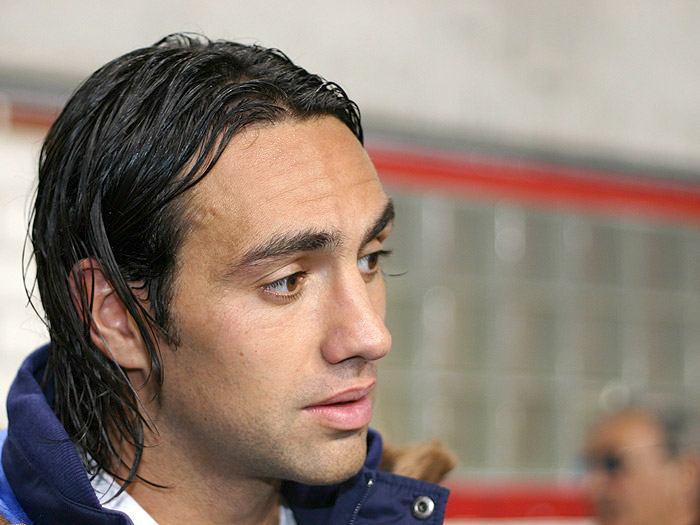
Lazio had two more Coppa Italia triumphs in 1998 and 2004, as well as the last UEFA Cup Winners' Cup in 1999. They also reached the UEFA Cup final, but lost 0–3 against Internazionale. In addition, Lazio won the Supercoppa Italiana twice and defeated Manchester United in 1999 to win the UEFA Super Cup. In 2000, Lazio became also the first Italian football club to be quoted on the Italian Piazza Affari stock market.
With money running out, Lazio's results slowly worsened in the years. In 2002, a financial scandal involving Cragnotti and his food products multinational Cirio forced him to leave the club, and Lazio was controlled until 2004 by caretaker financial managers and a bank pool. This forced the club to sell their star players and even fan favourite captain Alessandro Nesta. In 2004, entrepreneur Claudio Lotito acquired the majority of the club. In 2006, the club qualified to the 2006–07 UEFA Cup under coach Delio Rossi. The club, however, was excluded from European competitions due to their involvement in the 2006 Italian football scandal.
In the 2006–07 season, despite a later-reduced points deduction, Lazio achieved a third-place finish, thus gaining qualification to the UEFA Champions League third qualifying round, where they defeated Dinamo București to reach the group phase, and ended fourth place in the group composed of Real Madrid, Werder Bremen and Olympiacos. Things in the league did not go much better, with the team spending most of the season in the bottom half of the table, sparking the protests of the fans, and eventually ending the Serie A season in 12th place. In the 2008–09 season, Lazio won their fifth Coppa Italia, beating Sampdoria in the final.
Lazio started the 2009–10 season playing the Supercoppa Italiana against Inter in Beijing and winning the match 2–1, with goals from Matuzalém and Tommaso Rocchi.
Lazio won the 2012–13 Coppa Italia 1–0 over rivals Roma, with the lone goal coming from Senad Lulić in the 71st minute.
Lazio won the 2018–19 Coppa Italia 2–0 over Atalanta, winning their seventh title overall. Sergej Milinkovic-Savic (82') and Joaquin Correa (90') were the goalscorers in this match.
Lazio won the 2019 Supercoppa Italiana 3–1 over Juventus in Riyadh, Saudi Arabia, winning their fifth title overall. Luis Alberto (16'), Senad Lulic (73'), and Danilo Cataldi (90+4') were the goalscorers for Lazio, while Paulo Dybala (45') was the lone goalscorer for Juventus.
In the 2024-25 UEFA Europa League group stage, Lazio topped the 36-club table with 19 points. They reached the quarter-finals of the competition after defeating Viktoria Plzen 3–2 on aggregate in the round of 16.
Colours, badge and nicknames
Lazio's colours of white and sky blue were inspired by the national emblem of Greece, due to the fact that Lazio is a mixed sports club this was chosen in recognition of the fact that the Ancient Olympic Games and along with it the sporting tradition in Europe is linked to Greece.
Originally, Lazio wore a shirt which was divided into white and sky blue quarters, with black shorts and socks. After a while of wearing a plain white shirt very early on, Lazio reverted to the colours which they wear today. Some seasons Lazio have used a sky blue and white shirt with stripes, but usually it is sky blue with a white trim, with the white shorts and socks. The club's colours have led to their Italian nickname of Biancocelesti.
Lazio's traditional club badge and symbol is the eagle, which was chosen by founding member Luigi Bigiarelli. A symbol of the Roman legions and emperor, it was chosen to represent power and victory; it also identifies the club with its origin city. Lazio's use of the symbol has led to two of their nicknames; le Aquile ("the Eagles") and gli Aquilotti ("the Young Eagles"). The current club badge features a golden eagle above a white shield with a blue border; inside the shield is the club's name and a smaller tripartite shield with the colours of the club.
Kit suppliers and shirt sponsors
| Period | Kit manufacturer | Main shirt sponsor | Alternate shirt sponsor | Secondary shirt sponsor | Shirt sponsor (back) | Shirt sponsor (sleeve) |
|---|---|---|---|---|---|---|
| 1946–1961 | Gradella Sport | None | None | None | None | |
| 1961–1962 | Lacoste | |||||
| 1962–1963 | Gradella Sport | |||||
| 1963–1964 | Lacoste | |||||
| 1964–1969 | Gradella Sport | |||||
| 1969–1970 | Tuttosport | |||||
| Umbro | ||||||
| 1970–1971 | Umbro | |||||
| 1971–1978 | Tuttosport | |||||
| NR (Ennerre) | ||||||
| 1978–1979 | NR (Ennerre) | |||||
| 1979–1980 | NR (Ennerre) | |||||
| Pouchain | ||||||
| 1980–1981 | Adidas | |||||
| NR (Ennerre) | ||||||
| 1981–1982 | Adidas | Tonini | ||||
| 1982–1984 | NR (Ennerre) | Sèleco | ||||
| 1984–1986 | Castor Eletttrodomestici | |||||
| 1986–1987 | Tuttosport | Cassa di Risparmio di Roma | ||||
| 1987–1989 | Kappa | |||||
| 1989–1991 | Umbro | |||||
| 1991–1992 | Banco di Santo Spirito | |||||
| 1992–1996 | Banca di Roma | |||||
| 1997–1998 | Cirio | |||||
| 1998–1999 | Puma | Del Monte Foods (in UEFA matches) | ||||
| 1999–2000 | Stream TV (in cup matches) / Del Monte Foods (in UEFA matches) | |||||
| 2000–2002 | Siemens Mobile | None | ||||
| 2002–2003 | Cotonella (in cup matches) / Compex (in cup matches) | |||||
| 2003–2004 | Parmacotto | Indesit (in cup & UEFA matches) | ||||
| 2004–2005 | Errebian (in supercup matches) | |||||
| 2005–2007 | INA Assitalia | None | ||||
| 2007–2008 | None | So.Spe. (Matchday 2, 7, 8, 10–11, 15–19, 21–24, 26 & 28-30 & cup matches) / Edileuropa (25, 27, 29–31, & 34–38) | ||||
| 2008–2009 | Pro Evolution Soccer 2009 (Matchday 15) / Cucciolone (16 & 18) / Groupama (31) | |||||
| 2009–2010 | Edileuropa | Clinica Paideia (Matchday 4 & 12) / Regione Lazio (in supercup matches) | ||||
| 2010–2011 | None | Clinica Paideia (Matchday 12 & 37) | ||||
| 2011–2012 | Clinica Paideia (Matchday 7 & 11) | |||||
| 2012–2013 | Macron | Clinica Paideia (Matchday 17–18) | ||||
| 2013–2014 | Lazio Style Channel (Matchday 10, 19 & 24) / Clinica Paideia (23) | |||||
| 2014–2015 | Clinica Paideia (Matchday 2, 8, 12 & 19) / Associazione italiana contro le leucemie-linfomi e mieloma (13) | |||||
| 2015–2016 | Extraordinary Jubilee of Mercy (Matchday 15) / Clinica Paideia (30, 34 & 36) | |||||
| 2016–2017 | Sèleco | Clinica Paideia (Matchday 15) / Libera (30) | ||||
| 2017–2018 | None | Clinica Paideia (Matchday 14 & 19) | Sèleco Easy Life | |||
| 2018–2019 | Marathonbet | None | Sèleco / Igea Banca (in Coppa Italia Final) | Clinica Paideia (Matchday 21 & 26) | ||
| 2019–2020 | None | Regione Lazio (in supercup matches) | None | Clinica Paideia (Matchday 2 & 15) / Frecciarossa (Matchday 27–38) | ||
| 2020–2021 | World Food Programme (Matchday 13) / Contrader (31) / Clinica Paideia (37) | Contrader | Frecciarossa | |||
| 2021–2022 | Binance | None | Clinica Paideia (Matchday 6 & 34) | |||
| 2022–2023 | Mizuno | Clinica Paideia (Matchday 27) | AIRFire (Matchday 19–38) | |||
| 2023–2024 | None | Clinica Paideia (Matchday 16, 30 & 33) / Regione Lazio (in supercup matches) | None | AeroItalia | ||
| 2024–2025 | Casa di Cura Villa Mafalda (Matchday 36) | AeroItalia | None |
Stadium
Main article: Stadio Olimpico

Stadio Olimpico, located on the Foro Italico, is the major stadium of Rome. It is the home of the Italy national football team as well as of both local teams Lazio and Roma. It was opened in 1937 and after its latest renovation in 2008, the stadium has a capacity of 70,634 seats. It was the site of the 1960 Summer Olympics, but has also served as the location of the 1987 World Athletics Championships, the 1980 European Championship final, the 1990 World Cup and the Champions League Final in 1996 and 2009.
Also on the Foro Italico lies the Stadio dei Marmi, or "marble stadium", which was built in 1932 and designed by Enrico Del Debbio. It has tiers topped by 60 white marble statues that were gifts from Italian cities in commemoration of 60 athletes.
During the 1989–90 season, Lazio and Roma played their games at the Stadio Flaminio of Rome, located in the district Flaminio, because of the renovation works carried out at the Stadio Olimpico.
In June 2018, Lazio President Claudio Lotito stated that the Biancocelesti "should be granted the same favour and treatment as Roma – the ability to also build a new stadium. He also added that "Lazio's stadium will be built before Roma's stadium." In June 2019, Lotito was set to present the designs of a potential future stadium for Lazio, named the Stadio delle Aquile. However, this did not occur for reasons unknown, and in July 2021, Lotito pivoted from the creation of the Stadio delle Aquile to the idea of moving the club's home to a renovated Stadio Flaminio.
In October 2022, Lotito provided an update on his Stadio Flaminio project, stating that he is "very attached" to the hope that Lazio will play there again, as having it as their home is "something that evokes our history and our roots." In November 2022, Lotito discussed his plans for the Stadio Flaminio at the ‘Sing a Song’ charity event at the Auditorium della Conciliazione in Rome. He stated that he "would like to increase the stadium from a capacity of around 18,000 to 45,000" and that "it is a problem" for Lazio to "remain without a stadium of their own."
In September 2024, Lazio made concrete steps in their plans to own and renovate the Stadio Flaminio. The club were looking to team up with a famous company named “Legend” that specializes in building and maintaining sports venues - they would then become the project manager and take care of the ticketing service, merchandising management, retail sales and the search to find a naming sponsor; with Emirates reportedly interested in the project. The total cost of the operation was said to be between €250 and €300 million.
In December 2024, Lotito and his collaborators held a meeting with Mayor Roberto Gualtieri and Councilor Alessandro Onorato at the Municipality of Rome in Campidoglio to present their project for the new Stadio Flaminio. He envisioned developing a state-of-the-art stadium with a capacity of 40,000 to 50,000 spectators and a retractable roof; he also outlined plans for the comprehensive redevelopment of the surrounding Flaminio district. He stated that the project was well-received, while revealing that acquiring the necessary paperwork could require another three years. However, shortly after, "Roma Nuoto" received approval from the Conference of Services after threatening legal action following the long and unjustified delay in the process for their plans for the abandoned stadium; they envision a multi-sport facility for the future of the Stadio Flaminio, including an Olympic-sized swimming pool, padel courts, and a hockey rink, thus competing with Lazio.
In March 2025, Lotito officially deposited his proposal for the currently-defunct Stadio Flaminio to the Municipality of Rome to become Lazio's new home. The Biancocelesti will be looking to finalize the bureaucratic procedures by the start of 2026 and are aiming to finish the renovation work by the summer of 2029. There will be 50,750 seats, and renovating this ground - and the surrounding area - will cost them circa €438 million, as per Calcio e Finanza.
In April 2025, the "Roma Nuoto" project for the Stadio Flaminio was turned down by the Municipality Council of Rome, after they unanimously deemed it ill-suited for the venue's purpose, which is hosting domestic and international events within a large stadium. The doomed project sought to reduce the stadium capacity from 42,000 to just 7,500, which would have diminished the value of the stadium according to the Municipality Council.
Supporters and rivalries
Main article: SS Lazio supporters, Derby della Capitale

Lazio is the sixth-most supported football club in Italy and the second in Rome, with around 2% of Italian football fans supporting the club (according to La Repubblica's research of August 2008). Historically, the largest section of Lazio supporters in the city of Rome has come from the far northern section, creating an arch-like shape across Rome with affluent areas such as Parioli, Prati, Flaminio, Cassia and Monte Mario.
Founded in 1987, Irriducibili Lazio were the club's biggest ultras group for over 30 years. They typically create traditional Italian ultra displays during the Derby della Capitale (Rome Derby), the match between Lazio and their main rivals, Roma. It is amongst the most heated and emotional footballing rivalries in the world, such as where Lazio fan Vincenzo Paparelli was killed at one of the derby games during the 1979–80 season after being hit in the eye by an emergency rocket thrown by a Roma fan. Lazio also have a strong rivalry with Napoli and Livorno, as well as with Pescara and Atalanta. The club also maintains strong competitive rivalries with Fiorentina, Juventus and Milan.
Conversely, the ultras have friendly relationships with Internazionale, Triestina and Hellas Verona. Internationally, Lazio's fans maintain a long-standing strong friendship with the supporters of the Bulgarian club Levski Sofia and as such, Lazio were invited to participate in the centenary football match honouring the birthday of the Bulgarian club.
Far-right politics and Irriducibili Ultras
Dubbed "the most right-wing football club in Europe" by author James Montague, SS Lazio has a supporter culture that has been associated with far‑right politics, nationalism and extremist behaviour over several decades; critics have sometimes referred to the club as "SS Nazio".
In the early years of Italian organised supporter culture, before the emergence of modern ultras, Lazio’s fanbase included a range of political orientations. In the 1960s and early 1970s, Italian ultra culture began to develop around the country, and groups of supporters at Lazio and other clubs formed with varying ideologies. Lazio had groups such as the Viking among its early supporters in this period.
A marked shift occurred in 1972 with the formation of the Irriducibili, a group that would become the dominant ultra faction within the Curva Nord, the section of Lazio’s home ground, the Stadio Olimpico, where the most vocal supporters stand. Over the 1980s and 1990s the Irriducibili became increasingly prominent, establishing a reputation for organised displays, coordinated chants and intense loyalty to the club, and also for integrating far‑right political symbolism into their activities. In 1987 Fabrizio Piscitelli, known as Diabolik, became a leading figure within the Irriducibili and helped consolidate their influence among Lazio’s hardcore supporters.
During the 1990s, the Irriducibili were noted for violent behaviour on and off the terraces, and for the use of fascist salutes, racially abusive chants and anti‑Semitic banners. Incidents attributed to sections of the Lazio support in this era included monkey chants directed at Black players and banners referencing figures such as Serbian paramilitary commander Željko Ražnatović with slogans such as "Honour to the Tiger, Arkan". In 1998, Lazio supporters displayed an openly anti‑Semitic banner during the Derby della Capitale against AS Roma, reading "Auschwitz is your country, the gas chambers are your home"; in 2000, another banner taunted Roma fans by calling them "Squad of Blacks, terrace of Jews".
Paolo Di Canio, a player associated with Lazio in the mid‑2000s, contributed to the public perception of the club’s right‑wing support. In October 2005, he performed a straight‑arm salute, understood as a fascist gesture, to Lazio fans during a derby against AS Roma; he was fined and suspended by Italian authorities for this act. Di Canio has described himself at times as a fascist in personal statements and written favourably about Benito Mussolini in his autobiography.
In the 2000s and 2010s, Lazio's supporter culture continued to attract controversy. On 3 February 2016, a Serie A match between Lazio and Napoli at the Stadio Olimpico was temporarily halted in the 68th minute after Lazio supporters directed racist abuse, including monkey chants, at Napoli defender Kalidou Koulibaly, alongside anti-Neapolitan chants. Play resumed after three minutes, and Napoli won 2-0, with referee Massimiliano Irrati's decision to stop the game praised by Napoli manager Maurizio Sarri but questioned by Lazio coach Stefano Pioli, who described the chanting as coming from a minority and denied it was racist. In 2017, images of Anne Frank in an AS Roma shirt were displayed by Lazio ultras at the Olimpico, occurring shortly after racial abuse had resulted in parts of the stadium being closed and sanctions being applied.
Fabrizio Piscitelli’s leadership of the Irriducibili continued until his death in 2019, when he was shot dead in Rome; reports suggest he was involved in organised crime circles. Following his death, the Irriducibili formally disbanded, but elements of far‑right supporter identity persisted among sections of the fanbase.
In 2021, the club signed Romano Floriani Mussolini, the great‑grandson of Benito Mussolini, to its youth ranks; this event was widely reported internationally and underscored external perceptions of the club’s historical associations, though Lazio officials emphasised sporting merit in the decision.
Incidents involving Lazio supporters have continued into the 2020s, and Italian football authorities as well as UEFA have repeatedly sanctioned SS Lazio for supporter behaviour. In 2020, Lazio were fined by UEFA for racist behaviour and fascist salutes by fans during a Europa League match; the club sought to identify and penalise individuals implicated in the conduct. On 4 April 2023, Lazio were given a suspended one-match partial stadium closure after antisemitic chants were directed at Roma supporters by fans in the Curva Nord during the Derby della Capitale on 19 March 2023. The sanction was suspended for one year after Lazio issued three lifetime bans to individuals involved, including one supporter wearing a shirt referencing Adolf Hitler and two others performing Roman salutes, with the penalty to be enforced if further incidents occur.
In January 2024, the Curva Nord was subject to closure for matches following racist chanting directed at players, including a high‑profile incident involving Romelu Lukaku. In March 2024, around 100 Lazio fans were reported to have raised fascist slogans, cheered for Mussolini and performed Roman salutes in a Munich beer hall before a Champions League fixture. In November 2024, city authorities in Amsterdam banned Lazio fans from attending a Europa League match, citing concerns about extremist, racist and anti‑Semitic expressions, referencing past behaviour including fascist salutes and Nazi symbolism. In January 2025, reports emerged of suspected Lazio ultras attacking visiting Real Sociedad supporters in Rome, resulting in multiple injuries and prompting condemnation from local officials and police investigations; authorities characterised some of the suspected assailants as far‑right extremists.
Honours
Domestic
- Serie A
- Serie B
- Winners (1): 1968–69
- Coppa Italia
- Supercoppa Italiana
Continental
Players
Current squad
Lazio Primavera
Main article: SS Lazio Youth Sector
Other players under contract
Out on loan
Retired numbers
Main article: List of retired numbers in association football
12 – Since the 2003–04 season, the Curva Nord of Stadio Olimpico, as a sign of recognition, is considered the 12th man on the pitch.
Club officials
Board of directors
| Role | Name |
|---|---|
| Owner | ITA Claudio Lotito (66.70%) |
| President | ITA Claudio Lotito |
| CEO | ITA Marco Cavaliere |
| Counselor | ITA Marco Moschini |
| Judicial Department | ITA Francesca Miele |
| Secretary | ITA Armando Calveri |
| Chief Scout | ITA Giancarlo Romainore |
| Sporting Director | ITA Angelo Fabiani |
| Supporter Liaison Officer | ITA Giampiero Angelici |
| Team Manager | GER Stefan Derkum |
| Head of Youth Development | ITA Enrico Lotito |
| Youth Center Coordinator | ITA Fabrizio Fratini |
| Medical Director | ITA Ivo Pulcini |
| Medical Coordinator | ITA Fabio Rodia |
| Ticketing Director | ITA Angelo Cragnotti |
| Responsibles for Order and Safety | ITA Alessandro Bracci |
| Administrator | ITA Giovanni Russo |
| Marketing & Sales Director | ITA Marco Canigiani |
- Last updated: 11 June 2024
- Source:
Current technical staff
| Role | Name |
|---|---|
| Head coach | ITA Maurizio Sarri |
| Assistant coach | ITA Giovanni Martusciello |
| Technical coaches | ITA Marco Ianni |
| ITA Giammarco Fedeli | |
| Goalkeeping coaches | ITA Cristiano Viotti |
| ITA Massimo Nenci | |
| Athletic coaches | ITA Simone Fugalli |
| ITA Davide Losi | |
| ITA Davide Ranzato | |
| Match analyst | ITA Gianni Picchioni |
| Kit men | ITA Stefano Delle Grotti |
| ITA Mauro Patrizi | |
| ITA Walter Pela | |
| Club doctor | ITA Italo Leo |
| Rehab coach | ITA Giuseppe Malizia |
| Physiotherapists | ITA Christian Marsella |
| ITA Daniele Misseri | |
| ITA Glauco Bucci | |
| ITA Gianni Scapini | |
| ITA Luigi Iachetti |
- Last updated: 1 July 2025
- Source:
Notable managers
The following managers have all won at least one trophy when in charge of Lazio:
| Name | Period | Trophies |
|---|---|---|
| ITA Fulvio Bernardini | 1958–1960 | Coppa Italia |
| ARG Juan Carlos Lorenzo | 1968–1971 | Serie B |
| ITA Tommaso Maestrelli | 1971–1976 | Serie A |
| SWE Sven-Göran Eriksson | 1997–2001 | 2 Coppa Italia, 2 Supercoppa Italiana, Serie A, UEFA Cup Winners' Cup, UEFA Super Cup |
| ITA Roberto Mancini | 2002–2004 | Coppa Italia |
| ITA Delio Rossi | 2005–2009 | |
| ITA Davide Ballardini | 2009–2010 | Supercoppa Italiana |
| BIH Vladimir Petković | 2012–2014 | Coppa Italia |
| ITA Simone Inzaghi | 2016–2021 | 2 Supercoppa Italiana, Coppa Italia |
Statistics and records
.jpg)
.png)
Ștefan Radu holds Lazio's official appearance record, having played 416 appearances. The record for total appearances by a goalkeeper is held by Luca Marchegiani, with 339 appearances, while the record for most league appearances is held by Aldo Puccinelli with 339.
The all-time leading goalscorer for Lazio is Ciro Immobile, with 206 goals scored, followed by Silvio Piola with 159 goals. Piola, who played also with Pro Vercelli, Torino, Juventus and Novara, is also the highest goalscorer in Serie A history, with 274 goals. Immobile is also the all-time top goalscorer in European competitions, with 26 goals.
Officially, Lazio's highest home attendance is approximately 80,000 for a Serie A match against Foggia on 12 May 1974, the match that awarded to Lazio their first Scudetto. This is also the record for the Stadio Olimpico, including matches held by Roma and the Italy national football team.
Società Sportiva Lazio as a company
In 1998, during Sergio Cragnotti's period in charge as the chairman, Società Sportiva Lazio S.p.A. became a listed company: Lazio were the first Italian club to do so. However, Cragnotti resigned as chairman in 2001, after a "huge hole in the budget" of the club.
Claudio Lotito, the current chairman of Lazio, purchased the club from Cragnotti in 2004, but owned just 26.969% of shares as the largest shareholders at that time. It was followed by banking group Capitalia (and its subsidiaries Mediocredito Centrale, Banca di Roma and Banco di Sicilia) as the second largest shareholders for 17.717%. Capitalia also hold 49% stake of Italpetroli (via Capitalia's subsidiary Banca di Roma), the parent company of city rival Roma (via Italpetroli's subsidiary "Roma 2000"). Lotito later purchased the minority stake from Capitalia.
, Claudio Lotito owns just over two-thirds of the shares of Lazio. Lazio is one of only three Italian clubs listed on the Borsa Italiana, the others being Juventus and Roma. In the past, Lazio was the only one with a single primary share holder (Lotito). However, following several capital increases by Roma and Juventus, they also are significantly owned by a shareholder. According to The Football Money League, published by consultants Deloitte, in the 2004–05 season, Lazio was the 20th highest earning football club in the world with an estimated revenue of €83 million; However, in 2016 ranking (the rank used data in 2014–15 season), Lazio was not in the top 20.
Lazio was one of the few clubs that self-sustain from the financial support of a shareholder, and also consistently make an aggregate profit after every season. Unlike Internazionale, Roma and Milan, who were sanctioned by UEFA due to breaches of Financial Fair Play, Lazio passed the regulations held by the administrative body with the high achievements. Lotito also received a prize that joint awarded by Associazione Italiana Allenatori Calcio and DGS Sport&Cultura, due to Lazio's financial health.
In 2017, the club renewed their sponsorship deal with shirt manufacturer Macron. It was worth €16 million a season, plus variables of about €9 million stemming from league and European competition finishes.
In February 2022, Lazio announced that they had parted ways with Macron after 10 years. Mizuno would become the team's new sportswear and technical gear provider, with the Biancocelesti receiving €20 million over the next five years as a result of their new agreement with the Japanese company.
In March 2022, Lazio released their financial reports from June to December 2021 which showed a decrease in revenue (from €106.66 to €71.56 million) but an increase in profit (from -€0.12 million to €4.6 million) compared to the previous six months.
In March 2025, Italian Newspaper Il Messaggero reported that Lazio could soon have their own docu-series on Netflix dedicated to the history of the club; from the foundation in 1900 all the way to the modern era. This multi-season series would not only focus on Lazio's triumphs on the pitch, but also on the club's elusive fanbase. Several legendary figures would appear in the series, including Giuseppe Signori, Miroslav Klose, and Paolo Di Canio.
In March 2025, Lazio released their financial reports from June to December 2024 which yielded €87.5 million in overall revenues. On the other hand, the club reduced its costs from €97.2 million in the year prior to just under €87 million this time around.
| Year | Turnover | Result | Total Assets | Net Assets |
|---|---|---|---|---|
| 2005–06 | €87,945,533 | €16,790,826 | €150,061,486 | |
| 2006–07 | €76,271,329 | €1,467,481 | €187,378,234 | |
| 2007–08 | €102,482,031 | €13,761,874 | €165,628,257 | |
| 2008–09 | €92,001,361 | €12,050,984 | €166,196,353 | €2,218,231 |
| 2009–10 | €98,501,843 | €168,732,996 | €508,710 | |
| 2010–11 | €93,670,372 | €9,982,408 | €165,245,840 | €10,500,666 |
| 2011–12 | €95,509,291 | €4,221,554 | €185,154,912 | €14,665,185 |
| 2012–13 | €109,794,311 | €169,728,461 | €8,710,921 | |
| 2013–14 | €107,509,172 | €7,068,190 | €174,890,394 | €15,720,281 |
| 2014–15 | €110,927,382 | €5,812,193 | €177,369,842 | €21,544,400 |
| 2015–16 | €93,820,507 | €166,627,240 | €8,869,720 | |
| 2016–17 | €129,060,393 | €11,377,545 | €204,540,451 | €20,303,284 |
References
Sources
References
- "Stadi Serie A 2015–2016".
- (22 March 2018). "Azionisti rilevanti di SOCIETA' SPORTIVA LAZIO SPA". CONSOB.
- "Storia". S.S. Lazio.
- "Palmares". S.S. Lazio.
- (28 November 2007). "Il Derby della Capitale". CBC.
- "La Storia". S.S. Lazio S.p.A..
- "Club info". S.S. Lazio.
- "Silvio Piola". cronologia.leonardo.it.
- "Italy 1970/71". RSSSF.
- (July 2017). "La Lazio di Re Cecconi". vecchiasignora.com.
- "I banditi e i Campioni – Lazio '73–'74 – Uno scudetto "contro" tutto e tutti". postadelgufo.it.
- "Italy 1973/74". RSSSF.
- Benetollo, Paolo. "Luciano Re Cecconi, l'Angelo biondo". pagine70.com.
- "Italy 1978/79". RSSSF.
- "Italy 1988/89". RSSSF.
- "Italy 1989/90". RSSSF.
- (12 July 2000). "Lazio's £40m Crespo deal". BBC Sport.
- (19 May 1999). "Lazio leave it late". UEFA.
- (1 June 1998). "Zamorano leads Inter rout". UEFA.
- (1 September 1999). "Salas downs United". UEFA.
- Capone, Antonello. (3 February 2000). "Da oggi la Roma è quotata in Borsa". La Gazzetta dello Sport.
- "Claudio Lotito is the new Lazio chairman". guide.dada.net.
- "Prima sentenza sullo scandalo calcio: Juve, Lazio e Fiorentina in serie B". La Repubblica.
- (14 May 2009). "Lazio win the Coppa Italia". ESPN Star Sports.
- (8 August 2009). "Supercoppa alla Lazio. Battuta l'Inter 2–1". La Gazzetta dello Sport.
- (26 May 2013). "Roma-Lazio 0-1, decide un gol di Lulic. Biancocelesti in Europa". La Gazzetta della Sport.
- (15 May 2019). "Coppa Italia: Atalanta bow to Lazio". Football Italia.
- "#LazioStory {{!}} Nel 2019 la vittoria della Supercoppa Italiana a Riyad".
- (2025-02-01). "Europa League Prize Money Table: Man United & Tottenham on Top, Lazio off the Podium".
- (2025-03-14). "How Much Lazio Earned From Europa League After Reaching Quarter-Finals".
- (24 June 2007). "Lazio". albionroad.com.
- (24 June 2007). "Maglie". ultraslazio.it.
- (24 June 2007). "Lazio Football Team Information". football.co.uk.
- (24 June 2007). "Evoluzione di un simbolo nobile e glorioso". ultraslazio.it.
- (10 October 2019). "La storia, l'evoluzione e il significato dello stemma della Lazio". Admar Services (Malta).
- "Stadio Olimpico – nuove tecniche di safety & security". Vigili del Fuoco.
- (2018-06-11). "Claudio Lotito: "Lazio Will Build a Stadium Before Roma”".
- (2019-04-06). "Stadio delle Aquile: Details About Lazio's New Stadium".
- (2021-07-29). "Lazio President Lotito's Stadio Flaminio Project Must Follow 20 Requirements".
- (2022-10-12). "Lazio Exploring Move to Stadio Flaminio - The Latest".
- (2022-11-28). "Lotito Talks New Lazio Stadium & Winter Retreat".
- (2024-09-21). "Lazio New Stadium Project Taking Shape - Costs & Capacity Revealed".
- (2024-12-11). "Lazio Set for Substantial Stadio Flaminio Meeting on Friday".
- (2024-12-26). "Stadio Flaminio: The Future Home of S.S. Lazio?".
- (2024-12-20). "Lazio Risk Missing Out on Stadio Flaminio Due to 'Roma Nuoto' Project".
- (2025-03-08). "How Lazio Will Finance €450M Stadio Flaminio Project".
- Cosentini, Luca. (2025-03-08). "Lazio, ecco il nuovo Flaminio da 50mila posti: costerà 450 milioni".
- (2025-04-04). "Lazio Receive Major Stadio Flaminio Boost as Roma Nuoto Project Rejected".
- Bordignon, Fabio. (8 August 2008). "Tifosi, Juventus la più amata. Inter la più antipatica". La Repubblica.
- (29 June 2007). "S.S. Lazio". ITV-Football.
- (29 June 2007). "Italian Ultras Scene". View from the Terrace.
- Duke, Greg. (22 October 2008). "Football First 11: Do or die derbies". CNN.
- (20 October 2019). "Vincenzo Paparelli: Death in the Terrace". The Laziali.
- (29 June 2007). "Ultras History". ultraslazio.it.
- (23 May 2014). "Levski Sofia – Lazio centenario". Youtube.
- (24 May 2014). "Levski Sofia-Lazio 3-2, amichevole centenario". sportpeople.net.
- Walker, Michael. (4 October 2023). "Celtic vs Lazio: The Champions League tie that became a political powderkeg". [[New York Times]].
- Montague, James. (7 March 2020). "Meet the Irriducibile, the fascist Lazio ultras who worship Mussolini".
- (9 August 2021). "The Ultras".
- (6 March 2024). "Lazio fans raise fascist gestures in beer hall, Munich". [[TVP World]].
- (14 September 2016). "Sky Italia suspend ties with Paolo Di Canio after he appears on air with fascist tattoo on show". [[Irish Independent]].
- (13 December 2005). "Di Canio in more trouble". [[Irish Independent]].
- (4 February 2016). "Lazio’s Serie A match against Napoli halted due to racist chanting". [[The Guardian]].
- Campo, Carlo. (3 February 2016). "Play stopped after Lazio supporters racially abuse Napoli's Kalidou Koulibaly". The Score.
- (26 October 2017). "Anne Frank scandal part of Lazio fans' dark past". [[France 24]].
- Campanale, Susy. (27 February 2020). "Lazio ‘Irriducibili’ ultras disband".
- (24 March 2021). "Mussolini’s great-grandson signs professional contract with Lazio". [[Irish Times]].
- Galardini, Giacomo. (25 January 2020). "Italian Soccer Club SS Lazio Demanded Fans Repay $55,000 Fine For Fascist Salutes, Racist Behavior". [[Forbes]].
- Onyeagwara, Nnamdi. (4 April 2024). "Lazio issued with suspended partial stadium ban for antisemitic chants". [[New York Times]].
- (12 January 2024). "Lazio hit with stand closure after monkey chants at Lukaku". [[France 24]].
- (26 November 2024). "Amsterdam bars Italian team’s fans from match, fearing repeat of antisemitic attacks". [[Times of Israel]].
- Giuffrida, Angela. (23 January 2025). "‘Shameful’: Rome mayor dismayed after Lazio thugs attack Real Sociedad fans". [[The Guardian]].
- (June 2023). "Serie A Champions History".
- Stokkermans, Karel. (26 January 2000). "European Cup Winners' Cup".
- Stokkermans, Karel. (17 August 2023). "European Super Cup".
- "MEN'S FIRST TEAM".
- "Lazio, tutti i nuovi numeri di maglia: la lista completa".
- "Organigramma".
- "Prima squadra".
- "Record". SS Lazio.
- "Ciro Immobile - Lazio career".
- "Italy – All-Time Topscorers". RSSSF.
- (29 June 2007). "S.S. Lazio S.p.A". Funding Universe.
- Caioli, Luca. (2012). "Roberto Mancini: A Footballing Life: The Full Story". Icon Books.
- (31 December 2004). "Azionisti rilevanti di SOCIETA' SPORTIVA LAZIO SPA". CONSOB.
- (28 February 2005). "2004 Bilancio". Borsa Italiana archive.
- (8 June 2007). "S.S. Lazio SpA". consob.it.
- (21 April 1998). "La Lazio debutta in Borsa il giorno della coppa Uefa". La Repubblica.
- (April 2018). "Lazio". Borsa Italiana.
- (February 2006). "Football Money League". Deloitte.
- (January 2016). "Top of the table Football Money League". Deloitte.
- (16 April 2015). "PREMIO 'FINANCIAL FAIR PLAY' ALLA LAZIO DI LOTITO". SS Lazio.
- (8 February 2017). "Coumincato Stampa: Accordo Macron Lazio Marketing". SS Lazio.
- (February 18, 2022). "S.S. Lazio e Mizuno tracciano una nuova era di partnership".
- (February 19, 2022). "Lazio Will Receive More Per Season From Mizuno Deal Compared to Macron Agreement".
- Heyes, Apollo. (March 31, 2022). "Lazio Release Financial Reports Ending December 2021: Revenue Down, Profit Up".
- (2025-03-07). "Netflix Set to Launch Series on Lazio - Three Legends Expected To Appear".
- (2025-03-12). "Lazio Release Half-Yearly Financial Report - FFP Trouble Avoided".
- (18 October 2007). "S.S. Lazio 2006–07 annual report". SS Lazio.
- (23 October 2008). "S.S. Lazio 2007–08 annual report". SS Lazio.
- (27 October 2009). "S.S. Lazio 2008–09 annual report". SS Lazio.
- (28 October 2010). "S.S. Lazio 2009–10 annual report". SS Lazio.
- (6 October 2011). "S.S. Lazio 2010–11 annual report". SS Lazio.
- (4 October 2012). "S.S. Lazio 2011–12 annual report". SS Lazio.
- (8 October 2013). "Bilancio S.S. Lazio al 30 giugno 2013". SS Lazio.
- (7 October 2014). "Bilancio S.S. LAZIO al 30 giugno 2014". SS Lazio.
- (7 October 2015). "Bilancio S.S. LAZIO al 30 giugno 2015". SS Lazio.
- (22 September 2016). "Comunicato_Stampa: approvato il progetto di Bilancio 30-06-16". SS Lazio.
- (6 October 2017). "Bilancio S.S. LAZIO SpA 30-06-17 appr. 06-10-2017". SS Lazio.
This article was imported from Wikipedia and is available under the Creative Commons Attribution-ShareAlike 4.0 License. Content has been adapted to SurfDoc format. Original contributors can be found on the article history page.
Ask Mako anything about SS Lazio — get instant answers, deeper analysis, and related topics.
Research with MakoFree with your Surf account
Create a free account to save articles, ask Mako questions, and organize your research.
Sign up freeThis content may have been generated or modified by AI. CloudSurf Software LLC is not responsible for the accuracy, completeness, or reliability of AI-generated content. Always verify important information from primary sources.
Report