From Surf Wiki (app.surf) — the open knowledge base
Sri Chand
Guru Nanak's elder son (1494–1629)

Guru Nanak's elder son (1494–1629)
| Field | Value |
|---|---|
| religion | Udasi |
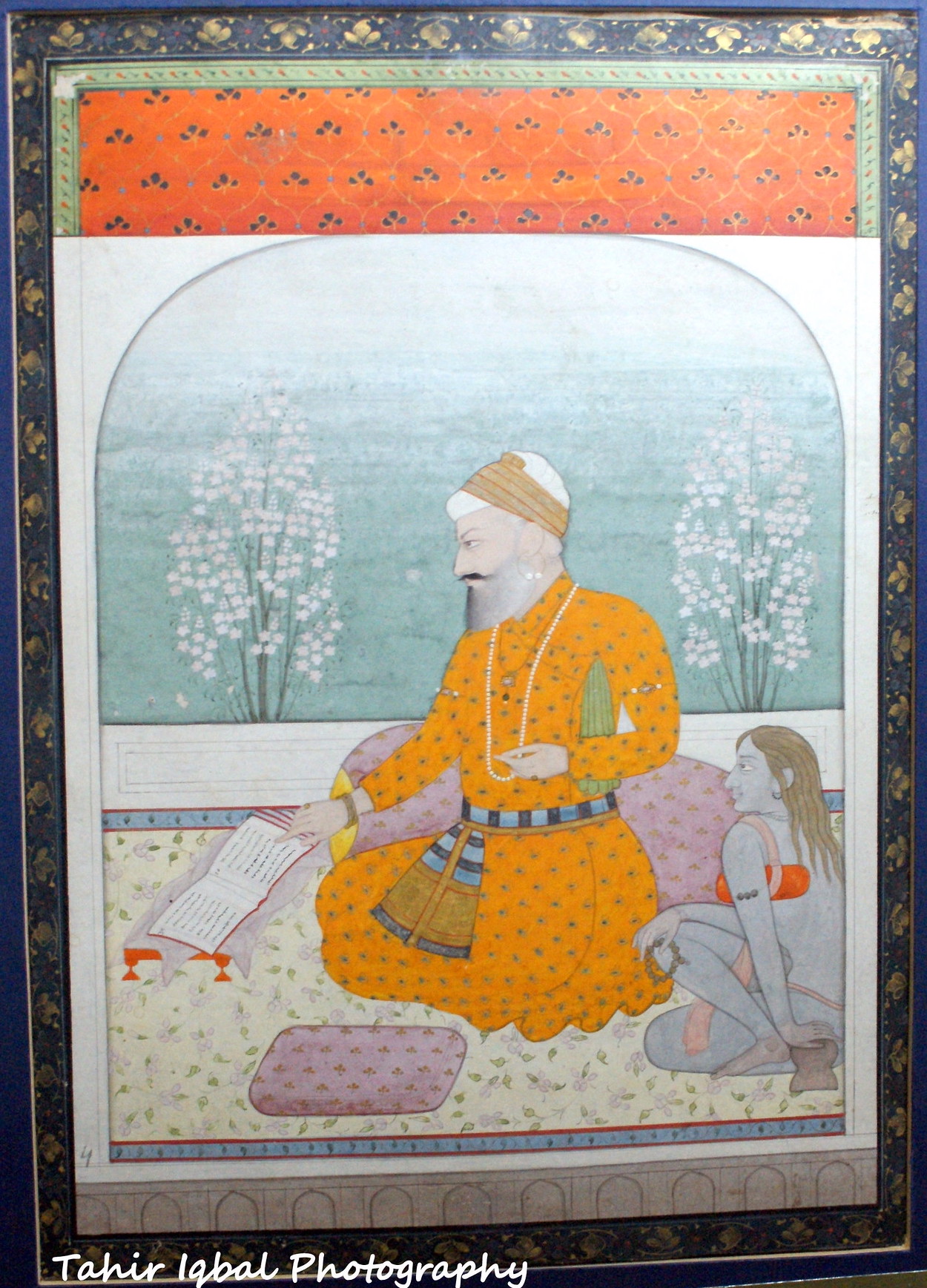
| image | Painting of Sri Chand, elder son of Guru Nanak and founder of the Udasi sect, with a visitor and fly-whisk attendants, circa early-19th century.jpg |
| father | Guru Nanak |
| birthname | Sri Chand Bedi |
| birth_date | 8 September 1494 |
| death_date | 13 January 1629 (134 years old) |
| death_place | Kiratpur, Lahore Subah, Mughal Empire |
| mother | Mata Sulakhni |
| office1 | Head of Udasi sect |
| predecessor1 | Position established (founder) |
| successor1 | Baba Gurditta |
| honorific prefix | Baba |
| honorific suffix | Ji |
| native_name | ਸ੍ਰੀ ਚੰਦ |
| native_name_lang | pa |
| native name lang | pa |
| relatives | Lakhmi Das (brother) |
| birth_place | Sultanpur Lodhi, Delhi Sultanate |
| caption | Painting of Sri Chand, elder son of Guru Nanak and founder of the Udasi sect, with a visitor and fly-whisk attendants, circa early-19th century. |
Sri Chand (8 September 1494 – 13 January 1629; Gurmukhi: ਸ੍ਰੀ ਚੰਦ), also referred to as Baba Sri Chandra or Bhagwan Sri Chandra, was the founder of the Udasi sect of ascetic Sadhus. Sikh sources give his life the impressive dates of 8 September 1494 – 13 January 1629, which would have made him 134 years old upon his death but current scholarship attributes errors in the dates of his birth and death to conversion to different calendars and mistakes.
Early life
He was the eldest son of Guru Nanak, the first Guru and founder of Sikhism. He was born to Mata Sulakhani on Bhadra sudi 9, 1551 Bikrami (i.e. 8 September 1494) in Sultanpur Lodhi. Whilst Guru Nanak was out on his long travels, Sri Chand's mother took him and his younger brother to her parental house located in the village of Pakkhoke Randhawa (located in present-day Dera Baba Nanak). As Sri Chand matured, he became a spiritually-inclined individual who grew to be indifferent to worldly affairs. When he was eleven years old, he left for Kashmir to study Sanskrit literature under the wing of Pandit Purushottam Kaul. He also studied and partook in yoga under the mentorship of Avinasha Muni. After he reached adulthood, Sri Chand had become an ascetic and followed a life calling of celibate reclusivity. Guru Nanak finally returned home for good in 1522 after his last travel tour and thus Sri Chand returned to living with his family.
Sri Chand had a high-regard for his father despite any incompatibilities of their spiritual views and teachings. It is said that after his father's death on 7 September 1539, Muslim followers of Nanak constructed a shrine at the spot his ashes had been buried. During a flooding event of the Ravi River, this shrine was apparently washed away by the flood water. Sri Chand managed to rediscover the urn containing his father's ashes that had been upheaved by the flood and he therefore shifted the urn to Pakkhoke Randhawa for it to be reburied near the well of Ajita Randhawa, an early follower of Nanak. The present-day shrine of Dera Baba Nanak evolved ultimately as a dera out of the samadh (mausoleum) constructed at that location by Sri Chand.
Candidacy for Sikh guruship
According to Bhai Gurdas' Varan, Sri Chand was egotistic, which is why his father passed over him as a suitable successor: Dharam Chand, son of Lakhmi Das, made a show of himself.
Dasu installed [himself] on the seat of authority and Datu learned to sit in the siddh posture.
Mohan went mad, and Mohari was celebrated.
Prithi Chand, the rascal, with his hidden agenda, spread madness.
Mahadev was egotistical and was led astray.
Living amid the sandalwood, yet without its fragrance.|author=Bhai Gurdas|title=Varan|source=Pannaa 26, section 33}}Sri Chand had promoted renunciation and celibacy, which were against the teachings of Sikhism.
Spiritual career

Sri Chand promoted the worship of five Indic deities, them namely being Surya, Vishnu, Shiva, Ganesha, and Shakti (divine feminine cosmic energy and dynamic force of the Universe).
As the founder and leader of the Udasi sect, he established their main base of operations at Barath (located eight kilometres southwest of Pathankot). Sri Chand embarked on many travels throughout the Indian subcontinent with his entourage of followers, much like his own father did before him.
Composing ''Aarta''
.jpg)
Sri Chand wrote a ten verse work titled Arta Sri Guru Nanak Dev, popularly known simply as Aarta, his most important writing, in praise of his father, Guru Nanak, and presented it to him after one of the Udasis (travels). This writing had a major influence on people of that time who did not know about Guru Nanak yet.
Aarta Kijey Nanak Shah Patshah Ka Har Har Deen Dunia Ke Shehan Shah Ka
Char Kunt Jaki Dharamshala Sangat Gawey Shabad Rasala
Aarta Kijey ...
Kot Devi Jaki Jot Jagaway Kot Tetees Jaki Ustat Gawey
Aarta Kijey ...
Chhinwey Kror Jakey Charan Pakhaley Chand Surai Jaki Jot Ujaley
Aarta Kijey ...
Bhaar Athharah Jaki Pohap Ki Mala Param Jot Satgur Deen Dyala
Aarta Kijey ...
Pawan Rai Jako Chawar Jhulawey Rikhi Muni Jako Dhian Legawey
Aarta Kijey ...
Panj Parwan Hai Satgur pura Bajey Shabad Anahad Toora
Aarta Kijey ...
Ghanta Bajey Dhun Onkara Adhar Akhand Jako Jhilmil Tara
Aarta Kijey ...
Srichand Bakhaney Satgur Nanak Poota Agam, Agad, Adol, Awdhuta
Aarta Kijey ...
Jo Jan Nanak Shah Ka Aarta Gawey Basey Baikunth Param Gat Pawey
Aarta Kijey ...
Saran Parey Ki Rakh Dyala Nanak Tumrey Bal Gopala
Aarta Kijey ...|group=note}}}}
Akharas
Prominent Udasi akharas were established in the 1800s, including the Shree Panchayati Akhada Bada Udasin (est. 1825) by Yogiraj Shri Nirvandev in Haridwar, and Shree Panchayati Akhada Naya Udasin (est. 1846) by Mahant Sudhir Das after a dispute with the Bada Udasin.
Possible contribution to the Adi Granth
According to a sakhi, when Guru Arjan had finished composing sixteen astpadis (cantos) of the Gauri Sukhmani composition, popularly known as Sukhmani Sahib, Sri Chand visited him. During this visit, it is said that Guru Arjan requested him to continue the composition he was compiling and complete the seventeenth canto of the Sukhmani Sahib. Sri Chand humbly recited the verse of his father following the Mul Mantar in the Japji Sahib. Thus, it became the seventeenth canto of the Sukhmani Sahib.
Relationship with Guru Nanak's successors and Sikhs
It is believed that Sri Chand rejected Guru Angad as the successor to his father. When the Sikh guruship passed from Nanak to Angad, the sons of Nanak, Sri Chand and Lakhmi Das, made a legal claim to their father's properties in Kartarpur, forcing Guru Angad to reestablish the early Sikh community's centre at his native village of Khadur instead.
Guru Amardas declared active and domestic Sikhs to be separate from passive and recluse Udasins. Baba Mohan, son of Amar Das, would mimic the life path of Sri Chand by becoming a lifelong celibate himself.
However the Sikh Gurus, Guru Amardas, Guru Ramdas, Guru Arjan and Guru Hargobind who were contemporaries of Sri Chand held him in high esteem due to his descent, old age and piety.
When Sri Chand paid a visit to the fourth Sikh guru, Ram Das, it is said the Sikh guru got-up to wipe Sri Chand's feet with his own beard as a show of deep respect for Sri Chand after Nanak's son made a remark about the Guru's long beard.
Guru Arjan met with Sri Chand at Barath to request for compositions of Nanak in the possession of Sri Chand to assist with his project of compiling a Sikh scripture.
In 1619, Sri Chand used his spiritual sway and authority to help convince Jahangir to release Guru Hargobind from his incarceration at Gwalior Fort.[[File:Painting of Baba Gurditta receiving the Udasi gaddi (seat of authority) from Baba Sri Chand, with Guru Hargobind and his other sons (Ani Rai, Suraj Mal, Atal Rai, and Tegh Bahadur) observing.jpg|thumb|Painting of Baba Gurditta receiving the Udasi gaddi (seat of authority) from Baba Sri Chand, with Guru Hargobind and his other sons (Ani Rai, Suraj Mal, Atal Rai, and Tyag Mal) observing]]Guru Hargobind's eldest son, Baba Gurditta, was given to the Udasins at the behest of Baba Sri Chand and Baba Gurditta eventually replaced Baba Sri Chand as head of the Udasins after his death. Baba Gurditta was the father of Guru Hari Rai, the grandfather of Guru Har Krishan, and the elder half-brother of Guru Tegh Bahadur.
Sri Chand was there for the groundbreaking ceremony for the establishment of Kiratpur at the foothills of the Shivalik Range by Baba Gurditta on the orders of Guru Hargobind. Sri Chand broke the ground for the project himself. Sri Chand also participated in the cremation ceremony of Baba Buddha.
Ram Rai, son of Guru Har Rai joined the Udasin sect after a failed attempt of being an official eighth Guru of the Sikhs.
Death
Sri Chand died in Kiratpur on 13 January 1629. He had arranged Baba Gurditta to succeed him as the Udasi leader prior to his death.
Gallery
File:Hindu Temple, Sadh Belo 11.jpg|Memorials to Udasin mahants of Sadh Belo with an invocation to Sri Chand, the founder of Udasins. File:Sri Chand with Lakhmi Das.jpg|Sri Chand (right) seated with his brother Lakhmi Das (left). Fresco from Gurdwara Baba Atal in Amritsar File:Khem Singh Bedi Haveli fresco 49.jpg|Fresco of Guru Nanak, Sri Chand, Bhai Mardana, Bhai Bala, and possibly Lakhmi Das from a Punjabi haveli, circa 1850's File:Fresco artwork from Pothi-Mala, Gur Harsahai, Punjab 36.jpg|Fresco of Sri Chand seated to the left of Guru Nanak, from Pothimala, Guru Harsahai, circa 18th century
Notes
References
Bibliography
References
- (1992–1998). "The encyclopaedia of Sikhism". Punjabi University.
- Gandhi, Surjit Singh. (2007). "History of Sikh gurus retold". Atlantic Publishers & Distributors.
- Siṅgha, Kirapāla. (2004). "Janamsakhi tradition : an analytical study". Singh Brothers.
- Singh Madra, Amandeep. (2016). "Sicques, Tigers or Thieves : Eyewitness Accounts of the Sikhs (1606-1810).". Palgrave Macmillan.
- Singh Madra, Amandeep. (2016). "Sicques, Tigers or Thieves : Eyewitness Accounts of the Sikhs (1606-1810).". Palgrave Macmillan.
- (1992–1998). "The encyclopaedia of Sikhism". Punjabi University.
- "Baba Siri Chand, Founder of the Udasi Sect". Learn Religions.
- Singh, Bhupinder. (October–December 2019). "Genealogy of Guru Nanak". Institute of Sikh Studies, Chandigarh.
- (2020). "The Sikh View on Happiness: Guru Arjan's Sukhmani". Bloomsbury Academic.
- Sibal, Rajni Sekhri. (2022). "The Guru - Guru Nanak's Saakhis". StoryMirror Infotech Pvt Ltd.
- Ralhan, O. P.. (2004). "Srichandraji Maharaj". Anmol Publications Pvt. Ltd.
- (2019). "Eternal Glory of Guru Nanak". Partridge Publishing.
- (13 January 2019). "The Famous Akhadas at Kumbh Mela".
- (1992–1998). "The encyclopaedia of Sikhism". Punjabi University.
- Nayar, Kamala Elizabeth. (2020). "The Sikh View on Happiness : Guru Arjan's Sukhmani.". Bloomsbury Publishing Plc.
- Khalid, Haroon. "Intrigue, manipulation, deception: How Guru Arjan's brother put up a serious challenge against him".
- Singh, Pashaura. (2021-04-03). "Ideological basis in the formation of the Shiromani Gurdwara Prabandhak Committee and the Shiromani Akali Dal: exploring the concept of Guru-Panth". Sikh Formations.
- Singh, Harbans. "The Encyclopedia Of Sikhism - Volume IV S-Z".
- (2007-09-02). "Baba Gurditta - Gateway To Sikhism".
- Singh, Bhupinder. (October 2019). "Genealogy of Guru Nanak". Institute of Sikh Studies.
This article was imported from Wikipedia and is available under the Creative Commons Attribution-ShareAlike 4.0 License. Content has been adapted to SurfDoc format. Original contributors can be found on the article history page.
Ask Mako anything about Sri Chand — get instant answers, deeper analysis, and related topics.
Research with MakoFree with your Surf account
Create a free account to save articles, ask Mako questions, and organize your research.
Sign up freeThis content may have been generated or modified by AI. CloudSurf Software LLC is not responsible for the accuracy, completeness, or reliability of AI-generated content. Always verify important information from primary sources.
Report