From Surf Wiki (app.surf) — the open knowledge base
Split pin
Metal fastener with two tines that are bent during installation
.png)
Metal fastener with two tines that are bent during installation
A split pin, also known as a cotter pin, or cotter key in the US, is a metal fastener with two tines that are bent during installation, similar to a staple or rivet. Typically made of thick wire with a half-circular cross section, split pins come in multiple sizes and types.
The British definition of "cotter pin" may include the equivalent to US term "cotter". To avoid confusion, the term split cotter is sometimes used for a split pin. A further use of the term "cotter pin" is the "crank cotter pin" used to lock bicycle pedal cranks to the bottom bracket axle. These are not "split" at all and are wedge shaped.
History
The cotter pin was invented by Ira J. Young of the Wire Manufacturing Company in St. Louis, Missouri in 1912. He filed two patents for machines to make the fastener that year.
Construction

A new split pin (see figure A) has its flat inner surfaces touching for most of its length so that it appears to be a split cylinder (figure D). Once inserted, the two ends of the pin are bent apart, locking it in place (figure B). When they are removed they are supposed to be discarded and replaced, because of fatigue from bending.
Split pins are typically made of soft metal, making them easy to install and remove, but also making it inadvisable to use them to resist strong shear forces. Common materials include mild steel, brass, bronze, stainless steel, and aluminium.
Types

The most common type of split pin is the extended prong with a square cut, but extended prongs are available with all of the other types of ends. The extended prong type is popular because the difference in length of the two tines makes it easier to separate them. To ease insertion into a hole the longer tine may be slightly curved to overlap the tip of the shorter tine or it is beveled.
Hammer lock split pins are properly installed by striking the head with a hammer to secure the pin. This forces the shorter tine forward, spreading the pin.
Types include standard, humped and clinch.
Sizes
The diameters of split pins are standardized.
| Nominal diameter | ||
|---|---|---|
| mm | Hole size | |
| mm | For bolt size | |
| mm | ||
| 1.5 | 1.9 | 6 |
| 2 | 2.4 | 8 |
| 2.5 | 2.8 | 10 |
| 3 | 3.4 | 12, 14 |
| 4 | 4.5 | 20 |
| 5 | 5.6 | 24, 28 |
| 6 | 6.3 | 30, 36, 42 |
| 8 | 8.5 | 48 |
American split pins start at in and end at in. Metric conversions in the table below are approximate.
| Nominal diameter | Hole size | For bolt size | in | mm | in | mm | in | mm |
|---|---|---|---|---|---|---|---|---|
| 0.79 | 1.19 | |||||||
| 1.19 | 1.59 | |||||||
| 1.59 | 1.98 | 6.35 | ||||||
| 1.98 | 2.38 | 7.94 | ||||||
| 2.38 | 2.78 | 9.53 | ||||||
| 2.78 | 3.18 | |||||||
| 3.18 | 3.57 | 12.70 | ||||||
| 3.57 | 3.97 | 15.88 | ||||||
| 3.97 | 4.37 | 19.05 | ||||||
| 4.76 | 5.16 | 1, | 25.4, 28.58 | |||||
| 5.56 | 5.95 | , | 31.75, 34.93 | |||||
| 6.35 | 6.75 | 38.10 | ||||||
| 7.94 | 7.94 | 44.45 | ||||||
| 9.53 | 9.53 | |||||||
| 11.11 | 11.11 | |||||||
| 12.70 | 12.70 | |||||||
| 15.88 | 15.88 | |||||||
| 19.05 | 19.05 |
Applications
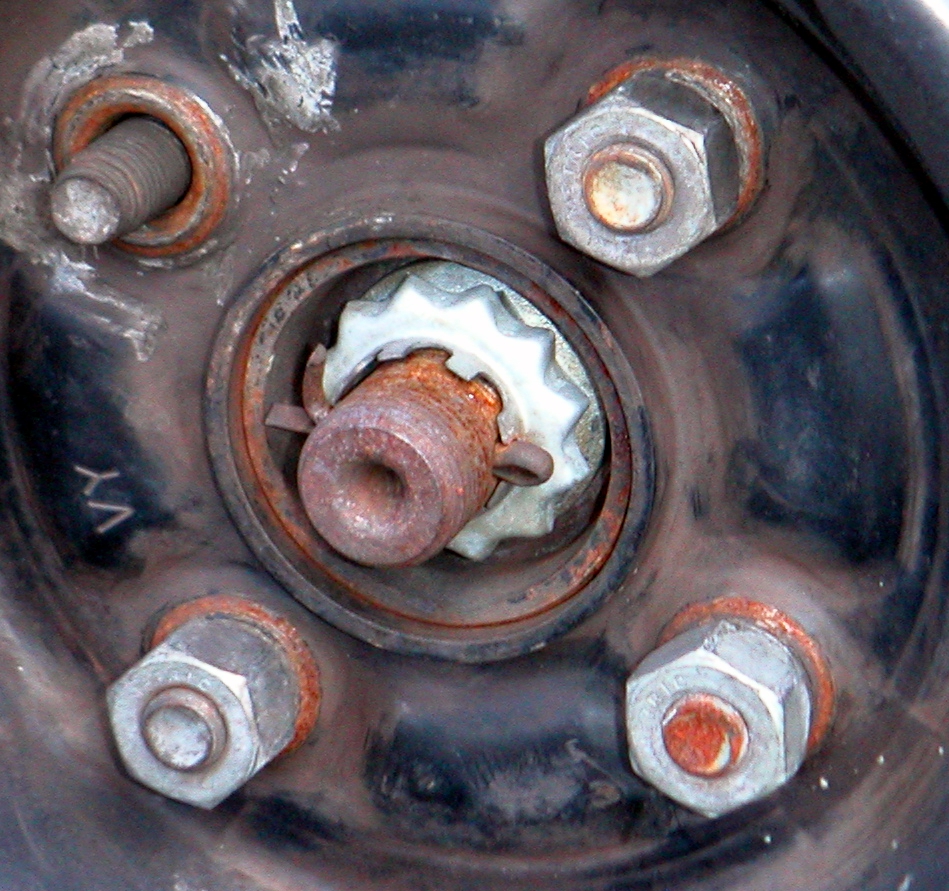

Split pins are frequently used to secure other fasteners, e.g. clevis pins, or to secure a castellated nut, or, infrequently, as a low-tech shear pin.
Split pins are cheaper but less reusable than linchpins, and provide less strength but easier to install/remove than spring pins.
References
Notes
Bibliography
- .
- .
- .
- .
References
- {{US patent. 4298299
- "Our Colorful History".
- {{cite patent. "". link
- {{cite patent. "". link
- {{Harvnb. Welsch. 2005
- {{Harvnb. Soled. 1957
- "Cotter pins".
- {{Harvnb. Jensen. 2001
- {{Harvnb. Reithmaier. 1999
This article was imported from Wikipedia and is available under the Creative Commons Attribution-ShareAlike 4.0 License. Content has been adapted to SurfDoc format. Original contributors can be found on the article history page.
Ask Mako anything about Split pin — get instant answers, deeper analysis, and related topics.
Research with MakoFree with your Surf account
Create a free account to save articles, ask Mako questions, and organize your research.
Sign up freeThis content may have been generated or modified by AI. CloudSurf Software LLC is not responsible for the accuracy, completeness, or reliability of AI-generated content. Always verify important information from primary sources.
Report