From Surf Wiki (app.surf) — the open knowledge base
Spade bit (horse)
Historic vaquero design for a type of curb bit
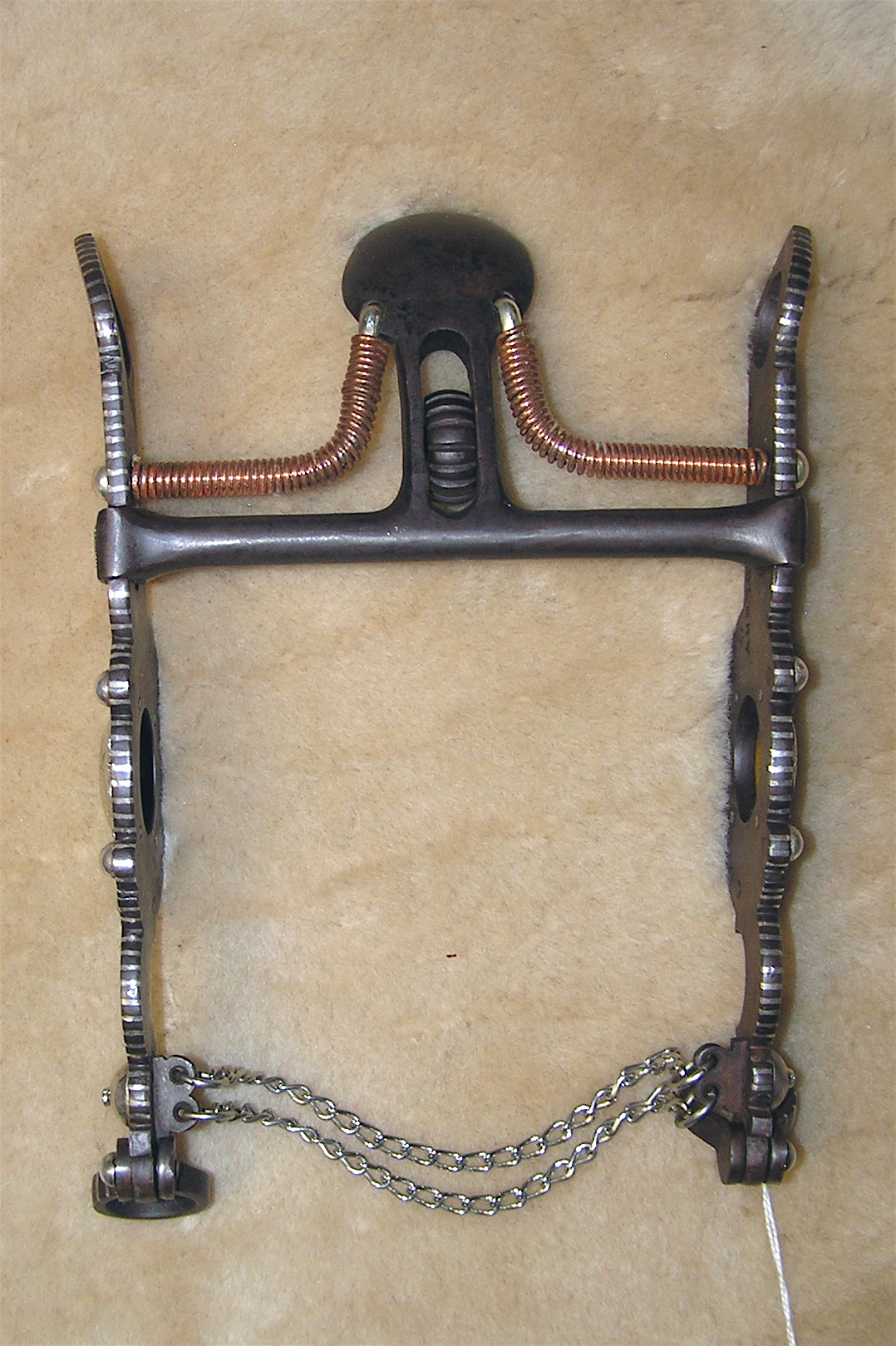
Historic vaquero design for a type of curb bit

The spade bit is a historic vaquero design for a type of curb bit with straight, highly decorated shanks and a mouthpiece that includes a straight bar, a narrow port with a cricket, and a "spoon," a flat, partly rounded plate affixed above the port, supported by braces on either side. Considered a highly technical piece of equipment to be used only on a finished horse, the spade bit is a refined tool that experts compare to driving a sports car in its ability to convey precise commands to the horse. Not all horses have the conformation or temperament to become a finished spade bit horse, a process that takes a number of years and is seldom complete until a horse has at least five years of training under saddle.
Use
The spade bit is an elaborate, complex bit that can only be properly used on a highly trained horse handled by a skilled rider. In the vaquero tradition, its use represents the highest level of trust and communication between horse and rider. | access-date = 2010-07-13 Experts compare the ride and handling of a horse trained in this manner to that of a Jaguar. The process of training the spade bit horse takes five to seven years to complete. Its emphasis has always been on producing a finely tuned working horse and partner, emphasizing quality rather than on how quickly the goal is reached. The conformation of the horse is also a factor; to become a spade bit horse, the animal must be bred to have a higher neck set and well-carried head. |access-date = 2010-07-21 |url-status = dead |archive-url = https://web.archive.org/web/20100126055401/http://www.varianarabians.com/breeding/business_sense.asp |archive-date = 2010-01-26

Traditionally, the vaquero method starts a young horse using a hackamore, which is headgear with no bit that uses a heavy rawhide noseband, called a bosal, to control the horse. Then the horse moves to lighter bosals, and next into a combination of headgear that represents a transitional period in its training; a bridle with a type of curb bit called a "half breed" which is worn in conjunction with a light bosal. The rider carries two sets of reins, one set on the bosal and one on the curb, giving this gear its name, the "two-rein. After several years in a two-rein, the horse graduates into the spade bit. A light bosal called a bosalito remains on the horse by tradition, usually without reins attached.
References
Sources
- {{cite book
- {{cite web | access-date = 2010-08-06
- {{cite video
- Bennett, Deb (1998) Conquerors: The Roots of New World Horsemanship. Amigo Publications Inc; 1st edition.
- Connell, Ed (1952) Hackamore Reinsman. The Longhorn Press, Cisco, Texas. Fifth Printing, August, 1958.
- Jaheil, Jessica. "Bosal, snaffle, spade - why?" Horse Sense, web page accessed July 11, 2011
This article was imported from Wikipedia and is available under the Creative Commons Attribution-ShareAlike 4.0 License. Content has been adapted to SurfDoc format. Original contributors can be found on the article history page.
Ask Mako anything about Spade bit (horse) — get instant answers, deeper analysis, and related topics.
Research with MakoFree with your Surf account
Create a free account to save articles, ask Mako questions, and organize your research.
Sign up freeThis content may have been generated or modified by AI. CloudSurf Software LLC is not responsible for the accuracy, completeness, or reliability of AI-generated content. Always verify important information from primary sources.
Report