From Surf Wiki (app.surf) — the open knowledge base
Space Telescope Imaging Spectrograph
Instrument on the Hubble Space Telescope

Instrument on the Hubble Space Telescope

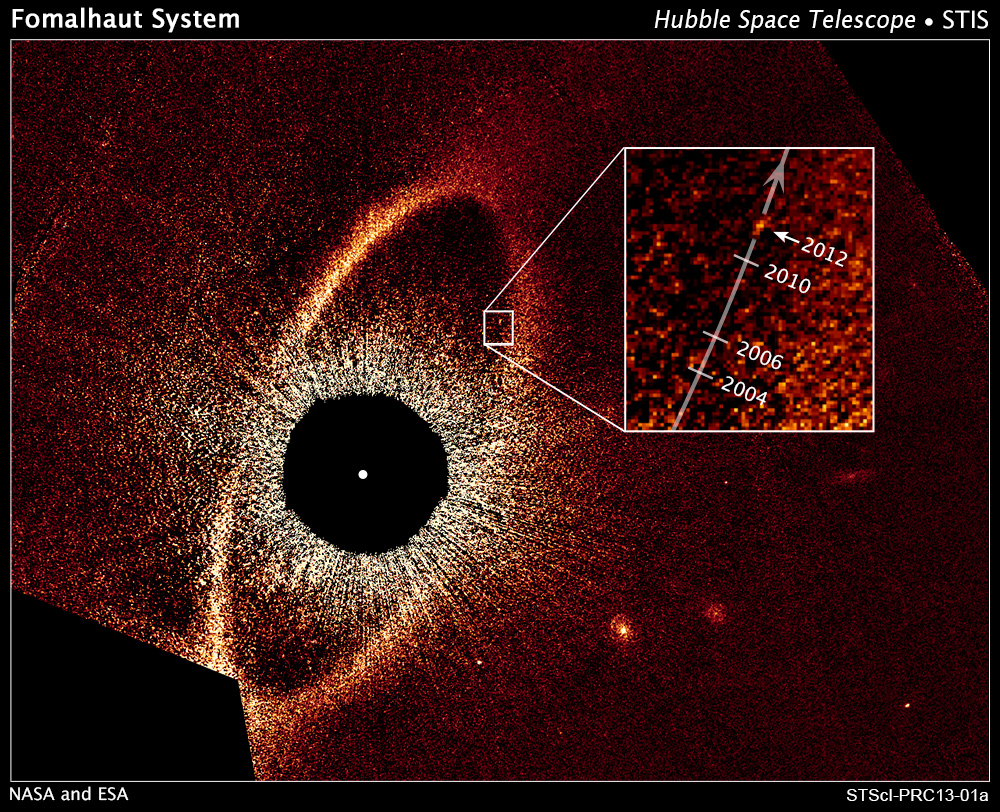

The Space Telescope Imaging Spectrograph (STIS) is a spectrograph, also with a camera mode, installed on the Hubble Space Telescope. Aerospace engineer Bruce Woodgate of the Goddard Space Flight Center was the principal investigator and creator of the STIS. It operated continuously from 1997 until a power supply failure in August 2004. After repairs, it began operating again in 2009. The spectrograph has made many important observations, including the first spectrum of the atmosphere of an extrasolar planet, HD 209458b.
The STIS was installed on Hubble in 1997 during its second servicing mission (STS-82) by Mark Lee and Steven Smith, replacing the High Resolution Spectrograph and the Faint Object Spectrograph. It was designed to operate for five years. On August 3, 2004, an electronic failure rendered STIS inoperable, ending its use 2 years beyond its predicted lifespan. In order to bring it back to operational status, the instrument was repaired by space shuttle astronauts during STS-125, Servicing Mission 4, launched on May 11, 2009. The crew did a long (many hour) EVA to repair the instrument.
Design
STIS is both a spectrograph and an imaging camera, and is focused on ultraviolet light.
The STIS has three 1024×1024 detector arrays. The first is a charge-coupled device with a 52×52 arc-second field of view, covering the visible and near-infrared spectrum from 200 nm to 1030 nm.
The other two detectors are Multi-Anode Multichannel Arrays, each with a 25×25 arc-second field of view. One is Cs2Te, and covers the near-UV between 160 nm and 310 nm. The other is CsI and covers the far-UV between 115 nm and 170 nm.
Timeline
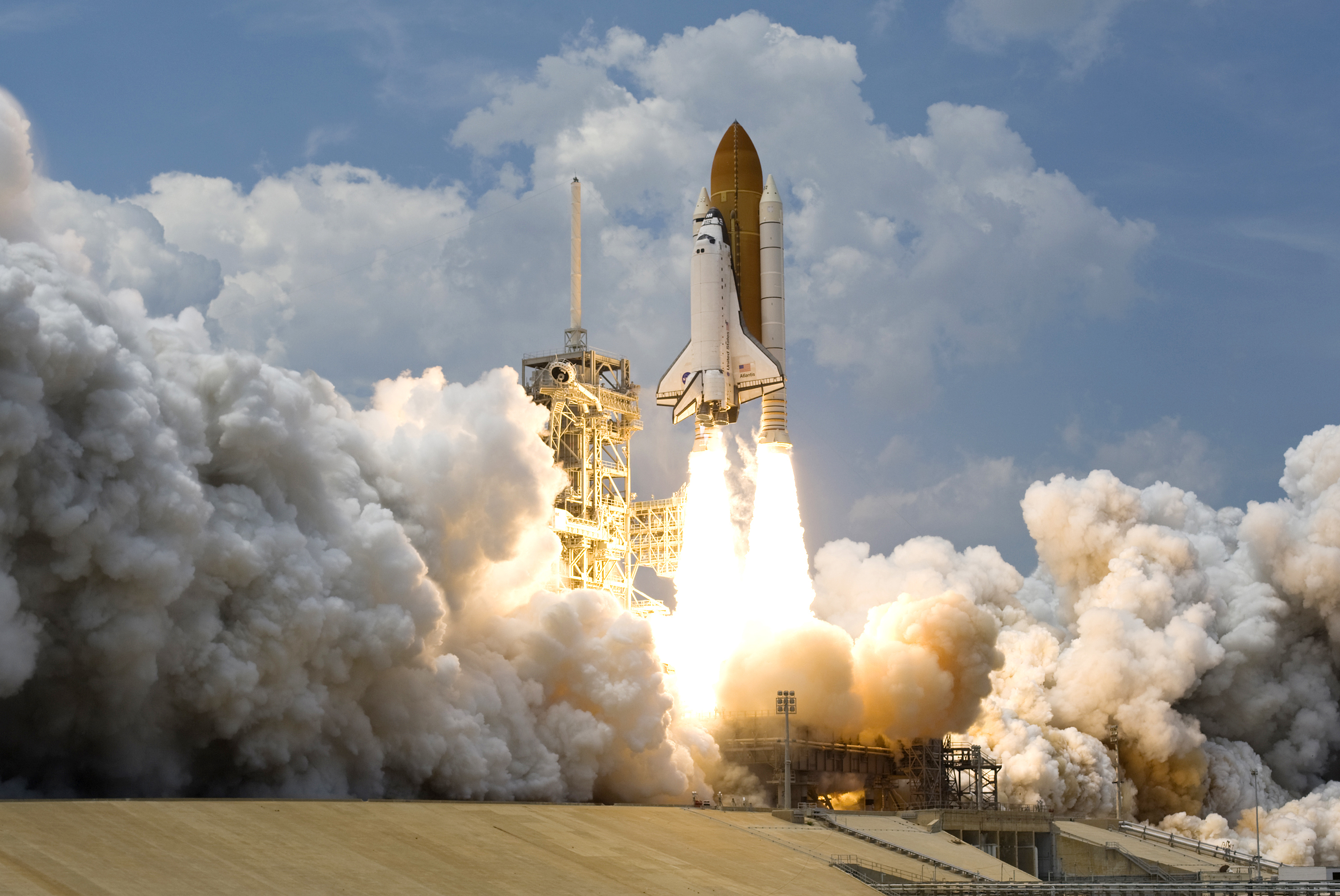
- February 14, 1997 – STIS installed (STS-82)
- 2001 – Switches to Side-2 electronics after a failure in side-1.
- August 3, 2004 – STIS goes offline due to side-2 power-failure
- 2009 – STIS repaired (STS-125)
- Operating on side-2 electronics with all optical and UV channels.
Selected discoveries and observations
On its 20th anniversary (1997–2017) NASA noted a selection of discoveries and/or observations conducted with STIS:
- Survey of 20 galaxies to look for black holes
- Study of the Intergalactic Medium
- Study of the Galactic Halo
- Study of Interstellar Medium
- Chemical analysis of an atmosphere of an exoplanet
- Observations of a Dust Disk around Beta Pictoris
- Study of massive stars in R136 (in the Tarantula Nebula)
- Study of the star Eta Carinae
- Study of Supernova 1987A
- Study of flows from an Active Galaxy
References
References
- Tanglao, Leezel. (2014-05-01). "Inventor of the camera used on Hubble telescope has died". [[CBS News]].
- (2014-05-09). "Tributes paid to man who changed the face of space". [[Eastbourne Herald]].
- McKee, Maggie. (2019-06-30). "NASA attempts to revive Hubble's main camera". [[New Scientist]].
- (May 17, 2009). "Space Telescope Operations Control Center — Flight Day 7". [[NASA]].
- Gebhardt, Chris. (2009-05-17). "STS-125: Eight hour EVA-4 works STIS repair – Atlantis' TPS overview". [[NASASpaceFlight.com]].
- "STIS Instrument Detectors". [[Space Telescope Science Institute]].
- [https://www.stsci.edu/hst/instrumentation/stis ''About STIS'']
- Hille, Karl. (2017-02-28). "The 20th Anniversary of Hubble's STIS Instrument". NASA.
This article was imported from Wikipedia and is available under the Creative Commons Attribution-ShareAlike 4.0 License. Content has been adapted to SurfDoc format. Original contributors can be found on the article history page.
Ask Mako anything about Space Telescope Imaging Spectrograph — get instant answers, deeper analysis, and related topics.
Research with MakoFree with your Surf account
Create a free account to save articles, ask Mako questions, and organize your research.
Sign up freeThis content may have been generated or modified by AI. CloudSurf Software LLC is not responsible for the accuracy, completeness, or reliability of AI-generated content. Always verify important information from primary sources.
Report