From Surf Wiki (app.surf) — the open knowledge base
Soyuz TMA-7
2005 Russian crewed spaceflight to the ISS
2005 Russian crewed spaceflight to the ISS
| Field | Value |
|---|---|
| name | Soyuz TMA-7 |
| image | File:Soyuz TMA-7 launch.jpg |
| operator | Roscosmos |
| COSPAR_ID | 2005-039A |
| mission_duration | 189 days, 19 hours, 53 minutes |
| orbits_completed | 2,987 |
| spacecraft_type | Soyuz-TMA 11F732 |
| manufacturer | Energia |
| launch_mass | 7200 kg |
| launch_date | UTC |
| launch_rocket | Soyuz-FG |
| launch_site | Baikonur 1/5 |
| landing_date | UTC |
| crew_size | 3 |
| crew_members | Valery I. Tokarev |
| William S. McArthur, Jr. | |
| crew_launching | Gregory H. "Greg" Olsen |
| crew_landing | Marcos C. Pontes |
| crew_photo | Crew of soyuz tma7.jpg |
| orbit_reference | Geocentric |
| orbit_regime | Low Earth |
| orbit_periapsis | ~200 km |
| orbit_apoapsis | ~252 km |
| orbit_inclination | ~51.7 degrees |
| orbit_period | ~88.7 minutes |
| apsis | gee |
| docking_target | ISS |
| docking_type | dock |
| docking_port | Pirs nadir |
| docking_date | 3 October 2005 |
| 05:27 UTC | |
| undocking_date | 18 November 2005 |
| 08:46 UTC | |
| time_docked | |
| docking_target | ISS |
| (Relocation) | |
| docking_type | dock |
| docking_port | Zarya nadir |
| docking_date | 18 November 2005 |
| 09:05 UTC | |
| undocking_date | 20 March 2006 |
| 06:49 UTC | |
| time_docked | |
| docking_target | ISS |
| (Relocation) | |
| docking_type | dock |
| docking_port | Zvezda aft |
| docking_date | 20 March 2006 |
| 07:11 UTC | |
| undocking_date | 8 April 2006 |
| 20:28 UTC | |
| time_docked | |
| previous_mission | Soyuz TMA-6 |
| next_mission | Soyuz TMA-8 |
| programme | Soyuz programme |
| (Crewed missions) |
William S. McArthur, Jr.
05:27 UTC 08:46 UTC (Relocation) 09:05 UTC 06:49 UTC (Relocation) 07:11 UTC 20:28 UTC (Crewed missions)
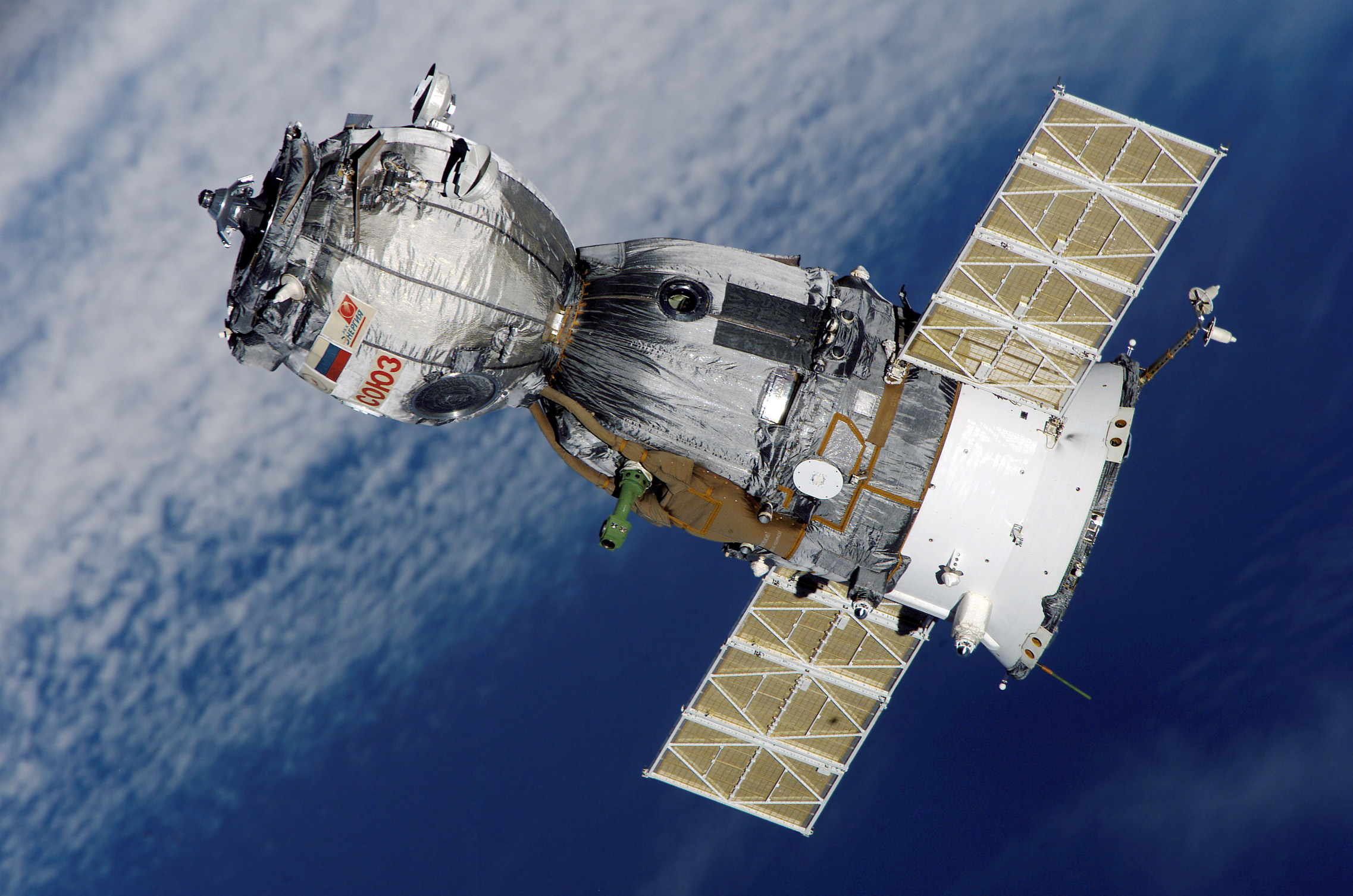
Soyuz TMA-7 () was a transport mission for portions of the International Space Station (ISS) Expedition 12 crew launched October 1, 2005. The flight delivered ISS Commander William McArthur and ISS Flight Engineer Valery Tokarev to the station to replace Expedition 11 crew members. Spaceflight Participant Gregory Olsen joined the TMA-7 crew for the ascent and docking with the ISS, spent approximately eight days aboard conducting experiments, then returned to Earth with the outgoing members of Expedition 11 aboard Soyuz TMA-6. McArthur and Tokarev were joined on their return trip to Earth by Flight Engineer Marcos Pontes who launched aboard Soyuz TMA-8 and spent approximately seven days aboard the ISS conducting experiments for the Brazilian Space Agency.
Crew
Docking with ISS
- Docked to ISS: October 3, 2005, 05:27 UTC (to Pirs module)
- Undocked from ISS: November 18, 2005, 08:46 UTC (from Pirs module)
- Docked to ISS: November 18, 2005, 09:05 UTC (to nadir port of Zarya)
- Undocked from ISS: March 20, 2006, 06:49 UTC (from nadir port of Zarya)
- Docked to ISS: March 20, 2006, 07:11 UTC (to aft port of Zvezda)
- Undocked from ISS: April 8, 2006, 20:28 UTC (from aft port of Zvezda)
Mission highlights
28th crewed flight to ISS (Flight 11S).
Soyuz TMA-7 is a Soyuz spacecraft which was launched on October 1, 2005 by a Soyuz-FG rocket from Baikonur Cosmodrome.
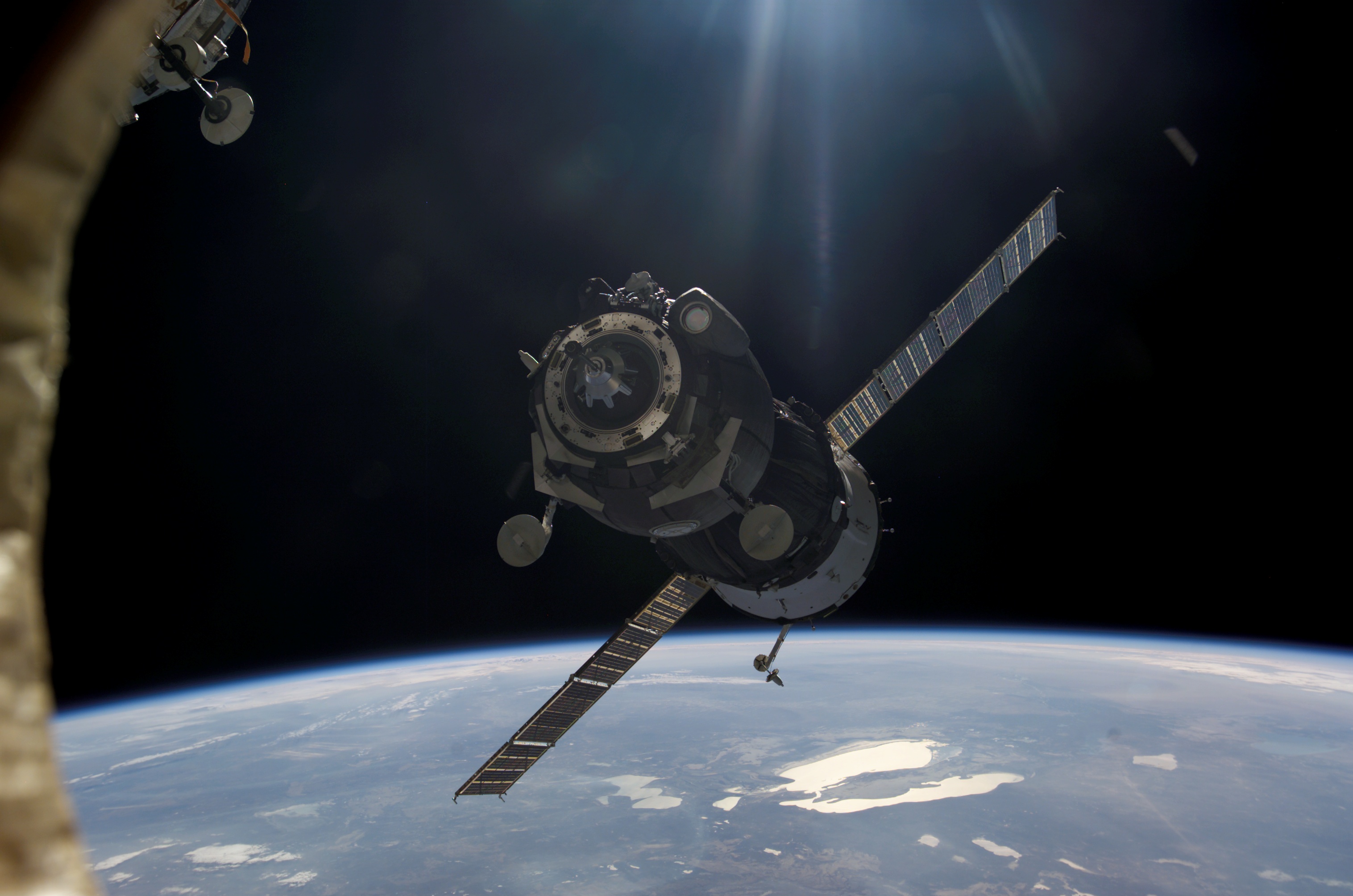
The spacecraft carried two members of the Expedition 12 crew to the International Space Station, together with the space tourist Gregory Olsen. They replaced the Expedition 11 crew, Commander Sergei Krikalev and John Phillips.
The last member of the original Expedition 12 crew, Thomas Reiter finally launched in July 2006 on STS-121. Owing to shuttle mechanical and weather delays, he was forced to move to Expedition 13.
This was the last flight which is covered by the 1996 "balance" agreement that required the Russians to provide 11 Soyuz spacecraft to ferry joint U.S-Russian crews to and from the International Space Station. Further Soyuz flights needed a renegotiation between NASA and its Russian counterpart, and a modification of the Iran Nonproliferation Act of 2000.
After re-entry, when the pilot parachute was deployed at a height of 10 km the main parachute took a while to open, which caused some concern among the crew and could have been fatal if the main parachute had taken longer to deploy.
Replica
A company in Bauru is building a replica of the capsule that brought Marcos Pontes back to Earth, but they wrongly describe it as the Soyuz TMA-8.
References
References
- (October 11, 2005). "OFFICIAL PRESS RELEASE about the return of the ISS-11 and VC-9 crews to the Earth". [[NPO Energia]].
- Mark Wade. "Soyuz TMA-7".
- Joachim Becker. (2018-04-20). "Soyuz TMA-7". SPACEFACTS.
- Anatoly Zak. (2012-05-05). "Soyuz TMA-7". RussianSpaceWeb.
- Pontes, Marcos. (2011). "Missão Cumprida: A História completa da primeira missão espacial brasileira". McHilliard.
- (2021-05-16). "Empresa produz réplica de cápsula que trouxe Marcos Pontes à Terra".
- (2021-05-12). "Aeródromo de Bauru terá réplica em tamanho original de cápsula espacial usada por Marcos Pontes".
This article was imported from Wikipedia and is available under the Creative Commons Attribution-ShareAlike 4.0 License. Content has been adapted to SurfDoc format. Original contributors can be found on the article history page.
Ask Mako anything about Soyuz TMA-7 — get instant answers, deeper analysis, and related topics.
Research with MakoFree with your Surf account
Create a free account to save articles, ask Mako questions, and organize your research.
Sign up freeThis content may have been generated or modified by AI. CloudSurf Software LLC is not responsible for the accuracy, completeness, or reliability of AI-generated content. Always verify important information from primary sources.
Report