From Surf Wiki (app.surf) — the open knowledge base
Soyuz TMA-4
2004 Russian crewed spaceflight to the ISS
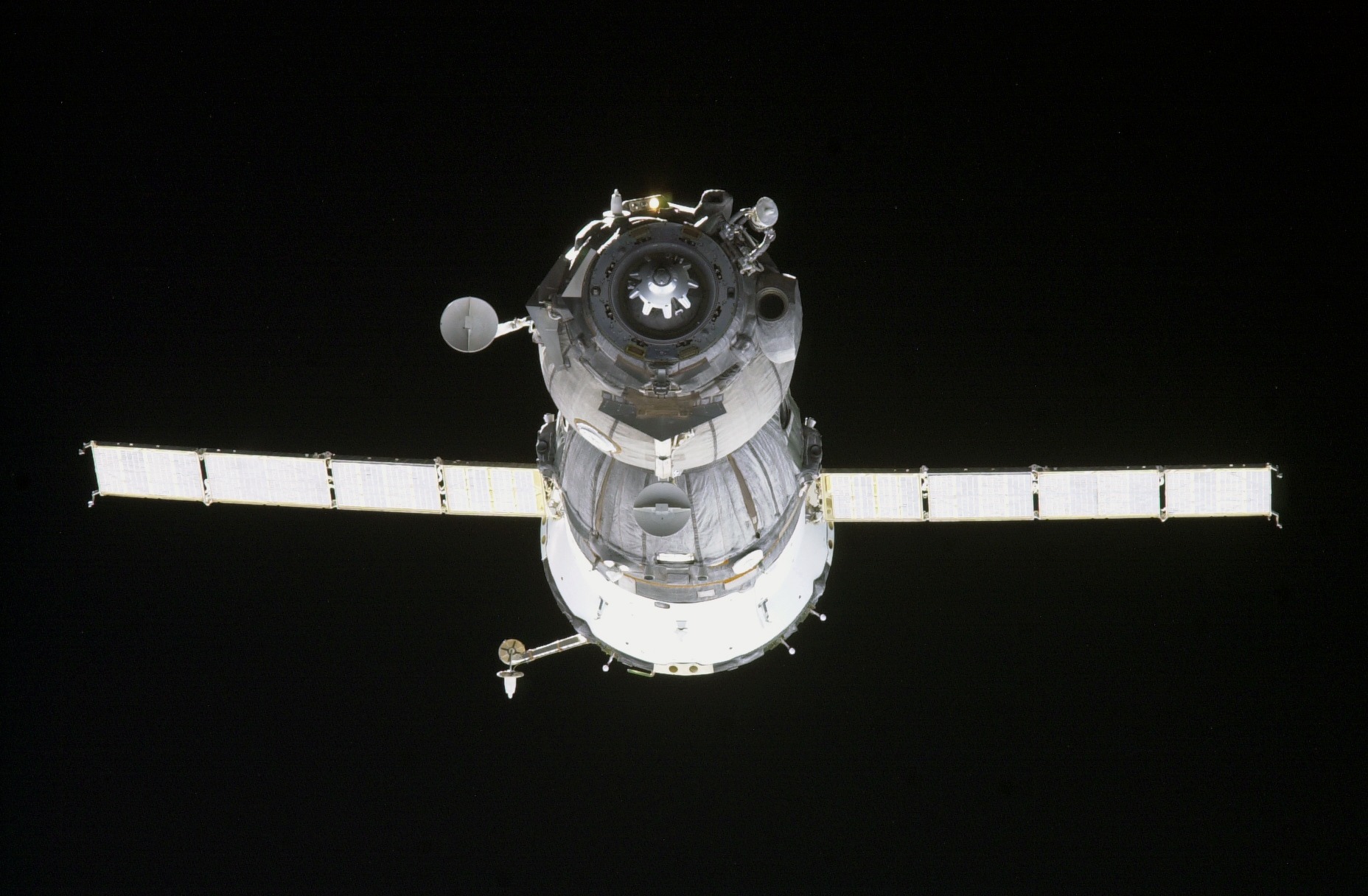
2004 Russian crewed spaceflight to the ISS
| Field | Value |
|---|---|
| name | Soyuz TMA-4 |
| image | Soyuz TMA-4 launch.jpg |
| insignia | Soyuz TMA-4 Patch.png |
| mission_type | ISS crew transport |
| operator | Roscosmos |
| mission_duration | |
| orbits_completed | ~2,950 |
| spacecraft | Soyuz-TMA 11F732 |
| spacecraft_type | Soyuz-TMA |
| manufacturer | Energia |
| launch_date | UTC |
| launch_rocket | Soyuz-FG |
| launch_site | Baikonur, Site 1/5 |
| launch_contractor | Progress |
| landing_date | UTC |
| landing_site | 90 km north of Arkalyk |
| crew_size | 3 |
| crew_members | Gennady Padalka |
| Michael Fincke | |
| crew_launching | André Kuipers |
| crew_landing | Yuri Shargin |
| crew_callsign | Altair |
| crew_photo | Soyuz TMA-4 Crew.jpg |
| crew_photo_caption | From left to right: Michael Fincke, Gennady Padalka and André Kuipers |
| orbit_reference | Geocentric |
| orbit_regime | Low Earth |
| orbit_periapsis | 200 km |
| orbit_apoapsis | 252 km |
| orbit_inclination | 51.7 degrees |
| orbit_period | 88.7 minutes |
| apsis | gee |
| docking | {{Infobox spaceflight/Dock |
| docking_target | ISS |
| docking_type | dock |
| docking_port | Zarya nadir |
| docking_date | 21 April 2004 |
| 05:01 UTC | |
| undocking_date | 23 October 2004 |
| 21:08 UTC | |
| time_docked | |
| previous_mission | Soyuz TMA-3 |
| next_mission | Soyuz TMA-5 |
| programme | Soyuz programme |
| (Crewed missions) |
Michael Fincke 05:01 UTC 21:08 UTC (Crewed missions)
Soyuz TMA-4 was a Soyuz mission to the International Space Station (ISS) launched by a Soyuz FG launch vehicle. It was launched on 19 April 2004 (UTC) from Baikonur Cosmodrome. Gennady Padalka from Russia, Michael Fincke from the US and André Kuipers from the Netherlands were flown to the International Space Station. Kuipers returned to Earth 9 days later together with ISS crew 8 with the re-entry module of the Soyuz TMA-3, the other two stayed as ISS crew 9. The craft landed 24 October 2004 with Padalka, Fincke and Yuri Shargin aboard.
Crew
Original Crew
Mission parameters
- Mass: ? kg
- Perigee: 200 km
- Apogee: 252 km
- Inclination: 51.7°
- Period: 88.7 minutes
Docking with ISS
- Docked to ISS: 21 April 2004, 05:01 UTC (to nadir port of Zarya)
- Undocked from ISS: 23 October 2004, 21:08 UTC (from nadir port of Zarya)
Mission highlights
Soyuz TMA-4 is a Russian passenger spacecraft that was launched by a Soyuz-FG rocket from Baikonur at 03:19 UT on 19 April 2004. It carried three astronauts (a Russian, an American and a Dutchman) to the International Space Station (ISS) and docked with the Zarya module of the ISS automatically on 21 April at 05:01 UT. Two of its astronauts remained in the ISS for about six months, while the Dutch astronaut and the two astronauts who had inhabited the ISS for several months left the ISS on 29 April in the TMA-3 that had remained docked with the ISS, soft landing in Kazakhstan at 00:11 on 30 April.
The Expedition 10 crew, Leroy Chiao-Cdr U.S.A. and Salizhan Sharipov-Russia replaced the Expedition 9 crew, Gennady Padalka-Cdr Russia and Michael Fincke-Flight Engineer-U.S.A. on 16 October 2004.
References
References
- (22 September 2004). "OFFICIAL PRESS RELEASE on General Designers' Review for the Soyuz TMA-5 prelaunch processing". [[NPO Energia]].
- (16 October 2003). "Return to space for Spanish ESA astronaut". [[ESA]].
This article was imported from Wikipedia and is available under the Creative Commons Attribution-ShareAlike 4.0 License. Content has been adapted to SurfDoc format. Original contributors can be found on the article history page.
Ask Mako anything about Soyuz TMA-4 — get instant answers, deeper analysis, and related topics.
Research with MakoFree with your Surf account
Create a free account to save articles, ask Mako questions, and organize your research.
Sign up freeThis content may have been generated or modified by AI. CloudSurf Software LLC is not responsible for the accuracy, completeness, or reliability of AI-generated content. Always verify important information from primary sources.
Report