From Surf Wiki (app.surf) — the open knowledge base
Soyuz TMA-15
2009 Russian crewed spaceflight to the ISS
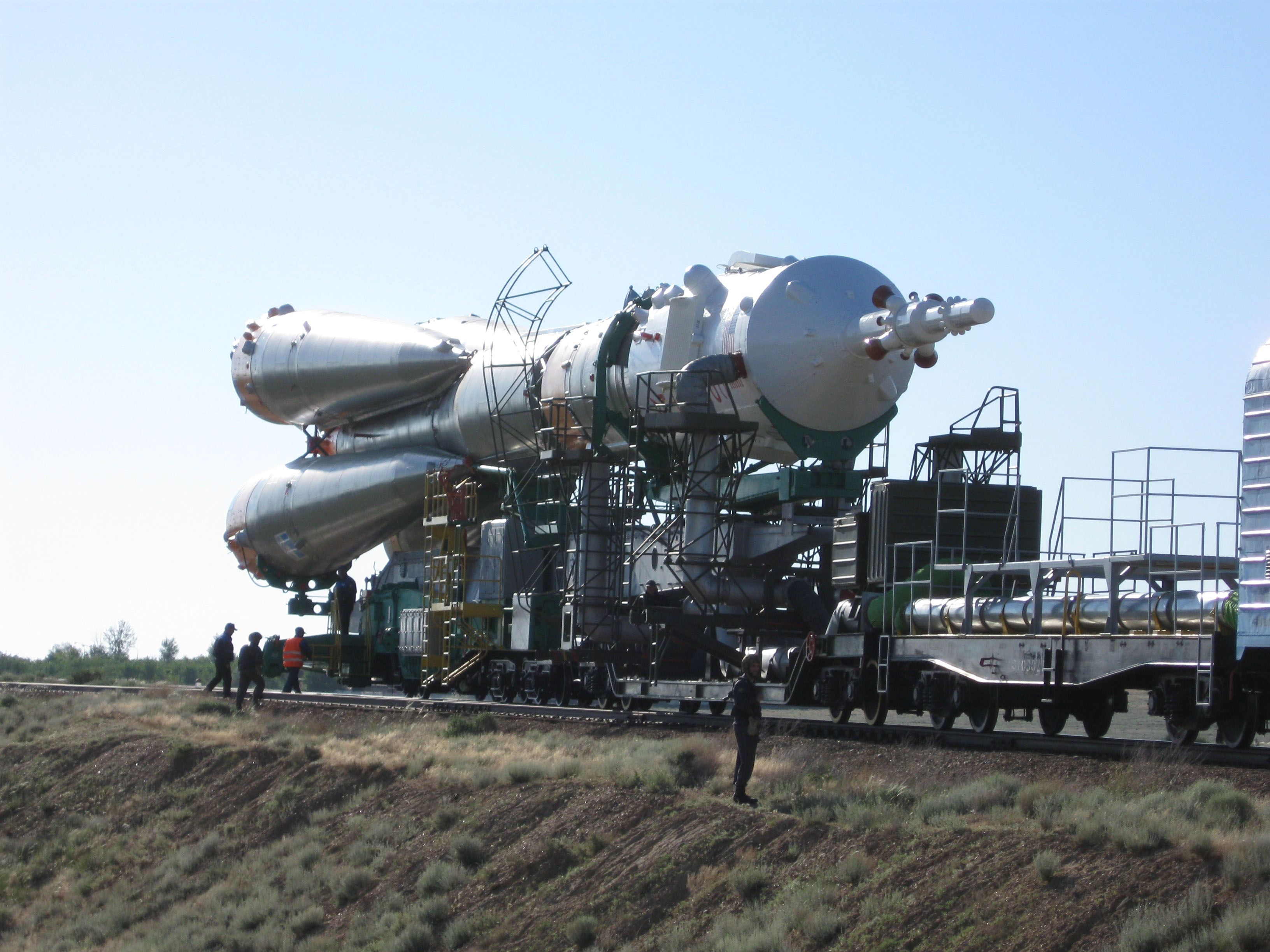
2009 Russian crewed spaceflight to the ISS
| Field | Value |
|---|---|
| name | Soyuz TMA-15 |
| mission_type | ISS crew rotation |
| operator | Roscosmos |
| COSPAR_ID | 2009-030A |
| SATCAT | 35010 |
| mission_duration | |
| spacecraft_type | Soyuz-TMA 11F732 |
| manufacturer | Energia |
| launch_date | UTC |
| launch_rocket | Soyuz-FG |
| launch_site | Baikonur 1/5 |
| landing_date | UTC |
| crew_size | 3 |
| crew_members | Roman Romanenko |
| Frank De Winne | |
| Robert Brent Thirsk | |
| crew_callsign | Таймыр (Taymyr) or |
| Парус (Parus, meaning Sail) | |
| crew_photo | Soyuz TMA-15 crew.jpg |
| crew_photo_caption | From left to right; Thirsk, Romanenko and De Winne |
| orbit_epoch | 28 May 2009 |
| orbit_reference | Geocentric |
| orbit_regime | Low Earth |
| orbit_periapsis | 151 km |
| orbit_apoapsis | 414 km |
| orbit_inclination | 51.6 degrees |
| orbit_period | 90.16 minutes |
| apsis | gee |
| docking_target | ISS |
| docking_type | dock |
| docking_port | Zarya nadir |
| docking_date | 29 May 2009 |
| 12:34 UTC | |
| undocking_date | 1 December 2009 |
| 03:56 UTC | |
| time_docked | |
| previous_mission | Soyuz TMA-14 |
| next_mission | Soyuz TMA-16 |
| programme | Soyuz programme |
| (Crewed missions) |
Frank De Winne Robert Brent Thirsk Парус (Parus, meaning Sail)
12:34 UTC 03:56 UTC
(Crewed missions)
Soyuz TMA-15 was a crewed spaceflight to the International Space Station. Part of the Soyuz programme, it transported three members of the Expedition 20 crew to the space station. TMA-15 was the 102nd crewed flight of a Soyuz spacecraft, since Soyuz 1 in 1967. The Soyuz spacecraft remained docked to the space station during Expedition 20 and Expedition 21 as an emergency escape vehicle. The mission marked the start of six-person crew operations on the ISS.
Crew
Backup crew
Mission highlights
Soyuz TMA-15 was launched successfully by a Soyuz-FG carrier rocket from Site 1/5 at the Baikonur Cosmodrome in Kazakhstan, at 10:34 UTC on 27 May 2009. It docked with the ISS at 12:34 UTC on 29 May 2009.
Roman Romanenko was the third second-generation space traveller. He was reported to have chosen Taymyr () as the mission callsign because it was the callsign on his father's first flight, Soyuz 26; however, the callsign Parus ( meaning Sail) was used for communications with the spacecraft. Robert Thirsk became the first Canadian to fly on a Soyuz; all previous Canadians in space had flown aboard Space Shuttles. Frank De Winne became the first European to be in command of the ISS.
The craft and crew returned to earth 1 December 2009.
References
References
- CSA. (2008). "Canadian astronauts Julie Payette and Robert Thirsk to go on space missions in 2009". CSA.
- NASA. "Consolidated Launch Manifest". NASA.
- NASA. (24 November 2009). "NASA TV to Broadcast Space Station Crew Soyuz Landing Events". NASA.
- NASA TV coverage of the launch of Soyuz TMA-15, 2009-05-27
- McDowell, Jonathan. "Satellite Catalog". Jonathan's Space Page.
- Zak, Anatoly. "Mission of Soyuz TMA-15". RussianSpaceWeb.
- NASA. (11 February 2008). "NASA Assigns Crews for STS-127 and Expedition 19 Missions". NASA.
- ESA. (2008). "Frank De Winne prepares for new mission". ESA.
This article was imported from Wikipedia and is available under the Creative Commons Attribution-ShareAlike 4.0 License. Content has been adapted to SurfDoc format. Original contributors can be found on the article history page.
Ask Mako anything about Soyuz TMA-15 — get instant answers, deeper analysis, and related topics.
Research with MakoFree with your Surf account
Create a free account to save articles, ask Mako questions, and organize your research.
Sign up freeThis content may have been generated or modified by AI. CloudSurf Software LLC is not responsible for the accuracy, completeness, or reliability of AI-generated content. Always verify important information from primary sources.
Report