From Surf Wiki (app.surf) — the open knowledge base
Soviet patriotism
Nationalism theory developed by Vladimir Lenin

Nationalism theory developed by Vladimir Lenin
Soviet patriotism is the socialist patriotism involving emotional and cultural attachment of the Soviet people to the Soviet Union as their homeland. It is also referred to as Soviet nationalism.
Manifestation in the Soviet Union
Main article: Socialist patriotism
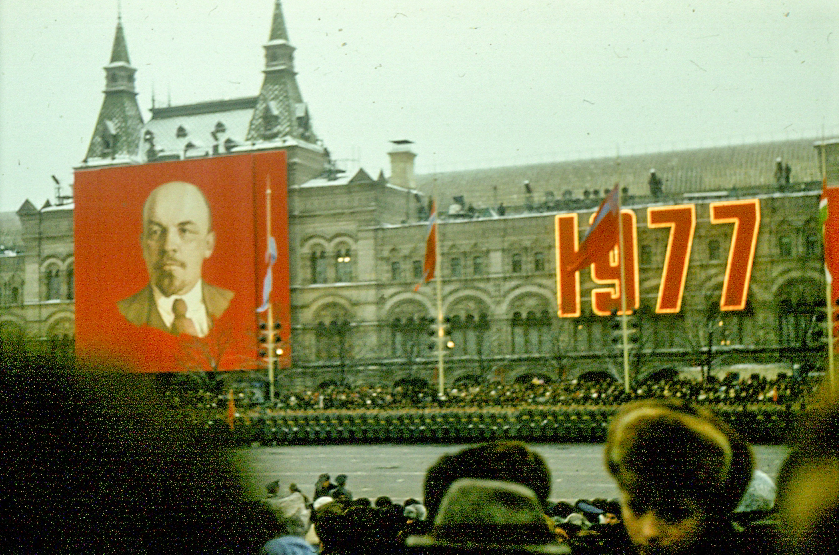


Under the outlook of world communism Vladimir Lenin separated patriotism into what he defined as proletarian, socialist patriotism from bourgeois nationalism. Lenin promoted the right of all nations to self-determination and the right to unity of all workers within nations, but he also condemned chauvinism and claimed there were both justified and unjustified feelings of national pride. Lenin explicitly denounced conventional Russian nationalism as "Great Russian chauvinism", and his government sought to accommodate the country's multiple ethnic groups by creating republics and sub-republic units to provide non-Russian ethnic groups with autonomy and protection from Russian domination. Lenin also sought to balance the ethnic representation of leadership of the country by promoting non-Russian officials in the Communist Party of the Soviet Union to counter the large presence of Russians in the Party. However, even at this early period the Soviet government appealed at times to Russian nationalism when it needed support - especially on the Soviet borderlands in the Soviet Union's early years.
Stalin emphasized a centralist Soviet socialist patriotism that spoke of a collective "Soviet people" and identified Russians as being the "elder brothers of the Soviet people". During World War II, Soviet socialist patriotism and Russian nationalism merged, portraying the war not just as a struggle of communists versus fascists, but more as a struggle for national survival. During the war, the interests of the Soviet Union and the Russian nation were presented as the same, and as a result Stalin's government embraced Russia's historical heroes and symbols, and established a de facto alliance with the Russian Orthodox Church. The war was described by the Soviet government as the Great Patriotic War. Nationalities deemed "unreliable" were persecuted, and there were widespread deadly deportations during the Second World War.
Nikita Khrushchev moved the Soviet government's policies away from Stalin's reliance on Russian nationalism. Khrushchev promoted the notion of the people of the Soviet Union as being a supranational "Soviet People" that became state policy after 1961. This did not mean that individual ethnic groups lost their separate identities or were to be assimilated but instead promoted a "brotherly alliance" of nations that intended to make ethnic differences irrelevant. At the same time, Soviet education emphasized an "internationalist" orientation. Many non-Russian Soviet people suspected this "Sovietization" to be a cover for a new episode of "Russification", in particular because learning the Russian language was made a mandatory part of Soviet education, and because the Soviet government encouraged ethnic Russians to move outside of Russia and settle in other Soviet republics.
Efforts to achieve a united Soviet identity were severely damaged by the severe economic problems in the Soviet Union in the 1970s and 1980s resulting in a wave of anti-Soviet sentiment among non-Russians and Russians alike. Mikhail Gorbachev presented himself as a Soviet patriot dedicated to address the country's economic and political challenges, but he was unable to restrain the rising regional and sectarian ethnic nationalism, with the USSR breaking up in 1991.
Contemporary Soviet patriotism
In modern day Russia, the Communist Party of the Russian Federation is often said to follow the ideology of Soviet patriotism.
In many post-Soviet states such as Russia, Ukraine, Moldova, Belarus, Kazakhstan and others, there exists nostalgia for the Soviet Union, primarily among the older generation of people. Soviet symbolism and propaganda has been utilized by the Russian forces during the Russo-Ukrainian War (especially during the 2022 Russian invasion of Ukraine), to legitimize the actions of the Russian forces in Ukraine.
References
Bibliography
References
- ''The Current digest of the Soviet press , Volume 39, Issues 1-26''. American Association for the Advancement of Slavic Studies, 1987. Pp. 7.
- Dobrenko, Evgeny. (2020-07-14). "Late Stalinism". Yale University Press.
- Christopher Read. ''Lenin: a revolutionary life''. Digital Printing Edition. Oxon, England, UK; New York, New York, USA: Routledge, 2006. Pp. 115.
- Naimark, Norman M.. (2002-09-19). "Fires of Hatred: Ethnic Cleansing in Twentieth-Century Europe". Harvard University Press.
- Bozóki & Ishiyama, p245
- (19 December 2018). "Ностальгия по СССР". levada.ru.
- (19 December 2018). "Russia vs. Ukraine: More Russians Want the Soviet Union and Communism Back Amid Continued Tensions". [[Newsweek]].
This article was imported from Wikipedia and is available under the Creative Commons Attribution-ShareAlike 4.0 License. Content has been adapted to SurfDoc format. Original contributors can be found on the article history page.
Ask Mako anything about Soviet patriotism — get instant answers, deeper analysis, and related topics.
Research with MakoFree with your Surf account
Create a free account to save articles, ask Mako questions, and organize your research.
Sign up freeThis content may have been generated or modified by AI. CloudSurf Software LLC is not responsible for the accuracy, completeness, or reliability of AI-generated content. Always verify important information from primary sources.
Report