From Surf Wiki (app.surf) — the open knowledge base
Sovetsk, Kaliningrad Oblast
Town in Kaliningrad Oblast, Russia
Town in Kaliningrad Oblast, Russia
| Field | Value |
|---|---|
| en_name | Sovetsk |
| ru_name | Советск |
| image_skyline | Старый Тильзит.jpg |
| image_caption | Old town of Sovetsk, with German-era buildings |
| coordinates | |
| map_label_position | right |
| image_coa | Coat of Arms of Sovetsk.svg |
| image_flag | Flag of Sovetsk.png |
| pushpin_map | Russia Kaliningrad Oblast#European Russia#Europe |
| federal_subject | Kaliningrad Oblast |
| adm_city_jur | town of oblast significance of Sovetsk |
| adm_city_jur_ref | |
| adm_ctr_of | town of oblast significance of Sovetsk |
| adm_ctr_of_ref | |
| inhabloc_cat | Town |
| urban_okrug_jur | Sovetsky Urban Okrug |
| urban_okrug_jur_ref | |
| mun_admctr_of | Sovetsky Urban Okrug |
| mun_admctr_of_ref | |
| leader_title | Head |
| leader_name | Viktor Smilgin |
| pop_2010census | 41705 |
| pop_2010census_ref | |
| pop_latest | 43224 |
| pop_latest_date | 2002 |
| pop_latest_ref | |
| established_date | 1288 |
| current_cat_date | 1552 |
| postal_codes | 238750 |
| dialing_codes | 40161 |
| website | https://sovetsk.gov39.ru/ |
Sovetsk (; ; ; ) is a town in Kaliningrad Oblast, Russia, located on the south bank of the Neman River which forms the border with Lithuania.
Founded in the medieval period and granted municipal rights in 1552, it is one of the historically most important towns of the oblast and the traditional capital of the region of Lithuania Minor. It was the place where two treaties were concluded, of great importance in the history of France, Poland, Lithuania, Germany and Russia. It is the place of origin of the Tilsit cheese.
With a population of 38,614 as of 2023 it is the second largest city of the Kaliningrad Oblast.
History
Early history
Tilsit, which received civic rights from Albert, Duke of Prussia in 1552, developed around a castle of the Teutonic Knights, known as the Schalauer Haus, founded in 1288. In 1454, King Casimir IV Jagiellon incorporated the region to the Kingdom of Poland upon the request of the anti-Teutonic Prussian Confederation. After the subsequent Thirteen Years' War (1454–1466), the settlement was a part of Poland as a fief held by the Teutonic Knights, and thus was located within the Polish–Lithuanian union, later elevated to the Polish–Lithuanian Commonwealth.
In the winter of 1678–1679, during the Scanian War, the town was occupied by Sweden. From the 18th century, it was part of the Kingdom of Prussia. During the Seven Years' War, in 1757–1762, the town was under Russian control. Afterwards it fell back to Prussia.
Late modern period

The Treaties of Tilsit were signed here in July 1807, the preliminaries of which were settled by the emperors Alexander I of Russia and Napoleon I of France on a raft moored in the Neman River. This treaty, which created the Kingdom of Westphalia and the Duchy of Warsaw, completed Napoleon's humiliation of the Kingdom of Prussia, when it was deprived of one half of its dominions. Three days before its signing, the Prussian queen Louise (1776–1810) tried to persuade Napoleon in a private conversation to ease his hard conditions on Prussia; though unsuccessful, Louise's effort endeared her to the Prussian people.
In 1811, a new ship-of-the-line of the French navy was named Tilsitt, to commemorate this treaty. This ship of 80 guns of the Bucentaure class was built in Antwerp. After the fall of the French empire, the ship was transferred to the new Dutch navy and named Neptunus.
Until 1945, a marble tablet marked the house in which King Frederick William III of Prussia and Queen Louise resided. Also, in the former Schenkendorf Platz was a monument to the poet Max von Schenkendorf (1783–1817), a native of Tilsit; a statue of Lenin was erected in its place in 1967.
Following the unsuccessful Polish November Uprising, hundreds of Polish insurgents, including professors and students of the Wilno University, were interned in the town in 1832.

During the 19th century when the Lithuanian language in Latin characters was banned within the Russian Empire, Tilsit was an important centre for printing Lithuanian books which then were smuggled by Knygnešiai to the Russian-controlled part of Lithuania. The Lithuanian Literary Society with a library and an archaeological collection was active in the town. In the 19th century, there were four churches in the town: two Lutheran (one Lithuanian and one German), one Calvinist, and one Catholic, as well as a synagogue. The local Lithuanian population was subjected to Germanisation policies, intensified after the city became part of the German Empire in 1871, which resulted in a decrease in the share of Lithuanians in the town's population. In 1877, weekly German-language services were introduced in the Lithuanian church, alongside the Lithuanian services. The bridge was built in 1907 and rebuilt in 1946. The town was occupied by Russian troops between 26 August 1914 and 12 September 1914 during World War I. The Act of Tilsit was signed here by leaders of the Lietuvininks in 1918.

World War II and post-war period
Hitler visited the town just before World War II, and a photo was taken of him on the famous bridge over the Neman River. During the war, the Germans operated a forced labour subcamp of the Stalag I-A prisoner-of-war camp for Allied POWs in the town, and expelled Poles from German-occupied Poland were also enslaved as forced labour in the town's vicinity. Tilsit was occupied by the Red Army on January 20, 1945 (during the East Prussian offensive), and was annexed by the Soviet Union in 1945. The remaining Germans who had not evacuated were subsequently expelled in accordance with the Potsdam Agreement and replaced with Soviet citizens. The town was renamed Sovetsk in honor of Soviet rule.
Modern Sovetsk has sought to take advantage of Tilsit's tradition of cheese production (Tilsit cheese), but the new name ("Sovetsky cheese") has not inherited its predecessor's reputation.
Since the dissolution of the Soviet Union in 1991, there has been some discussion about the possibility of restoring the town's original name. In 2010, the Kaliningrad Oblast's then-governor Georgy Boos of the ruling United Russia Party proposed restoring the original name and combining the town with the Neman and Slavsk Districts to form a new Tilsit District. Boos emphasized that this move would stimulate development and economic growth, but that it could happen only through a referendum. The idea was opposed by the Communist Party of Russia; in particular, Igor Revin, the Kaliningrad Secretary of the Communist Party, accused Boos and United Russia of Germanophilia.
In April 2007, government restrictions on visits to border areas were tightened, and for foreigners, and Russians living outside the border zone, travel to the Sovetsk and Bagrationovsk areas required advance permission from the Border Guard Service (in some cases up to 30 days beforehand). It was alleged that this procedure slowed the development of these potentially thriving border towns. In June 2012, these restrictions were lifted (the only restricted area is the Neman river shoreline), which gave a boost to local and international tourism.
Geography
Sovetsk lies in the historic region of Lithuania Minor at the confluence of the Tylzha and Neman rivers. Panemunė in Lithuania was formerly a suburb of the town; after Germany's defeat in World War I, the trans-Neman suburb was detached from Tilsit (with the rest of the Klaipėda Region) in 1920.
Climate
Sovetsk has a borderline oceanic climate (Cfb in the Köppen climate classification) using the -3 C boundary, or a humid continental climate (Dfb) using the 0 C boundary.
Administrative and municipal status
Within the framework of administrative divisions, it is incorporated as the town of oblast significance of Sovetsk—an administrative unit with the status equal to that of the districts. As a municipal division, the town of oblast significance of Sovetsk is incorporated as Sovetsky Urban Okrug.
Architecture
Many of the town's buildings were destroyed during World War II. However, the old town centre still includes several German buildings, including those of Jugendstil design. The Queen Louise Bridge, now connecting the town to Panemunė in Lithuania, retains an arch – all that is left of a more complex pre-war bridge structure built in 1907. The carved relief portrait of Queen Louise above the arch still exists; however, the German inscription "KÖNIGIN LUISE-BRÜCKE" was removed after the Soviets took over the town.
File:Tilsit Queen Louise-Bridge.jpg|Queen Louise bridge File:Замок в тильзите.jpg|Tilsit castle File:Дома на улице победы.jpg|Old townhouses File:Старинные дома на улице Победы.jpg|Old townhouses File:Масонская «Ложа трех патриархов» - сейчас дворец творчества.jpg|New Loge, built 1925-26 by Erich Mendelsohn
Historical population
_in_1910,_one_of_them_has_a_billboard_in_Lithuanian_language_Knigynas_(book_store).jpg)
|1959|31941 |1989|41881 |2002|43224 |2004|43300 |2010|41705 |2021|38910
Ethnic composition in 2021:
- Russians: 86.0%
- Lithuanians: 1.23%
- Ukrainians: 1.01%
- Belarusians: 0.71%
- Romani: 0.44%
- Armenians: 0.33%
- Tatars: 0.23%
- Germans: 0.21%
- Azeris: 0.17%
- Uzbeks: 0.15%
- Poles: 0.11%
- Tajiks: 0.08%
- Kazakhs: 0.07%
- Georgians: 0.06%
- Kyrgyz: 0.06%
- Lezgins: 0.06%
Twin towns – sister cities
Sovetsk is twinned with:
- GER Kiel, Germany
- SVK Považská Bystrica, Slovakia
Notable people
.jpg)

.jpg)
- Daniel Klein (1609–1666), Lithuanian pastor and grammarian
- Johann Christian Jacobi (1719–1784), German oboist
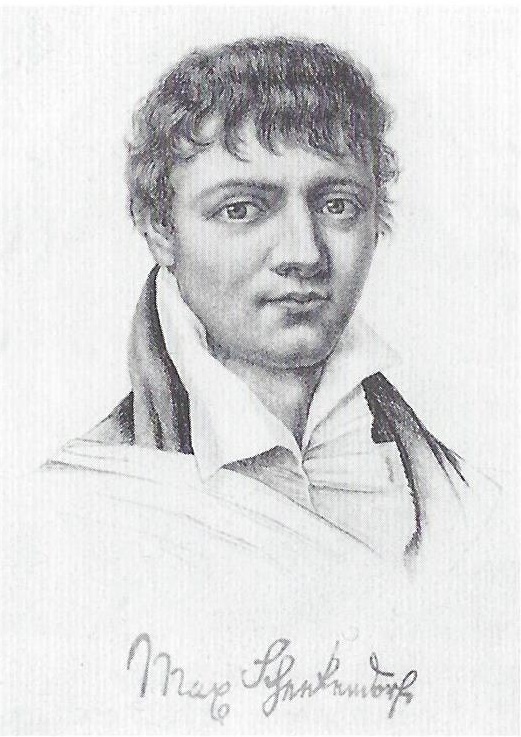
- Max von Schenkendorf (1783–1817), German poet and author
- Franz Meyen (1804–1840), German botanist
- Hans Victor von Unruh (1806–1886), German politician and technician
- Louis Kolitz (1845-1912), German artist
- Wilhelm Voigt (1849–1922), the inspiration for The Captain of Köpenick
- Margarete Poehlmann (1856–1923), German educator and politician, first woman to speak in a Prussian parliament
- Gustaf Kossinna or Kossina (1858–1931), archaeologist
- Johanna Wolff (1858–1943), German author
- Oscar Friedheim (1858–1928), British businessman of German-Jewish descent
- Max Scherwinsky (1859–1909) German-born architect working mainly in Riga, Latvia
- Emil Wiechert (1861–1928), German geophysicist
- Raphael Friedeberg (1863–1940), German physician and politician
- Max Gülstorff (1882–1947), German actor
- Carl Brinkmann (1885–1954), German sociologist and economist
- Franz Scheidies (1890–1942) general in the Wehrmacht during WWII
- Walter Weiß (1890–1967), German general during WWII.
- Friedrich Schröder Sonnenstern (1892–1982), Illustrator
- Dick Shikat (1897–1968) German professional wrestler and World Heavyweight Champion
- Frank Wisbar (1899–1967) German director
- Karl Hermann Martell (1906–1966), German actor
- Franz Abromeit (1907–1964), SS officer, Reichssicherheitshauptamt (Judenreferent)
- Joachim Sadrozinski (1907–1944), officer and resistance fighter
- Erna Dorn (1911–1953) victim of injustice in the German Democratic Republic
- Siegfried Graetschus (1916–1943), SS-Oberscharführer, killed during revolt in Sobibor extermination camp
- Johannes Bobrowski (1917–1965), German writer
- Werner Abrolat (1924–1997), German actor
- Gunter Wyszecki (1925–1985), German-Canadian physicist
- Armin Mueller-Stahl (born 1930), German actor, honorary citizen since 8 December 2011
- Sabine Bethmann (1931–2021), German actress
- Jürgen Kurbjuhn (1940–2014), football player
- Klaus-Dieter Sieloff (1942–2011), football player
- John Kay (born 1944), lead singer of the late 1960s rock band Steppenwolf
- Edgar Froese (1944–2015), German founder and leader of the electronic music group Tangerine Dream
- Victor Ivrii (born 1949) a Soviet, Canadian mathematician
- Andrei Sosnitskiy (born 1962) a Belarusian professional football coach and a former player
Popular culture
The town is the location of a scene in Leo Tolstoy's War and Peace (Book Two Part Two Chapter 21). Tilsit is the setting for part of the 1939 film "The Journey to Tilsit", which is based on a 1917 novella of the same name written by Hermann Sudermann.
Gallery
Wappen von Tilsit.gif|Coat of arms of Tilsit (1905) Bundesarchiv_B_145_Bild-P001239,_Tilsit.jpg|Market square of Tilsit with the town hall and the Schenkendorf statue, 1930 Tilsit_an_der_Memel.JPG|Old view of Tilsit, Советск - Школьная 13.jpg|Gymnasium Дом,где Мюллер-Шталь.jpg|The birthplace of Armin Mueller-Stahl, which has been a listed building since 2010
References
Notes
Sources
- Northern Germany by Karl Baedeker, 14th revised edition, London, 1904, p. 178.
References
- {{ru-pop-ref. 2010Census
- . (1892). "Słownik geograficzny Królestwa Polskiego i innych krajów słowiańskich, Tom XII".
- Górski, Karol. (1949). "Związek Pruski i poddanie się Prus Polsce: zbiór tekstów źródłowych". Instytut Zachodni.
- Górski, pp. 96–97, 214–215
- Kasparek, Norbert. (2014). "Na tułaczym szlaku... Powstańcy Listopadowi na Pomorzu". Muzeum w Koszalinie, Archiwum Państwowe w Koszalinie.
- Maroszek, Józef. (2007). "Przewodnik historyczno-turystyczny po dziedzictwie kulturowym pogranicza Polska – Litwa – Kaliningrad".
- . (1892). "Słownik geograficzny Królestwa Polskiego i innych krajów słowiańskich, Tom XII".
- (2022). "The United States Holocaust Memorial Museum Encyclopedia of Camps and Ghettos 1933–1945. Volume IV". [[Indiana University Press]], [[United States Holocaust Memorial Museum]].
- Wardzyńska, Maria. (2017). "Wysiedlenia ludności polskiej z okupowanych ziem polskich włączonych do III Rzeszy w latach 1939-1945". [[Institute of National Remembrance.
- (2004). "The Russian Domestic Debate on Kaliningrad: Integrity, Identity and Economy". LIT Verlag.
- link. [[Komsomolskaya Pravda]]. (24 March 2010)
- Stolyarov. Bulat. link. Snob.ru. (25 March 2010)
- "''EU–Russian Border Security. Stereotypes and Realities.''}} {{small".
- Resolution #639
- Law #376
- 1989Census
- {{ru-pop-ref. 2002Census
- "Ethnic composition of Russia 2021".
- "Наши партнеры". Sovetsk.
- [http://www.berliner-zeitung.de/panorama/armin-mueller-stahl-ehrenbuerger-seiner-heimatstadt,10808334,11279376,view,asTicker.html Armin Mueller-Stahl Ehrenbürger seiner Heimatstadt] {{Webarchive. link. (September 23, 2015 [[Berliner Zeitung]], 8 December 2011 {{in lang). de
- (1949). "War and Peace". International Collectors Library.
This article was imported from Wikipedia and is available under the Creative Commons Attribution-ShareAlike 4.0 License. Content has been adapted to SurfDoc format. Original contributors can be found on the article history page.
Ask Mako anything about Sovetsk, Kaliningrad Oblast — get instant answers, deeper analysis, and related topics.
Research with MakoFree with your Surf account
Create a free account to save articles, ask Mako questions, and organize your research.
Sign up freeThis content may have been generated or modified by AI. CloudSurf Software LLC is not responsible for the accuracy, completeness, or reliability of AI-generated content. Always verify important information from primary sources.
Report