From Surf Wiki (app.surf) — the open knowledge base
Southern Qi
Chinese ruling dynasty from 479 to 502
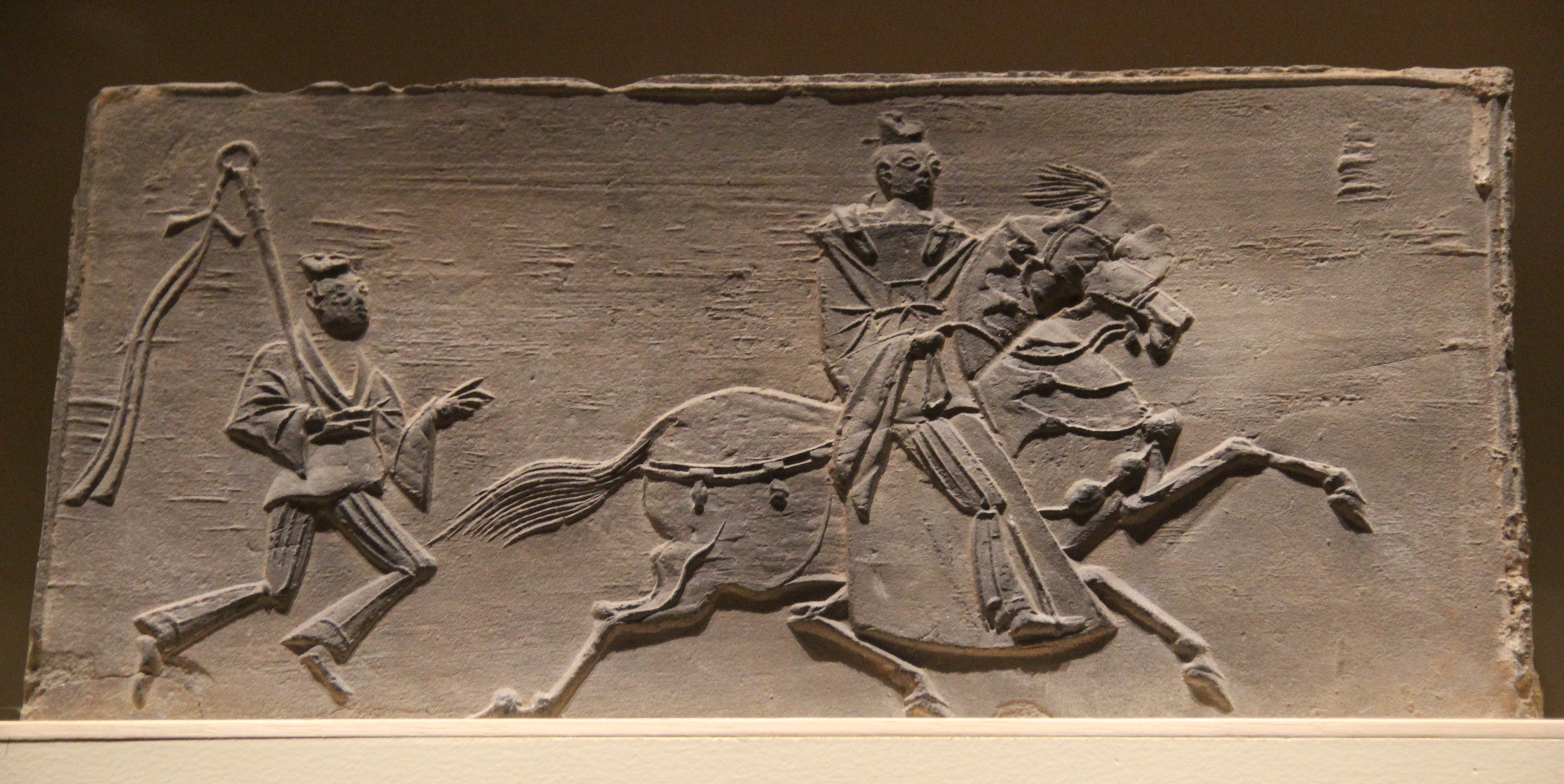
Chinese ruling dynasty from 479 to 502
| Field | Value | ||||
|---|---|---|---|---|---|
| native_name | |||||
| conventional_long_name | Qi | ||||
| common_name | Southern Qi | ||||
| era | |||||
| status | Empire | ||||
| status_text | |||||
| empire | |||||
| government_type | Monarchy | ||||
| year_start | 479 | ||||
| year_end | 502 AD | ||||
| year_exile_start | |||||
| year_exile_end | |||||
| event_start | |||||
| date_start | 3 June | ||||
| event_end | |||||
| date_end | 24 April | ||||
| event1 | |||||
| date_event4 | |||||
| event_pre | |||||
| event_post | |||||
| date_post | |||||
| p1 | Liu Song dynasty | ||||
| flag_p1 | |||||
| image_p1 | |||||
| s1 | Liang dynasty | ||||
| flag_s1 | |||||
| image_s1 | |||||
| flag_s5 | |||||
| image_flag | |||||
| flag | |||||
| flag_type | |||||
| image_coat | |||||
| symbol | |||||
| symbol_type | |||||
| image_map | Southern Qi map.jpg | ||||
| image_map_caption | Southern Qi and its neighbors. They were bordered by the Northern Wei to the north. | ||||
| image_map2 | |||||
| image_map2_caption | |||||
| capital | Jiankang | ||||
| capital_exile | |||||
| longEW | |||||
| currency | Chinese coin, | ||||
| Chinese cash | |||||
| leader1 | Emperor Gao | ||||
| leader2 | Emperor Wu | ||||
| leader3 | Emperor He | ||||
| year_leader1 | 479–482 | ||||
| year_leader2 | 482–493 | ||||
| year_leader3 | 501–502 | ||||
| title_leader | Emperor | ||||
| representative1 | |||||
| year_representative1 | |||||
| title_representative | |||||
| deputy1 | |||||
| year_deputy1 | |||||
| title_deputy | |||||
| legislature | |||||
| house1 | |||||
| type_house1 | |||||
| house2 | |||||
| type_house2 | |||||
| stat_year1 | |||||
| stat_area1 | |||||
| stat_pop1 | |||||
| footnotes | |||||
| today | China | ||||
| Vietnam |
Chinese cash|| Vietnam
Qi, known in historiography as the Southern Qi ( or ) or Xiao Qi (), was a Chinese imperial dynasty and the second of the four Southern dynasties during the Northern and Southern dynasties era. It followed the Liu Song dynasty and was succeeded by the Liang dynasty. The main polity to its north was the Northern Wei.
History
The dynasty began in 479, when Xiao Daocheng forced the Emperor Shun of Liu Song into yielding the throne to him, ending Liu Song and starting Southern Qi, as its Emperor Gao. The dynasty's name was taken from Xiao's fief, which roughly occupied the same territory as the Warring States era Kingdom of Qi. The Book of the Qi does not mention whether or not Xiao had any blood relationship to either the House of Jiang or House of Tian, the two dynasties which had previously ruled that kingdom.
During its 23-year history, the dynasty was largely filled with instability, as after the death of the capable Emperor Gao and Emperor Wu, Emperor Wu's grandson Xiao Zhaoye was assassinated by Emperor Wu's intelligent but cruel and suspicious cousin Xiao Luan, who took over as Emperor Ming, and proceeded to carry out massive executions of Emperor Gao's and Emperor Wu's sons, as well as officials whom he suspected of plotting against him.
The arbitrariness of these executions was exacerbated after Emperor Ming was succeeded by his son Xiao Baojuan, whose actions drew multiple rebellions, the last of which, by the general Xiao Yan led to Southern Qi's fall and succession by Xiao Yan's Liang Dynasty.
More than fifty percent of Tuoba Xianbei princesses of the Northern Wei were married to southern Han Chinese men from the imperial families and aristocrats from southern China of the Southern dynasties who defected and moved north to join the Northern Wei. Tuoba Xianbei Princess Nanyang (南陽長公主) was married to Xiao Baoyin, a Han Chinese member of Southern Qi royalty. Xianbei Tuoba Emperor Xiaozhuang of Northern Wei's sister the Shouyang Princess was wedded to the Han Chinese Liang dynasty ruler Emperor Wu of Liang's son .
War with Northern Wei
In 479, after Xiao Daocheng usurped the throne of Liu Song, the Northern Wei emperor prepared to invade under the pretext of installing Liu Chang, son of Emperor Wen of Liu Song who had been in exile in Wei since 465 AD. Wei troops began to attack Shouyang but could not take the city. The Southern Qi began to fortify their capital, Jiankang, in order to prevent further Wei raids. Multiple sieges and skirmishes were fought until 481 but the war did not witness any major campaign. A peace treaty was signed in 490 with the Emperor Wu.
Sovereigns of Southern Qi Dynasty (479–502) {{anchor|Rulers}}
| Posthumous Name | Family name and given names | Period of Reigns | Era names |
|---|---|---|---|
| Emperor Gao of Southern Qi (齊高帝) | Xiao Daocheng (蕭道成) | 479–482 | Jianyuan (建元) 479–482 |
| Emperor Wu of Southern Qi (齊武帝) | Xiao Ze (蕭賾) | 482–493 | Yongming (永明) 483–493 |
| – | Xiao Zhaoye (蕭昭業) | 493–494 | Longchang (隆昌) 494 |
| – | Xiao Zhaowen (蕭昭文) | 494 | Yanxing (延興) 494 |
| Emperor Ming of Southern Qi (齊明帝) | Xiao Luan (蕭鸞) | 494–498 | Jianwu (建武) 494–498 |
| Yongtai (永泰) 498 | |||
| – | Xiao Baojuan (蕭寶卷) | 499–501 | Yongyuan (永元) 499–501 |
| Emperor He of Southern Qi (齊和帝) | Xiao Baorong (蕭寶融) | 501–502 | Zhongxing (中興) 501–502 |
Sovereigns' family tree
Notes
References
Citations
Sources
- Book of Southern Qi
- History of Southern Dynasties
- Zizhi Tongjian
References
- ''[[Book of Southern Qi]]'', [[:zh:s:http://zh.wikisource.org/wiki/南齊書/卷1. vol. 1]].
- ''[[Zizhi Tongjian]]'', [[:zh:s:資治通鑑/卷145. vol. 145]].
- "汉典:萧齐".
- Book of the Southern Qi 南齊書, chapter 1
- 川本『中国の歴史、中華の崩壊と拡大、魏晋南北朝』、P150
- 川本『中国の歴史、中華の崩壊と拡大、魏晋南北朝』、P152
- 川本『中国の歴史、中華の崩壊と拡大、魏晋南北朝』、P153
- (2007). "Cultural Convergence in the Northern Qi Period: A Flamboyant Chinese Ceramic Container : a Research Monograph". Metropolitan Museum of Art.
- (1980). "Teng-Hsien: An Important Six Dynasties Tomb". Artibus Asiae. Supplementum.
- Tang, Qiaomei. (May 2016). "Divorce and the Divorced Woman in Early Medieval China (First through Sixth Century)". Harvard University.
- (2004). "China: Dawn of a Golden Age, 200–750 AD". Metropolitan Museum of Art.
- (22 September 2014). "Ancient and Early Medieval Chinese Literature (vol.3 & 4): A Reference Guide, Part Three & Four". BRILL.
This article was imported from Wikipedia and is available under the Creative Commons Attribution-ShareAlike 4.0 License. Content has been adapted to SurfDoc format. Original contributors can be found on the article history page.
Ask Mako anything about Southern Qi — get instant answers, deeper analysis, and related topics.
Research with MakoFree with your Surf account
Create a free account to save articles, ask Mako questions, and organize your research.
Sign up freeThis content may have been generated or modified by AI. CloudSurf Software LLC is not responsible for the accuracy, completeness, or reliability of AI-generated content. Always verify important information from primary sources.
Report