From Surf Wiki (app.surf) — the open knowledge base
South Carolina General Assembly
Legislative branch of the state government of South Carolina
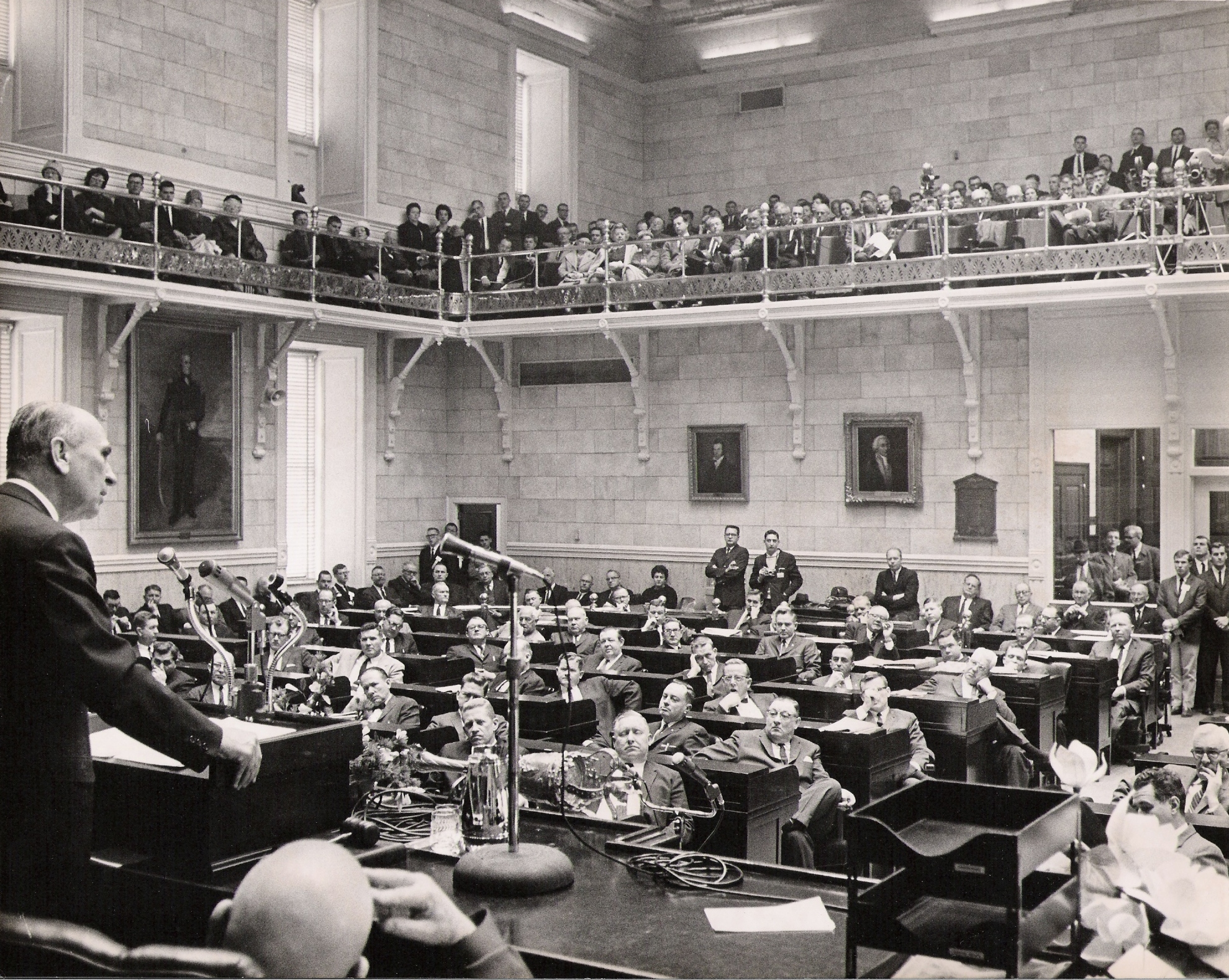
Legislative branch of the state government of South Carolina
| Field | Value | |||
|---|---|---|---|---|
| background_color | name = South Carolina General Assembly | |||
| coa_pic | Seal of South Carolina.svg | |||
| coa_caption | Great Seal of the State of South Carolina | |||
| session_room | SC State House at evening.jpg | |||
| house_type | Bicameral | |||
| houses | Senate | |||
| House of Representatives | ||||
| foundation | ||||
| leader1_type | Senate President | |||
| leader1 | Thomas Alexander | |||
| party1 | (R) | |||
| election1 | December 6, 2021 | |||
| leader2_type | House Speaker | |||
| leader2 | Murrell Smith | |||
| party2 | (R) | |||
| election2 | May 12, 2022 | |||
| house1 | Senate | |||
| house2 | House | |||
| members | 170 voting members: | |||
| 46 Senators | ||||
| 124 Representatives | ||||
| structure1 | [[File:SC Senate 2024.svg | 250px]] | ||
| structure2 | [[File:South Carolina House of Representatives 2022.svg | 250px]] | ||
| *{{nowrap | {{Color box | #FF0000 | border | silver}} Republican (34)}} |
| *{{nowrap | {{Color box | #0000FF | border | silver}} Democratic (12)}} |
| political_groups2 | Majority | |||
| *{{nowrap | {{Color box | #FF0000 | border | silver}} Republican (88)}} |
| *{{nowrap | {{Color box | #0000FF | border | silver}} Democratic (36)}} |
| last_election1 | 5 November 2024 | |||
| last_election2 | 5 November 2024 | |||
| next_election1 | November 7, 2028 | |||
| next_election2 | November 3, 2026 | |||
| meeting_place | South Carolina State House | |||
| Columbia | ||||
| website | ||||
| constitution | Constitution of South Carolina |
House of Representatives 46 Senators 124 Representatives Majority
Minority
Minority
Columbia
The South Carolina General Assembly, also called the South Carolina Legislature, is the state legislature of the U.S. state of South Carolina. The legislature is bicameral and consists of the lower South Carolina House of Representatives and the upper South Carolina Senate. All together, the General Assembly consists of 170 members. The legislature convenes at the State House in Columbia.
Prior to the 1964 federal Reynolds v. Sims decision by the U.S. Supreme Court, each county doubled as a legislative district, with each county electing one senator and at least one representative. Moreover, each county's General Assembly delegation also doubled as its county council, as the state constitution made no provision for local government.
The "one man, one vote" provision of Reynolds v. Sims caused district lines to cross county lines, causing legislators to be on multiple county councils. This led to the passage of the Home Rule Act of 1975, which created county councils that were independent of the General Assembly. However, the General Assembly still retains considerable authority over local government. As a result, the legislature still devotes considerable time to local matters, and county legislative delegations still handle many matters that are handled by county governments in the rest of the country.
There are 124 members of the South Carolina House of Representatives, who are elected every two years, and the South Carolina Senate has 46 members, elected every four years concurrent to the presidential election. For both houses, there are no term limits. The General Assembly meets in joint session to elect judges, with all 170 members having an equal vote in such elections.
Role
The main role of the South Carolina General Assembly is to pass laws "as the common good may require." In order for a bill to become law, both the Senate and House of Representatives must vote to pass the bill by a simple majority. Then the bill must be sent to the governor. If the governor vetoes the bill, both houses can either sustain the veto or override the veto. Veto overrides require a two-thirds majority. Once he receives the bill, if the governor neither signs nor vetoes the bill, it becomes law after five days, Sundays excluded.
Qualifications
Senators
According to the South Carolina Constitution, no person may serve as a senator who:
- Is not qualified to vote in state elections
- Is not a resident of the district in which he or she seeks to represent
- Is not at least 25 years of age
- Has been convicted of or pleaded guilty to a felony or voter fraud or bribery unless 15 years has elapsed since the time was served.
Representatives
According to the South Carolina Constitution, no person may serve as a representative who:
- Is not qualified to vote in state elections
- Is not a resident of the district in which he or she seeks to represent
- Is not at least 21 years of age
- Has been convicted of or pleaded guilty to a felony or voter fraud or bribery unless 15 years has elapsed since the time was served.
Officers

Senate
House of Representatives
Historic party control
| Year | Senate | |||
|---|---|---|---|---|
| Majority | House | |||
| Majority | Governor | |||
| Control | ||||
| 1868 | Republican | Republican | Republican | |
| 1870 | ||||
| 1872 | ||||
| 1874 | ||||
| 1876 | Democratic | Democratic | ||
| 1878 | Democratic | |||
| 1880 | ||||
| 1882 | ||||
| 1884 | ||||
| 1886 | ||||
| 1888 | ||||
| 1890 | ||||
| 1892 | ||||
| 1894 | ||||
| 1896 | ||||
| 1898 | ||||
| 1900 | ||||
| 1902 | ||||
| 1904 | ||||
| 1906 | ||||
| 1908 | ||||
| 1910 | ||||
| 1912 | ||||
| 1914 | ||||
| 1916 | ||||
| 1918 | ||||
| 1920 | ||||
| 1922 | ||||
| 1924 | ||||
| 1926 | ||||
| 1930 | ||||
| 1934 | ||||
| 1938 | ||||
| 1942 | ||||
| 1946 | ||||
| 1950 | ||||
| 1954 | ||||
| 1958 | ||||
| 1962 | ||||
| 1966 | ||||
| 1970 | ||||
| 1974 | Republican | |||
| 1978 | Democratic | |||
| 1982 | ||||
| 1986 | Republican | |||
| 1990 | ||||
| 1994 | Republican | |||
| 1998 | Republican | Democratic | ||
| 2002 | Republican | |||
| 2006 | ||||
| 2010 | ||||
| 2014 | ||||
| 2018 | ||||
| 2022 | ||||
| 2024 | ||||
| 2026 | TBD | TBD |
Notes
References
References
- "South Carolina Legislature Online - House of Representatives".
- "Reynolds v. Sims 377 U.S. 533 (1964)".
- "Scoppe: The Home Rule Act that didn't really allow home rule".
- "ARTICLE III LEGISLATIVE DEPARTMENT". South Carolina Legislature.
- "ARTICLE IV EXECUTIVE DEPARTMENT". South Carolina Legislature.
- "ARTICLE III LEGISLATIVE DEPARTMENT". South Carolina Legislature.
- "ARTICLE III LEGISLATIVE DEPARTMENT". South Carolina Legislature.
This article was imported from Wikipedia and is available under the Creative Commons Attribution-ShareAlike 4.0 License. Content has been adapted to SurfDoc format. Original contributors can be found on the article history page.
Ask Mako anything about South Carolina General Assembly — get instant answers, deeper analysis, and related topics.
Research with MakoFree with your Surf account
Create a free account to save articles, ask Mako questions, and organize your research.
Sign up freeThis content may have been generated or modified by AI. CloudSurf Software LLC is not responsible for the accuracy, completeness, or reliability of AI-generated content. Always verify important information from primary sources.
Report