From Surf Wiki (app.surf) — the open knowledge base
South Africa national cricket team
National cricket team of South Africa
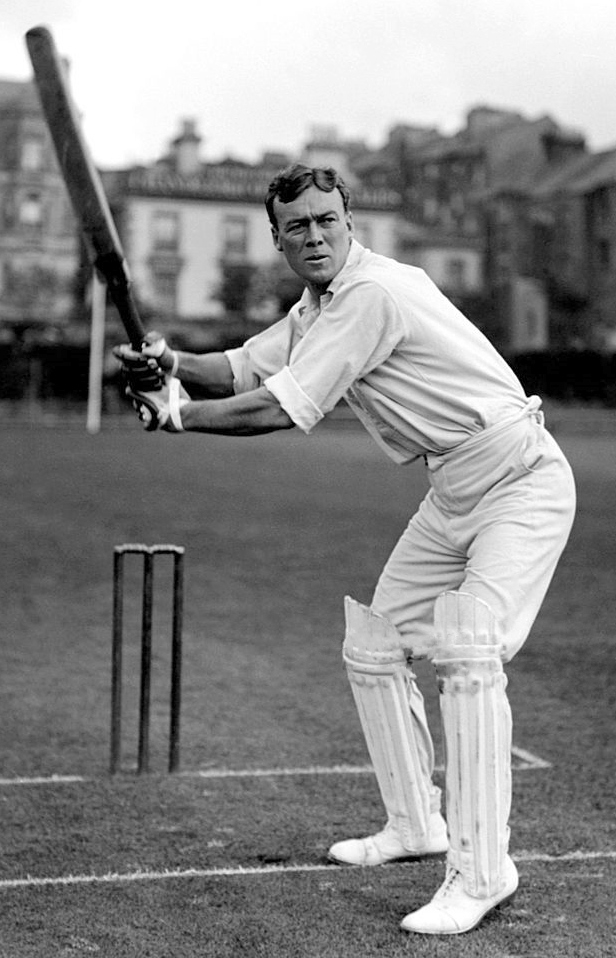
National cricket team of South Africa
| Field | Value |
|---|---|
| name | South Africa |
| image | Southafrica cricket logo.svg |
| image_size | 210px |
| alt | South Africa Cricket's coat of arms |
| website | https://cricket.co.za/ |
| nickname | Proteas |
| association | Cricket South Africa |
| test_captain | Temba Bavuma |
| od_captain | Temba Bavuma |
| t20i_captain | Aiden Markram |
| coach | Shukri Conrad |
| icc_status | Full member |
| icc_member_year | 1909 |
| icc_region | Africa Cricket Association |
| test_status_year | 1889 |
| test_rank | 2nd |
| odi_rank | 6th |
| odi_rank_best | 1st (1 May 1996) |
| t20i_rank | 5th |
| test_rank_best | 1st (1 January 1969) |
| t20i_rank_best | 1st (8 August 2012) |
| first_test | v at St George's Park, Port Elizabeth, 12–13 March 1889 |
| most_recent_test | v at Assam Cricket Association Stadium, Guwahati; 22–26 November 2025 |
| num_tests | 479 |
| num_tests_this_year | 0 |
| test_record | 191/162 |
| (126 draws) | |
| test_record_this_year | 0/0 (0 draws) |
| wtc_apps | 3 |
| wtc_first | 2019–2021 |
| wtc_best | Champions (2023–2025) |
| first_odi | v at Eden Gardens, Kolkata; 10 November 1991 |
| most_recent_odi | v at ACA–VDCA Cricket Stadium, Visakhapatnam; 6 December 2025 |
| num_odis | 698 |
| num_odis_this_year | 0 |
| odi_record | 421/250 |
| (6 ties, 21 no results) | |
| odi_record_this_year | 0/0 |
| (0 ties, 0 no results) | |
| wc_apps | 9 |
| wc_first | 1992 |
| wc_best | Semi-finals (1992, 1999, 2007, 2015, 2023) |
| first_t20i | v at Wanderers Stadium, Johannesburg; 21 October 2005 |
| most_recent_t20i | v at Wanderers Stadium, Johannesburg; 31 January 2026 |
| num_t20is | 217 |
| num_t20is_this_year | 3 |
| t20i_record | 116/97 |
| (1 ties, 3 no results) | |
| t20i_record_this_year | 2/1 |
| (0 ties, 0 no results) | |
| wt20_apps | 9 |
| wt20_first | 2007 |
| wt20_best | Runners-up (2024) |
| h_pattern_b | _collar |
| h_leftarm | FFFFF0 |
| h_body | FFFFF0 |
| h_rightarm | FFFFF0 |
| h_pants | FFFFF0 |
| a_pattern_la | _rsa_ct25 |
| a_pattern_b | _rsa_ct25 |
| a_pattern_ra | _rsa_ct25 |
| a_leftarm | 005443 |
| a_body | 005443 |
| a_rightarm | 005443 |
| a_pants | 005443 |
| t_pattern_la | _rsa_t20_25 |
| t_pattern_b | _rsa_t20_25 |
| t_pattern_ra | _rsa_t20_25 |
| t_leftarm | F2C200 |
| t_body | F2C200 |
| t_rightarm | F2C200 |
| t_pants | 005443 |
| asofdate | 31 January 2026 |
(126 draws)
(6 ties, 21 no results) (0 ties, 0 no results)
(1 ties, 3 no results) (0 ties, 0 no results)
The South Africa men's national cricket team, also known as the Proteas, represents South Africa in men's international cricket and is administered by Cricket South Africa. South Africa is a full member of the International Cricket Council. The team's nickname derives from South Africa's national flower, Protea cynaroides, commonly known as the "King Protea". South Africa are the current World Test Champions.
South Africa entered first-class and international cricket at the same time when they hosted an England cricket team in the 1888–89 season. Initially, the team was no match for Australia or England but, having gained experience and expertise, they were able to field a competitive team by the first decade of the 20th century. The team regularly played against Australia, England and New Zealand through to the 1960s, by which time there was considerable opposition to the country's apartheid policy. The ICC imposed an international ban on the team, commensurate with actions taken by other global sporting bodies. When the ban was imposed, South Africa had developed to a point where its team was arguably the best in the world, and even out-played Australia.
The ban remained in place until 1991, after which South Africa played against India, Pakistan, Sri Lanka and the West Indies for the first time. The team has been strong since its reinstatement, and has at several times held the number-one positions in international rankings. South Africa is also one of the most successful teams in ODI cricket, winning more than 60 per cent of their matches. However, the 1998 Champions Trophy was its first success in ICC-organised limited-overs tournaments. South Africa won the gold medal at the Commonwealth Games in 1998. South Africa won the 2023–2025 ICC World Test Championship, beating Australia by 5 wickets in the final.
As of February 2025, the team is currently ranked 5th in ODIs, 2nd in Tests and 5th in T20Is.
History
Beginnings and early developments
Main article: History of cricket in South Africa to 1918
European colonisation of southern Africa began on Tuesday, 6 April 1652 when the Dutch East India Company established a settlement called the Cape Colony on Table Bay, near present-day Cape Town, and continued to expand into the hinterland through the 17th and 18th centuries. It was founded as a victualling station for the Dutch East Indies trade route but soon acquired an importance of its own due to its good farmland and mineral wealth. There was virtually no British interest in South Africa until 1795 when troops under General Sir James Henry Craig seized Cape Colony during the French Revolutionary War, the Netherlands having been occupied by French forces the same year. After the British seized Cape Colony a second time in 1806 to counteract French interests in the region in the course of the Napoleonic Wars, Cape Colony was turned into a permanent British settlement. As in most other parts of the world, British colonisation brought in its wake the introduction of the game of cricket, which began to develop rapidly. The first-ever recorded cricket match in South Africa took place in 1808, in Cape Town between two service teams for a prize of one thousand rix-dollars.
The oldest cricket club in South Africa is the Port Elizabeth Cricket Club, founded in 1843. In 1862, an annual fixture "Mother Country v Colonial Born" was staged for the first time in Cape Town. By the late 1840s, the game had spread from its early roots in Cape Colony and permeated the Afrikaners in the territories of Orange Free State and Transvaal, who were descendants of the original Dutch settlers and were not considered naturally a cricket-playing people. In 1876, Port Elizabeth presented the "Champion Bat" for competition between South African towns. The first tournament was staged in Port Elizabeth. King William's Town Cricket Club won the tournament in 1876 and the following year, in 1877, too.
In 1888, Sir Donald Currie sponsored the first English team to tour South Africa. It was managed by Major R. G. Warton and captained by future Hollywood actor C. Aubrey Smith. The tour marked the advent, retrospectively, of both first-class and Test cricket in South Africa. Currie donated the Currie Cup (originally called the Kimberley Cup) that became the trophy, first won by Transvaal in 1889–90, for a national championship of the provincial teams in South Africa.
Early Test history
In 1889, South Africa became the third test-playing nation when it played against England at Port Elizabeth captained by Owen Robert Dunell. Soon after, a 2nd test was played at Cape Town. However, these two matches, as was the case with all early matches involving the erstwhile 'South African XI' against all touring teams, did not receive the status of official 'Test' matches until South Africa formed the Imperial Cricket Conference with England and Australia in 1906. Neither did the touring English team organised by Major Warton even claim to be representing the English cricket team; the matches were marketed as 'Major Warton's XI' v/s 'South African XI' instead. Even the players who participated did not know that they had played international cricket, and the side that played South Africa was regarded to be of weak county strength. The team was captained by C. Aubrey Smith, a decent medium pacer from Sussex, and for two of the Major Warton's XI, Basil Grieve and The Honourable Charles Coventry, the two Tests constituted their entire first-class career. Even so, the nascent, fledgling 'South African XI' was very weak, losing both tests comfortably to England, English spinner Johnny Briggs claiming 15–28 in the second Test at Cape Town. However, Albert Rose-Innes did make history by becoming the first South African bowler to take a five-wicket haul in Tests at Port Elizabeth.
South Africa's early Test record remains the worst among all current Test-playing nations with ten defeats and just a solitary draw from their first eleven tests, and it was not until 1904 that they began to emerge as a quality international team. They recorded their first Test win against England in 1906, which took them 17 years. The low point of this barren early period for the South African team was an English tour of 1895–96, where South Africa was humiliated 3–0 in 3 Tests by an English side for the first time remotely comparable to a full-strength team, losing all the tests by 288 runs, an innings and 197 runs, and by an innings and 32 runs respectively. The touring English team, arranged by Lord Hawke, included four of the best cricketers of the world at the time: Tom Hayward, C.B. Fry, George Lohmann and Sammy Woods.
Emergence as a quality international team
In the early 1900s, the first world-class South African cricket team emerged, comprising stars such Bonnor Middleton, Jimmy Sinclair, Charlie Llewellyn, Dave Nourse, Louis Tancred, Aubrey Faulkner, Reggie Schwarz, Percy Sherwell, Tip Snooke, Bert Vogler, and Gordon White, players who were capable of giving any international teams a run for their money. In addition to possessing batsmen such as Sinclair (the batsman with the highest strike rate in Test history), Nourse, Tancred, all-rounder Faulkner, Sherwell, Snooker, and White, the South Africans developed the world's first (and arguably greatest) spin attack which specialised in googly. Greatest among the South African googly quartet was Schwarz, who, inspired by English googly bowler Bernard Bosanquet, regarded as the inventor of the googly, developed into the most devastating googly bowler of his time. He taught diligently the secrets of the googly to allrounder Faulkner, medium-pacer Vogler, and specialist batsman White, and together the four formed a quartet which began to lead South Africa to unprecedented heights in Test cricket. Another important force during this period for South Africa was the all-around performances of Faulkner and Llewellyn. Faulkner came to be regarded as the first great South African all-rounders in the international game, regarded by some as even the greatest all-rounder in the world in the pre-1st World War period.

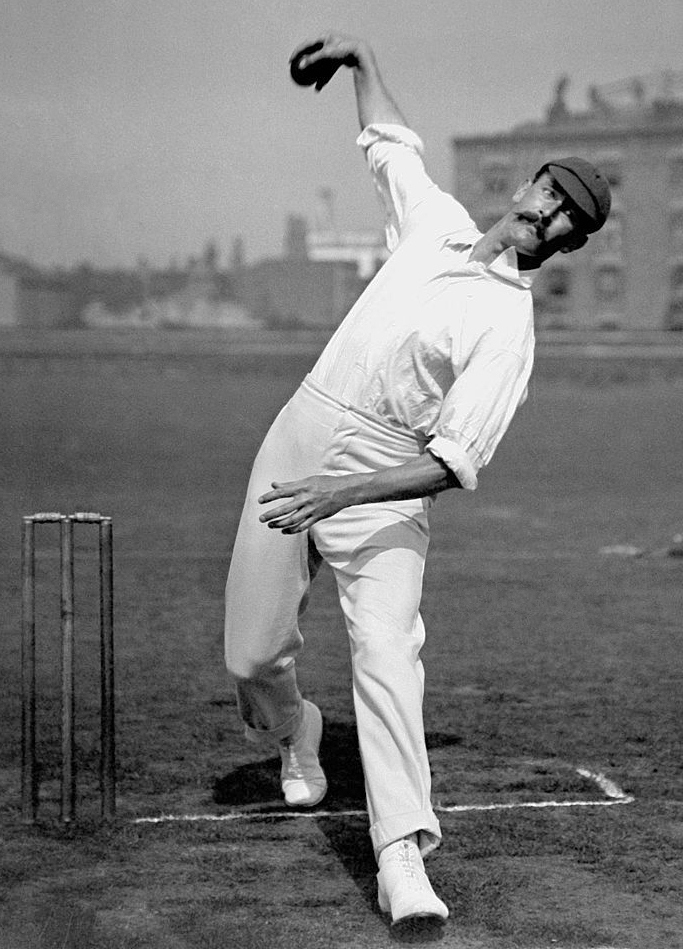
The Australian cricket team toured South Africa in 1902, with an extremely strong squad comprising many prominent members of 'The Golden Age of Australian Cricket' such as Victor Trumper, Joe Darling, Clem Hill, Syd Gregory, Monty Noble, Reggie Duff, Warwick Armstrong, Hugh Trumble, and Ernie Jones. Though South Africa lost the 3-match Test series 2–0, they avoided defeat for the first time by drawing the first game at Johannesburg, even forcing the touring side to follow on thanks to some outstanding all-round performances from Llewellyn.
In 1904, South Africa was invited by the Marylebone Cricket Club for a tour of England to play a series of first-class matches, the team not being regarded as sufficiently high standard to play-official Tests. The side won ten out of their twenty-two matches, including a thrilling tie with Middlesex, who finished among the top four in that year's County Championship, due to some magic weaved by Schwarz through his googlies. He repeated his heroics against an all-England XI, whom South Africa recorded an upset victory against by 189 runs. Unfortunately, the match was not accorded official Test status.
In 1906, England made a reciprocal tour to South Africa, which this time consisted of a 5-match official Test series. The touring English team was a second-string team, with only Colin Blythe, Schofield Haigh and JN Crawford being those who could be considered regulars of the England team. Nevertheless, South Africa was still not favouriting going into the series. However, in a shocking result at Johannesburg, the inspired South Africans, led by Sherwell and their googly quartet, defeated England by 1 wicket, thereby recording her first Test win. Schwarz, Vogler, and Faulkner led the way for South Africa. Afterwards, South Africa defeated England by 9 wickets in the 2nd Test at Johannesburg, a 243-run win in the 3rd test at the same venue as well as an innings-and-16 runs victory at Cape Town in the 5th Test to secure a 4–1 domination of England. Schwarz picked up 18 in the series at 17.22, Faulkner 14 at 19.42. However, Vogler was not so successful with 9 wickets at 22.33. The series is widely recognised as the one which heralded the arrival of South Africa as a major force on the international cricket scene. The MCC duly complied by inviting the South African team to tour England in 1907 for the first time to play-official Tests. Though the series finished 1–0 to England with two draws, the quartet of Schwarz, Faulkner, Vogler, and White were praised for their exceptional quality of googly bowling, and Schwarz and Vogler came to be recognised as * Wisden* Cricketers of the Year the following year – the first South Africans to win the prestigious award.
England's next tour of South Africa came about in 1909–10. Once again, South Africa was dominant, winning the 5-match Test series 3–2, with victories in the first Test at Johannesburg by 19 runs, second Test at Durban by 95 runs, and by 4 wickets in the 4th Test at Cape Town. South Africa's captain was Tip Snooke.
The South African cricket team toured Australia for the first time in 1910–11. The Australian team was then considered as the leading cricket team of the era, in what has been described as 'The Golden Age of Australian Cricket'. Led by the legendary Clem Hill and the batting exploits of Victor Trumper, Australia won the 5-match Test series comfortably 4–1, though South Africa made history by recording their first-ever overseas Test victory, as well as a maiden Test victory against Australia at the 3rd Test in Adelaide Oval. The tour was significant for the rise of Billy Zulch as a leading batsman of the South African cricket team; and after a resolute 150 in the 1st Test at Sydney Cricket Ground in a heavy innings defeat for South Africa, he scored South Africa's highest individual score of 105 in their maiden overseas Test win at Adelaide, a match also characterised by the all-round performances Charlie Llewellyn and the outstanding bowling of Reggie Schwarz.
South Africa's next international cricketing involvement was a triangular tournament held in England, involving England, Australia, and South Africa, the only three Test-playing nations of the era. By this time, the googly duo of Schwarz and White were past their prime, while Vogler had already retired. Additionally, retirements of key players such as Sherwell ensured that South Africa was nowhere near their best in the series. South Africa finished bottom with just one draw, but the series was notable for the debut of Herbie Taylor, regarded as one of the finest batsmen of the era. The tournament marked the international swansong for Schwarz and White. The tournament also marked the peak of the short, but moderately successful test career of medium-pacer Sid Pegler, whose rise, coinciding as it did with the decline of Schwarz and Vogler, briefly caused him to hold the mantle of the lead bowler of the South African bowling attack before as well as to emerge as South Africa's leading bowler and a resounding success in the Triangular tournament, before commitments elsewhere in the form of the appointment as a colonial district commissioner in Nyasaland forced him to drift out of cricket – meaning that the enormous potential that he showed in that Triangular, as well as the expectations that he could be a mainstay in the South African bowling in the coming years, were not quite fulfilled.

Prodigious batsman Herbie Taylor was named captain of the South African team to face off against the visiting English team in 1913–14, in what would prove South Africa's last international cricketing involvement before the First World War. Overall, the series was extremely poor for a South African side in transition, who failed to replicate the achievements of the South African sides 1905–06 and 1909–10, losing the 5-match Test series 4–0 against an extremely strong English side playing under the banner of the MCC. However, the series became memorable for Herbie Taylor's exceptional batting, who heralded his arrival as a new colossus in the world game, scoring a phenomenal 508 runs at an average of 50.80 against a terrific Sydney Barnes at his prime, who had claimed a record 49 wickets during the series at just 10.93. The cricket historian H.S. Altham wrote: "The English cricketers were unanimous that finer batting than his against Barnes at his best they never hoped to see." Neville Cardus noted it was "perhaps the most skillful of all Test performances by a batsman." It also led Cardus to count Taylor as "one of the six greatest batsmen of the post-Grace period".
The inter-war years
Main article: History of cricket in South Africa from 1918–19 to 1945
The war brought in its wake the temporary suspension of international cricket. The Currie Cup, which had hitherto not been held during the years of The Boer War (1899–1902) and on the years when England had visited as a touring team, faced cancellation during the years of war (1914–18). Cricketing activity in South Africa resumed to normal with the armistice in November 1918.
Post World War I, South Africa first hosted in 1919–20 an Australian Imperial Forces side boasting cricketers of the calibre of Jack Gregory, Herbie Collins, Bert Oldfield, and Nip Pellew. The South African XI lost both of their matches against them.
Australia became the first international team to make an official tour to South Africa in 1921–22. The first two tests at Durban and Johannesburg were drawn, with Australia sealing the series 1–0 with a 10-wicket win in the 3rd Test at Cape Town. Herbie Taylor, who captained the South Africans, finished with 200 runs at 33.33. Claude Carter was the South Africans' leading bowler, taking 15 wickets at 21.93.

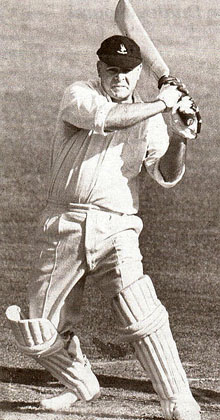
The following season, in 1922–23, an English cricket team toured. Just like nine years, previous Taylor was at his best. In the first Test at Johannesburg, he batted at number three and in the second innings scored a superb 176, the next highest score in the match was 50. Taylor's knock included 25 boundaries and was the largest by a South African against England. South Africa won the Test by 168 runs, it was Taylor's first victory as captain and as a Test player. He followed that in the second Test with scores of 9 and 68 as England narrowly won by one wicket. In the third Test at Durban he was moved back up to open the innings, he scored 91 and shared 110 with Bob Catterall. The third day's play was washed out leaving the draw inevitable in a four-day match. The fourth Test was also drawn, Taylor scored 11 at number four and then moved back as the opener in the second innings made 101. Wisden wrote: "Taylor, who hit out freely when fear of defeat had gone, played a masterly game, but he had a little luck". With the series still level at 1–1, the fifth and final Test was made Timeless to ensure a winner of the series. England's C. A. G. Russell scored two centuries in the match and South Africa were set a target fourth innings target of 344. Taylor, at number four, batted for four and a half hours over an innings of 102 however he received little support from his teammates and South Africa lost by 109 runs. Taylor finished the series with 582 runs at 64.66 and was the highest scorer on either side, his total was 278 more than the next South African. His series total was at the time a Test record for a captain, later surpassed by Don Bradman in 1936. His three centuries in the series set a South African Test record which was only bettered in 2003/04 by Jacques Kallis. The Wisden report of the series recorded that "H. W. Taylor as a batsman was in a class by himself". The series cemented Taylor's position as a leading batsman in the world.
With Faulkner retiring in 1924, the South Africans, who had only two quality players in Taylor and Cattrell, underwent somewhat of a barren period in the 1920s. However, the emergence of a new generation of South African cricketers, more so in their batting than in their bowling, in the 1930s such as Bruce Mitchell, Xen Balaskas, Ken Viljoen, Dudley Nourse, Eric Rowan, Alan Melville, Pieter van der Bijl, and Ronnie Grieveson once again ensured that South Africa became a top-quality international team. The team's leading batsmen during this era were Mitchell, Nourse, Rowan, Melville, and van der Bijl. Nourse, in particular, became famous for his hand-eye coordination and his excellent fielding, one of many to be produced by South Africa in the coming decades; natural skills which were according to legend inspired and developed by his father Dave's refusal to coach him as a youngster, demanding that he learned the rudiments of the game on his own, as he himself had. This South African team was also distinct from past South African teams in one respect: whereas the previous teams had been composed entirely of British-origin players, this team had Afrikaners like van der Bijl and Greeks such as Balaskas, regarded by wide consensus to be the greatest Greek cricketer ever.
The post-war years
Main article: History of cricket in South Africa from 1945–46 to 1970
The South African cricket team toured England in 1947. At Trent Bridge, Captain Alan Melville and vice-captain, Dudley Nourse achieved a Test match record for a third wicket partnership of 319. The following year Nourse, 38-year-old captain of Natal, was appointed Captain for the 1948 MCC Test matches in South Africa.
They continued to play regularly against England, Australia and New Zealand until 1970. The membership rules of the Imperial Cricket Conference (ICC) meant that when South Africa left the Commonwealth in May 1961, they also left the ICC. Despite the rules being changed in 1964 to allow other nations to be "Associate" members, South Africa did not reapply. Due to South African apartheid laws, which introduced legal racial segregation to the country in 1948, no non-white (defined under the legislation as either "black", "coloured" or "Indian") player was eligible to play Test cricket for South Africa.
The international ban
Main article: History of cricket in South Africa from 1970–71 to 1990
The anti-apartheid movement led the ICC to impose a moratorium on tours in 1970. This decision excluded players such as Graeme Pollock, Barry Richards and Mike Procter from international Test cricket for most of their careers. It would also cause the emigration of future stars such as Allan Lamb and Robin Smith, who both played for England, and Kepler Wessels, who initially played for Australia before returning to South Africa. World class cricketers of their day such as Clive Rice and Vintcent van der Bijl also never played Test cricket despite their strong first class records.
A rainbow nation
Main article: History of cricket in South Africa from 1990–91 to 2000
The ICC reinstated South Africa as a Test nation in 1991, and the team played its first sanctioned international match since 1970 (and its first-ever One-Day International) against India in Calcutta on 10 November 1991 losing by 3 wickets. South Africa's first Test match after re-admission was played against the West Indies in April 1992. The match was played in Bridgetown, Barbados and South Africa lost by 52 runs.
Since South Africa has been reinstated they have achieved mixed success and hosted the International Cricket Council Cricket World Cup in 2003. However, it is widely believed the sides containing the likes of Allan Donald, Shaun Pollock, Gary Kirsten, Jacques Kallis and Hansie Cronje grossly underachieved, gaining a reputation as "chokers", due to them reaching the semi-finals of the Cricket World Cup four times, but failing to progress into the finals. In the second part of the 1990s, South Africa had the highest winning percentage in ODIs of any team, but they were knocked out of the 1996 World Cup in the quarter-finals, and then were eliminated on countback after tying their semi-final against Australia in 1999.
Their most noted international win was their win in the inaugural Champions Trophy in 1998. The team also won Commonwealth Games Gold medal in 1998.
21st century Proteas
Main article: History of cricket in South Africa from 2000–01

In the 2003 World Cup, South Africa was one of the favourites but was eliminated by only one run in the group stages after they had mistakenly counted the number of runs they needed. They have also had bad press for failing in vital matches in global tournaments including the 2002 ICC Champions Trophy and the 2007 ICC World Twenty20.
With Donald retiring, Cronje banned for match-fixing and later killed in a plane crash, and Pollock also retiring from international cricket, the team once again changed shape. Graeme Smith was made captain, although following injuries to Smith and Jacques Kallis, Ashwell Prince deputised as Test captain on 12 July 2006. At the age of 29, he became the first non-white man to captain the once all-white South African cricket team. Although that racial quota policy, was rescinded in 2007, a new rule passed in 2016 stated that the team had to have an average minimum of six Black players, of which two must be Black African, in matches over the season.
With the addition of high-class players such as AB de Villiers and Hashim Amla, the South African Cricket team started rising in the ICC rankings. After many of the major players in the Australian side that had dominated the early 2000s had retired, the number one place in the ICC Test Championship was a wide-open race, with India and England having short stints as the number one side. South Africa toured England in 2012 for a three-Test series with the winner assured of being the world No. 1. South Africa went on to take the series comfortably 2–0 and claim the top spot in the rankings, a position they retained for over a full calendar year from 20 August 2012. Eight days later, on 28 August 2012, South Africa became the first team to top the rankings in all three formats of the game.
In February 2014 South Africa took on Australia in a Test series, with the winner being ranked No. 1 team in the world. Australia won the series 2–1. South Africa later in the year would regain the No. 1 ranking.
During this time of dominance in the Test arena, the ODI and T20I performances were far less consistent, as South Africa search for a winning formula ahead of the 2014 ICC World Twenty20 and the 2015 ICC Cricket World Cup. A notable ODI series loss to New Zealand at home in January 2013, and a further loss in Sri Lanka highlighted South Africa's recent difficulties. Exits from the 2012 ICC World Twenty20 and the 2013 ICC Champions Trophy only served to improve South Africa's reputation as 'chokers' in major tournaments. In the latter years of Smith's career, South Africa split the captaincy in the shorter forms of the game, with the ODI side being led by AB de Villiers and the T20I side by Faf du Plessis. After Smith's retirement, Hashim Amla was appointed captain of the test side, leading his side to victory in his first test in charge, in Galle in Sri Lanka.
Tournaments
South Africa previously had a record of failing to win world cups and was much-maligned because of this. The 1992 Cricket World Cup, for example, featured a rain-affected semi-final played before the introduction of the Duckworth-Lewis rain rule. South Africa needed 22 runs from 13 balls when rain intervened. After the delay, they were left in the situation of requiring 22 runs from one ball to progress. In 1996 they were eliminated in the quarter-finals despite being one of the fancied teams and having qualified first in their group. In 1999 South Africa lost in the semi-final to eventual champions Australia. The match ended in a tie with both South Africa and Australia managing 213 but Australia advanced to the Final as Australia finished higher than South Africa in the group.
South Africa hosted the 2003 Cricket World Cup but failed to progress beyond the group stage due to a misunderstanding of how many runs they needed to score in a rain-affected run chase. As a result of this, Shaun Pollock resigned as captain and was replaced by young batsman Graeme Smith, although Pollock continued to play for the team. Under Smith's leadership, South Africa has achieved some success, although they were hampered by the retirements of many star players, including fast bowler Allan Donald and one-day specialist Jonty Rhodes.
In the 2007 Cricket World Cup they had a rollercoaster ride that included dominant wins over England, the West Indies, Ireland, Netherlands and Scotland, and a narrow win over Sri Lanka, but devastating losses to Australia, New Zealand and Bangladesh that cost them the No. 1 ranking. Then they bowed out in the semi-finals with their lowest ever score in a World Cup as Australia bowled them out for 149 and won by 7 wickets.
In the 2011 World Cup, South Africa topped Group B with the distinction of bowling out every side they played within the 50 overs, which also included a famous victory over hosts and eventual champions India. In the quarter-final, they were beaten by New Zealand after suffering a dramatic collapse and losing eight wickets for 64 runs. Even after many setbacks, their biggest heartbreak was awaiting them in the 2015 World cup semi-final where they lost to the tournament runners-up New Zealand in a rain-affected tie. Batting first South Africa posted 281–5 and set a revised target of 298 to New Zealand, thanks to an amazing batting performance by Faf du Plessis, David Miller and captain AB de Villiers. Chasing a mammoth target of 298 New Zealand got off to a flier inspired by their captain Brendon McCullum. But the real hero of the match was Grant Elliott, who scored 84* including a second-last ball six off the then world's best bowler Dale Steyn. This saw South Africa crash out of the 2015 World Cup despite playing some fantastic cricket throughout the entire tournament.
In the 2019 Cricket World Cup South Africa lost the opening match of the tournament to England and followed this up with losses to Bangladesh and India. Rained out against West Indies, they defeated Afghanistan but then lost to New Zealand and Pakistan, to end their chances of qualifying for the next stage. In the 2023 Cricket World Cup South Africa reached the semi-final but lost its match against Australia who went on to win the final.
They also hold the record of the highest successful run chase and made the highest total (the latter record has been surpassed) in One-Day Internationals (438–9 in 49.5 overs), in an iconic match against Australia on 12 March 2006. This game is considered by many to be the greatest One-Day International ever played.
In the 2024 ICC Men's T20 World Cup, South Africa reached the final unbeaten, with a resounding 9-wicket win over Afghanistan in a one-sided demolition. This was the first appearance in an ICC final for the Proteas. Ultimately, they lost to India by 7 runs. In 2025, South Africa beat Australia (the reigning champions) in the World Test Championship final, by 5 wickets, thereby becoming world Test champions.
Records
Test matches
Main article: List of South Africa Test cricket records
One-Day Internationals
Main article: List of South Africa One Day International cricket records
T20 Internationals
Main article: List of South Africa Twenty20 International cricket records
International grounds
Tournament history
A red box around the year indicates tournaments played within South Africa
ICC
World Test Championship
| Year | League stage | Final Host | Final | Final Position | Pos | Matches | Ded | PC | Pts | PCT | P | W | L | D | T |
|---|---|---|---|---|---|---|---|---|---|---|---|---|---|---|---|
| 2019–21 | 5/9 | 13 | 5 | 8 | 0 | 0 | 6 | 600 | 264 | 44 | ENG Rose Bowl, England | DNQ | 5th | ||
| 2021–23 | 3/9 | 15 | 8 | 6 | 1 | 0 | 0 | 180 | 100 | 55.6 | ENG The Oval, England | DNQ | 3rd | ||
| 2023–25 | 1/9 | 13 | 9 | 3 | 1 | 0 | 0 | 144 | 100 | 69.44 | ENG Lord's, England | Won | 1st |
ICC Cricket World Cup
| World Cup record | Host and Year | Round | Position | P | W | L | T | NR | Squad |
|---|---|---|---|---|---|---|---|---|---|
| ENG 1975 | Not eligible, South Africa were banned due to apartheid | ||||||||
| ENG 1979 | |||||||||
| ENG WAL 1983 | |||||||||
| IND PAK 1987 | |||||||||
| AUS NZL 1992 | Semi-finals | 4/9 | 9 | 5 | 4 | 0 | 0 | Squad | |
| IND PAK SRI 1996 | Quarter-final | 5/12 | 6 | 5 | 1 | 0 | 0 | Squad | |
| ENG WAL SCO IRE NED1999 | Semi-finals | 3/12 | 9 | 6 | 2 | 1 | 0 | Squad | |
| RSA ZIM KEN 2003 | Group stage | 9/14 | 6 | 3 | 2 | 0 | 1 | Squad | |
| WIN 2007 | Semi-finals | 4/16 | 10 | 6 | 4 | 0 | 0 | Squad | |
| IND SRI BAN 2011 | Quarter-final | 5/14 | 7 | 5 | 2 | 0 | 0 | Squad | |
| AUS NZL 2015 | Semi-finals | 4/14 | 8 | 5 | 3 | 0 | 0 | Squad | |
| ENG WAL 2019 | Group stage | 7/10 | 9 | 3 | 5 | 0 | 1 | Squad | |
| IND 2023 | Semi-finals | 3/10 | 10 | 7 | 3 | 0 | 0 | Squad | |
| SA ZIM NAM 2027 | Qualified as co-hosts | ||||||||
| IND BAN 2031 | TBD | ||||||||
| Total | 0 Titles | - | 74 | 45 | 26 | 1 | 2 | - |
T20 World Cup
Main article: South Africa at the Men's T20 World Cup
| T20 World Cup record | Host and Year | Round | Position | P | W | L | T | NR | Squad | |
|---|---|---|---|---|---|---|---|---|---|---|
| RSA 2007 | Super 8s | 5/12 | 5 | 4 | 1 | 0 | 0 | Squad | ||
| ENG 2009 | Semi-finals | 3/12 | 6 | 5 | 1 | 0 | 0 | Squad | ||
| WIN 2010 | Super 8s | 7/12 | 5 | 2 | 3 | 0 | 0 | Squad | ||
| SRI 2012 | Super 8s | 8/12 | 5 | 2 | 3 | 0 | 0 | Squad | ||
| BAN 2014 | Semi-finals | 4/16 | 5 | 3 | 2 | 0 | 0 | Squad | ||
| IND 2016 | Super 10s | 5/16 | 4 | 2 | 2 | 0 | 0 | Squad | ||
| UAE OMA 2021 | Super 12s | 5/16 | 5 | 4 | 1 | 0 | 0 | Squad | ||
| AUS 2022 | Super 12s | 6/16 | 5 | 2 | 2 | 1 | 0 | Squad | ||
| USA 2024 | **Runners-up** | 2/20 | 9 | 8 | 1 | 0 | 0 | **Squad** | ||
| IND SL 2026 | Qualified | |||||||||
| AUS NZ 2028 | TBD | |||||||||
| ENG WAL SCO IRE 2030 | ||||||||||
| Total | 0 Titles | - | 49 | 32 | 16 | 0 | 1 | - |
Champions Trophy
| Champions Trophy record | Host and Year | Round | Position | P | W | L | T | NR | Squad |
|---|---|---|---|---|---|---|---|---|---|
| Bangladesh 1998 | Champions | 1/9 | 3 | 3 | 0 | 0 | 0 | Squad | |
| Kenya 2000 | Semi-finals | 4/11 | 2 | 1 | 1 | 0 | 0 | Squad | |
| Sri Lanka 2002 | Semi-finals | 4/12 | 3 | 2 | 1 | 0 | 0 | Squad | |
| England 2004 | Group stage | 6/12 | 2 | 1 | 1 | 0 | 0 | Squad | |
| India 2006 | Semi-finals | 3/12 | 4 | 2 | 2 | 0 | 0 | Squad | |
| South Africa 2009 | Group stage | 7/8 | 3 | 1 | 2 | 0 | 0 | Squad | |
| England WAL 2013 | Semi-final | 4/8 | 4 | 1 | 2 | 1 | 0 | Squad | |
| England WAL 2017 | Group stage | 5/8 | 3 | 1 | 2 | 0 | 0 | Squad | |
| PAK UAE 2025 | Semi-final | 3/8 | 4 | 2 | 1 | 0 | 1 | Squad | |
| India 2029 | TBD | ||||||||
| Total | 1 Titles | - | 28 | 14 | 12 | 1 | 1 | - |
Other
Commonwealth Games
| Commonwealth Games record | Year | Round | Position | P | W | L | T | NR | Squad |
|---|---|---|---|---|---|---|---|---|---|
| MAS 1998 | Champions | 1/16 | 5 | 5 | 0 | 0 | 0 | Squad | |
| Total | 1 Title | - | 5 | 5 | 0 | 0 | 0 | - |
Honours
ICC
Titles
- World Test Championship
- Champions (1): 2023–2025
- T20 World Cup
- Runners-up (1): 2024
- Champions Trophy
- Champions (1): 1998
Awards
- ICC Test Championship
- Winners (3): 2013–2015
- ICC ODI Championship
- Winners (2): 2008, 2009
Multi-sport event
- Commonwealth Games
- Gold medal (1): 1998
Perpetual Trophies
- Sir Vivian Richards Trophy (v )
- Winners (9): 1998-99, 2000-01, 2003-04, 2004-05, 2007-08, 2010, 2014-15, 2021, 2022–23,
- Basil D'Oliveira Trophy (v )
- Winners (2): 2008, 2012
- Gandhi-Mandela Trophy (v )
- Winners (2): 2017–18, 2021–22
Team colours
| Period | Kit manufacturer | Shirt sponsor |
|---|---|---|
| 1992–1996 | ISC | No sponsor |
| 1997–2001 | Adidas | Castle |
| ICC Cricket World Cup 1999 | Asics | Standard Bank |
| 2001–2005 | Admiral | Castle |
| 2005–2008 | Hummel | Castle |
| Standard Bank | ||
| 2008–2011 | Reebok | Castle |
| 2011–2015 | Adidas | Standard Bank |
| Castle | ||
| 2016–2021 | New Balance | Standard Bank |
| No sponsor | ||
| 2021–2023 | Castore | No sponsor |
| ICC Men's Cricket World Cup 2023 | Lotto | Amul |
| 2023–2025 | Lotto | Royal Green Spirits |
| 2025-2027 | Macron | Suzuki |
South Africa's kits are manufactured by Macron, who replaced the previous manufacturer Lotto in 2025. When playing Test cricket, South Africa's cricket whites feature the king protea badge (the emblem of the South African Sports Commission) with the South African flag above it on the left breast of the shirt. South African fielders may wear a green cap or a white sun hat with the king protea badge in the middle. Helmets are also coloured green. Before 1996, the cap insignia was the United Cricket Board of South Africa old badge, which was a circle with a ball superimposed over a wicket in the centre and the inscription which reads "UNITED CRICKET BOARD OF SOUTH AFRICA" around the circle's border. Before 1991, the cap insignia was a springbok head under the inscription "S.A.C.B" in yellow letters (which changed to "S.A." with the years of the tour, for instance, "S.A. 1982–83").
In limited overs cricket, South Africa's ODI and Twenty20 shirts feature the king protea badge with the national flag on the left breast of the shirt.
In ODIs, the kit comprises a green shirt with yellow accents and dark green stylised protea leaves and green trousers, whilst the Twenty20 kit comprises a green shirt with a yellow gradient and the Oxigen logo in the front and green trousers. In both uniforms, the fielding hat is a green baseball cap with white piping and a yellow line on the visor border or a green sunhat, which are both green with the king protea badge.
In ICC limited-overs tournaments, a modified kit design is used with the sponsor's logos moving to the sleeve and 'South Africa' printed across the front.
Since 2016, South Africa played some matches with an all-pink version of its uniform, to raise breast cancer awareness.
Previous suppliers were ISC (1992–1996), Asics (1999), Admiral (2000–2003), Hummel (2004–2007), Adidas (2011–2015), New Balance (2016–2021) and Castore (2021–2023).
Until 2016, the sponsor was Castle Lager. During the 2003–04 tour of Pakistan, the Castle Lager logo was replaced by "Charles".
Current squad
For the 2024–25 period, CSA awarded 18 players national contracts, from which selectors choose the core of the Test, One-Day, and Twenty20 International teams. Non-contracted players remain eligible for selection and can be upgraded to a Cricket South Africa contract if they gain regular selection.
This is a list of every active player who is contracted to Cricket South Africa, has played for South Africa since November 2024 or was named in the recent Test, ODI or T20I squads. Uncapped players are listed in italics.
Last updated: 8 November 2025
- Forms – This refers to the forms they've played for South Africa in the past year, not over their whole South Africa career
- C – Contracted to Cricket South Africa (Y = Holds contract)
- S/N – Shirt number
| Name | Age | Batting style | Bowling style | Domestic team | SA20 Team | Forms | C | S/N | Captain | Last Test | Last ODI | Last T20I | Batters | All-rounders | Wicket-keepers | Spin bowlers | Seam bowlers |
|---|---|---|---|---|---|---|---|---|---|---|---|---|---|---|---|---|---|
| Temba Bavuma | Right-handed | Right-arm medium | Lions | Test, ODI | Y | 11 | Test, ODI (C) | 2025 | 2025 | 2023 | |||||||
| David Bedingham | Right-handed | Western Province | Sunrisers Eastern Cape | Test | 5 | 2025 | |||||||||||
| Matthew Breetzke | Right-handed | Warriors | Durban's Super Giants | Test, ODI, T20I | 35 | 2025 | 2025 | 2025 | |||||||||
| Dewald Brevis | Right-handed | Right-arm leg break | Titans | MI Cape Town | Test, ODI, T20I | Y | 52 | 2025 | 2025 | 2025 | |||||||
| Tony de Zorzi | Left-handed | Western Province | Test, ODI, T20I | Y | 33 | 2025 | 2025 | 2025 | |||||||||
| Zubayr Hamza | Right-handed | Right-arm leg break | Lions | Test | 39 | 2024 | 2021 | ||||||||||
| Reeza Hendricks | Right-handed | Right-arm off break | Lions | MI Cape Town | T20I | Y | 17 | 2024 | 2025 | ||||||||
| David Miller | Left-handed | Dolphins | Paarl Royals | T20I | Y | 10 | T20I (VC) | 2025 | 2024 | ||||||||
| Tristan Stubbs | Right-handed | Right-arm off break | Warriors | Sunrisers Eastern Cape | Test, ODI, T20I | Y | 30 | 2025 | 2025 | 2025 | |||||||
| Rassie van der Dussen | Right-handed | Right-arm leg break | Lions | MI Cape Town | ODI, T20I | Y | 72 | 2022 | 2025 | 2025 | |||||||
| Corbin Bosch | Right-handed | Right-arm fast-medium | Titans | Test, ODI, T20I | 37 | 2025 | 2025 | 2025 | |||||||||
| Donovan Ferreira | Right-handed | Right arm off break | Titans | Joburg Super Kings | ODI, T20I | 55 | 2025 | 2025 | |||||||||
| Marco Jansen | Right-handed | Left-arm fast | Warriors | Sunrisers Eastern Cape | Test, ODI, T20I | Y | 70 | 2025 | 2025 | 2025 | |||||||
| George Linde | Left-handed | Left-arm orthodox | Western Province | MI Cape Town | ODI, T20I | 27 | 2021 | 2025 | 2025 | ||||||||
| Aiden Markram | Right-handed | Right arm off break | Titans | Sunrisers Eastern Cape | Test, ODI, T20I | Y | 4 | T20I (C); Test, ODI (VC) | 2025 | 2025 | 2025 | ||||||
| Wiaan Mulder | Right-handed | Right-arm medium | Lions | Durban's Super Giants | Test, ODI | 24 | 2025 | 2025 | 2024 | ||||||||
| Senuran Muthusamy | Left-handed | Left-arm orthodox | Lions | Pretoria Capitals | Test, ODI, T20I | 67 | 2025 | 2025 | 2025 | ||||||||
| Andile Phehlukwayo | Left-handed | Right-arm medium-fast | Dolphins | Paarl Royals | Y | 23 | 2018 | 2024 | 2024 | ||||||||
| Quinton de Kock | Left-handed | Lions | Durban's Super Giants | ODI, T20I | Y | 12 | 2021 | 2025 | 2025 | ||||||||
| Rubin Hermann | Left-handed | North West | Paarl Royals | ODI | 83 | 2025 | 2025 | ||||||||||
| Lhuan-dre Pretorius | Left-handed | Titans | Paarl Royals | Test, ODI, T20I | Y | 80 | 2025 | 2025 | 2025 | ||||||||
| Sinethemba Qeshile | Right-handed | Warriors | ODI | 19 | 2025 | 2019 | |||||||||||
| Ryan Rickelton | Left-handed | Lions | MI Cape Town | Test, ODI, T20I | Y | 44 | 2025 | 2025 | 2025 | ||||||||
| Kyle Verreynne | Right-handed | Western Province | Pretoria Capitals | Test, ODI | 97 | 2025 | 2025 | ||||||||||
| Bjorn Fortuin | Right-handed | Left-arm orthodox | Lions | Paarl Royals | ODI, T20I | Y | 77 | 2025 | 2025 | ||||||||
| Simon Harmer | Right-handed | Right arm off break | Titans | Test | 47 | 2025 | |||||||||||
| Keshav Maharaj | Right-handed | Left-arm orthodox | Dolphins | Durban's Super Giants | Test, ODI | Y | 16 | 2025 | 2025 | 2024 | |||||||
| Nqaba Peter | Right-handed | Right-arm leg break | Paarl Royals | ODI, T20I | 91 | 2025 | 2025 | ||||||||||
| Tabraiz Shamsi | Right-handed | Left-arm unorthodox | Titans | Joburg Super Kings | ODI | Y | 26 | 2018 | 2025 | 2024 | |||||||
| Ottneil Baartman | Right-handed | Right-arm fast-medium | Dolphins | Paarl Royals | ODI, T20I | 41 | 2024 | 2025 | |||||||||
| Nandre Burger | Left-handed | Left-arm fast-medium | Western Province | Joburg Super Kings | ODI, T20I | Y | 71 | 2024 | 2025 | 2025 | |||||||
| Gerald Coetzee | Right-handed | Right-arm fast | Titans | Joburg Super Kings | ODI, T20I | Y | 62 | 2024 | 2023 | 2025 | |||||||
| Kwena Maphaka | Left-handed | Left-arm fast | Lions | Paarl Royals | Test, ODI, T20I | 81 | 2025 | 2025 | 2025 | ||||||||
| Lungi Ngidi | Right-handed | Right-arm fast-medium | Titans | Paarl Royals | Test, ODI, T20I | Y | 22 | 2025 | 2025 | 2025 | |||||||
| Kagiso Rabada | Left-handed | Right-arm fast | Lions | MI Cape Town | Test, ODI, T20I | Y | 25 | 2025 | 2025 | 2025 | |||||||
| Andile Simelane | Right-handed | Right-arm fast | Dolphins | Sunrisers Eastern Cape | T20I | 99 | 2025 | ||||||||||
| Lizaad Williams | Left-handed | Right-arm medium-fast | Titans | Joburg Super Kings | ODI, T20I | 6 | 2022 | 2025 | 2025 |
Coaching staff
| Position | Name |
|---|---|
| Director of cricket | Enoch Nkwe |
| Head coach | |
| Batting coach | |
| Bowling coach | Piet Botha |
| Fielding coach |
Coaching history
- 1991–1994: Mike Procter
- 1994–1999: Bob Woolmer
- 1999–2002: Graham Ford
- 2002–2004: Eric Simons
- 2004–2005: Ray Jennings
- 2005–2010: Mickey Arthur
- 2010–2011: Corrie van Zyl
- 2011–2013: Gary Kirsten
- 2012–2013: Gary Kirsten (Test, ODI) and Russell Domingo (T20I)
- 2013–2017: Russell Domingo
- 2017–2019: Ottis Gibson
- 2019–2022: Mark Boucher
- 2022–2023: Malibongwe Maketa (interim)
- 2023–2025: Shukri Conrad (Test) and Rob Walter (ODI, T20I)
- 2025–present: Shukri Conrad
Current and former players
National captains
References
References
- "Records; One-Day Internationals; ESPN Cricinfo". ESPNcricinfo.
- [http://www.espncricinfo.com/ci/content/story/77653.html ''The Commonwealth Games Experience'' by Shaun Pollock] ESPN Cricinfo
- "ICC overview of Player Rankings International Cricket Council".
- [http://bleacherreport.com/articles/79768-history-of-south-african-sport-vi-cricket History of South African sport – Cricket] {{Webarchive. link. (9 September 2017 BleacherReport. 9 November 2008. Retrieved 16 June 2017.)
- [http://www.espncricinfo.com/ci/engine/current/match/62426.html South Africa's debut Test match 1889 scorecard] ESPNcricinfo. Retrieved 17 June 2017.
- "Coverdrive: Owen Dunell, South Africa's first skipper".
- [http://www.espncricinfo.com/magazine/content/story/436989.html The ignorant internationals] {{Webarchive. link. (15 May 2017 Martin Williamson, ESPNcricinfo. 28 November 2009. Retrieved 11 November 2011.)
- [http://www.cricketcountry.com/articles/south-africa-beat-england-in-a-thriller-to-achieve-their-maiden-test-win-86197 South Africa beat England in a thriller to achieve their maiden Test win] {{Webarchive. link. (20 May 2018 Cricket Country. 8 January 2016. Retrieved 17 June 2017.)
- [http://www.cricketarchive.co.uk/Archive/Scorecards/4/4478.html England vs South Africa 1st Test 1895–96 Scorecard] {{Webarchive. link. (2 September 2017 CricketArchive. Retrieved 17 June 2016.)
- [http://www.cricketarchive.co.uk/Archive/Scorecards/4/4485.html England vs South Africa 2nd Test 1895–96 Scorecard] {{Webarchive. link. (20 May 2018 CricketArchive. Retrieved 17 June 2017.)
- [http://www.cricketarchive.co.uk/Archive/Scorecards/4/4488.html England vs South Africa 3rd Test 1895–96 Scorecard] {{Webarchive. link. (20 May 2018 CricketArchive. Retrieved 17 June 2017)
- [http://www.cricketcountry.com/articles/aubrey-faulkner-the-first-of-the-great-south-african-all-rounders-76039 Aubrey Faulkner: The first of the great South African all-rounders] {{Webarchive. link. (9 September 2018 Cricket Country. 17 December 2015. Retrieved 17 June 2017.)
- Foster, R. E.. (1980). "Wisden Anthology 1900–1940". [[Queen Anne Press]].
- [https://cricketarchive.com/Archive/Scorecards/8/8050.html South Africa vs England 1st Test Scorecard 1909–10] {{Webarchive. link. (13 September 2017 CricketArchive. Retrieved 18 June 2017)
- [https://cricketarchive.com/Archive/Scorecards/8/8057.html South Africa vs England 2nd Test Scorecard 1909–10] {{Webarchive. link. (12 September 2017 CricketArchive. Retrieved 18 June 2017)
- [https://cricketarchive.com/Archive/Scorecards/8/8075.html South Africa vs England 4th Test Scorecard 1909–10] {{Webarchive. link. (12 September 2017 CricketArchive. Retrieved 18 June 2017)
- [http://www.espncricinfo.com/ci/engine/current/match/62508.html Australia vs South Africa 3rd Test Scorecard 1910–11] {{Webarchive. link. (14 January 2017 ESPNcricinfo. Retrieved 18 June 2017.)
- [http://www.espncricinfo.com/ci/content/player/48109.html Players: Billy Zulch] {{Webarchive. link. (7 July 2017 ESPNcricinfo. Retrieved 18 June 2017)
- [http://www.cricketarchive.co.uk/Archive/Scorecards/10/10325.html 1st Test South Africa vs Australia 1921–22 Scorecard] {{Webarchive. link. (20 May 2018 CricketArchive. Retrieved 18 June 2017)
- [http://www.cricketarchive.co.uk/Archive/Scorecards/10/10326.html 2nd Test South Africa vs Australia 1921–22 Scorecard] {{Webarchive. link. (20 May 2018 CricketArchive. Retrieved 18 June 2017)
- [http://www.cricketarchive.co.uk/Archive/Scorecards/10/10331.html 3rd Test South Africa vs Australia 1921–22 Scorecard] {{Webarchive. link. (20 May 2018 CricketArchive. Retrieved 18 June 2017)
- "Australia in South Africa Test Series, 1921/22 – Matches". ESPNcricinfo.
- "Test bowling for South Africa 1921–22".
- "South Africa v England, 1922/23, First Test, Scorecard". ESPNcricinfo.
- "Statsguru – Test matches – Highest innings for South Africa against England". ESPNcricinfo.
- "Statsguru – HW Taylor – Test matches – Match results". ESPNcricinfo.
- "South Africa v England, 1922/23, Second Test, Scorecard". ESPNcricinfo.
- "South Africa v England, 1922/23, Third Test, Scorecard". ESPNcricinfo.
- (1924). "England v South Africa, 1922–23, Fourth Test – Match Report". John Wisden & Co..
- "South Africa v England, 1922/23, Fifth Test, Scorecard". ESPNcricinfo.
- "England in South Africa Test Series, 1922/23 – Most runs". ESPNcricinfo.
- "Statsguru – Test matches – Most runs in a series by captain". ESPNcricinfo.
- "Statsguru – Test matches – Three or more hundreds in a series by a South African". ESPNcricinfo.
- (1924). "England M. C. C. team in South Africa 1922–23 – Series Report". John Wisden & Co..
- Kuper, Simon. (2010). "My Favourite Cricketer". [[A & C Black]].
- [[The Times]], 27 October 1948, ''Cricket South Africa's Captain''
- "Records / South Africa / Test matches / Series results". ESPNcricinfo.
- "History of the International Cricket Council". [[International Cricket Council]].
- (April 1971). "International Boycott of Apartheid Sport". United Nations Unit on Apartheid.
- Booth, Douglas. (1998). "The Race Game: Sport and Politics in South Africa". [[Routledge]].
- Pringle, Derek. (18 June 2013). "Champions Trophy 2013: England (underachievers) v South Africa (chokers) battle to lose tags". The Daily Telegraph.
- [http://content-ind.cricinfo.com/twenty20wc/content/current/story/311892.html South Africa choke on their lines again Hugh Chevallier in Durban] {{Webarchive. link. (10 October 2007 20 September 2007 Cricinfo)
- [https://news.bbc.co.uk/sport2/hi/front_page/7082466.stm South Africa Remove Racial Quotas] 7 November 2007 BBC Sport
- (3 September 2016). "South Africa announce racial quotas for national team". Reuters.
- [http://www.espncricinfo.com/rankings/content/current/page/211271.html ICC Rankings] 17 October 2013 ESPN Cricinfo
- McGlashan, Andrew. (28 August 2012). "Amla ton leads SA to third No. 1 spot". [[ESPNcricinfo]].
- "Results {{!}} South Africa v Australia {{!}} ESPN Cricinfo". ESPNcricinfo.
- "South Africa return to top of world rankings with draw in Sri Lanka".
- "South Africa end up on the wrong end of a rain-rule farce in the World Cup".
- "The unimprovable game".
- "Edgbaston is the sensation that never goes away".
- "The Edgbaston tie".
- "South Africa crash out of their home World Cup".
- "Dead-bat miscalculations: The tragicomic South Africa 2003 World Cup exit recreated by Afghanistan".
- "Jonty: Not the script I envisaged".
- "Ponting's prowess sees off South Africa to set up repeat of 1996".
- "India v South Africa – as it happened".
- "New Zealand beat South Africa in thriller to reach World Cup final".
- "World Cup: South Africa-born Elliott revels in New Zealand win".
- "Australia edge thriller to inflict more semi-final pain on South Africa".
- "South Africa win the greatest match of all".
- "The 438 game".
- "The 438 ODI".
- "Jasprit Bumrah's fine spell helps India beat South Africa in T20 World Cup final". [[The Irish Times]].
- (29 June 2024). "India seal T20 World Cup glory after epic duel against South Africa".
- (29 June 2024). "India wins men's T20 World Cup, defeating South Africa in dramatic final".
- "Markram steers South Africa to historic World Test Championship final triumph".
- "ICC World Test Championship 2019–2021 Table". ESPN Cricinfo.
- "Prudential World Cup 1975".
- "Prudential World Cup 1979".
- "Prudential World Cup 1983".
- "Reliance World Cup 1987/88".
- "Wills World Cup 1995/96".
- "World Cup 1999".
- "ICC World Cup 2002/03".
- "World Cup 2007".
- "ICC Cricket World Cup 2010/11".
- "ICC Cricket World Cup 2014/15".
- "ICC Cricket World Cup 2019".
- "USA to stage T20 World Cup: 2024–2031 ICC Men's tournament hosts confirmed".
- "ICC World Twenty20 2007/08".
- "ICC World T20, 2009".
- "ICC World T20, 2010".
- "ICC World T20 2012".
- "ICC World Twenty20 2014".
- "ICC World T20, 2016".
- "ICC Men's T20 World Cup 2021/22".
- "USA to stage T20 World Cup: 2024–2031 ICC Men's tournament hosts confirmed".
- "USA to stage T20 World Cup: 2024–2031 ICC Men's tournament hosts confirmed".
- "USA to stage T20 World Cup: 2024–2031 ICC Men's tournament hosts confirmed".
- "USA to stage T20 World Cup: 2024–2031 ICC Men's tournament hosts confirmed".
- "USA to stage T20 World Cup: 2024–2031 ICC Men's tournament hosts confirmed".
- "Wills International Cup 1998/99".
- "ICC KnockOut, 2000".
- "ICC Champions Trophy 2002/03".
- "2004 Champions Trophy".
- "ICC Champions Trophy 2006/07".
- "ICC Champions Trophy 2009/10".
- "ICC Champions Trophy 2013".
- "ICC Champions Trophy 2017".
- "USA to stage T20 World Cup: 2024–2031 ICC Men's tournament hosts confirmed".
- "Commonwealth Games 1998/99".
- "A retrospective: How the mace has changed hands".
- (6 December 2019). "Standard Bank drops bombshell on CSA by pulling the plug on its sponsorship".
- (22 September 2023). "Proteas' World Cup kit revealed".
- (2025-02-27). "Cricket South Africa strikes partnership with Macron". African Law & Business.
- (4 September 2023). "Proteas get new swag as CSA announce a partnership with Lotto Sport".
- "CA announce Castore as new kit sponsor for Proteas".
- "CSA welcomes New Balance as its official Apparel and Footwear Supplier".
- "CA announce Castore as new kit sponsor for Proteas".
- (20 October 2003). "South Africa: Charles' Stumps Ban On Proteas' Beer ADs".
- "CSA Announces Proteas Men And Women's Contracted Squad For 2024/25".
This article was imported from Wikipedia and is available under the Creative Commons Attribution-ShareAlike 4.0 License. Content has been adapted to SurfDoc format. Original contributors can be found on the article history page.
Ask Mako anything about South Africa national cricket team — get instant answers, deeper analysis, and related topics.
Research with MakoFree with your Surf account
Create a free account to save articles, ask Mako questions, and organize your research.
Sign up freeThis content may have been generated or modified by AI. CloudSurf Software LLC is not responsible for the accuracy, completeness, or reliability of AI-generated content. Always verify important information from primary sources.
Report