From Surf Wiki (app.surf) — the open knowledge base
Solvay Conference
Belgium academic gatherings since 1911
Belgium academic gatherings since 1911
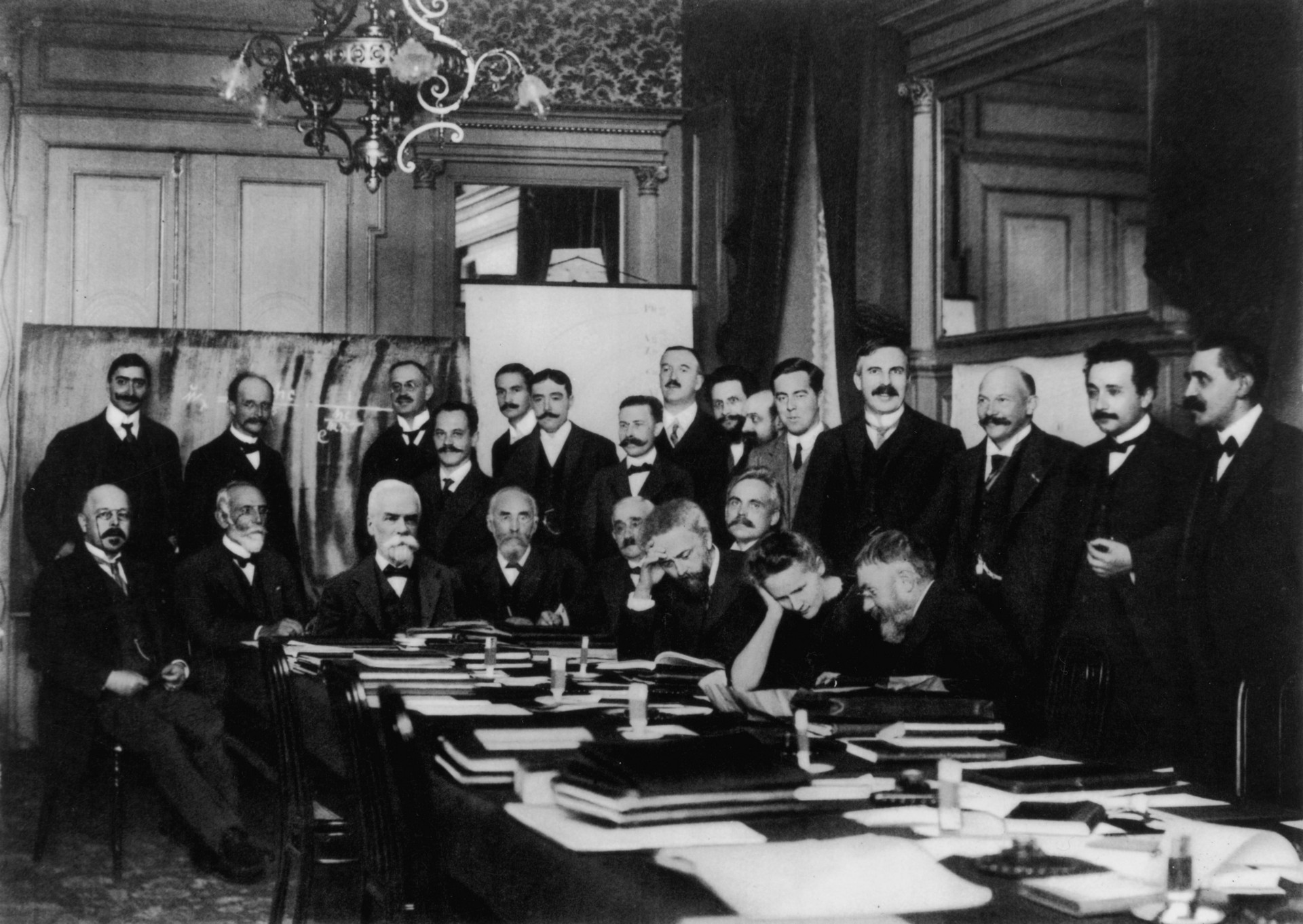
The Solvay Conferences () have been devoted to preeminent unsolved problems in both physics and chemistry. They began with the historic invitation-only 1911 Solvay Conference on Physics, considered a turning point in the world of physics, and are ongoing.
Since the success of 1911, they have been organised by the International Solvay Institutes for Physics and Chemistry, founded by the Belgian industrialist Ernest Solvay in 1912 and 1913, and located in Brussels. The institutes coordinate conferences, workshops, seminars, and colloquia. Recent Solvay Conferences entail a three year cycle: the Solvay Conference on Physics followed by a gap year, followed by the Solvay Conference on Chemistry.
The 1st Solvay Conference on Biology titled "The organisation and dynamics of biological computation" took place in April 2024.
Notable conferences
First conference
Hendrik Lorentz was chairman of the first Solvay Conference on Physics, held in Brussels from 30 October to 3 November 1911. The subject was Radiation and the Quanta. This conference looked at the problems of having two approaches, namely classical physics and quantum theory. Albert Einstein was the second youngest physicist present (the youngest one was Frederick Lindemann). Other members of the Solvay Congress were experts including Marie Skłodowska-Curie, Ernest Rutherford and Henri Poincaré (see image for attendee list).
Third conference
The third Solvay Conference on Physics was held in April 1921, soon after World War I. Most German scientists were barred from attending. In protest at this action, Albert Einstein, although he had renounced German citizenship in 1901 and become a Swiss citizen (in 1896, he renounced his German citizenship, and remained officially stateless before becoming a Swiss citizen in 1901), declined his invitation to attend the conference and publicly renounced any German citizenship again. Because anti-Semitism had been on the rise, Einstein accepted the invitation by Dr. Chaim Weizmann, the president of the World Zionist Organization, for a trip to the United States to raise money.
Fourth conference
The fourth Solvay Conference on Physics was held in 1924. These conferences, supported by the King of Belgium, had become the leading international gathering for the discussion of the very latest developments in physics. The subject was "The electrical conductivity of metals and related topics". Scientists based in Germany and Austria were not invited to this Solvay meeting due to the tensions still prevailing after the First World War. So there was no Planck, Einstein, Sommerfeld or Born.
Fifth conference
Perhaps the most famous conference was the fifth Solvay Conference on Physics, which was held from 24 to 29 October 1927. The subject was Electrons and Photons and the world's most notable physicists met to discuss the newly formulated quantum theory. The leading figures were Albert Einstein and Niels Bohr. Seventeen of the 29 attendees were or became Nobel Prize winners, including Marie Skłodowska-Curie who, alone among them, had won Nobel Prizes in two separate scientific disciplines. The anti-German prejudice that had prevented Einstein and others from attending the Solvay conferences held after the First World War had melted away. Essentially all of those names who had contributed to the recent development of the quantum theory were at this Solvay Conference, including Bohr, Born, de Broglie, Dirac, Heisenberg, Pauli, Planck, Lorentz, Compton, Ehrenfest, and Schrödinger. Heisenberg commented:
"Through the possibility of exchange between the representatives of different lines of research, this conference has contributed extraordinarily to the clarification of the physical foundations of the quantum theory. It forms, so to speak, the outward completion of the quantum theory." The photo taken of this conference's participants is sometimes entitled "The Most Intelligent Photo Ever Taken," for its depiction of the world's leading physicists gathered together in one shot.
Solvay conferences on physics
| No | Year | Title | Translation | Chair | 1911 | 1913 | 1921 | 1924 | 1927 | 1930 | 1933 | 1948 | 1951 | 1954 | 1958 | 1961 | 1964 | 1967 | 1970 | 1973 | 1978 | 1982 | 1987 | 1991 | 1998 | 2001 | 2005 | 2008 | 2011 | 2014 | 2017 | 2022 | 2023 |
|---|---|---|---|---|---|---|---|---|---|---|---|---|---|---|---|---|---|---|---|---|---|---|---|---|---|---|---|---|---|---|---|---|---|
| 1 | La théorie du rayonnement et les quanta | The theory of radiation and quanta | Hendrik Lorentz (Leiden) | ||||||||||||||||||||||||||||||
| 2 | La structure de la matière | The structure of matter | |||||||||||||||||||||||||||||||
| 3 | Atomes et électrons | Atoms and electrons | |||||||||||||||||||||||||||||||
| 4 | Conductibilité électrique des métaux et problèmes connexes | Electric conductivity of metals and related problems | |||||||||||||||||||||||||||||||
| 5 | Electrons et photons | Electrons and photons | |||||||||||||||||||||||||||||||
| 6 | Le magnétisme | Magnetism | Paul Langevin (Paris) | ||||||||||||||||||||||||||||||
| 7 | Structure et propriétés des noyaux atomiques | Structure & properties of the atomic nucleus | |||||||||||||||||||||||||||||||
| 8 | Les particules élémentaires | Elementary particles | Lawrence Bragg (Cambridge) | ||||||||||||||||||||||||||||||
| 9 | L'état solide | The solid state | |||||||||||||||||||||||||||||||
| 10 | Les électrons dans les métaux | Electrons in metals | |||||||||||||||||||||||||||||||
| 11 | La structure et l'évolution de l'univers | The structure and evolution of the universe | |||||||||||||||||||||||||||||||
| 12 | La théorie quantique des champs | Quantum field theory | |||||||||||||||||||||||||||||||
| 13 | The Structure and Evolution of Galaxies | J. Robert Oppenheimer (Princeton) | |||||||||||||||||||||||||||||||
| 14 | Fundamental Problems in Elementary Particle Physics | Christian Møller (Copenhagen) | |||||||||||||||||||||||||||||||
| 15 | Symmetry Properties of Nuclei | Edoardo Amaldi (Rome) | |||||||||||||||||||||||||||||||
| 16 | Astrophysics and Gravitation | ||||||||||||||||||||||||||||||||
| 17 | Order and Fluctuations in Equilibrium and Nonequilibrium Statistical Mechanics | Léon Van Hove (CERN) | |||||||||||||||||||||||||||||||
| 18 | Higher Energy Physics | ||||||||||||||||||||||||||||||||
| 19 | Surface Science | F. W. de Wette (Austin) | |||||||||||||||||||||||||||||||
| 20 | Quantum Optics | (Brussels) | |||||||||||||||||||||||||||||||
| 21 | Dynamical Systems and Irreversibility | Ioannis Antoniou (Brussels) | |||||||||||||||||||||||||||||||
| 22 | The Physics of Communication | ||||||||||||||||||||||||||||||||
| 23 | The Quantum Structure of Space and Time | David Gross (Santa Barbara) | |||||||||||||||||||||||||||||||
| 24 | Quantum Theory of Condensed Matter | Bertrand Halperin (Harvard) | |||||||||||||||||||||||||||||||
| 25 | The Theory of the Quantum World | David Gross | |||||||||||||||||||||||||||||||
| 26 | Astrophysics and Cosmology | Roger Blandford (Stanford) | |||||||||||||||||||||||||||||||
| 27 | The Physics of Living Matter: Space, Time and Information in Biology | Boris Shraiman (Santa Barbara) | |||||||||||||||||||||||||||||||
| 28 | The Physics of Quantum Information | David Gross (Santa Barbara) Peter Zoller (Innsbruck U.) | |||||||||||||||||||||||||||||||
| 29 | The Structure and Dynamics of Disordered Systems | David Gross (Santa Barbara) Marc Mézard (Bocconi U.) Giorgio Parisi (Sapienza U.) |
Participants per year
The following list of participants is extracted from the proceedings of the Solvay Conferences in Physics stored in the Solvay archives
1948: (scientific committee – present) Sir Lawrence Bragg, Niels Bohr, Théophile De Donder, Sir Owen Willans Richardson, Jules-Émile Verschaffelt, Hendrik Kramers (scientific committee – absent) Peter Debye, Abram Fedorovich Ioffé, Albert Einstein, Frédéric Joliot-Curie (speakers) C. F. Powell, P. Auger, Felix Bloch, Patrick Blackett, Homi J. Bhabha, Marie-Antoinette Tonnelat on behalf of Louis de Broglie, Rudolf Peierls, Walter Heitler, Edward Teller, R. Serber, Léon Rosenfeld (additional participants) H. Casimir, J. Cockroft, P. Dee, Paul Dirac, Ferretti, O. Frisch, Oskar Klein, Leprince-Ringuet, Lise Meitner, Christian Møller, Francis Perrin, J. Robert Oppenheimer, Wolfgang Pauli, P. Scherrer, Erwin Schrödinger (auditeurs) J. Timmermans, G. Balasse, J. Errera, O. Goche, P. Kipfer, L. Flamache, M. Occhialini, Marc de Hemptinne (secrétaires) E. Stahel, J. Géhéniau, Miss Dilworth, Ilya Prigogine, L. Groven, Léon Van Hove, Yves Goldschmidt, MM Van Styvendael, Demeur, Van Isacker (administrative commission) Jules Bordet, Ernest-John Solvay, Dr F. Héger-Gilbert, E. Henriot, F. van den Dungen.
Conferences on physics gallery
File:1911 Solvay conference.jpg|First Conference, 1911 File:Solvay conference 1913.jpg|Second Conference, 1913 File:Third Solvay Conference, 1921.jpg|Third Conference, 1921 File:Solvay conference, 1924.jpg|Fourth Conference, 1924 File:Solvay conference 1927.jpg|Fifth Conference, 1927. 1st row : Langmuir, Planck, Madame Curie, Lorentz, Einstein, Langevin, Guye, Wilson, Richardson. 2nd row : Debye, Knudsen, W. L. Bragg, Kramers, Dirac, Compton, de Broglie, Born, Bohr. 3rd row : Piccard, Henriot, Ehrenfest, Herzen, De Donder, Schrödinger, Verschaffelt, Pauli, Heisenberg, Fowler, Brillouin. File:Solvay conference 1930.jpg|Sixth Conference, 1930. 1st row: Th. De Donder, P. Zeeman, P. Weiss, A. Sommerfeld, M. Skłodowska-Curie, P. Langevin, A. Einstein, O. Richardson, B. Cabrera, N. Bohr, W. J. De Haas; 2nd row: E. Herzen, E. Henriot, J. Verschaffelt, C. Manneback, A. Cotton, J. Errera, O. Stern, A. Piccard, W. Gerlach, C. Darwin, P. A. M. Dirac, H. Bauer, P. Kapitsa, L. Brillouin, H. A. Kramers, P. Debye, W. Pauli, J. Dorfman (ru), J. H. Van Vleck, E. Fermi, W. Heisenberg File:Solvay1933Large.jpg|Seventh Conference, 1933 File:Solvay conference 1948 g.jpg|Eighth Conference, 1948 File:Solvay conference 1951 g.jpg|Ninth Conference, 1951. Left to right, sitting: Crussaro, Allen, Cauchois, Borelius, Bragg, Møller, Sietz, Hollomon, Frank; middle row: , Koster, , Flamache, Goche, Groven, Orowan, Burgers, Shockley, Guinier, C.S. Smith, , Laval, Henriot; top row: Gaspart, Lomer, Cottrell, Homes, Curien File:Solvay conference 1954 g.jpg|Tenth Conference, 1954
Solvay conferences on chemistry
| No | Year | Title | Translation | Chair | 1922 | 1925 | 1928 | 1931 | 1934 | 1937 | 1947 | 1950 | 1953 | 1956 | 1959 | 1962 | 1965 | 1969 | 1970 | 1976 | 1980 | 1983 | 1987 | 1995 | 2007 | 2010 | 2013 | 2016 | 2019 | 2022 |
|---|---|---|---|---|---|---|---|---|---|---|---|---|---|---|---|---|---|---|---|---|---|---|---|---|---|---|---|---|---|---|
| 1 | Cinq Questions d'Actualité | Five topical questions | William Jackson Pope (Cambridge) | |||||||||||||||||||||||||||
| 2 | Structure et Activité Chimique | Structure and Chemical Activity | ||||||||||||||||||||||||||||
| 3 | Questions d'Actualité | Topical Questions | ||||||||||||||||||||||||||||
| 4 | Constitution et Configuration des Molécules Organiques | Constitution and Configuration of Organic Molecules | ||||||||||||||||||||||||||||
| 5 | L'Oxygène, ses réactions chimiques et biologiques | Oxygen, and its chemical and biological reactions. | ||||||||||||||||||||||||||||
| 6 | Les vitamines et les Hormones | Vitamins and Hormones | Frédéric Swarts (Ghent) | |||||||||||||||||||||||||||
| 7 | Les Isotopes | Isotopes | Paul Karrer (Zurich) | |||||||||||||||||||||||||||
| 8 | Le Mécanisme de l'Oxydation | The mechanism of oxidation | ||||||||||||||||||||||||||||
| 9 | Les Protéines | Proteins | ||||||||||||||||||||||||||||
| 10 | Quelques Problèmes de Chimie Minérale | Some Problems of Inorganic Chemistry | ||||||||||||||||||||||||||||
| 11 | Les Nucléoprotéines | Nucleoproteins | Alfred Ubbelohde (London) | |||||||||||||||||||||||||||
| 12 | Transfert d'Energie dans les Gaz | Energy transfer in gases | ||||||||||||||||||||||||||||
| 13 | Reactivity of the Photoexcited Organic Molecule | |||||||||||||||||||||||||||||
| 14 | Phase Transitions | |||||||||||||||||||||||||||||
| 15 | Electrostatic Interactions and Structure of Water | |||||||||||||||||||||||||||||
| 16 | Molecular Movements and Chemical Reactivity as conditioned by Membranes, Enzymes and other Molecules | |||||||||||||||||||||||||||||
| 17 | Aspects of Chemical Evolution | |||||||||||||||||||||||||||||
| 18 | Design and Synthesis of Organic Molecules Based on Molecular Recognition | Ephraim Katchalski (Rehovot) & Vladimir Prelog (Zurich) | ||||||||||||||||||||||||||||
| 19 | Surface Science | F. W. de Wette (Austin) | ||||||||||||||||||||||||||||
| 20 | Chemical Reactions and their Control on the Femtosecond Time Scale | Pierre Gaspard (Brussels) | ||||||||||||||||||||||||||||
| 21 | From Noncovalent Assemblies to Molecular Machines | Jean-Pierre Sauvage (Strasbourg) | ||||||||||||||||||||||||||||
| 22 | Quantum Effects in Chemistry and Biology | Graham Fleming (Berkeley) | ||||||||||||||||||||||||||||
| 23 | New Chemistry and New Opportunities from the Expanding Protein Universe | Kurt Wüthrich (ETH Zurich) | ||||||||||||||||||||||||||||
| 24 | Catalysis in Chemistry and Biology | Kurt Wüthrich (ETH Zurich) & Robert Grubbs (Caltech, USA) | ||||||||||||||||||||||||||||
| 25 | Computational Modeling: From Chemistry to Materials to Biology | Kurt Wüthrich (ETH Zurich) & Bert Weckhuysen (Utrecht U., The Netherlands) | ||||||||||||||||||||||||||||
| 26 | Chemistry Challenges of the 21st Century | Kurt Wüthrich (ETH Zurich) & Ben Feringa (Groningen U., The Netherlands) |
Conferences on chemistry gallery
File:Solvay conference, 1922.jpg|First Conference, 1922
Solvay conferences on biology
| No | Year | Title | Chair |
|---|---|---|---|
| 1 | 2024 | The organisation and dynamics of biological computation | Thomas Lecuit (IBDM Marseille) |
Participation of Nobel prize winners
The following Nobel prize-winning scientists either attended Solvay Conferences before 1934 or were recipients of a Solvay subsidy. (Before 1934 seven Solvay conferences on physics and four Solvay conferences on chemistry were held.)
; 1902–1910 : H. A. Lorentz (1902), P. Zeeman (1902) - M. Skłodowska-Curie (1903 and 1911), S. Arrhenius (1903) - Lord Rayleigh (1904) - J. J. Thomson (1906) - A. A. Michelson (1907) - E. Rutherford (1908) - J. D. van der Waals (1910)
; 1911–1920 : W. Wien (1911) - V. Grignard (1912) - H. Kamerlingh Onnes (1913) - M. von Laue (1914) - W. H. Bragg (1915), W. L. Bragg (1915) - C. G. Barkla (1917) - M. Planck (1918) - J. Stark (1919) - W. Nernst (1920)
; 1921–1930 : A. Einstein (1921), F. Soddy (1921) - N. Bohr (1922), F. W. Aston (1922) - K. M. Siegbahn (1924) - J. Franck (1925), G. Hertz (1925) - J. Perrin (1926) - A. H. Compton (1927), C. T. R. Wilson (1927), H. Wieland (1927) - O. Richardson (1928) - L. de Broglie (1929)
; 1931–1940 : W. Heisenberg (1932), I. Langmuir (1932) - P. A. M. Dirac (1933), E. Schrödinger (1933) - J. Chadwick (1935), F. Joliot-Curie (1935), I. Curie (1935) - W. Debije (1936) - E. Fermi (1938), R. Kuhn (1938) - E. Lawrence (1939), L. Ruzicka (1940)
; 1941–1950 : G. de Hevesy (1943) - W. Pauli (1945) - P. Bridgman (1946) - P. Blackett (1948)
; 1951–1954 : J. D. Cockcroft (1951), E. T. Walton (1951) - M. Born (1954), W. Bothe (1954).
Archives
The archives of the Solvay conferences from 1910 to 1962 are kept at the Free University of Brussels and at École Supérieure de Physique et de Chimie Industrielles de la ville de Paris (ESPCI Paris). In 2023, these archives were added by UNESCO to its Memory of the World International Register, recognising them as globally important documentary heritage.
References
References
- "Solvay Institutes".
- Paul Langevin and Maurice de Broglie, eds., ''[https://archive.org/details/lathoriedurayo00inst La théorie du rayonnement et les quanta. Rapports et discussions de la réunion tenue à Bruxelles, du 30 octobre au 3 novembre 1911, sous les auspices de M. E. Solvay]''. Paris: {{ill. Gauthier-Villars. fr, 1912. See also: The Collected Papers of Albert Einstein, Vol. 3: Writings 1909–1911, Doc. 26, p. 402 (English translation supplement).
- (16 May 2019). "Albert Einstein".
- ''The Age of Entanglement'', Louisa Gilder, Chapter 5, 2008.
- ''Einstein and the Quantum'', A. Douglas Stone, Chap. 23, 2013.
- (2007). "Einstein: His life and universe". Simon & Schuster.
- (2022). "Schrödinger in Oxford". World Scientific.
- Beenakker, Carlo. "Lorentz & the Solvay conferences". Instituut-Lorentz, Leiden University.
- (2022). "Schrödinger in Oxford". World Scientific.
- (2024-09-18). "“The Most Intelligent Photo Ever Taken”: The 1927 Solvay Council Conference Featuring 17 Nobel Prize Winners - The History Insider".
- Muzdakis, Madeleine. (2021-02-01). "29 Legendary Scientists Came Together in the "Most Intelligent Photo" Ever Taken".
- "Ioannis Antoniou".
- "Solvay Institutes".
- [[George Gamow]], ''Thirty Years That Shook Physics: The Story of Quantum Theory'', ©1966, [[Dover Publications]] edition of 1985; this photo by Benjamin Couprie with names in caption is facing p. 214
- Franklin Lambert & Frits Berends: ''Vous avez dit : sabbat de sorcières ? La singulière histoire des premiers Conseils Solvay'', EDP Sciences – Collection : Sciences et Histoire – octobre 2019. Annexe 1, page 263.
- "Archives of the International Solvay Conferences on Physics and Chemistry (1910-1962)". UNESCO Memory of the World Programme.
This article was imported from Wikipedia and is available under the Creative Commons Attribution-ShareAlike 4.0 License. Content has been adapted to SurfDoc format. Original contributors can be found on the article history page.
Ask Mako anything about Solvay Conference — get instant answers, deeper analysis, and related topics.
Research with MakoFree with your Surf account
Create a free account to save articles, ask Mako questions, and organize your research.
Sign up freeThis content may have been generated or modified by AI. CloudSurf Software LLC is not responsible for the accuracy, completeness, or reliability of AI-generated content. Always verify important information from primary sources.
Report