From Surf Wiki (app.surf) — the open knowledge base
Solar eclipse of April 8, 2024
Total eclipse over North America
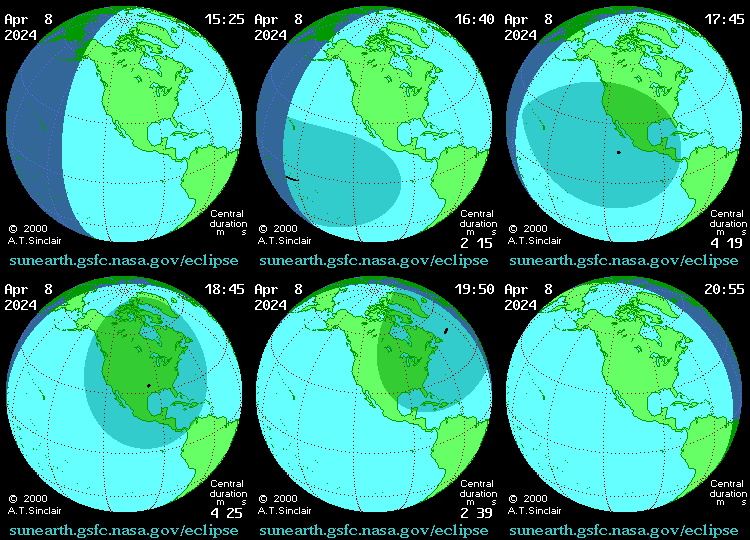
Total eclipse over North America
| Field | Value |
|---|---|
| location | Nazas, Durango, Mexico |
| start_partial | 15:42:07 |
| start_total | 16:38:44 |
| greatest_eclipse | 18:17:15 |
| end_total | 19:55:29 |
| end_partial | 20:52:14 |
| previous | Solar eclipse of October 14, 2023 |
| next | Solar eclipse of October 2, 2024 |
The solar eclipse of April 8, 2024, also known as the Great North American Eclipse, was a total solar eclipse visible across a band covering parts of North America, from Mexico to Canada and crossing the contiguous United States. A solar eclipse occurs when the Moon passes between Earth and the Sun, thereby obscuring the Sun. A total solar eclipse occurs when the Moon's apparent diameter is larger than the Sun's, which blocks all direct sunlight and allows some of the Sun's corona and solar prominences to be seen. Totality occurs only in a limited path across Earth's surface, with the partial solar eclipse visible over a larger surrounding region.
During this eclipse, the Moon's apparent diameter was 5.5 percent larger than average as a result of occurring about a day after perigee. With a magnitude of 1.0566, the eclipse's longest duration of totality was 4 minutes and 28 seconds near the Mexican town of Nazas, Durango.
This particular eclipse occurred at the Moon's ascending node of orbit. Totality was visible from 6 Mexican states, 15 U.S. states, and 6 Canadian provinces. Approximately 44 million people lived in the path of totality, including 32 million in the United States, 6 million in Canada, and 6 million in Mexico. The 10 largest cities in the path of totality accounted for a third of this population (5 of the 10 largest cities being in the United States, 3 in Mexico, and 2 in Canada). Adding people who travelled to the path of totality, an estimated 50 million people experienced the total solar eclipse, with at least 20 million people travelling to areas within the path of totality in the US alone. Meanwhile, about 652 million people experienced a partial solar eclipse.
This eclipse was the first total solar eclipse visible from Canada since August 1, 2008, and from the provinces since February 26, 1979. It was the first over Mexico since July 11, 1991. It was also the first over the United States since August 21, 2017. This is the only solar eclipse in the 21st century with totality visible from all three countries. The next total solar eclipse in the US will be on March 30, 2033, which will pass over Alaska. The next total eclipse in the contiguous United States of the US will be on August 23, 2044. The next total eclipse of similar width will take place on August 12, 2045, which will traverse coast-to-coast in a trajectory similar to the 2017 eclipse.
General path of shadow
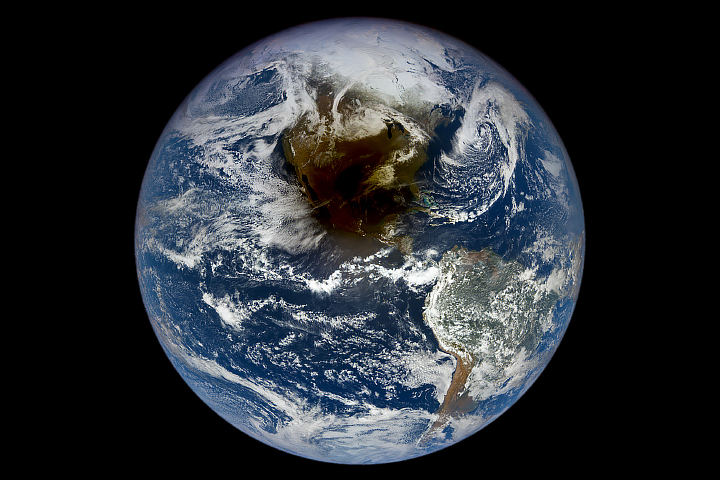
The totality of the solar eclipse was visible in a strip beginning in the Pacific Ocean, the edge of which passed approximately 60 kilometers north of Penrhyn atoll, 115 kilometers south of Starbuck Island, 275 kilometers north of Vostok Island, and 370 kilometers north of the Marquesas Islands. Later, the total solar eclipse was visible from North America, starting from the west coast of Mexico then ascending in a northeasterly direction through Mexico, the United States, and Canada, before ending in the Atlantic Ocean about 700 kilometers southwest of Ireland.
Visibility in the Americas
Mexico
Totality first passed over the Revillagigedo Islands (a federal possession of Mexico and associated with Colima state) and Islas Marías of Nayarit. Upon reaching the continental mainland, totality passed through the states of Sinaloa (including Mazatlán), northern Nayarit, Durango (including the city of Durango and [[Gómez Palacio, Durango|Gómez Palacio]]), extreme southeast Chihuahua, and Coahuila (including Torreón, Matamoros, Monclova, Sabinas, Ciudad Acuña, and Piedras Negras).{{cite web |date=April 2024 |title=Total Solar Eclipse in Mexico A partial eclipse was visible across the remainder of the country, including 79% coverage of the solar disc in Mexico City. Torreón was the most populous Mexican city in the path of totality.
United States


In the United States, totality was visible through the states of Texas (including parts of San Antonio, Austin, Fort Worth, and all of Arlington, Dallas, Killeen, Temple, Texarkana, Tyler, Sulphur Springs, and Waco); Oklahoma (including Idabel and Broken Bow); Arkansas (including Morrilton/Petit Jean, Hot Springs, Searcy, Jonesboro, and Little Rock); Missouri (including Cape Girardeau and Poplar Bluff); Tennessee (extreme northwestern corner of Lake County); Illinois (including Carbondale, where it intersected the path of the 2017 eclipse); Kentucky; Indiana (including Bloomington, Evansville, Indianapolis, Anderson, Muncie, Terre Haute, and Vincennes); Ohio (including Akron, Cleveland, Dayton, Lima, Lorain,Toledo, and Warren); Michigan (extreme southeastern corner of Monroe County); Pennsylvania (including Erie); Upstate New York (including Buffalo, Niagara Falls, Rochester, Syracuse, Watertown, the Adirondacks, Potsdam, and Plattsburgh); northern Vermont (including Burlington); New Hampshire; and Maine;{{cite news |last=Eliasen
A partial solar eclipse was visible in all of the other parts of the contiguous United States, Hawaii, and southeast Alaska (Alaska Panhandle).
Delta Air Lines scheduled two special eclipse-following flights: one from Austin to Detroit on a large-window A220-300, and one from Dallas to Detroit. Various other flights in the path of totality also avoided cloud cover entirely.
Canada
In Canada, totality was visible through parts of Southern Ontario (including Leamington, Fort Erie, Hamilton, Niagara Falls, Kingston, Prince Edward County, and Cornwall),{{Cite news |last=Nielsen |first=Kevin |date=April 5, 2024 | title=Total solar eclipse: Where the best views in Ontario are expected to be |publisher=Global News |url=https://globalnews.ca/news/10405585/ontario-eclipse-viewing-locations/
A partial solar eclipse was visible in all of the other parts of Canada, except the western part of Yukon and the western tip of the Northwest Territories.
Boat cruises to observe the eclipse were conducted on Lake Erie, Niagara River, Lake Ontario, and Saint Lawrence River.
Central America and South America
The partial eclipse was seen in all Central American countries, from Belize to Panama, all the Greater Antilles (Cuba, Dominican Republic, Haiti, Puerto Rico, and Jamaica), and northern South America (Colombia).
Largest cities and recommended viewing sites
Space.com identified the ten largest cities where totality was visible. In population order, they were:
- Montreal, Quebec
- San Antonio, Texas
- Dallas, Texas
- Austin, Texas
- Fort Worth, Texas
- Indianapolis, Indiana
- Durango, Durango
- Hamilton, Ontario
- Torreón, Coahuila
- Mazatlán, Sinaloa
Astronomy magazine provided a list of 20 recommended viewing sites, based on factors such as proximity to the center line, population size, ease of access, and so on. They were ordered from west to east:
- Mazatlán, Sinaloa
- Nazas, Durango
- Piedras Negras, Coahuila
- Radar Base, Texas
- Kerrville, Texas
- Lampasas, Texas
- Hillsboro, Texas
- Sulphur Springs, Texas
- Russellville, Arkansas
- Cape Girardeau, Missouri
- Vincennes, Indiana
- Indianapolis, Indiana
- Lima, Ohio
- Cleveland, Ohio
- Erie, Pennsylvania
- Niagara Falls, New York
- Buffalo, New York
- Plattsburgh, New York
- Sherbrooke, Quebec
- Mars Hill, Maine
Visibility in other continents
Europe
A partial eclipse passed over Svalbard (Norway), Iceland, Ireland, western parts of the United Kingdom, north-western parts of Spain and Portugal, the Azores, and the Canary Islands. Cloud cover prevented views of it from most of the British Isles, although it was seen in Western Scotland. Unusually, this eclipse extended below the horizon, where the greatest phase was observed at mid-nautical twilight in Galicia (Spain) and the beginning of astronomical twilight in Nouvelle-Aquitaine (France). The extension of the eclipse path within the twilight zone created what was likely the best observation window for the 12P/Pons–Brooks comet located closely to Jupiter.
Oceania
The partial eclipse was seen in Hawaii, eastern Kiribati (the eastern Phoenix Islands and the whole Line Islands), Tokelau, American Samoa except for its extreme western part, the Cook Islands, French Polynesia, and the Pitcairn Islands. Although all located east of the 180th meridian, the local time of the eclipse in Kiribati and Tokelau was Tuesday, April 9, 2024, because either UTC+13 or UTC+14 is observed in these areas.
Total eclipse timing
| Country or territory | City or place | Start of partial eclipse | Start of total eclipse | Maximum eclipse | End of total eclipse | End of partial eclipse | Duration of totality (min:s) | Duration of eclipse (hr:min) | Maximum magnitude | References: |
|---|---|---|---|---|---|---|---|---|---|---|
| Mexico | Mazatlán | 09:51:20 | 11:07:24 | 11:09:33 | 11:11:43 | 12:32:09 | 4:19 | 2:41 | 1.0217 | |
| Mexico | Durango | 10:55:11 | 12:12:06 | 12:14:00 | 12:15:54 | 13:36:42 | 3:48 | 2:42 | 1.0136 | |
| US | Austin | 12:17:10 | 13:36:08 | 13:37:01 | 13:37:55 | 14:58:09 | 1:47 | 2:41 | 1.0027 | |
| US | Waco | 12:20:27 | 13:38:00 | 13:40:07 | 13:42:13 | 15:00:44 | 4:13 | 2:40 | 1.02 | |
| US | Fort Worth | 12:22:26 | 13:40:26 | 13:41:43 | 13:43:00 | 15:01:50 | 2:34 | 2:39 | 1.0056 | |
| US | Arlington | 12:22:44 | 13:40:23 | 13:42:03 | 13:43:44 | 15:02:10 | 3:21 | 2:39 | 1.0103 | |
| US | Irving | 12:23:09 | 13:40:47 | 13:42:28 | 13:44:09 | 15:02:31 | 3:22 | 2:39 | 1.0104 | |
| US | Dallas | 12:23:15 | 13:40:42 | 13:42:38 | 13:44:34 | 15:02:43 | 3:52 | 2:39 | 1.0152 | |
| US | Garland | 12:23:44 | 13:41:10 | 13:43:06 | 13:45:02 | 15:03:07 | 3:52 | 2:39 | 1.0152 | |
| US | Plano | 12:23:50 | 13:41:24 | 13:43:10 | 13:44:56 | 15:03:08 | 3:32 | 2:39 | 1.0118 | |
| US | Little Rock | 12:33:29 | 13:51:36 | 13:52:50 | 13:54:04 | 15:11:35 | 2:28 | 2:38 | 1.0054 | |
| US | Sikeston | 12:41:06 | 13:58:02 | 13:59:48 | 14:01:34 | 15:17:08 | 3:32 | 2:36 | 1.0129 | |
| US | Evansville | 12:45:52 | 14:02:38 | 14:04:09 | 14:05:40 | 15:20:33 | 3:02 | 2:35 | 1.0092 | |
| US | Indianapolis | 13:50:31 | 15:06:03 | 15:07:58 | 15:09:53 | 16:23:14 | 3:50 | 2:33 | 1.019 | |
| US | Dayton | 13:53:29 | 15:09:28 | 15:10:50 | 15:12:12 | 16:25:37 | 2:44 | 2:32 | 1.0075 | |
| US | Riverside | 13:53:37 | 15:09:37 | 15:10:57 | 15:12:17 | 16:25:42 | 2:40 | 2:32 | 1.0072 | |
| US | Toledo | 13:56:53 | 15:12:23 | 15:13:16 | 15:14:10 | 16:27:01 | 1:47 | 2:30 | 1.0032 | |
| US | Akron | 13:59:07 | 15:14:13 | 15:15:38 | 15:17:02 | 16:29:07 | 2:49 | 2:30 | 1.0085 | |
| US | Cleveland | 13:59:20 | 15:13:45 | 15:15:40 | 15:17:35 | 16:29:01 | 3:50 | 2:30 | 1.0225 | |
| US | Erie | 14:02:23 | 15:16:22 | 15:18:14 | 15:20:05 | 16:30:52 | 3:43 | 2:28 | 1.0202 | |
| Canada | Hamilton | 14:03:52 | 15:18:12 | 15:19:07 | 15:20:02 | 16:31:12 | 1:50 | 2:27 | 1.0036 | |
| Canada | Burlington | 14:04:02 | 15:18:30 | 15:19:14 | 15:19:58 | 16:31:16 | 1:28 | 2:27 | 1.0024 | |
| Canada | Oakville | 14:04:20 | 15:19:18 | 15:19:28 | 15:19:39 | 16:31:24 | 0:21 | 2:27 | 1.0004 | |
| US | Buffalo | 14:04:54 | 15:18:20 | 15:20:13 | 15:22:06 | 16:32:11 | 3:46 | 2:27 | 1.0254 | |
| US | Rochester | 14:06:58 | 15:20:08 | 15:21:58 | 15:23:47 | 16:33:27 | 3:39 | 2:26 | 1.0213 | |
| Canada | Kingston | 14:09:30 | 15:22:15 | 15:23:47 | 15:25:19 | 16:34:30 | 3:04 | 2:25 | 1.0121 | |
| Canada | Montreal | 14:14:26 | 15:26:49 | 15:27:33 | 15:28:17 | 16:36:53 | 1:28 | 2:22 | 1.0026 | |
| Canada | Longueuil | 14:14:34 | 15:26:52 | 15:27:39 | 15:28:26 | 16:36:58 | 1:34 | 2:22 | 1.003 | |
| US | Montpelier | 14:14:57 | 15:27:38 | 15:28:27 | 15:29:15 | 16:37:55 | 1:37 | 2:23 | 1.0031 | |
| Canada | Sherbrooke | 14:16:36 | 15:27:42 | 15:29:25 | 15:31:08 | 16:38:17 | 3:26 | 2:22 | 1.0203 |
Characteristics
Magnitude
The magnitude of an eclipse, or the ratio of the angular diameter of the Moon to the angular diameter of the Sun, must be one or greater for a total eclipse to occur. The Moon was near perigee (the closest point in its orbit to Earth) during this eclipse. Occurring only about 24 hours after perigee (on April 7, 2024, at 18:50 UTC), the Moon's apparent diameter was larger. The Sun had an angular diameter of 31'56" at the moment of greatest eclipse. As the magnitude of this eclipse at that time was 1.0566, the angular diameter of the Moon was 1.0566 times that of the Sun, or 33'44". This gave the eclipse a wider path of totality and more maximum time in totality (4 min 28 s) compared to the total eclipse in 2017 (2 min 40 s), which had a magnitude of 1.0306.
Solar prominences
The eclipse occurred around the solar maximum, a period of greatest solar activity in the Sun's 11-year solar cycle, and it was anticipated that solar prominences would be visible during totality. Many observers reported seeing solar prominences during the event. Most plainly visible to the naked eye was a very bright red point of light near the lowest portion of the Sun's disk, which on telescopic views and photographs showed as a tent-shaped angular structure. The red and pink hues were the result of hydrogen and helium plasma being thrown up in broad arcs but never leaving the sun's atmosphere. Telescopic photographs revealed the western limb having several smaller, irregular shapes, of which one large, ragged shape appeared disconnected from the Sun's surface on one side. Several smaller prominences were also visible on the eastern limb, though because of the eclipse's relatively high magnitude, prominences on both limbs could not be viewed at the same time. These shapes correlate in detail with the NASA Solar Dynamics Observatory solar telescope images taken in space at the same as the earthbound eclipse, and with images from the ground-based National Solar Observatory GONG telescope in Cerro Tololo, Chile.
Shadow bands
The shadow bands phenomenon was observed and documented in some locations with clear skies. Attempts to observe and record shadow bands on the ground were disappointed in many areas of totality by the phenomenon not appearing in the event, perhaps having been washed out by the diffuse illumination of cloudy skies in various locations.
Eclipse path intersections
The path of the April 8, 2024, eclipse crossed the path of the previous American total solar eclipse of August 21, 2017, with the intersection of the two paths being in southern Illinois, in Makanda, just south of Carbondale. The path of the April 8 eclipse also crossed the path of the annular solar eclipse that occurred less than 6 months prior, on October 14, 2023, intersecting in the vicinity of San Antonio, Texas. The intersection of two total solar eclipses over the exact same spot within a 7-year period was found to be unusual, since the average interval for any given spot on Earth to observe a total solar eclipse is about once every 375 years. A similar total eclipse intersection occurred in Turkey during the August 1999 and March 2006 solar eclipses. A similar intersection of total solar eclipses will also occur over Egypt in August 2027 and March 2034. The intersection patterns are caused by the dynamics of the Saros cycle.
Impact
Economy and tourism

It was projected before the eclipse that there could be a $6 billion boost to the US economy due to the eclipse. The Mayor of Rochester, New York, Malik Evans, told reporters that the city was expected to bring in between $10–12 million to the city's economy from the Friday before the eclipse to the day of it. However, the day was cloudy. On April 12, New York Governor Kathy Hochul announced record breaking tourism numbers between April 6 and 9, which was a 45% increase compared to 2023, with nearly one million visitors to New York State parks and over 5.5 million toll transactions recorded.
One company that tracks Airbnb data likened the economic impact of the event to having Taylor Swift's concerts taking place simultaneously in every city along the eclipse's path. In the United States, the prices of motels and hotels near the path of totality increased up to 100 percent on April 7 and April 8. Montreal saw a 20% surge in hotel occupancy for April 7 and April 8. An estimated 20 million people travelled to the path of totality within the United States for the total solar eclipse, exceeding the estimated numbers for the August 2017 solar eclipse 7 years earlier by four times.
The eclipse caused a drop in solar power generation, with Texas experiencing a decrease from 12,000 MW to just over 3,000 MW at 2 p.m. Wind power generation also decreased by about 50% that day. However, there were no disruptions in power distribution as supply exceeded demand.
At Yankee Stadium, the Yankees gave away eclipse T-shirts to the first 15,000 fans at the game that day. The eclipse had pushed the start time back by four hours.
Traffic

Prior to the solar eclipse, US officials expected the April 2024 solar eclipse to be the largest travel event in the US in years, with up to 4 million travelers expected. Some likened the projected tourism surge to "50 Super Bowls happening all at once". At least 5 million Americans had travelled to see the August 2017 solar eclipse, and based on the mass traffic jams that had ensued following the eclipse, transportation agencies prepared for a potentially even bigger traffic problem, in the wake of the April 2024 solar eclipse. Highways in the area of totality saw significant increases in traffic, with departing tourists caught in traffic jams lasting up to eight hours. Many of those trying to drive down Interstate 93 in New Hampshire, for example, found themselves in jams lasting until at least 2 a.m. the following morning, resulting in numerous cars breaking down. Drivers and passengers spent four to six hours to pass through Franconia Notch where Interstate 93 is reduced to a single lane in each direction. Major highways in the state remained crowded through rush hour the following morning and into the afternoon. A similar effect was seen during the following morning's rush hour in northbound Interstate 65 in Indianapolis. In Vermont there were an estimated 60,000 additional cars and 248 inbound aircraft over the span of the eclipse weekend, with about 160,000 visitors coming into the state per Secretary of Transportation Joe Flynn. Drivers in southern Illinois leaving the region of totality to the north toward St. Louis, Missouri faced more than 80 miles of stop-and-go heavy congestion. Unlike other regions, traffic was lighter in Texas than the state's Department of Transportation had anticipated.
Animal behavior
Zookeepers, naturalists, university researchers, and citizen scientists positioned themselves to observe animal behavior during the eclipse, some with the goal of comparing results with observations made during the 1932 and 2017 total solar eclipses, and others opening new avenues of animal behavioral research. Wildlife and zoo animals were observed along the path of totality and in areas that saw only a partial eclipse. NASA worked with ARISA Lab, LLC, to recruit thousands of citizen scientists to help record sounds and observations of animal behavior during the eclipse. , a total of 3,372 written observations had been submitted by citizen scientists, and 770 recording devices had been registered with the project to provide sound and ultrasound recordings of wildlife and other ambient sounds before, during, and after the eclipse in a standardized way.
Wildlife

Changes in wild animal behavior were recorded during the eclipse, especially among birds. These changes were similar to those observed during the 2017 eclipse, but more pronounced. Weather radar was adapted to monitor the activity of flying animals, and birds were observed to decrease their daytime activities. Radar imaging demonstrated "noticeable decreases in typical daytime biological activities such as the movements of hawks and other soaring and insect-eating birds." Owls began hooting, and vultures and other birds began to roost. A team from Purdue University, observing a variety of ecosystems on wild-lands maintained by the university near Butlerville, Indiana, recorded the songs of 20 different species of birds going quiet, leaving only the songs of the robin and the tufted titmouse during the eclipse. Birding students at the University of Vermont observed species at Lake Champlain during the eclipse that had not been observed there before, including Bohemian waxwings, red-tailed hawks, and pileated woodpeckers.
Haikubox community science data from hundreds of locations found that at locations experiencing more than 99 percent obscurity, and in the absence of human vocalizations, birds generally stopped vocalizing, but that there was variability between locations and individual species responses.
Insects and frogs in the wild were also observed making their nighttime sounds. Cicadas in Arizona stopped singing when the Sun was 50% blocked during their partial eclipse. Spring peepers, a type of nocturnal frog, were heard intermittently by the Purdue team in rural Indiana while the eclipse was partial, but they abruptly filled the soundscape at the moment of totality. Wild cricket frogs were observed in Fort Worth, Texas, behaving similarly.
Zoo animals
At the Columbus Zoo and Aquarium, ostriches returned to their barn and began their evening rituals, such as preening and grooming each other. When the sunlight returned, the ostriches left their barn and resumed their daytime activities. A group of elephants at the zoo gathered together and began thumping their trunks on the ground. At the Fort Worth Zoo in Texas, flamingos bunched together, vocalized, and began marching together, which is a bonding behavior. A troop of gorillas at that zoo also gathered at the door to their indoor enclosure, where they were normally fed each evening, and appeared to act confused and frustrated, as if having missed their evening meal. The Fort Worth Botanic Garden (FWBG) placed hundreds of butterflies in their conservatory March 1, allowed them to acclimate, and observed them during the eclipse. The butterflies "didn't roost but instead ceased flying and remained very still." Goats at the FWBC were observed resting or sleeping during the eclipse. Giraffes at the Dallas Zoo also began to gallop, a behavior witnessed there and at many other zoos during the 2017 eclipse. Two aldabra tortoises at the same zoo were observed to rear on their hind legs and attack the door to their indoor enclosure, damaging the door's frame. Lions at the Buffalo Zoo started roaring just before totality.
Not all zoo animals reacted to the eclipse, nor did researchers expect them to. During the 2017 eclipse, researchers at the Riverbanks Zoo in South Carolina observed behavior changes in about 75% of species. Adam Hartstone-Rose, a biology professor at North Carolina State University, hypothesized that the captive animals that did react may have been responding to the emotions of human zoo visitors. Zoologists and volunteers at Parc Safari, a zoo in Hemmingford, Quebec, noted very little change in the animals they observed there, including giraffes, lions, hyenas, wolves, lynx, llamas, alpacas, and dromedaries. Hyenas vocalized during the eclipse, but there were other coinciding events that might have contributed to that behavior. The zoo's director of zoology, Aurélien Berthelot, did not expect much activity from their mammals. For example, lions sleep up to eighteen hours per day. Some roared during the eclipse while others slept. Analyses of their observations are continuing.
Human behavior
Some people acted irrationally, with conspiracy theories spreading online about the rapture occurring during the event. In Los Angeles, Danielle Johnson killed her infant when she threw her children off a balcony. She was referring to the eclipse as "the epitome of spiritual warfare" and an "apocalypse" on her Twitter account before the tragic incident. President Donald Trump, at the time running his second successful campaign, posted a propaganda video to his Truth Social account, depicting his head as the moon blocking out the sun with the phrases "the most important moment in human history is taking place in 2024" and "We will save America. And make it great again" being seen in the video. Scientific study has not proven a direct link between solar eclipses and human mental health, along with these sometimes dangerous grandiose ideologies that some people can harbor during these natural spectacles.
Responses
Arkansas Governor Sarah Huckabee Sanders preemptively declared a state of emergency related to the eclipse, citing the expected increase of travel to the state which could result in transportation difficulties, such as in Fort Smith, where the police prepared for traffic congestion as hotels filled up. Bell County, Texas Judge David Blackburn preemptively declared a state of emergency in February 2024 due to the projected number of visitors to the area. The region surrounding Niagara Falls, Ontario, also declared a state of emergency; as an existing major tourist destination along the path of totality, it expected an influx of at least one million visitors on April 8.
A lawsuit was filed on April 2 by six inmates of various religions at Woodbourne Correctional Facility in New York against the state, stating that the decision to lock down the prison during the eclipse conflicted with their religious beliefs. The solar eclipse is important in various religions. The state settled the lawsuit by allowing the six inmates to view the eclipse.
Gallery
Total
|File:Telephoto-crop.png|Totality on board the MS Zaandam |File:Total_Eclipse_2024_Mazatlán.jpg|Totality as seen from Mazatlán, Sinaloa |File:April 8 2024 eclipse totality seen from Durango, Mexico.jpg|Totality as seen from Victoria de Durango, Durango |File:Eclipse sobre las dunas de Bilbao (Viesca, Coahuila).jpg|Totality as seen from Viesca, Coahuila |File:2024 Total Solar Eclipse (NHQ202404080101).jpg|Totality as seen from Dallas, Texas |File:Totality as seen from Russellville.jpg|Totality as seen from Russellville, Arkansas |File:Eclipse and Venus, April 8, 2024.jpg|Totality with Venus near the lower right corner, as seen from Vienna, Illinois |File:Solar Eclipse Totality (April 8, 2024) by Bella Taylor.jpg|Totality as seen from Crab Orchard National Wildlife Refuge, Illinois |File:2024 Eclipse Totality from Speedway, IN.jpg|Totality as seen from Speedway, Indiana |File:Solar eclipse of April 2024 from Indianapolis.jpg|Totality as seen from Indianapolis, Indiana |File:2024 Total Solar Eclipse (GRC-2024-C-02639).jpg|Totality as seen from Cleveland, Ohio |File:2024 eclipse totality from Harborcreek, PA.jpg|Totality as seen from Harborcreek, Pennsylvania |File:Solar eclipse at James N. Allan Provincial Park - 2024 - 01.jpg|Totality as seen from James N. Allan Provincial Park, Ontario |File:Eclipse-2024-newport-vt-kloch-crop.jpg|Quadcopter transits during totality from Newport, Vermont |File:Solar Eclipse from Moosehead Lake.jpg|Totality as seen from Greenville, Maine |File:Total Solar Eclipse over Jackman, Maine.jpg|Totality as seen from Jackman, Maine
Total with scenery
|File:Totality 2024 Evansville IN Horizon.jpg|Totality with Venus over Evansville, Indiana |File:Solar Eclipse Totality from IMS.jpg|Totality over the Indianapolis Motor Speedway's flag stand |File:Total eclipse sidney.jpg|Totality over Sidney, Ohio |File:Norwalk total eclipse.jpg|Overhead view of downtown Norwalk, Ohio during totality |File:Totality Ripley NY.jpg|Totality over Ripley, New York |File:2024 Solar Eclipse Totality in Newport, VT.jpg|Totality over Derby, Vermont
Partial
|File:Partial Solar Eclipse Nuevo Leon MX.jpg|Partial as seen from San Nicolás de los Garza, Nuevo León |File:Solar eclipse apr 8 2024 santa ana ca.jpg|Partial as seen from Santa Ana, California |File:2024 Total Solar Eclipse (NHQ202404080305).jpg|Partial as seen from Indianapolis, Indiana |File:2024 Eclipse Lexington KY.png|Partial as seen from Lexington, Kentucky |File:2024 Total Solar Eclipse (NHQ202404080201).jpg|Partial as seen from Washington, D.C. above the Washington Monument |File:Partial Solar Eclipse of 2024.jpg|Partial as seen from Southeastern Pennsylvania |File:NJ Partial Solar Eclipse 04-08-24.jpg|Partial as seen from Plainfield, New Jersey |File:Partial Solar Eclipse over Jackman, Maine.jpg|Partial as seen from Jackman, Maine |File:Near total eclipse viewed from Central Elgin, Ontario.jpg|Partial as seen from Dexter, Ontario |File:Solar eclipse, viewed from Montreal, 3 - Partial (after totality) - 00013.jpg|Post-totality diamond-ring effect as seen from Montreal, Quebec
Composites
|File:Total Solar Eclipse Apr 2024 sequence Vincennes Indiana.jpg| Eclipse progression as seen from Vincennes, Indiana |File:Indianapolis Total Eclipse Composite.jpg|Eclipse progression as seen from Indianapolis, Indiana |File:Baily's Beads 2nd Contact.jpg|Eclipse progression from Baily's beads to totality as seen from Rondeau Provincial Park, Ontario |File:Path to Totality in Cleveland (53650459062).jpg|Eclipse progression to totality as seen from Cleveland, Ohio |File:Eclipse progression as seen from Newport, Vermont.jpg|Eclipse progression as seen from Newport, Vermont |File:2024 Total Solar Eclipse Corona.jpg|Composite image of totality as seen from Sherbrooke, Quebec reveals the corona |File:Solar eclipse on April 8, 2024 in Québec city, pano no mirror version.jpg|Eclipse progression as seen from Québec City, Quebec
Projections
|File:Eclipse solar del 8 de abril desde Puebla.jpg|Photograph of the eclipse projected with binoculars in Puebla, Mexico |File:Sombra abril Puebla.webm|Video of the eclipse projected through the leaves of a tree in Puebla |File:Solar eclipse crescent shadows, College Station TX.jpg|Leaf shadow projection of the eclipse in College Station, Texas |File:2024 April 8 eclipse through pinhole camera.jpg|Cardboard box pinhole projection of the eclipse in Dallas, Texas |File:Solar eclipse April 8 2024 Arkansas.jpg|Camera obscura projection of the eclipse in Danville, Arkansas |File:Colandereclipse2024.jpg|Colander projection of the eclipse in Corning, Arkansas |File:Interlaced finger projection of the April 8, 2024 solar eclipse.jpg|Interlaced finger projection of the eclipse in Marion, Illinois
Eclipse details
Shown below are two tables displaying details about this particular solar eclipse. The first table outlines times at which the Moon's penumbra or umbra attains the specific parameter, and the second table describes various other parameters pertaining to this eclipse.
| Event | Time (UTC) |
|---|---|
| First Penumbral External Contact | 2024 April 8 at 15:43:23.3 UTC |
| First Umbral External Contact | 2024 April 8 at 16:40:00.7 UTC |
| First Central Line | 2024 April 8 at 16:41:09.4 UTC |
| First Umbral Internal Contact | 2024 April 8 at 16:42:18.1 UTC |
| First Penumbral Internal Contact | 2024 April 8 at 17:46:09.2 UTC |
| Greatest Eclipse | 2024 April 8 at 18:18:29.4 UTC |
| Greatest Duration | 2024 April 8 at 18:20:44.2 UTC |
| Ecliptic Conjunction | 2024 April 8 at 18:22:00.8 UTC |
| Equatorial Conjunction | 2024 April 8 at 18:37:18.9 UTC |
| Last Penumbral Internal Contact | 2024 April 8 at 18:50:23.9 UTC |
| Last Umbral Internal Contact | 2024 April 8 at 19:54:30.4 UTC |
| Last Central Line | 2024 April 8 at 19:55:38.1 UTC |
| Last Umbral External Contact | 2024 April 8 at 19:56:45.7 UTC |
| Last Penumbral External Contact | 2024 April 8 at 20:53:30.4 UTC |
| Parameter | Value |
|---|---|
| Eclipse Magnitude | 1.05656 |
| Eclipse Obscuration | 1.11631 |
| Gamma | 0.34314 |
| Sun Right Ascension | 01h11m36.9s |
| Sun Declination | +07°35'29.4" |
| Sun Semi-Diameter | 15'58.2" |
| Sun Equatorial Horizontal Parallax | 08.8" |
| Moon Right Ascension | 01h10m57.5s |
| Moon Declination | +07°53'55.5" |
| Moon Semi-Diameter | 16'36.3" |
| Moon Equatorial Horizontal Parallax | 1°00'56.6" |
| ΔT | 71.5 s |
Eclipse season
This eclipse is part of an eclipse season, a period, roughly every six months, when eclipses occur. Only two (or occasionally three) eclipse seasons occur each year, and each season lasts about 35 days and repeats just short of six months (173 days) later; thus two full eclipse seasons always occur each year. Either two or three eclipses happen each eclipse season. In the sequence below, each eclipse is separated by a fortnight.
| March 25 | |||
|---|---|---|---|
| Descending node (full moon) | |||
| April 8 | |||
| Ascending node (new moon) | |||
| [[File:Lunar eclipse chart close-2024Mar25.png | 200px]] | [[File:SE2024Apr08T.png | 200px]] |
| Penumbral lunar eclipse | |||
| Lunar Saros 113 | Total solar eclipse | ||
| Solar Saros 139 |
Notes
References
References
- "April 8, 2024 Total Solar Eclipse". timeanddate.
- Carter, Jamie. (April 8, 2024). "Highlights from the total solar eclipse: Live videos, photos and updates". [[NBC News]].
- Spanner, Holly. (April 5, 2024). "Solar eclipse 2024: How to see the biggest cosmic event of the year this April". BBC.
- (8 April 2024). "Así se vivió el eclipse solar total en Nazas, epicentro en Durango". Milenio.
- Carter, Jamie. (27 March 2024). "Will the total solar eclipse on April 8 be the most watched ever?".
- "April 8, 2024 — Great North American Eclipse (Total Solar Eclipse)". timeanddate.
- (8 April 2024). "Total solar eclipse frenzy grips North America". Aljazeera.
- (4 April 2024). "Are you among the one in six near the eclipse?". Statistics Canada.
- Carter, Jamie. (1 January 2024). "Total solar eclipse April 2024: 10 of the biggest cities within the path of totality".
- Aziz, Saba. (February 12, 2024). "Total solar eclipse: All you need to know about the rare celestial event". Global News.
- Dickinson, Terence. (August 3, 2017). "Canada's last solar eclipse in 1979". Maclean's.
- (1991). "Total Solar Eclipse in Mexico, 1991". [[National Autonomous University of Mexico]].
- "Location of Total Solar Eclipse of April 8, 2024".
- (2024-04-09). "Penrhyn catches a glimpse of near-total eclipse despite cloudy skies". Cook Islands NEWS.
- (2024-04-06). "Where & When". NASA.
- Carter, Jamie. (November 20, 2023). "The best places in Mexico to see the total solar eclipse on April 8, 2024". Space news.
- (April 7, 2024). "Solar Eclipse of April 8 2024 from Mazatlán, Mexico". The Sky Live.
- "Gran Eclipse Mexicano 2024". Instituto de Geofísica, UNAM.
- Gore, Leada. (August 22, 2017). "Solar eclipse 2024: Best U.S. cities to see the next total solar eclipse". [[The Birmingham News]].
- (April 3, 2024). "Great North American Eclipse: Dallas". Perot Museum of Nature and Science.
- (2024-03-01). "When is the next total solar eclipse in the US after 2024? Here's what you need to know.". [[USA Today]].
- "April 8, 2024 — Great North American Eclipse (Total Solar Eclipse)".
- Lamothe, Jacqueline. (8 April 2024). "1 solar eclipse, 2 spectacular flights: How Delta people are preparing for the celestial event".
- Diba Mohtasham. (February 22, 2024). "Delta's special total solar eclipse flight sold out in 24 hours". [[NPR]].
- Jubier, Xavier. (April 7, 2024). "Total Eclipse for Fort Erie, Canada". [[Google Maps]].
- Urquhart, Mia. (January 22, 2024). "N.B. has front-row seat for 'once-in-a-lifetime' total solar eclipse on April 8". [[CBC News]].
- Goodsell, Devon. (September 5, 2022). "'Once-in-a-lifetime opportunity' to view 2024 total solar eclipse on P.E.I.". [[CBC News]].
- (March 28, 2023). "Timing of 2024 Solar Eclipse". [[University of Prince Edward Island]].
- (March 27, 2008). "NASA – Total Solar Eclipse of 2024 Apr 08".
- Jubier, Xavier. (April 7, 2024). "The Eclipse vanishing off the eastern coast of Newfoundland, Canada.". [[Google Maps]].
- Jubier, Xavier. (April 7, 2024). "The Eclipse vanishing off the eastern coast of Newfoundland, Canada.". Google Maps.
- Jubier, Xavier. (April 7, 2024). "The Eclipse vanishing off the eastern coast of Newfoundland, Canada.". Google Maps.
- Otis, Daniel. (8 January 2024). "How to watch a rare total solar eclipse across eastern Canada this year". [[CTV News]].
- Salim, Lidya. (22 March 2024). "What is a solar eclipse and how to observe it safely?". [[Science Rendezvous]].
- "Eclipse Cruise".
- (April 8, 2024). "20 of the best places to view the 2024 total solar eclipse". Astronomy.
- "Eclipse Path of Total Solar Eclipse on April 8, 2024".
- McDonagh, Darragh. (April 8, 2024). "Cloud spoils solar eclipse for Irish stargazers". [[Daily Mirror]].
- Mucklejohn, Piers. (April 8, 2024). "Clouds plague UK spectators as millions in US witness total solar eclipse". [[The Independent]].
- (April 8, 2024). "Eclipse 2024: Partial eclipse seen in Scotland as most of UK misses out". [[BBC News]].
- "2024 solar eclipse in Europe".
- (April 14, 2023). "12P/Pons Brooks comet during 2024 total solar eclipse".
- (Apr 8, 2024). "April 8, 2024 - Solar Eclipse - Honolulu, HI, USA".
- (Apr 8, 2024). "Apr 8, 2024 - Partial Solar Eclipse in American Samoa".
- (Apr 9, 2024). "April 9, 2024 - Solar Eclipse - Rawaki, Phoenix Islands, Kiribati".
- "Moon Distances for London, United Kingdom, England". timeanddate.
- Carter, Jamie. (2023-03-23). "Massive explosions may be visible on the sun during the April 8 total solar eclipse".
- Bartels, Meghan. (2024-04-08). "What Were the Red Dots around the Total Solar Eclipse?". [[Scientific American]].
- (2024-04-08). "Solar flares reported during total eclipse as sun nears solar maximum. What are they?". [[USA Today]].
- (2024-04-08). "Possible massive sun explosion captured on camera by Chicago eclipse viewer in Cape Girardeau".
- Bartels, Meghan. (April 8, 2024). "What Were the Red Dots around the Total Solar Eclipse?". SCIENTIFIC AMERICAN, A DIVISION OF SPRINGER NATURE AMERICA, INC..
- (April 14, 2024). "Space photo of the week: NASA spots enormous pink 'flames' during total solar eclipse. What are they?". Future US, Inc..
- Sky Story. (April 10, 2024). "Shadow Bands of a Solar Eclipse Racing Over Snow".
- Coleman, RG. (Apr 10, 2024). "April 8, 2024—Eclipse Day, Lampasas, Texas".
- "Total Solar Eclipse 2017 – Path Overlap with the 2024 Eclipse".
- "2 Great Texan Eclipses".
- (2023). "Eclipse America 2023-2024". [[American Astronomical Society]].
- Gordon Telepun. (7 April 2020). "2024 total solar eclipse: The novelty of "the cross"". [[AccuWeather]].
- Michael E. Bakich. (24 June 2024). "How to see the next 20 years of eclipses, including the eclipse of a lifetime". [[Astronomy (magazine).
- Sherter, Aimee. (Apr 6, 2024). "The solar eclipse could deliver a $6 billion economic boom: "The whole community is sold out"".
- Kekatos, Mary. (April 5, 2024). "How Rochester, New York, hopes the eclipse brings a lasting economic boom to city".
- (12 April 2024). "NY saw record tourism numbers for eclipse, despite cloudy conditions in WNY".
- Raymond, Art. (Apr 9, 2024). "The Taylor Swift effect? Eclipse spending may top $6 billion".
- Clements, Erin. (5 April 2024). "Total Solar Eclipse Causes Surge in Pricing and Demand for Hotels, Airbnbs: What to Know as a Traveler". [[Peoplemag]].
- Rassy, Swidda. (April 8, 2024). "Tourism up in Montreal due to total solar eclipse".
- (14 April 2024). "Total Solar Eclipse of April 8, 2024: A Retrospective on Travel and Attendance". Eclipse Optics.
- (April 8, 2024). "NREL Shows Live Grid Impacts From Total Solar Eclipse". [[National Renewable Energy Laboratory]].
- (April 5, 2024). "Yankees-Marlins start time pushed back due to solar eclipse". Fox5NY.
- Jamie Carter. (21 December 2023). "Eclipse 2024 Will Be Like '50 Super Bowls Happening At The Same Time'". Forbes.
- Solcyré Burga. (3 April 2024). "'20 or 30 Super Bowls.' Drivers and Officials Brace for Massive Eclipse Traffic Jams". [[Time (magazine).
- (10 April 2024). "See Maps of Where Eclipse Seekers Flocked and the Traffic That Followed". The New York Times.
- (April 9, 2024). "Many eclipse visitors to northern New England pulled an all-nighter trying to leave". [[The Associated Press]].
- (9 April 2024). "Eclipse traffic fallout: NHDOT responds to criticism following hours-long delays". WMUR9.
- (April 8, 2024). "Eclipse traffic clogs up Indianapolis area roads". Nexstar Media, Inc..
- Dockser, Corey. (2024-04-10). "Vermont's eclipse in (preliminary) numbers: 160,000 visitors, 60,000 cars".
- (April 9, 2024). "'I'd sit in this traffic 10x to see that eclipse again!': Eclipse viewers stuck in traffic for hours". KSDK-TV.
- "Where was all the anticipated eclipse traffic?". 121cast Pty Ltd.
- "Eclipse Soundscapes Project". ARISA Lab, LLC with support from NASA.
- Leonard, Pat. (23 April 2024). "Early analysis finds eclipse had noticeable effect on birds". Science X.
- Marchesani, Gabriella. (April 18, 2024). "The Tourism of Totality: Lake Champlain Reacts to Total Solar Eclipse and Preps for Earth Day Activities". University of Vermont.
- (8 April 2025). "Continental-scale behavioral response of birds to a total solar eclipse". Scientific Reports.
- (April 24, 2024). "Owls Started Hooting During the Solar Eclipse As If They Were About To Hunt". NEWSWEEK DIGITAL LLC.
- (April 18, 2024). "While millions watched the eclipse, these Purdue University scientists listened". Kalmbach Media.
- (April 19, 2024). "Eclipse in the Garden: Recapping Community Science Involvement".
- (April 8, 2024). "Elephants, ostriches had biggest reactions to eclipse at the Columbus Zoo".
- "Animals reacted weirdly to the eclipse and NASA wants your help studying them". Sky News.
- "Animals are stressed during eclipses. But not for the reason you think".
- (8 April 2024). "Buffalo Zoo creates a unique experience for eclipse watchers". Nexstar Media Inc..
- (April 22, 2024). "Solar eclipse 2024: Nasa studying how animals reacted to the eclipse". BBC.
- (April 17, 2024). "Parc Safari animals turn a blind eye to the eclipse".
- https://www.christianitytoday.com/2024/04/solar-eclipse-christianity-end-of-world-prophesy-revelation/
- https://www.nbcnews.com/news/us-news/mom-threw-2-kids-l-freeway-killing-baby-seemed-agitated-impending-ecli-rcna147314
- https://time.com/6964573/trump-bizarre-solar-eclipse-campaign-ad/
- Sellinger, Teresa. (April 8, 2024). "Do Solar Eclipses Impact Mental Health?".
- (2024-04-09). "Total Solar Eclipse Darkens North America".
- Rains, Brett. (2024-04-04). "Fort Smith police prepare for traffic congestion as hotels fill up for the eclipse".
- (6 April 2024). "Gov. Sarah Huckabee Sanders declares state of emergency ahead of solar eclipse". KHBS.
- (2024-04-07). "How will eclipse-driven tourism impact the Texas economy?".
- (30 March 2024). "Niagara Falls declares state of emergency in advance of huge influx of eclipse visitors". CBC News.
- Lagetta, Eric. (2 April 2024). "New York inmates say a prison lockdown for the eclipse violates their religious freedoms: Lawsuit".
- (4 April 2024). "Inmates at New York prison will get to watch eclipse after all".
- "Total Solar Eclipse of 2024 Apr 08". EclipseWise.com.
This article was imported from Wikipedia and is available under the Creative Commons Attribution-ShareAlike 4.0 License. Content has been adapted to SurfDoc format. Original contributors can be found on the article history page.
Ask Mako anything about Solar eclipse of April 8, 2024 — get instant answers, deeper analysis, and related topics.
Research with MakoFree with your Surf account
Create a free account to save articles, ask Mako questions, and organize your research.
Sign up freeThis content may have been generated or modified by AI. CloudSurf Software LLC is not responsible for the accuracy, completeness, or reliability of AI-generated content. Always verify important information from primary sources.
Report