From Surf Wiki (app.surf) — the open knowledge base
Sneer
Facial expression of scorn or disgust
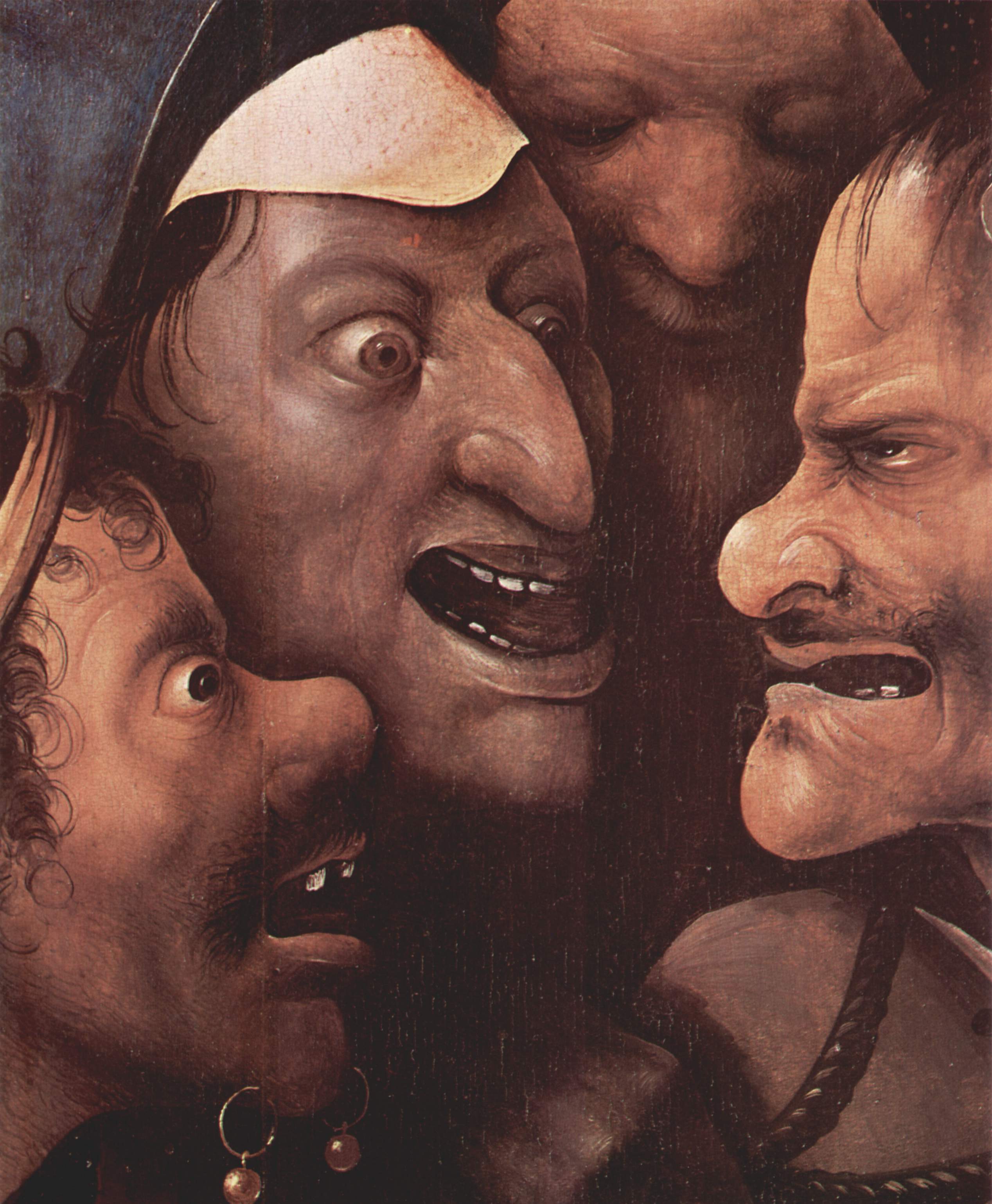
.png)
Facial expression of scorn or disgust
the facial expression
A sneer is a facial expression of scorn or disgust characterized by a slight raising of one corner of the upper lip, known also as curling the lip or turning up the nose. In The Expression of Emotions in Man and Animals, Charles Darwin defined a "sneer" as "the upper lip being retracted in such a manner that the canine tooth on one side of the face alone is shown" Darwin related the sneer to the snarl observed in non-human animals, particularly carnivores, observing that:
:The uncovering of the canine tooth is the result of a double movement. The angle or corner of the mouth is drawn a little backwards, and at the same time a muscle which runs parallel to and near the nose draws up the outer part of the upper lip, and exposes the canine on this side of the face. The contraction of this muscle makes a distinct furrow on the cheek, and produces strong wrinkles under the eye, especially at its inner corner. The action is the same as that of a snarling dog; and a dog when pretending to fight often draws up the lip on one side alone, namely that facing his antagonist.
It is suggested that the sneer is a universal expression of contempt and that Darwin was the first to observe this. Cats may be observed to sneer, though this is probably related to the Flehmen response.
In popular culture
- In Wuthering Heights, Emily Brontë used the sneer—as perceived by the novel's narrator, the housekeeper Ellen Dean ("Nelly")—to epitomize the personality of Heathcliff, the lead character.'My amiable lady!' he interrupted, with an almost diabolical sneer on his face. 'Where is she - my amiable lady?' (Chapter 2)|'Have you been listening at the door, Edgar?' asked the mistress, in a tone particularly calculated to provoke her husband, implying both carelessness and contempt of his irritation. Heathcliff, who had raised his eyes at the former speech, gave a sneering laugh at the latter (Chapter 11)|'Yes, she's dead!' I answered, checking my sobs and drying my cheeks. 'Gone to heaven, I hope; where we may, every one, join her, if we take due warning and leave our evil ways to follow good!'
'Did she take due warning, then?' asked Heathcliff, attempting a sneer. 'Did she die like a saint? (Chapter 16)|'Heathcliff did not glance my way, and I gazed up, and contemplated his features almost as confidently as if they had been turned to stone. His forehead, that I once thought so manly, and that I now think so diabolical, was shaded with a heavy cloud; his basilisk eyes were nearly quenched by sleeplessness, and weeping, perhaps, for the lashes were wet then: his lips devoid of their ferocious sneer, and sealed in an expression of unspeakable sadness. Had it been another, I would have covered my face in the presence of such grief. In his case, I was gratified; and, ignoble as it seems to insult a fallen enemy, I couldn't miss this chance of sticking in a dart: his weakness was the only time when I could taste the delight of paying wrong for wrong.' (Chapter 17)| I could doubt no more: he was dead and stark!
I hasped the window; I combed his black long hair from his forehead; I tried to close his eyes: to extinguish, if possible, that frightful, life-like gaze of exultation before any one else beheld it. They would not shut: they seemed to sneer at my attempts; and his parted lips and sharp white teeth sneered too! (Chapter 34)
- The horror genre actor Vincent Price delivered his characters' lines with a trademark sneer.
- Punk rock musician Billy Idol is also known for a trademark sneer.
- In the Harry Potter stories, Draco Malfoy and his father are notorious for their sinister sneers, which represent these characters' sense of entitlement over and contempt for those judged lacking in monetary, power, or family status.
- More than one commentator has depicted pop culture judicial panels such as those seen on American Idol and Britain's Got Talent as regularly sneering upon their hapless contestants.
- The cartoon character Cyril Sneer from the Canadian series The Raccoons has a sneer as his namesake.Animated TV specials: the complete directory to the first twenty-five years. Scarecrow Press, 1989.
- Former U.S. vice president Dick Cheney's political opponents have at times perceived him as looking upon them with a sneer.
References
References
- (Apr 10, 1937). "The Power of the Sneer". The Age.
- [[Charles Darwin]], ''[[The Expression of Emotions in Man and Animals]]'', 1872, pp [http://darwin-online.org.uk/content/frameset?itemID=F1142&viewtype=text&pageseq=1 249-250]
- Darwin, above; p. 251
- (March 1988). "On the form and universality of the contempt expression". Motivation and Emotion.
- (March 1997). "Neuropsychological aspects of facial asymmetry during emotional expression". Neuropsychology Review.
- Desmond Morris. (1987). "Cat watching". Crown Publishers.
- 0-7864-1932-6. p.96
- 0-618-87268-X. pp.2-3
- 0-415-96484-9. p.51
- 0-313-32067-5. p.184
- 0-470-45969-7. p.245
- 0-435-22730-0. p.78
- [https://books.google.com/books?id=5xAEAAAAMBAJ&q=sneering&pg=RA1-PA43 ''Billboard'']. May 4, 2002. p.43
- [https://books.google.com/books?id=7iQEAAAAMBAJ&dq=%22Cyril+Sneer%22&pg=RA1-PA49 ''Billboard'']. Jul 26, 1986. p.K-19
- 1-56025-886-1. p.62
- 0-7425-4193-2. p.2
This article was imported from Wikipedia and is available under the Creative Commons Attribution-ShareAlike 4.0 License. Content has been adapted to SurfDoc format. Original contributors can be found on the article history page.
Ask Mako anything about Sneer — get instant answers, deeper analysis, and related topics.
Research with MakoFree with your Surf account
Create a free account to save articles, ask Mako questions, and organize your research.
Sign up freeThis content may have been generated or modified by AI. CloudSurf Software LLC is not responsible for the accuracy, completeness, or reliability of AI-generated content. Always verify important information from primary sources.
Report