From Surf Wiki (app.surf) — the open knowledge base
Smoking ban
Law prohibiting tobacco smoking in a given space

Law prohibiting tobacco smoking in a given space
.svg)
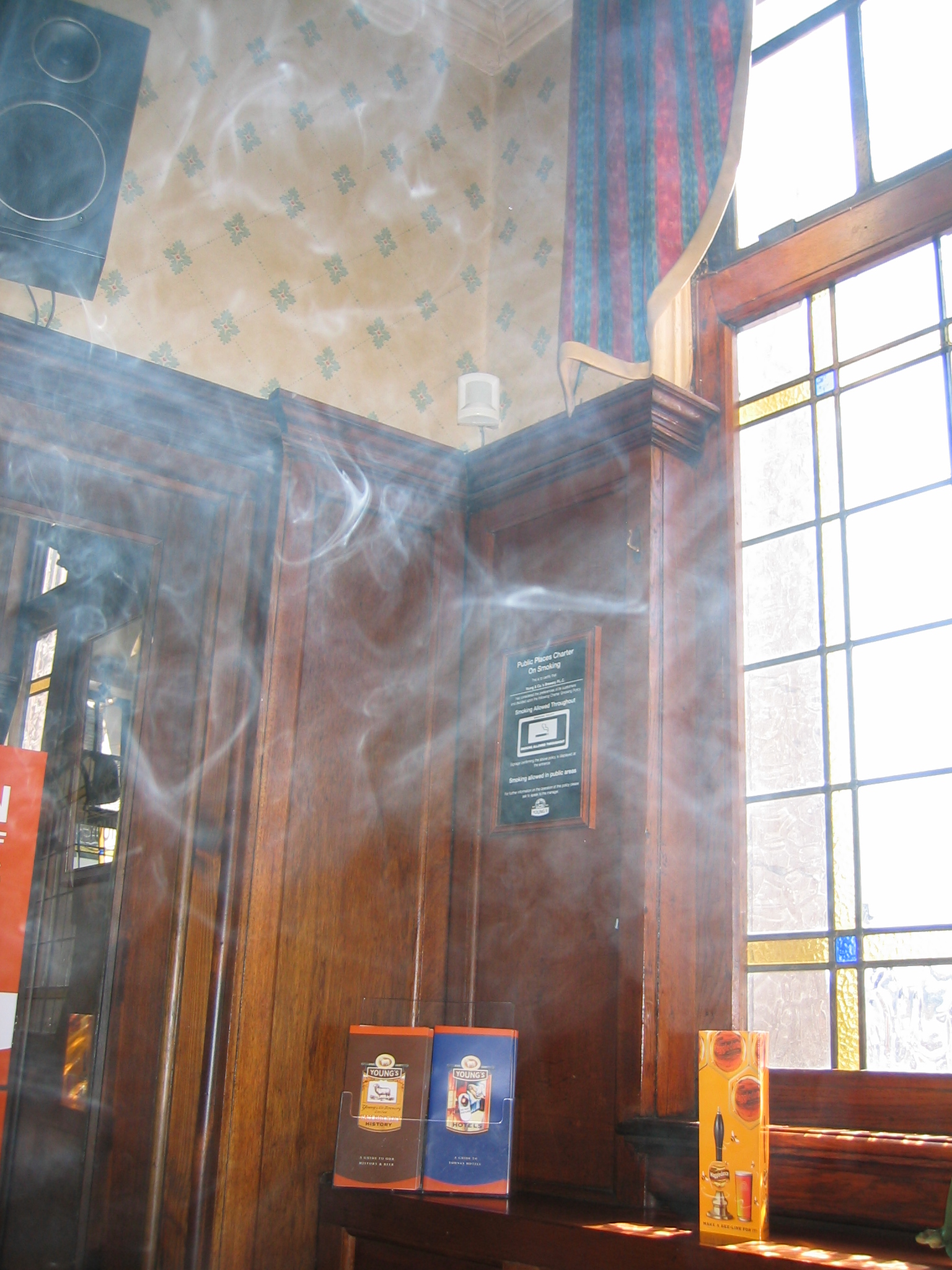
Smoking bans, or smoke-free laws, are public policies, including criminal laws and occupational safety and health regulations, that prohibit tobacco smoking in certain spaces. The spaces most commonly affected by smoking bans are indoor workplaces and buildings open to the public such as restaurants, bars, office buildings, schools, retail stores, hospitals, libraries, transport facilities, and government buildings, in addition to public transport vehicles such as aircraft, buses, watercraft, and trains. However, laws may also prohibit smoking in outdoor areas such as parks, beaches, pedestrian plazas, college and hospital campuses, and within a certain distance from the entrance to a building, and in some cases, private vehicles and multi-unit residences.
The most common rationale cited for restrictions on smoking is the negative health effects associated with secondhand smoke (SHS), or the inhalation of tobacco smoke by persons who are not smoking. These include diseases such as heart disease, cancer, and chronic obstructive pulmonary disease. The number of smoking bans around the world increased substantially in the late 20th century and early 21st century due to increased knowledge about these health risks. Many early smoking restrictions merely required the designation of non-smoking areas in buildings, but policies of this type became less common following evidence that they did not eliminate the health concerns associated with SHS. A 2024 systematic review revealed that air quality in partially enclosed outdoor hospitality venues where smoking is permitted as well as inside the adjacent outdoor and indoor non-smoking areas, the World Health Organization PM2.5 guidelines supporting extensions of smoke-free policies to outdoor hospitality settings are often exceeded.
Opinions on smoking bans vary. Many individuals and organizations such as the World Health Organization (WHO) support smoking bans on the basis that they improve health outcomes by reducing exposure to SHS and possibly decreasing the number of people who smoke, while others oppose smoking bans and assert that they violate individual and property rights and cause economic hardship, among other issues.
Rationale

Smoking bans are usually enacted in an attempt to protect non-smokers from the effects of secondhand smoke, which include an increased risk of heart disease, cancer, chronic obstructive pulmonary disease, and other diseases. Laws implementing bans on indoor smoking have been introduced by many countries and other jurisdictions as public knowledge about these health risks increased.
Additional rationales for smoking restrictions include reduced risk of fire in areas with explosive hazards; cleanliness in places where food, pharmaceuticals, semiconductors, or precision instruments and machinery are produced; decreased legal liability; potentially reduced energy use via decreased ventilation needs; reduced quantities of litter; healthier environments; and giving smokers incentive to quit.
Evidence basis
Main article: Passive smoking
Research has generated evidence that secondhand smoke causes the same problems as direct smoking, including Erectile dysfunction(Smoking causes erectile dysfunction because it promotes atherosclerosis) lung cancer, cardiovascular disease, and lung ailments such as emphysema, bronchitis, and asthma. Specifically, meta-analyses show that lifelong non-smokers with partners who smoke in the home have a 20–30% greater risk of lung cancer than non-smokers who live with non-smokers. Non-smokers exposed to cigarette smoke in the workplace have an increased lung cancer risk of 16–19%. An epidemiology report by the Institute of Medicine (IOM), convened by the United States Centers for Disease Control and Prevention (CDC), says that the risk of coronary heart disease is increased by around 25–30% when one is exposed to secondhand smoke. The data shows that even at low levels of exposure, there is a risk, and the risk increases with more exposure.
A study issued in 2002 by the International Agency for Research on Cancer of the World Health Organization concluded that non-smokers are exposed to the same carcinogens on account of tobacco smoke as active smokers. Sidestream smoke emitted from the burning ends of tobacco products contains 69 known carcinogens, particularly benzopyrene and other polynuclear aromatic hydrocarbons, and radioactive decay products, such as polonium-210. Several well-established carcinogens have been shown by the tobacco companies' own research to be present at higher concentrations in secondhand smoke than in mainstream smoke.
Scientific organisations confirming the effects of secondhand smoke include the U.S. National Cancer Institute, the U.S. Centers for Disease Control and Prevention, the U.S. National Institutes of Health, the Surgeon General of the United States, and the World Health Organization.
Air quality in bars and restaurants
Restrictions on smoking in bars and restaurants can substantially improve the air quality in such establishments. For example, one study listed on the website of the CDC states that New York's statewide law to eliminate smoking in enclosed workplaces and public places substantially reduced RSP (respirable suspended particles) levels in western New York hospitality venues. RSP levels were reduced in every venue that permitted smoking before the law was implemented, including venues in which only smoke from an adjacent room was observed at baseline. The CDC concluded that their results were similar to other studies, which also showed substantially improved indoor air quality after smoking bans were instituted.
A 2004 study showed New Jersey bars and restaurants had more than nine times the levels of indoor air pollution of neighbouring New York City, which had already enacted its smoking ban.
Research has also shown that improved air quality translates to decreased toxin exposure among employees. For example, among employees of the Norwegian establishments that enacted smoking restrictions, tests showed decreased levels of nicotine in the urine of both smoking and non-smoking workers (as compared with measurements before going smoke-free).
Public Health Law Research
In 2009, the Public Health Law Research Program, a national program office of the US-based Robert Wood Johnson Foundation, published an evidence brief summarising the research assessing the effect of a specific law or policy on public health. They stated that "There is strong evidence supporting smoking bans and restrictions as effective public health interventions aimed at decreasing exposure to secondhand smoke."
Ecological Damage
Many smokers carelessly discard cigarette butts, which easily enter ecosystems. Cigarette butts contain high levels of nicotine, a devastating toxin for most animals. Many animals, including infants, may ingest these butts, facing both the immediate threat of nicotine poisoning and the dangers associated with plastic ingestion. Furthermore, burning cigarette butts can cause wildfires. Disposing of cigarette butts in sewers can lead to clogged drains and subsequent flooding.
Tobacco farming also has negative environmental impacts. Firstly, it contributes to deforestation, with approximately 5% of global deforestation linked to tobacco cultivation. An estimated one tree is lost for every 300 cigarettes produced. Deforestation leads to climate change, biodiversity loss, soil erosion, and water pollution. Secondly, tobacco farming requires large amounts of fertilizer, causing soil degradation and pollution. Some fertilizers even contain radioactive materials that can be transferred to the lungs of smokers and those exposed to secondhand smoke. Additionally, tobacco farming consumes significant water resources, exacerbating water shortages. The overuse of pesticides pollutes water sources, harms wildlife, and poses health risks to tobacco farmers, particularly in developing countries where safety knowledge may be lacking and child labor is prevalent. Tobacco production also releases substantial greenhouse gas emissions, contributing to climate change. Tobacco waste pollutes oceans, rivers, soil, and urban environments. In developing countries, tobacco farming raises food security concerns, as valuable water and farmland are used for tobacco instead of food crops. Overall, tobacco farming causes severe damage to both the environment and human health, necessitating measures to reduce its negative impacts.
History
One of the world's earliest smoking bans was a 1575 Roman Catholic Church regulation which forbade the use of tobacco in any church in Mexico. In 1590, Pope Urban VII moved against smoking in church buildings. He threatened to excommunicate anyone who "took tobacco in the porchway of or inside a church, whether it be by chewing it, smoking it with a pipe or sniffing it in powdered form through the nose". Pope Urban VIII imposed similar restrictions in 1624. In 1604 King James VI and I published an anti-smoking treatise, A Counterblaste to Tobacco, that had the effect of raising taxes on tobacco. Russia banned tobacco for 70 years from 1627. The Ottoman Sultan Murad IV prohibited smoking in his empire in 1633 and had smokers executed. The earliest citywide European smoking bans were enacted shortly thereafter. Such bans were enacted in Bavaria, Kursachsen, and certain parts of Austria in the late 17th century. Smoking was banned in Berlin in 1723, in Königsberg in 1742, and in Stettin in 1744. These bans were repealed in the revolutions of 1848. Before 1865, Russia had a ban on smoking in the streets.
The first building in the world to ban smoking was the Old Government Building in Wellington, New Zealand in 1876. The ban related to concerns about the threat of fire, as it is the second largest wooden building in the world.
The first modern attempt at restricting smoking saw Nazi Germany banning smoking in every university, post office, military hospital, and Nazi Party office, under the auspices of Karl Astel's Institute for Tobacco Hazards Research, established in 1941 under orders from Adolf Hitler. The Nazis conducted major anti-tobacco campaigns until the demise of their regime in 1945.
In the latter part of the 20th century, as research on the risks of secondhand tobacco smoke became public, the tobacco industry launched "courtesy awareness" campaigns. Fearing reduced sales, the industry began a media and legislative programme that focused on "accommodation". Tolerance and courtesy were encouraged as a way to ease heightened tensions between smokers and those around them, while avoiding smoking bans. In the US, states were encouraged to pass laws providing separate smoking sections.
In 1975, the U.S. state of Minnesota enacted the Minnesota Clean Indoor Air Act, making it the first state to restrict smoking in most public spaces. At first restaurants were required to have "No Smoking" sections, and bars were exempt from the Act. As of 1 October 2007 Minnesota enacted a ban on smoking in all restaurants and bars statewide, called the Freedom to Breathe Act of 2007.
The resort town of Aspen, Colorado became the first city in the US to restrict smoking in restaurants in 1985, though it allowed smoking in areas that were separately ventilated.
On 3 April 1987, the city of Beverly Hills, California initiated an ordinance to restrict smoking in most restaurants, in retail stores, and at public meetings. It exempted restaurants in hotels – City Council members reasoned that hotel restaurants catered to large numbers of visitors from abroad, where smoking is more acceptable than in the United States.
In 1990, the city of San Luis Obispo, California became the first city in the world to restrict indoor smoking in bars as well as in restaurants. The ban did not include workplaces, but covered all other indoor public spaces and its enforcement was somewhat limited.
In the United States, California's 1998 smoking ban encouraged other states such as New York to implement similar regulations. California's ban included a controversial restriction on smoking in bars, extending the statewide ban enacted in 1994. As of April 2009, there were 37 states with some form of smoking ban. Some areas in California began banning smoking across whole cities, including every place except residential homes. More than 20 cities in California enacted park- and beach-smoking restrictions. In May 2011, New York City expanded its previously implemented smoking ban by banning smoking in parks, beaches and boardwalks, public golf courses and other areas controlled by the New York City Parks Department. In recent years New York City has passed administrative codes §17-502 and §17-508 forcing landlords of privately owned buildings, cooperatives, and condominiums to adopt a smoking policy into all leases. These codes oblige landlords to enact provisions telling tenants the exact locations where they can or can not smoke. In January 2010, the mayor of Boston, Massachusetts, Thomas Menino, proposed a restriction upon smoking inside public housing apartments under the jurisdiction of the Boston Housing Authority.
From December 1993, in Peru, it became illegal to smoke in any public enclosed place and any public transport vehicle (according to Law 25357 issued on 27 November 1991 and its regulations issued on 25 November 1993 by decree D.S.983-93-PCM). There is also legislation restricting publicity, and it is also illegal (Law 26957 21 May 1998) to sell tobacco to minors or directly to advertise tobacco within 500m of schools (Law 26849 9 Jul 1997).
On 11 November 1975 Italy banned smoking on public transit vehicles (except for smokers' rail carriages) and in some public buildings (hospitals, cinemas, theatres, museums, universities, and libraries). After an unsuccessful attempt in 1986, on 16 January 2003 the Italian parliament passed the Legge Sirchia, which would ban smoking in all indoor public places, including bars, restaurants, discotheques and offices from 10 January 2005.
On 3 December 2003, New Zealand passed legislation to progressively implement a smoking ban in schools, school grounds, and workplaces by December 2004.
On 29 March 2004, the Republic of Ireland implemented a nationwide ban on smoking in all workplaces. In Norway, similar legislation came into force on 1 June the same year.
In Scotland, Andy Kerr, the Minister for Health and Community Care, introduced a ban on smoking in public areas on 26 March 2006. Smoking was banned in all public places in the whole of the United Kingdom in 2007, when England became the final region to have the legislation come into effect (the age limit for buying tobacco also increased from 16 to 18 on 1 October 2007).
KeralaSmokeBanOn 12 July 1999, a Division Bench of the Kerala High Court in India banned smoking in public places by declaring "public smoking as illegal first time in the history of the whole world, unconstitutional and violative of Article 21 of the Constitution". The Bench, headed by Dr. Justice K. Narayana Kurup, held that "tobacco smoking" in public places (in the form of cigarettes, cigars, beedies or otherwise) "falls within the mischief of the penal provisions relating to public nuisance as contained in the Indian Penal Code and also the definition of air pollution as contained in the statutes dealing with the protection and preservation of the environment, in particular, the Air (Prevention and Control of Pollution), Act 1981."
In 2003, India introduced a law that banned smoking in public places like restaurants, public transport, or schools. The same law also made it illegal to advertise cigarettes or other tobacco products.
In 2010 Nepal planned to enact a new anti-smoking bill that would ban smoking in public places and outlaw all tobacco advertising to prevent young people from smoking.
On 31 May 2011 Venezuela introduced a ban on smoking in all enclosed public and commercial spaces, including malls, restaurants, bars, discos, workplaces, etc.
Smoking was first restricted in schools, hospitals, trains, buses, and train stations in Turkey in 1996. In 2008, a more comprehensive smoking ban was implemented, covering all public indoor venues.{{cite web
The Plage Lumière beach in La Ciotat, France, became the first beach in Europe to restrict smoking from August 2011, to encourage more tourists to visit the beach. Effective as of 1 July 2025, the prohibition of smoking in France was expanded nationwide to include beaches, in parks and public gardens, at bus shelters, in sports venues and near schools. Violators are punishable to a €135 fine.
In 2012, smoking in Costa Rica became subject to some of the most restrictive regulations in the world, with the practice being banned from many outdoor recreational and educational areas as well as in public buildings and vehicles.
Public support
According to a 2018 Gallup poll, 25% of U.S. adults believe that smoking should be completely banned in the country, marking the highest level of support recorded by Gallup so far. Previously, the percentage of adults supporting this measure had fluctuated between 11% and 24% over nearly thirty years of Gallup's tracking.
Another poll conducted by Kantor, of over 28,000 Europeans in 2020, found that seven in ten people support banning the use of e-cigarettes or heated tobacco products in areas where smoking is prohibited, reflecting an increase of seven percentage points since 2017. Relative majorities also favor the other two control policies surveyed: banning flavors in e-cigarettes, with 47% support (up by 7 points since 2017), and introducing plain packaging for cigarettes, also supported by 47% (up by 1 point).
A February 2021 study (based on fieldwork done from August to September 2020) reported that in all countries except Croatia, less than half of the respondents reported seeing people smoking inside the last time they visited a drinking establishment, such as a bar. Croatia stands out with 73% of respondents indicating this. In other countries, the proportions range from 47% in Cyprus, 45% in Slovakia, and 31% in Denmark, to only 3% in Sweden, 5% in Hungary, and 7% in Austria. These results indicate that despite the presence of indoor smoking bans across the EU, indoor tobacco smoke in drinking establishments remains an issue in several countries.
Effects
Effects upon health
Several studies have documented health and economic benefits related to smoking bans. A 2009 report by the Institute of Medicine concluded that smoking bans reduced the risk of coronary heart disease and heart attacks, but the report's authors were unable to identify the magnitude of this reduction. Also in 2009, a systematic review and meta-analysis found that bans on smoking in public places were associated with a significant reduction of incidence of heart attacks. The lead author of this meta-analysis, David Meyers, said that this review suggested that a nationwide ban on smoking in public places could prevent between 100,000 and 225,000 heart attacks in the United States each year.
A 2012 meta-analysis found that smoke-free legislation was associated with a lower rate of hospitalizations for cardiac, cerebrovascular, and respiratory diseases, and that "More comprehensive laws were associated with larger changes in risk." The senior author of this meta-analysis, Stanton Glantz, told USA Today that, concerning exemptions for certain facilities from smoking bans, "The politicians who put those exemptions in are condemning people to be put into the emergency room." A 2013 review found that smoking bans were associated with "significant reduction in acute MI [myocardial infarction] risk", but noted that "studies with smaller population in the United States usually reported larger reductions, while larger studies reported relatively modest reductions".
A 2014 systematic review and meta-analysis found that smoke-free legislation was associated with approximately 10% reductions in preterm births and hospital attendance for asthma, but not with a decrease in low birth weight. A 2016 Cochrane review found that since the previous version of that review was published in 2010, the evidence that smoking bans improved health outcomes had become more robust, especially with respect to acute coronary syndrome admissions. A 2024 systematic review and meta-analysis reported significant reductions in stroke-related hospital admissions following smoke-free legislation; for example, Florida's 2003 statewide law was associated with an 18.1% decrease in stroke hospitalizations over the course of more than three years.
However, other studies came to the conclusion that smoking bans have little or no short-term effect on myocardial infarction rates and other diseases. A 2010 study from the US used huge nationally representative databases to compare smoking-restricted areas with control areas and found no associations between smoking bans and short-term declines in heart attack rates. The authors have also analyzed smaller studies using subsamples and revealed that large short-term increases in myocardial infarction incidence following a smoking ban are as common as the large decreases.
Effects upon tobacco consumption
Smoking bans are generally acknowledged to reduce rates of smoking; smoke-free workplaces reduce smoking rates among workers, and restrictions upon smoking in public places reduce general smoking rates through a combination of stigmatisation and reduction in the social cues for smoking. The World Health Organization considers smoking bans to influence reducing demand for tobacco by producing an environment where smoking becomes increasingly more difficult and to help shift social norms away from the acceptance of smoking in everyday life. Along with tax measures, cessation measures, and education, smoking bans are viewed by public health experts as an important element in reducing smoking rates and promoting positive health outcomes. When effectively implemented, they are seen as an important element of policy to support behaviour change in favour of a healthy lifestyle.
One report stated that cigarette sales in Ireland and Scotland increased after their smoking bans were implemented. In contrast, another report states that in Ireland, cigarette sales fell by 16% in the six months after implementation of the ban. In the UK, cigarette sales fell by 11% during July 2007, the first month of the nationwide smoking ban, compared with July 2006.
A 1992 document from Phillip Morris summarised the tobacco industry's concern about the effects of smoking bans: "Total prohibition of smoking in the workplace strongly effects tobacco industry volume. Smokers facing these restrictions consume 11%–15% less than average and quit at a rate that is 84% higher than average."
In the United States, the CDC reported a levelling-off of smoking rates in recent years despite a large number of ever more comprehensive smoking bans and large tax increases. It has also been suggested that a "backstop" of hardcore smokers has been reached: those unmotivated and increasingly defiant in the face of further legislation. The smoking ban in New York City was credited with the reduction in adult smoking rates at nearly twice the rate as in the rest of the country, "and life expectancy has climbed three years in a decade".
In Sweden, use of snus, as an alternative to smoking, has risen steadily since that nation's smoking ban.
Smoking restrictions may make it easier for smokers to quit. A survey suggests 22% of UK smokers may have considered quitting in response to that nation's smoking ban.
Restaurant smoking restrictions may help to stop young people from becoming habitual smokers. A study of Massachusetts youths, found that those in towns with smoking bans were 35 percent less likely to be habitual smokers.
Economic impact

Many studies have been published in the health industry literature on the economic effects of smoking bans. The majority of these government and academic studies have found that there is no negative economic impact associated with smoking restrictions and many have found that there may be a positive effect on local businesses. A 2003 review of 97 such studies of the economic effects of a smoking ban on the hospitality industry found that the "best-designed" studies concluded that smoking bans did not harm businesses. Similarly, a 2014 meta-analysis found no significant gains or losses in revenue in restaurants and bars affected by smoking bans. In addition, such laws may reduce health care costs, improve work productivity, and lower the overall cost of labour in the community thus protected, making that workforce more attractive for employers.
Studies funded by the bar and restaurant associations have sometimes claimed that smoking bans hurt restaurant and bar profits. Such associations have also criticised studies which found that such legislation had no impact. Many bar and restaurant associations have relationships with the tobacco industry and are sponsored by them.
Australia
A government survey in Sydney found that the proportion of the population attending pubs and clubs rose after smoking was banned inside them. However, a ClubsNSW report in August 2008 blamed the smoking ban for New South Wales clubs suffering their worst fall in income ever, amounting to a decline of $385 million. Income for clubs was down 11% in New South Wales. Sydney CBD club income fell 21.7% and Western Sydney clubs lost 15.5%.
Germany
Some smoking restrictions were introduced in German hotels, restaurants, and bars in 2008 and early 2009. The restaurant industry has claimed that some businesses in the states that restricted smoking in late 2007 (Lower Saxony, Baden-Württemberg, and Hessen) experienced reduced profits. The German Hotel and Restaurant Association (DEHOGA) claimed that the smoking ban deterred people from going out for a drink or meal, stating that 15% of establishments that adopted a ban in 2007 saw turnover fall by around 50%. However, a study by the University of Hamburg (Ahlfeldt and Maennig 2010) finds negative impacts on revenues, if any, only in the very short run. In the medium and long run, a recovery of revenues took place. These results suggest either that the consumption in bars and restaurants is not affected by smoking bans in the long run, or that negative revenue impacts from smokers are compensated by increasing revenues from non-smokers.
Ireland
The Republic of Ireland was the first country to introduce fully smoke-free workplaces (29 March 2004, after it was delayed from 1 January 2004). The Irish workplace smoke-free law was introduced to protect workers from secondhand smoke and to discourage smoking in a nation with a high percentage of smokers. In Ireland, the main opposition to the ban came from publicans. Many pubs introduced "outdoor" arrangements (generally heated areas with shelters). It was speculated by opponents that the smoke-free workplaces law would increase the amount of drinking and smoking in the home, but recent studies showed this was not the case.
Ireland's Office of Tobacco Control website indicates that "an evaluation of the official hospitality sector data shows there has been no adverse economic effect from the introduction of this measure (the March 2004 national smoking ban in bars, restaurants, etc), despite claims that the smoke-free law was a significant contributing factor to the closure of hundreds of small rural pubs, with almost 440 fewer licences renewed in 2006 than in 2005."
United Kingdom
Smoking bans were enacted in Scotland on 26 March 2006, in Wales on 2 April 2007, in Northern Ireland on 30 April 2007, and in England on 1 July 2007. The legislation was cited as an example of good regulation which has had a favourable impact on the UK economy by the Department for Business, Innovation and Skills, and a review of the impact of smoke-free legislation carried out for the Department of Health concluded that there was no clear adverse impact on the hospitality industry despite initial criticism from some voices within the pub trade.
Six months after implementation in Wales, the Licensed Victuallers Association (LVA), which represents pub operators across Wales, claimed that pubs had lost up to 20% of their trade. The LVA said some businesses were on the brink of closure, others had already closed down, and there was little optimism that trade would eventually return to previous levels.
The British Beer and Pub Association (BBPA), which represents some pubs and breweries across the UK, claimed that beer sales were at their lowest level since the 1930s, ascribing a fall in sales of 7% during 2007 to the smoke-free regulations.
According to a survey conducted by pub and bar trade magazine The Publican, the anticipated increase in sales of food following the introduction of smoke-free workplaces did not immediately occur. The trade magazine's survey of 303 pubs in the United Kingdom found the average customer spent £14.86 on food and drink at dinner in 2007, virtually identical to 2006.
A survey conducted by BII (formerly British Institute of Innkeeping) and the Federation of Licensed Victuallers' Associations (FLVA) concluded that sales had decreased by 7.3% in the 5 months since the introduction of smoke-free workplaces on 1 July 2007. Of the 2,708 responses to the survey, 58% of licensees said they had seen smokers visiting less regularly, while 73% had seen their smoking customers spending less time at the pub.
United States
In the US, smokers and hospitality businesses initially argued that businesses would suffer from no-smoking laws. However, a 2006 review by the U.S. Surgeon General found that smoking restrictions were unlikely to harm businesses in practice, and that many restaurants and bars might see increased business.
In 2003, New York City amended its smoke-free law to include virtually all restaurants and bars, including those in private clubs, making it, along with the California smoke-free law, one of the toughest in the United States. The city's Department of Health found in a 2004 study that air pollution levels had decreased sixfold in bars and restaurants after the restrictions went into effect, and that New Yorkers had reported less secondhand smoke in the workplace. The study also found the city's restaurants and bars prospered despite the smoke-free law, with increases in jobs, liquor licenses, and business tax payments. The president of the New York Nightlife Association remarked that the study was not wholly representative, as by not differentiating between restaurants and nightclubs, the reform may have caused businesses like nightclubs and bars to suffer instead. A 2006 study by the New York State Department of Health found that "the CIAA has not had any significant negative financial effect on restaurants and bars in either the short or the long term".
On 19 December 1990, Carl's Jr. became the first large fast-food chain to ban smoking in all of its company-owned restaurants. On 1 April 1993, Showbiz Pizza Time Inc., owner of Chuck E. Cheese, banned smoking in its restaurants. On 26 January 1994, Arby's Inc. announced it would ban smoking indoors in its 257 company-owned locations later that year. Dairy Queen Inc., having banned indoor smoking in company-owned locations in 1993, announced that it would urge 6,000 Dairy Queen, Orange Julius, and Karmel Korn franchise owners to put a ban on smoking inside their restaurants. On 24 February 1994, fast-food restaurant McDonald's announced that it would ban smoking inside its 1,400 company-owned restaurants effective immediately and would "continue to actively encourage our franchises to make their restaurants smoke-free, and more are voluntarily doing so every day". Taco Bell announced a similar ban on its company-owned restaurants on 15 March 1994. On 21 December 2000, Wendy's International Inc. announced an agreement to ban smoking in its company-owned restaurants by 31 March 2001, with implemented effective dates of "Jan. 1 in the West, Feb. 1 in the Southeast, March 1 in upper northern states, and March 31 in the Midwest and Northeast." On 11 August 2005, Yum! Brands, parent company of KFC and Pizza Hut restaurants, announced that it would ban smoking inside some 1,200 KFCs and 1,675 Pizza Huts that were company-owned beginning the following week and encourage the ban to its franchise operators.
In Wauwatosa, Wisconsin, three restaurants received short-term exemptions from a local smoke-free ordinance in restaurants when they managed to demonstrate financial suffering because of it.
A bar received the first hardship exemption in Washington, D.C. Maryland also has provisions for hardship exemptions.
Effects upon musical instruments
Bellows-driven instruments – such as the accordion, concertina, melodeon and (Irish) Uilleann bagpipes – reportedly need less frequent cleaning and maintenance as a result of the Irish smoke-free law. "Third-hand smoke", solid particulates from secondhand smoke that are adsorbed onto surfaces and later re-emitted as gases or transferred through touch, are a particular problem for musicians. After playing in smoky bars, instruments can emit nicotine, 3-ethenylpyridine (3-EP), phenol, cresols, naphthalene, formaldehyde, and tobacco-specific nitrosamines (including some not found in freshly-emitted tobacco smoke), which can enter musicians' bodies through the skin, or be re-emitted as gases after they have left the smoky environment. Concern about third-hand smoke on instruments is one of the reasons many musicians, represented by the New Orleans Musicians' Clinic, supported the smoking ban there.
Effects of prison smoking restrictions
Prisons are increasingly restricting tobacco smoking. In the United States, 24 states prohibit indoor smoking whereas California, Nebraska, Arkansas, and Kentucky prohibit smoking on the entire prison grounds. In July 2004 the Federal Bureau of Prisons adopted a smoke-free policy for its facilities. The 1993 U.S. Supreme Court ruling in Helling v. McKinney acknowledged that a prisoner's exposure to secondhand smoke could be regarded as cruel and unusual punishment (which would be in violation of the Eighth Amendment). A 1997 ruling in Massachusetts established that prison smoking bans do not constitute cruel and unusual punishment. Many officials view prison smoking bans as a means of reducing health-care costs.
Except for Quebec, all Canadian provinces have banned smoking indoors and outdoors in all their prison facilities. Prison officials and guards are sometimes worried due to previous events in other prisons concerning riots, fostering a cigarette black market within the prison, and other problems resulting from total prison smoking restrictions. Prisons have experienced riots when placing smoking restrictions into effect, resulting in prisoners setting fires and destroying prison property, and persons being assaulted, injured, and stabbed. One prison in Canada had some guards reporting breathing difficulties from the fumes of prisoners smoking artificial cigarettes made from nicotine patches lit by creating sparks from inserting metal objects into electrical outlets. For example in 2008, the Orsainville Detention Centre near Quebec City, withdrew its smoke-free provision following a riot. But the feared increase in tension and violence expected in association with smoking restrictions has generally not been experienced in practice.
Prison smoking bans are also in force in New Zealand, the Isle of Man and the Australian states of Victoria, Queensland, Tasmania, Northern Territory and New South Wales. The New Zealand ban was subsequently successfully challenged in court on two occasions, resulting in a law change to maintain it.
Some prisoners are getting around the prison smoking bans by producing and smoking "teabacco", which is nicotine patches or lozenges mixed with tea leaves, and rolled up in Bible paper. A forensic analysis of teabacco made from nicotine lozenges identified some potentially-toxic compounds, but concluded that teabacco made from nicotine lozenges may be less harmful than traditional tobacco cigarettes.
Compliance
The introduction of smoking restrictions occasionally generates protests and predictions of widespread non-compliance, along with the rise of smokeasies, including in New York City, Germany, Illinois, the United Kingdom, Utah, and Washington, D.C..
High levels of compliance with smoke-free laws have been reported in most jurisdictions including New York, Ireland, Italy and Scotland. Poor compliance was reported in Kolkata. A 2024 systematic review and meta-analysis of 23 studies estimated pooled non-compliance with smoke-free laws at 48.0% (95% CI 33.9–62.2), with the highest non-compliance observed in hotels (59%).
Criticism
Smoke-free regulations and ordinances have been criticised on a number of grounds.
Government interference with personal lifestyle
Critics of smoke-free provisions, including musician Joe Jackson, and political essayist Christopher Hitchens, have claimed that regulation efforts are misguided. Typically, such arguments are based upon an interpretation of John Stuart Mill's harm principle which perceives smoke-free laws as an obstacle to tobacco consumption per se, rather than a bar upon harming other people.
Such arguments, which usually refer to the notion of personal liberty, have themselves been criticised by Nobel Prize-winning economist Amartya Sen who defended smoke-free regulations on several grounds. Among other things, Sen argued that while a person may be free to acquire the habit of smoking, they thereby restrict their own freedom in the future given that the habit of smoking is hard to break. Sen also pointed out the heavy costs that smoking inevitably imposes on every society which grants smokers unrestricted access to public services (which, Sen noted, every society that is not "monstrously unforgiving" would do). Arguments which invoke the notion of personal liberty against smoke-free laws are thus incomplete and inadequate, according to Sen.
In New Zealand, two psychiatrist patients and a nurse took their local district health board to court, arguing a smoking ban at intensive care units violated "human dignity" as they were there for mental health reasons, not smoking-related illness. They argued it was "cruel" to deny patients cigarettes.
Property rights
Some critics of smoke-free laws emphasise the property rights of business owners, drawing a distinction between nominally public places (such as government buildings) and privately owned establishments (such as bars and restaurants). Citing economic efficiency, some economists suggest that the basic institutions of private property rights and contractual freedom are capable of resolving conflicts between the preferences of smokers and those who seek a smoke-free environment, without government intrusion.
Legality of smoke-free regulations
Businesses affected by smoke-free regulations have filed lawsuits claiming that these are unconstitutional or otherwise illegal. In the United States, some cite unequal protection under the law while others cite loss of business without compensation, as well as other types of challenges. Some localities where hospitality businesses filed lawsuits against the state or local government include Nevada, Montana, Iowa, Colorado, Kentucky, New York, South Carolina, and Hawaii, though none have succeeded.
Smoke-free laws may move smoking elsewhere
Restrictions upon smoking in offices and other enclosed public places often result in smokers going outside to smoke, frequently congregating outside doorways. This can result in non-smokers passing through these doorways getting exposed to more secondhand smoke rather than less. Many jurisdictions that have restricted smoking in enclosed public places have extended provisions to cover areas within a fixed distance of entrances to buildings.
The former UK Secretary of State for Health John Reid claimed that restrictions upon smoking in public places may lead to more people smoking at home. However, both the House of Commons Health Committee and the Royal College of Physicians disagreed, with the former finding no evidence to support Reid's claim after studying Ireland, and the latter finding that smoke-free households increased from 22% to 37% between 1996 and 2003.
Connection to drunk driving fatalities
In May 2008, research published by Adams and Cotti in the Journal of Public Economics examined statistics of drunken-driving fatalities and accidents in areas where smoke-free laws have been implemented in bars and found that fatal drunken-driving accidents increased by about 13%, or about 2.5 such accidents per year for a typical county of 680,000. They speculate this could be caused by smokers driving farther away to jurisdictions without smoke-free laws or where enforcement is lax.
Effects of funding on research literature
As in other areas of research, the effect of funding on research literature has been discussed with respect to smoke-free laws. Most commonly, studies which found few or no positive and/or negative effects of smoke-free laws and which were funded by tobacco companies have been delegitimised because of the obvious conflict of interest.
Professor of Economics at the California State Polytechnic University-San Luis Obispo, Michael L. Marlow, defended "tobacco-sponsored" studies arguing that all studies merited "scrutiny and a degree of skepticism", irrespective of their funding. He wished for the basic assumption that every author were "fair minded and trustworthy, and deserves being heard out" and for less attention to research funding when evaluating the results of a study. Marlow suggests that studies funded by tobacco companies are viewed and dismissed as "deceitful", i.e. as being driven by (conscious) bad intention.
Alternatives
Incentives for voluntarily smoke-free establishments
During the debates over the Washington, DC, smoke-free law, city council member Carol Schwartz proposed legislation that would have enacted either a substantial tax credit for businesses that chose to voluntarily restrict smoking or a quadrupling of the annual business license fee for bars, restaurants and clubs that wished to allow smoking. Additionally, locations allowing smoking would have been required to install specified high-performance ventilation systems.
Ventilation
Critics of smoke-free laws have suggested that ventilation is a means of reducing the harmful effects of secondhand smoke. A tobacco industry-funded study conducted by the School of Technology of the University of Glamorgan in Wales, published in the Building Services Journal suggested that "ventilation is effective in controlling the level of contamination", although "ventilation can only dilute or partially displace contaminants and occupational exposure limits are based on the 'as low as reasonably practicable' principle".
Some hospitality organisations have claimed that ventilation systems could bring venues into line with smoke-free restaurant ordinances. A study published by the American Society of Heating, Refrigerating and Air-Conditioning Engineers and funded by the Robert Wood Johnson Foundation found one establishment with lower air quality in the non-smoking section, due to improperly installed ventilation systems. They also determined that even properly functioning systems "are not substitutes for smoking bans in controlling environmental smoke exposure".
The tobacco industry has focused on proposing ventilation as an alternative to smoke-free laws, though this approach has not been widely adopted in the U.S. because "in the end, it is simpler, cheaper, and healthier to end smoking". The Italian smoke-free law permits dedicated smoking rooms with automatic doors and smoke extractors. Nevertheless, few Italian establishments are creating smoking rooms due to the additional cost.
A landmark report from the U.S. Surgeon General found that even the use of elaborate ventilation systems and smoking rooms fail to provide protection from the health hazards of secondhand smoke, since there is "no safe level of secondhand smoke".
References
References
- "Impact of secondhand smoke on air quality in partially enclosed outdoor hospitality venues: a review".
- "Smokefree legislation consultation response, The Institute of Public Health in Ireland".
- (28 October 2005). "New health bill will ban smoking in majority of workplaces".
- [https://web.archive.org/web/20050906213831/http://www.who.int/tobacco/framework/WHO_FCTC_english.pdf WHO Framework Convention on Tobacco Control]; First international treaty on public health, adopted by 192 countries and signed by 168. See in particular Article 8 ''Protection from exposure to tobacco smoke''.
- Peate, Ian. (April 2005). "The effects of smoking on the reproductive health of men". British Journal of Nursing (Mark Allen Publishing).
- Korenman, Stanley G.. (March 2004). "Epidemiology of erectile dysfunction". Endocrine.
- (January 2005). "The impact of vascular risk factors on erectile function". Drugs of Today (Barcelona, Spain: 1998).
- (2003). "European Code Against Cancer and scientific justification: Third version (2003)". Annals of Oncology.
- (August 2004). "Tobacco smoking and cancer: a brief review of recent epidemiological evidence". Lung Cancer.
- (February 2025}}{{page needed). "Patient Assessment Tutorials: A Step-by-Step Procedures Guide for the Dental Hygienist". Lippincott Williams & Wilkins}}{{year missing.
- (13 April 2004). "Disparity in Protecting Food Service Staff from Secondhand Smoke Shows Need for Comprehensive Smoke-Free Policies, Say Groups".
- [https://www.greenfacts.org/glossary/pqrs/sidestream-smoke.htm Glossary: Sidestream smoke]
- "Involuntary smoking".
- (February 1966). "Polonium 210 in tobacco, cigarette smoke, and selected human organs". Public Health Reports.
- (December 2005). "Philip Morris toxicological experiments with fresh sidestream smoke: more toxic than mainstream smoke". Tobacco Control.
- [http://cancercontrol.cancer.gov/tcrb/monographs/10/index.html Health Effects of Exposure to Environmental Tobacco Smoke] {{webarchive. link. (5 September 2007 : A monograph from the U.S. [[National Cancer Institute]]. Retrieved 6 August 2007.)
- [https://www.cdc.gov/tobacco/data_statistics/fact_sheets/secondhand_smoke/general_facts/ Secondhand Smoke Fact Sheet], from the [[Centers for Disease Control and Prevention]]. Retrieved 6 August 2007.
- [https://ntp.niehs.nih.gov/sites/default/files/ntp/roc/content/profiles/tobaccorelatedexposures.pdf Environmental Tobacco Smoke]. From the 11th Report on Carcinogens of the [[National Institutes of Health]]. Retrieved 6 August 2007. [https://web.archive.org/web/20080716173310/http://ntp.niehs.nih.gov/ntp/roc/eleventh/profiles/s176toba.pdf Archive]
- [http://www.surgeongeneral.gov/library/secondhandsmoke/ The Health Consequences of Involuntary Exposure to Tobacco Smoke]: A Report of the Surgeon General. Dated 27 June 2006. Retrieved 6 August 2007.
- [https://monographs.iarc.fr/ENG/Monographs/vol83/volume83.pdf Tobacco Smoke and Involuntary Smoking]: A monograph of the [[International Agency for Research on Cancer]] of the [[World Health Organization]]. Retrieved 6 August 2007.
- (12 November 2004). "Indoor Air Quality in Hospitality Venues Before and After Implementation of a Clean Indoor Air Law --- Western New York, 2003". Morbidity and Mortality Weekly Report.
- "Study Finds That New Jersey Bars and Restaurants Have Nine Times More Air Pollution than Those in Smoke-Free New York".
- Nina Athey-Pollard. (16 March 2006). "Smoking ban leads to healthier bar staff". RSC Publishing.
- (March 2006). "Airborne exposure and biological monitoring of bar and restaurant workers before and after the introduction of a smoking ban". Journal of Environmental Monitoring.
- [http://www.publichealthlawresearch.org/public-health-topics/drugs-alcohol-and-tobacco/evidence-brief/workplace-smoking-bans-and-restriction Workplace Smoking Bans and Restrictions, Public Health Law Research 2009] {{webarchive. link. (14 April 2011)
- "Tobacco and the environment".
- (March 2023). "Environmental impact assessment of tobacco farming in northern Bangladesh". Heliyon.
- Smith, Kyle. (19 December 2010). "Could smoking become extinct?". The New York Post.
- Lader, Malcolm Harold; Henningfield, Jack E.; Martin Jarvis (1985). Nicotine, an old-fashioned addiction. London: Burke Publishing. pp. 96–8.
- (1985). "Nicotine, an old-fashioned addiction". Burke Publishing.
- Cutler, Abigail. (January 2007). "The ashtray of history".
- (Fall 1997). "The Nazi war on tobacco: ideology, evidence, and possible cancer consequences". Bulletin of the History of Medicine.
- (2–8 October 2006). "Law School / Old Government House".
- (2001). "Commentary: Schairer and Schöniger's forgotten tobacco epidemiology and the Nazi quest for racial purity". International Journal of Epidemiology.
- (1996). "Treatment protocols of the lupus nephritis collaborative study of plasmapheresis in severe lupus nephritis. The Lupus Nephritis Collaborative Study Group". Progress in Clinical and Biological Research.
- (30 June 1994). "Preemption/Accommodation presentation". University of California at San Francisco.
- "Minnesota Clean Indoor Air Act – Freedom to Breathe". Minnesota Department of Health.
- Martiga Lohn. (13 May 2007). "Minnesota lawmakers approve smoking ban". Boston Globe.
- Cummings, Judith. (4 April 1987). "BEVERLY HILLS SMOKING BAN CLEARS AIR BUT ASH TRAYS STAY". The New York Times.
- David E. Garth. (29 January 2001). "Letter to Nebraska Senators from San Luis Obispo Chamber of Commerce in favor of Smokefree Legislation". Tobacco.org.
- (8 October 1991). "Smoking out in Los Gatos". Lodi News-Sentinel.
- "The effects of a ban on smoking in public places in San Luis Obispo, California".
- (6 October 2006). "How many Smokefree Laws?". American Nonsmokers' Rights Foundation.
- (7 June 2013). "Tobacco Free Ireland".
- "2006 New York Laws: New York City Administrative Code(NEW): (17-501 - 17-514) Smoke-free Air Act".
- (16 January 2018). "The Newest New York City Real Estate Laws That Property Owners and Occupants Must Know in 2018".
- link. (2 October 2011 , ''Boston Herald'', Sunday, 31 January 2010)
- "*** NORMATTIVA ***".
- "L. 3/2003".
- That was part of a wider law. Smoke provisions are contained in art. 51
- Ministry of Health. (15 September 2005). "Smokefree Law in New Zealand". moh.govt.nz.
- (1 June 2004). "Norwegians ban smoking in bars". BBC News.
- (7 August 2008). "Smoking restrictions in Norway". [[Innovation Norway]].
- (May 2005). "Norway's ban on smoking in bars and restaurants – A review of the first year". Directorate for Health and Social Affairs.
- . (26 March 2006). ["Scotland begins pub smoking ban"](https://news.bbc.co.uk/1/hi/scotland/4845260.stm). *BBC News*.
- Roxby, Philippa. (1 July 2012). "Smoking ban's impact five years on". BBC News.
- "[ Explained ] The Cigarettes And Other Tobacco Products (Prohibition Of Advertisement And Regulation Of Trade And Commerce, Production, Supply And Distribution) Act, 2003".
- (1 June 2010). "AFP: Nepal to ban smoking in public places".
- "Official publication of the law".
- (27 August 2011). "Smoking Ban Announced at Plage Lumière, Provence, France". The Global Herald.
- (2025-05-30). "Smoking to be banned on French beaches, public gardens and near schools starting July 1".
- "Costa Rica's strict anti-smoking laws".
- (2018-07-23). "One in Four Americans Support Total Smoking Ban".
- "Attitudes of Europeans towards tobacco and electronic cigarettes".
- "Attitudes of Europeans towards tobacco and electronic cigarettes".
- (July 2024). "Secondhand Smoke Exposure and Cardiovascular Effects: Making Sense of the Evidence". Institute of Medicine.
- Blue, Laura. (30 October 2012). "Smoke-Free Laws Are Saving Lives".
- (September 2009). "Cardiovascular effect of bans on smoking in public places: a systematic review and meta-analysis". Journal of the American College of Cardiology.
- Tamkins, Theresa. (22 September 2009). "Big drop in heart attacks after smoking bans, studies say".
- (October 2012). "Association between smoke-free legislation and hospitalizations for cardiac, cerebrovascular, and respiratory diseases: a meta-analysis". Circulation.
- Szabo, Liz. (29 October 2012). "Smoking bans cut number of heart attacks, strokes".
- (May 2013). "The effects of smoke-free legislation on acute myocardial infarction: a systematic review and meta-analysis". BMC Public Health.
- (May 2014). "Effect of smoke-free legislation on perinatal and child health: a systematic review and meta-analysis". Lancet.
- (28 March 2014). "Smoking bans cut asthma and premature births by 10%, study says".
- Siddique, Haroon. (4 February 2016). "Smoking bans reduce harm from passive smoking, study finds".
- (February 2016). "Legislative smoking bans for reducing harms from secondhand smoke exposure, smoking prevalence and tobacco consumption". The Cochrane Database of Systematic Reviews.
- "Impact of smoke-free legislation on stroke risk: A systematic review and meta-analysis".
- (2010). "Changes in U.S. hospitalization and mortality rates following smoking bans". Journal of Policy Analysis and Management.
- (1999). "Do Workplace Smoking Bans Reduce Smoking?". The American Economic Review.
- "Do Smoking Bans Really Get People to Quit?".
- "WHO Framework Convention on Tobacco Control". World Health Organization.
- Eva Langlands. (15 October 2006). "Cigarette sales up 5% despite smoking ban". The Times.
- Pagnamenta, Robin. (21 August 2007). "Cigarette sales drop 7% in a month". The Times.
- BBC [https://news.bbc.co.uk/2/hi/business/7023841.stm Cigarette sales 'slump after ban'] 2 October 2007
- John Heironimus. (21 January 1992). "Impact of Workplace Restrictions on Consumption and Incidence".
- Marc Kaufman. (9 November 2007). "Decades-Long U.S. Decrease in Smoking Rates Levels Off". The Washington Post.
- Michael Sherer. (21 October 2013). "Michael Bloomberg Wants To Be Mayor of the World".
- (sv) [https://www.svd.se/nyheter/inrikes/artikel_484687.svd SVD: Folkhälsoinstitutet: Snus ger cancer]
- BBC News [https://news.bbc.co.uk/2/hi/health/4781732.stm A fifth of smokers 'plan to quit'] 8 March 2006
- [https://www.newscientist.com/article/mg19826552.900-restaurant-smoking-bans-stop-teens-getting-the-habit.html Restaurant smoking bans stop teens getting the habit] ''New Scientist'' Issue 2655, 10 May 2008, page 4
- (May 2008). "Local restaurant smoking regulations and the adolescent smoking initiation process: results of a multilevel contextual analysis among Massachusetts youth". Archives of Pediatrics & Adolescent Medicine.
- (2007). "The economic impact of clean indoor air laws". CA: A Cancer Journal for Clinicians.
- (March 2003). "Review of the quality of studies on the economic effects of smoke-free policies on the hospitality industry". Tobacco Control.
- (May 2014). "Systematic review and meta-analysis of the economic impact of smoking bans in restaurants and bars". Addiction.
- (October 1997). "The health care costs of smoking". The New England Journal of Medicine.
- [https://web.archive.org/web/20081001202848/http://www.tlw.org/public/content/Documents/Smoking%20Ban/Economic_Impacts.pdf "Economic impacts"] Tavern League of Wisconsin (broken link)
- (June 2002). "Tobacco industry manipulation of the hospitality industry to maintain smoking in public places". Tobacco Control.
- (2 September 2007). "No smoke signals a boom for pubs, clubs". The Sydney Morning Herald.
- (July 2024). "DEADLINK". The Australian.
- [http://www.dw-world.de/dw/article/0,2144,3058044,00.html/ Germany's Smoking Ban Spreads Through States, ''Deutsche Welle'', 14 January 2007]
- (2009). "Impact of Non-Smoking Ordinances on Hospitality Revenues: The Case of Germany". Hamburg Contemporary Economic Discussion Paper No. 26.
- (29 March 2024). "Ireland's smoking ban 20 years on: How an unheralded civil servant triumphed against big tobacco". The Guardian.
- (February 2008). "Does smoke-free Ireland have more smoking inside the home and less in pubs than the United Kingdom? Findings from the international tobacco control policy evaluation project". European Journal of Public Health.
- Lister}}{{dead link, David. (September 2024). "Rural pubs will suffer from smoking ban". The Times.
- "Sunday 26 March 2006 – clearing the air for a healthier Scotland". Scottish Government.
- (2 March 2007). "Third of pubs 'not ready for ban'". BBC News.
- (October 2009). "Better regulation, Better Benefits: Getting the Balance Right. Case Studies". Department of Business Innovation and Skills.
- (March 2011). "The impact of smokefree legislation in England: evidence review". Department of Health.
- "ic Wales (icwales.icnetwork.co.uk)".
- [https://news.bbc.co.uk/2/hi/uk_news/7102937.stm Pub beer sales slump to low point] 20 November 2007, BBC News
- [https://www.healthclubmanagement.co.uk/health-club-management-news/Smoking-ban-fails-to-lift-food-sales/43993 Smoke Ban Fails To Boost Pub Meal Sales] 26 November 2007, SKY News
- [https://news.bbc.co.uk/2/hi/uk_news/england/kent/7147786.stm Smoking ban 'costs pub takings'] 17 December 2007, BBC News
- "The Health Consequences of Involuntary Exposure to Tobacco Smoke: A Report of the Surgeon General".
- "Richard Roesler: Surgeon General: No Safe Level of Secondhand Smoke.". [[CNN]].
- link. (21 June 2008 29 March 2003, ''The New York Times'')
- Mark Engelen, Matthew Farrelly & Andrew Hyland: ''[http://www.health.state.ny.us/prevention/tobacco_control/docs/ciaa_impact_report.pdf The Health and Economic Impact of New York's Clean Indoor Air Act].'' July 2006, p. 21
- McNary, Dave. (19 December 1990). "Carl's Jr. Announces Ban on Smoking". [[United Press International]].
- Squires, Sally. (10 May 1993). "Fast-Food Franchises Try Smoke-Free Sites". [[The Washington Post]].
- (24 February 1994). "McDonald's Bans Smoking at All the Sites It Owns". [[The New York Times]].
- (15 March 1994). "Smoking Banned by O.C.-Based Taco Bell Chain". [[Los Angeles Times]].
- (22 December 2000). "Wendy's to Ban Smoking at Restaurants".
- (11 August 2005). "KFC, Pizza Hut Restaurants Going Smoke-Free".
- Janice Kayser. (16 Jan 2008). "Hector's Wants Longer Exemption".
- (22 October 2007). "D.C. Grants First Exemption to Smoking Ban".
- Rebecca McClay. (11 Jan 2008). "Smoking ban fires up debate". The Gazette.
- (September 2007). "Changes in exposure of adult non-smokers to secondhand smoke after implementation of smoke-free legislation in Scotland: national cross sectional survey". BMJ.
- "Clearing the Air".
- Polito, John R.. "Prison Smoking Cessation, Tobacco Cessation and Nicotine Cessation". WhyQuit.com.
- Young, Christie Getto. (20 April 2009). "100% SMOKEFREE CORRECTIONAL FACILITIES". American NonSmokers' Rights Foundation.
- Zoroya, Gregg. (21 July 2004). "Smoking bans spread to prisons". USA TODAY.
- "HELLING et al. v. McKINNEY". Cornell University Law School.
- Young, Christie Getto. "Prison smoking ban is not cruel and unusual punishment". Tobacco Control Resource Center, Northeastern University.
- Agar, John. (31 January 2009). "State's prison smoking ban to save health-care costs, end prisoner 'luxury'". The Grand Rapids Press.
- samantha. (14 December 2004). "Ban Damage: Prison Ban Casualty".
- Mike Harman. (11 February 2008). "Prisoner riot reverses smoking ban".
- Koubaridis, Andrew. (24 December 2012). "Prison smokes ban ruled unlawful". The New Zealand Herald.
- (4 July 2013). "Tobacco victory goes up in a puff of smoke". The New Zealand Herald.
- (2018). "'Teabacco': Smoking of nicotine-infused tea as an unintended consequence of prison smoking bans". Drug and Alcohol Review.
- (2019). "Constituents of "teabacco": A forensic analysis of cigarettes made from diverted nicotine replacement therapy lozenges in smoke-free prisons". Drug Testing and Analysis.
- [https://archive.today/20130103085818/http://www.google.com/hostednews/afp/article/ALeqM5ibVE6grha5qJ3su-g3vkNyxnWHAg AFP: Dutch cafe owners rally against smoking ban]
- Scottish Daily Record]]'', 7 January 2005. "Smoked out?" ''The Buffalo News'', 18 February 2004."N.Y. restaurants cutting trans fat from menus," ''[[The Washington Times]]'', 6 December 2006. "The Guide to the Guides," ''[[The Observer]]'' (United Kingdom), 30 January 2005. "A year after New York smoking ban, debate still rages over effects," ''[[The Philadelphia Inquirer]]'', 31 March 2004. "Late Night Cracks in City's Ban," ''[[New York Post]]'', 4 March 2004. "On The Run," ''[[The New York Times]]'', 8 June 2003.
- Connolly, Kate. (19 January 2008). ""'Nazi' claim as Germans rebel over smoking ban," ''The Observer'', 20 January 2008". The Guardian.
- (23 February 2008). "Smoking ban holds up, despite opposition". The Telegraph.
- "Beware of complacency as 'smoke-easies' appear", ''[[The Irish News]]'', 12 June 2007
- (29 August 2006). "Warning over 'smoke-easy' lock-ins". The Scotsman.
- (17 January 2008}} {{cite web). "Stand-off!". The Huddersfield Daily Examiner.
- (12 December 2006). "Everyone Head for the Smoke-Easy". Utah Statesman.
- (20 November 2003). "Smoke-easies offer cover from puff police; Aficionados just want a place to light up, relax". [[The Washington Times]].
- "tobaccofreecenter.org".
- (6 June 2009 }}{{Dead link). "Record compliance with smoking ban – The Irish Times – Mon, 22 Jun 2009".
- (2006-10-03). "Times Higher Education – Italian smoking ban leads to drop in heart attacks".
- (26 June 2006). "Smoking ban gets seal of public approval". Scottish Government.
- (24 February 2009). "Smoking ban up in smoke in Kolkata".
- "Non-compliance with smoke-free law in public places: a systematic review and meta-analysis of global studies".
- "The Official Website of Joe Jackson".
- [http://spectator.org/archives/2005/06/23/smoking-room The American Spectator : Smoking Room] {{webarchive. link. (23 March 2009)
- Hoggart, Simon. (18 May 2007). "Is the smoking ban a good idea?". The Guardian.
- Sen, Amartya. (11 February 2007). "Unrestrained smoking is a libertarian half-way house". [[Financial Times]].
- (20 May 2013). "Lawyer: smoking ban may harm patients". 3 News NZ.
- (20 May 2013). "Smoking ban cruel to psychiatric patients, court told". 3 News NZ.
- Valentin Petkantchin. (April 2005). "Should cigarettes be banned in public places?". Montreal Economic Institute.
- ] {{webarchive. [link](https://web.archive.org/web/20081224204843/http://www.lasvegasnow.com/Global/story.asp?s=5973819). (24 December 2008)
- [http://www.montanagaminggroup.com/index.php/fuseaction/topic.subcontent/page/74/parentPage/6 Montana Gaming Group, effect of public smoking ban on Montana businesses. smoking ban in public areas. Helena Montana smoking ban. environmental tobacco smoke] {{webarchive. link. (24 August 2007)
- Anna Holland. (26 September 2001). "Seven businesses sue over smoking ban".
- Ken Kobayashi. (31 January 2007). "Anti-smoking law challenged".
- [https://web.archive.org/web/20110716220730/http://no-smoking.org/june06/06-23-06-4.html Colorado AG Asks State Smoking Ban Lawsuit Be Dismissed
- link. (17 July 2011)
- [https://web.archive.org/web/20130518154756/http://www.highbeam.com/doc/1P2-13825459.html Health board stands by smoking ban,: Lawsuit alleges group overstepped its authority, Charleston Gazette]
- "Americans for Nonsmokers' Rights – Australia".
- Wintour, Patrick. (17 December 2005). "MPs to challenge ministers' veto on total smoking ban". The Guardian.
- (July 2005). "Smoking ban in public places also cuts smoking at home". BMJ.
- (3 April 2008). "Drunk driving after the passage of smoking bans in bars". The Economist.
- David R. Henderson. (May 2008). "Smoking in Restaurants: Rejoinder to Alamar and Glantz". Econ Journal Watch.
- Marlow, Michael L.. (2008). "Honestly, Who Else Would Fund Such Research? Reflections of a Non-Smoking Scholar". Econ Journal Watch.
- (14 June 2005). "Press Advisory – Statement of Councilmember Carol Schwartz at the 14 June 2005 Smoke-Free Hearing".
- Cited at parliament.uk. "[https://publications.parliament.uk/pa/cm200506/cmselect/cmhealth/485/48506.htm Dealing with the health effects of secondhand smoke]". Retrieved 26 August 2010.
- Cited at parliament.uk. "[https://publications.parliament.uk/pa/cm200506/cmselect/cmhealth/485/485iwe14.htm COMMENTARY ON STUDIES CARRIED OUT BY DR ANDREW GEENS OF THE UNIVERSITY OF GLAMORGAN SCHOOL OF TECHNOLOGY]". Retrieved 29 December 2011.
- "Can Displacement Ventilation Control Secondhand ETS?".
- (2004). "Tobacco industry efforts to present ventilation as an alternative to smoke-free environments in North America". Tobacco Control.
- BBC News [https://news.bbc.co.uk/2/hi/europe/4159587.stm Italians fume over cigarette curb] 10 January 2005
- U.S. Department of Health and Human Services. ''[http://www.surgeongeneral.gov/library/secondhandsmoke/ The Health Consequesnces of Involuntary Exposure to Tobacco Smoke: A Report of the Surgeon General].'' U.S. Department of Health and Human Services, Centers for Disease Control and Prevention, Coordinating Center for Health Promotion, National Center for Chronic Disease prevention and Health Promotion, Office on Smoking and Health, 2006. Retrieved 26 August 2010.
This article was imported from Wikipedia and is available under the Creative Commons Attribution-ShareAlike 4.0 License. Content has been adapted to SurfDoc format. Original contributors can be found on the article history page.
Ask Mako anything about Smoking ban — get instant answers, deeper analysis, and related topics.
Research with MakoFree with your Surf account
Create a free account to save articles, ask Mako questions, and organize your research.
Sign up freeThis content may have been generated or modified by AI. CloudSurf Software LLC is not responsible for the accuracy, completeness, or reliability of AI-generated content. Always verify important information from primary sources.
Report