From Surf Wiki (app.surf) — the open knowledge base
Slave market
Place where slaves are bought and sold
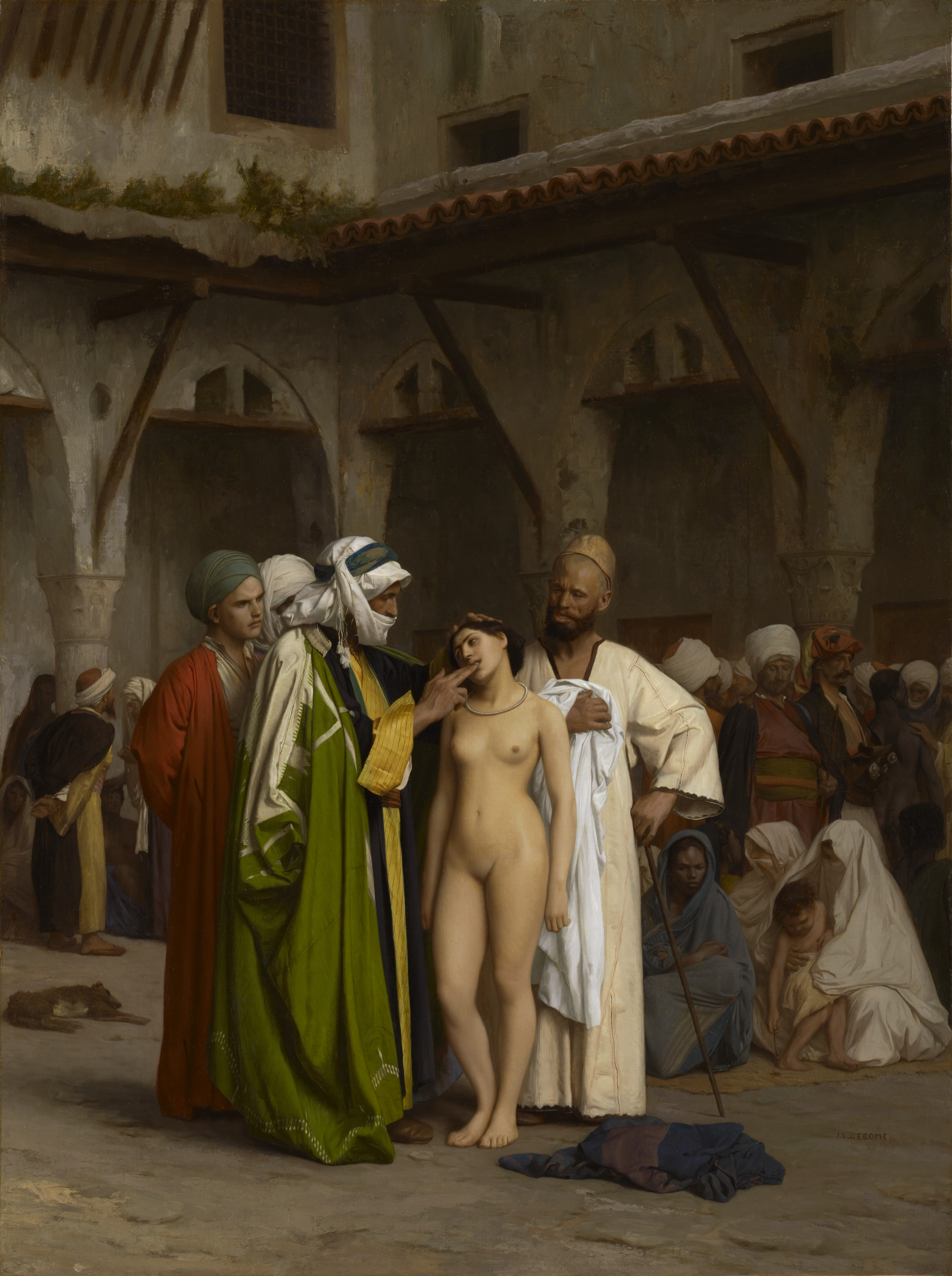
_Met_DP890399.jpg)
Place where slaves are bought and sold
A slave market is a place where slaves are bought and sold. These markets are a key phenomenon in the history of slavery.
Asia
Central Asia
Since antiquity, cities along the Silk road of Central Asia, had been centers of slave trade. In the early middle ages, Central Asia was a transit area for European slaves sold by the Vikings in Russia to slavery in the Abbasid Caliphate via the slave markets of the Central Asia. The slave trade in the Mongol Empire created a network of connected slave markets between Asia and Europe.
In the 19th century, the slave markets of Khiva and Bukhara were still among the biggest slave markets in the world. In Bukhara, Samarkand, Karakul, Karshi, and Charju, mainly Persians, Russians, and some Kalmyk slaves, were traded by Turkmens, Kazakhs, and Kyrgyz. From the 17th to 19th centuries, Khiva was a notorious slave market for captured Persian and Russian slaves. The slave markets of central Asia were eradicated with the Russian conquest of the Islamic states of Central Asia in the 1870s.
Africa
East Africa

In Somalia, the inhabiting Bantus are descended from Bantu groups that had settled in Southeast Africa after the initial expansion from Nigeria/Cameroon, and whose members were later captured and sold into the Arab slave trade.[[File:Zanzibar Slave Market, 1860 - Stocqueler.JPG|thumb|upright=1.15|[[Zanzibar]] slave market in 1860, by [[Edwin Roper Loftus Stocqueler|Edwin Stocqueler]]]] From 1800 to 1890, between 25,000–50,000 Bantu slaves are thought to have been sold from the slave market of Zanzibar to the Somali coast. Most of the slaves were from the Majindo, Makua, Nyasa, Yao, Zalama, Zaramo and Zigua ethnic groups of Tanzania, Mozambique and Malawi. Collectively, these Bantu groups are known as Mushunguli, which is a term taken from Mzigula, the Zigua tribe's word for "people" (the word holds multiple implied meanings including "worker", "foreigner", and "slave"). Bantu adult and children slaves (referred to collectively as jareer by their Somali masters) were purchased in the slave market exclusively to do undesirable work on plantation grounds.
Enslaved Africans were sold in the towns of the Arab world. In 1416, al-Maqrizi told how pilgrims coming from Takrur (near the Senegal River) had brought 1,700 slaves with them to Mecca. In North Africa, the main slave markets were in Morocco, Algiers, Tripoli and Cairo. Sales were held in public places or in souks.
Potential buyers made a careful examination of the "merchandise": they checked the state of health of a person who was often standing naked with wrists bound together. In Cairo, transactions involving eunuchs and concubines happened in private houses. Prices varied according to the slave's quality. Thomas Smee, the commander of the British research ship Ternate, visited such a market in Zanzibar in 1811 and gave a detailed description:
Thus ordered the procession begins, and passes through the market-place and the principle streets... when any of them strikes a spectator's fancy the line immediately stops, and a process of examination ensues, which, for minuteness, is unequalled in any cattle market in Europe. The intending purchaser having ascertained there is no defect in the faculties of speech, hearing, etc., that there is no disease present, next proceeds to examine the person; the mouth and the teeth are first inspected and afterwards every part of the body in succession, not even excepting the breasts, etc., of the girls, many of whom I have seen handled in the most indecent manner in the public market by their purchasers; indeed there is every reasons to believe that the slave-dealers almost universally force the young girls to submit to their lust previous to their being disposed of. From such scenes one turns away with pity and indignation.}}
North Africa
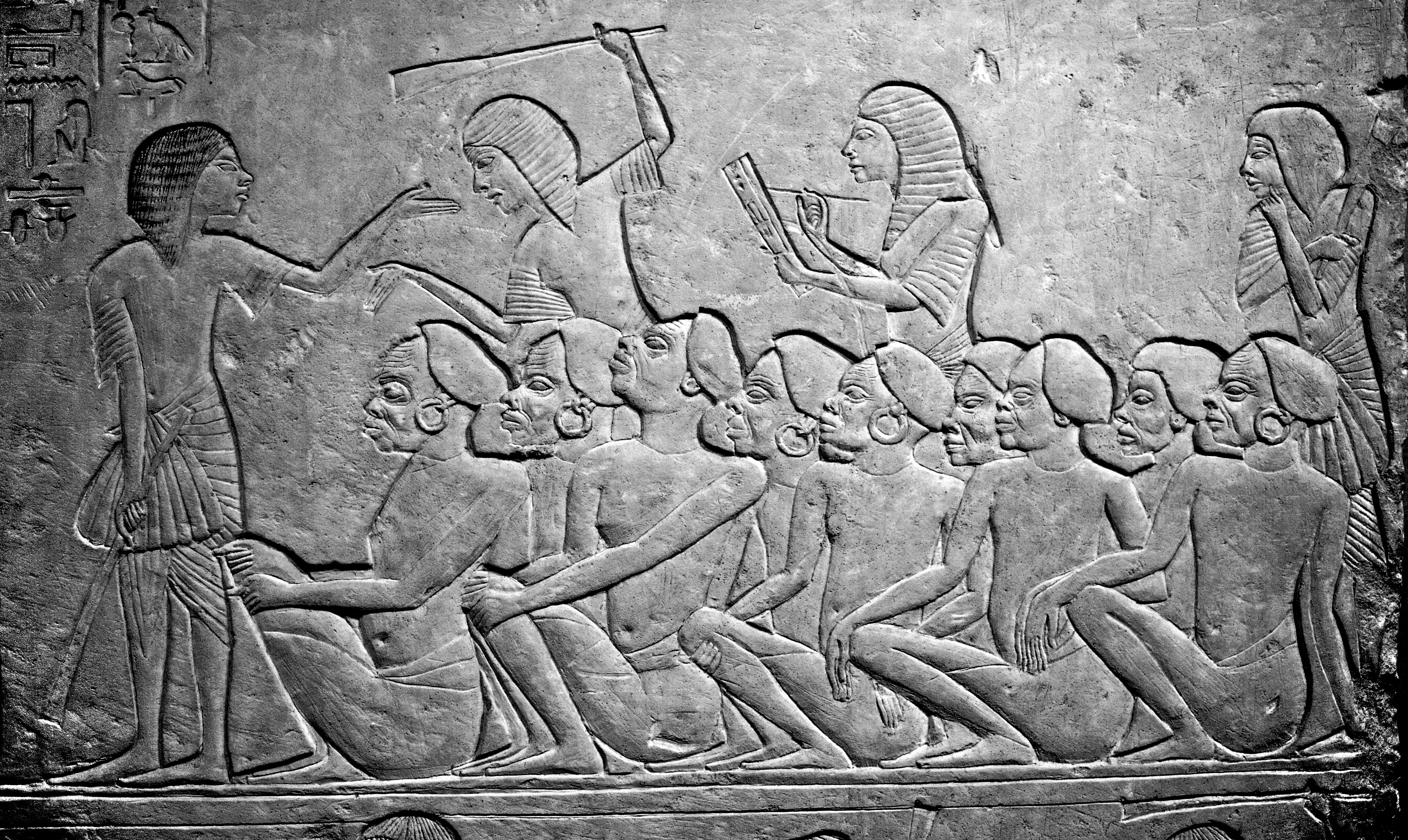
The slave trade had existed in North Africa since antiquity, with a supply of sub-Saharan African slaves arriving through trans-Saharan trade routes. The towns on the North African coast were recorded in Roman times for their slave markets, and this trend continued into the medieval age. The Barbary slave trade on the Barbary Coast increased in influence in the 15th century, when the Ottoman Empire took over as rulers of the area. Coupled with this was an influx of Sephardi Jews and Moorish refugees, newly expelled from Spain after the Reconquista. The Barbary slave trade encompassed both African slavery and White slavery.
West Africa
The Velekete Slave Market established in 1502 in Badagry, Lagos State, was significant during the Atlantic slave trade in Badagry as it served as a business point where African middlemen sold slaves to European slave merchants which made it one of the most populous slave markets in West Africa.
Europe and the Ottoman Empire
Southern Europe
The maritime town of Lagos, Portugal, was the first slave market created in Portugal for the sale of imported African slaves, the Mercado de Escravos, which opened in 1444. In 1441, the first slaves were brought to Portugal from northern Mauritania. Prince Henry the Navigator, major sponsor of the Portuguese African expeditions, as of any other merchandise, taxed one fifth of the selling price of the slaves imported to Portugal. In 1550, there were around 50,000 black African slaves in Lisbon. By 1552, African slaves made up 10% of the population of Lisbon. In the second half of the 16th century, the Crown gave up the monopoly on slave trade and the focus of European trade in African slaves shifted from import to Europe to slave transports directly to tropical colonies in the Americas—in the case of Portugal, especially Brazil. In the 15th century, one third of the slaves were resold to the African market in exchange of gold.
Northern and Eastern Europe
In the early middle ages, Dublin and Prague belonged to the biggest slave markets in Europe. Dublin was one of the centers of the viking slave trade. People taken captive during the Viking raids in Western Europe, such as Ireland, could be brought to Scandinavia or sold to Moorish Spain via the Dublin slave trade. Captives from Viking raids in Eastern Europe could be transported to Hedeby or Brännö and from there via the Volga trade route to Russia, where slaves and furs were sold to Byzantine and Muslim merchants in exchange for Arabic silver dirham and silk, which have been found in Birka, Wollin and Dublin; initially this trade route between Europe and the Abbasid Caliphate passed via the Khazar Kaghanate, but from the early 10th-century onward it went via Volga Bulgaria and from there by caravan to Khwarazm, to the Samanid slave market in Central Asia and finally via Iran to the Abbasid Caliphate.
Prague was the center of the Prague slave trade, to which Pagan Eastern Europeans where trafficked from Eastern Europe to Prague, where they were purchased by slave traders who sold them to slavery in al-Andalus on the Iberian Peninsula. Among other European slave markets, Genoa, and Venice (center of the Genoese slave trade and the Venetian slave trade) were some well-known markets, their importance and demand growing after the great plague of the 14th century which decimated much of the European work force.
Ottoman Empire
_-_The_Slave_Market,_Constantinople_-_NG_2400_-_National_Galleries_of_Scotland.jpg)
In the Ottoman Empire during the mid-14th century, slaves were traded in special marketplaces called "Esir" or "Yesir" that were located in most towns and cities. It is said that Sultan Mehmed II "the Conqueror" established the first Ottoman slave market in Constantinople in the 1460s, probably where the former Byzantine slave market had stood. According to Nicolas de Nicolay, there were slaves of all ages and both sexes, they were displayed naked to be thoroughly checked by possible buyers.
In the early 18th century, the Crimean Khanate maintained a massive slave trade with the Ottoman Empire and the Middle East, exporting about 2 million slaves from Russia and Poland-Lithuania over the period 1500–1700. Caffa (modern Feodosia) became one of the best-known and significant trading ports and slave markets.
The last slave market in Europe was in Constantinople, the Ottoman capital. It was a destination for slaves trafficked from Europe via the Crimean slave trade and the Circassian slave trade, and from Africa via the Trans-Saharan slave trade, the Red Sea slave trade, and the Indian Ocean slave trade. The slave market was divided in different sections for male and female slaves. In the market bazaar for female slaves, the Avret Pazari, slave girls were exposed naked on the auction block and tied in position for presumptive buyers to inspect. The huge slave market in the Ottoman capital was closed by the Disestablishment of the Istanbul Slave Market edict in 1847. This edict did not ban the sale of slaves, but moved it indoors, thereby making it less visible.
North America
The United States

.jpg)
In the history of slavery in the United States, the domestic slave trade had become a major economic activity by 1815, and lasted until the 1860s. Between 1830 and 1840, nearly 250,000 slaves were taken across state lines. In the 1850s, more than 193,000 were transported, and historians estimate nearly one million in total took part in the forced migration of this new Middle Passage. By 1860, the slave population in the United States had reached 4 million.
_(cropped).jpg)
In the 1840s, almost 300,000 slaves were transported, with Alabama and Mississippi receiving 100,000 each. During each decade between 1810 and 1860, at least 100,000 slaves were moved from their state of origin. In the final decade before the Civil War, 250,000 were moved. Historian Ira Berlin wrote:
The internal slave trade became the largest enterprise in the South outside the plantation itself, and probably the most advanced in its employment of modern transportation, finance, and publicity. The slave trade industry developed its own unique language, with terms such as "prime hands, bucks, breeding wenches, and "fancy girls" coming into common use.
The expansion of the interstate slave trade contributed to the "economic revival of once depressed seaboard states" as demand accelerated the value of slaves who were subject to sale.
Some traders moved their "chattels" by sea, with Norfolk to New Orleans being the most common route, but most slaves were forced to walk overland in coffles. Others were shipped downriver from such markets as Louisville on the Ohio River, and Natchez on the Mississippi. Traders created regular migration routes served by a network of slave pens, yards, and warehouses needed as temporary housing for the slaves. In addition, other vendors provided clothes, food, and supplies for slaves. As the trek advanced, some slaves were sold and new ones purchased. Berlin concluded, "In all, the slave trade, with its hubs and regional centers, its spurs and circuits, reached into every cranny of southern society. Few southerners, black or white, were untouched".
New Orleans, where French colonists had established sugarcane plantations and exported sugar as the chief commodity crop, became nationally important as a slave market and port, as slaves were shipped from there upriver by steamboat to plantations on the Mississippi River; it also sold slaves who had been shipped downriver from markets such as Louisville. By 1840, it had the largest slave market in North America. It became the wealthiest and the fourth-largest city in the nation, based chiefly on the slave trade and associated businesses. The trading season was from September to May, after the harvest.
One of the most famous remaining slave market buildings in the United States is the Old Slave Mart in Charleston, South Carolina. Throughout the first half of the 19th century, slaves brought into Charleston were sold at public auctions held on the north side of the Exchange and Provost building. After the city prohibited public slave auctions in 1856,
In 1859, an auction master named Z. B. Oakes purchased Ryan's Mart, and built what is now the Old Slave Mart building for use as an auction gallery. The building's auction table was 3 ft high and 10 ft long and stood just inside the arched doorway. In addition to slaves, the market sold real estate and stock. Slave auctions at Ryan's Mart were advertised in broadsheets throughout the 1850s, some appearing as far away as Galveston, Texas.
References
References
- Mayers, K. (2016). The First English Explorer: The Life of Anthony Jenkinson (1529-1611) and His Adventures on the Route to the Orient. Storbritannien: Matador. p. 121
- Adle, Chahryar. (2005-01-01). "History of Civilizations of Central Asia: Towards the contemporary period : from the mid-nineteenth to the end of the twentieth century". UNESCO.
- (6 April 1959). "Adventure in the East".
- United Nations High Commissioner for Refugees. "Refugees Vol. 3, No. 128, 2002 UNHCR Publication Refugees about the Somali Bantu". Unhcr.org.
- "The Somali Bantu: Their History and Culture".
- Refugee Reports, November 2002, Volume 23, Number 8
- Gwyn Campbell, ''The Structure of Slavery in Indian Ocean Africa and Asia'', 1 edition, (Routledge: 2003), p.ix
- Catherine Lowe Besteman, ''Unraveling Somalia: Race, Class, and the Legacy of Slavery'', (University of Pennsylvania Press: 1999), pp. 83-84
- Catherine Lowe Besteman, ''Unraveling Somalia: Race, Class, and the Legacy of Slavery'', (University of Pennsylvania Press: 1999), pp. unknown.
- Moorehead, Alan. (1960). "The White Nile". Harper & Brothers.
- Gerber, Jane. (1992). "The Jews of Spain". The Free Press.
- Hakeem Ibikunle Tijani. (2010). "The African diaspora: historical analysis, poetic verses, and pedagogy". Learning Solutions.
- (2001). "Badagry district, 1863–1999". John West Publications Ltd..
- Njoku, Jude. (6 February 2013). "Vlekete: When a slave market becomes a tourist centre". [[Vanguard (Nigeria).
- 978-0-9650493-7-5.
- de Oliveira Marques, António Henrique R. (1972). ''History of Portugal''. Columbia University Press, {{ISBN. 978-0-231-03159-2, pp. 158–60, 362–70.
- Drescher, Seymour. (2018-01-03). "Pathways from Slavery: British and Colonial Mobilizations in Global Perspective". Routledge.
- Thomas Foster Earle, K. J. P. Lowe "Black Africans in Renaissance Europe" p. 157 [https://books.google.com/books?id=d2dN5vh2200C&dq=slaves+black+in+portugal&pg=PA157 Google]
- David Northrup, "Africa's Discovery of Europe" p. 8 ([https://books.google.com/books?id=RzJzjQ4eOgQC&dq=lisbon+balck+slaves+percent&pg=PA8 Google])
- Klein, Herbert. ''The Atlantic Slave Trade'' (1970).
- (23 April 2013). "The Slave Market of Dublin".
- Barker, Hannah. (2021). "The Trade in Slaves in the Black Sea, Russia, and Eastern Europe". Cambridge University Press.
- The New Cambridge Medieval History: Volume 3, C.900-c.1024. (1995). Storbritannien: Cambridge University Press. p. 91
- The World of the Khazars: New Perspectives. Selected Papers from the Jerusalem 1999 International Khazar Colloquium. (2007). Nederländerna: Brill. p. 232
- The New Cambridge Medieval History: Volume 3, C.900-c.1024. (1995). Storbritannien: Cambridge University Press. p. 504
- Bales, Kevin. ''Understanding Global Slavery: A Reader''
- "Fischer W. Alan (1978) The sale of slaves in the Ottoman Empire: Markets and state taxes on slave sales, some preliminary considerations. Bogazici Universitesi Dergisi, Beseri Bilimler - Humanities, vol. 6, pp. 150-151.".
- [[Mikhail Kizilov]]. (2007). "Slaves, Money Lenders, and Prisoner Guards:The Jews and the Trade in Slaves and Captives in the Crimean Khanate". The Journal of Jewish Studies.
- "Historical survey > Slave societies". Britannica.com.
- (2016). "Istanbul: City of Majesty at the Crossroads of the World". Penguin.
- (2023). "The Palgrave Handbook of Global Slavery Throughout History". Springer International.
- Marcyliena H. Morgan (2002). [https://books.google.com/books?id=mhJcsiydNe8C&pg=PA20 ''Language, Discourse and Power in African American Culture''], p. 20. Cambridge University Press, 2002.
- Berlin, ''Generations of Captivity'', pp. 166–69.
- Kolchin, p. 98.
- Berlin, ''Generations of Captivity'', pp. 168–71.
- Walter Johnson, ''Soul by Soul: Life Inside the Antebellum Slave Market'', Cambridge, Massachusetts: Harvard University Press, 1999.
- Johnson (1999), ''Soul by Soul'', p. 2.
- National Conference of State Historic Preservation Officers, [https://archive.today/20121214015009/http://www.nps.gov/nr/travel/charleston/osm.htm Old Slave Mart]. Retrieved: 27 May 2010.
- enclosed slave markets sprang up along Chalmers, State, and Queen streets. One such market was Ryan's Mart, established by City Councilman and broker, Thomas Ryan and his business partner, James Marsh. Ryan's Mart originally consisted of a closed lot with three structures— a four-story [[barracoon]] or [[slave jail]], a kitchen, and a [[morgue]] or "dead house".Nenie Dixon and Elias Bull, [http://www.nationalregister.sc.gov/charleston/S10817710090/S10817710090.pdf National Register of Historic Places Nomination Form for Old Slave Mart], 12 February 1975. Retrieved: 27 May 2010.
This article was imported from Wikipedia and is available under the Creative Commons Attribution-ShareAlike 4.0 License. Content has been adapted to SurfDoc format. Original contributors can be found on the article history page.
Ask Mako anything about Slave market — get instant answers, deeper analysis, and related topics.
Research with MakoFree with your Surf account
Create a free account to save articles, ask Mako questions, and organize your research.
Sign up freeThis content may have been generated or modified by AI. CloudSurf Software LLC is not responsible for the accuracy, completeness, or reliability of AI-generated content. Always verify important information from primary sources.
Report