From Surf Wiki (app.surf) — the open knowledge base
Skull bossing
Protrusion of the bones of the skull, typically the forehead
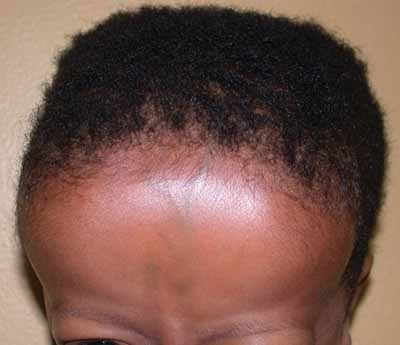
Protrusion of the bones of the skull, typically the forehead
Frontal bossing

Frontal bossing is the development of an unusually pronounced forehead which may also be associated with a heavier than normal brow ridge. It is caused by enlargement of the frontal bone, often in conjunction with abnormal enlargement of other facial bones, skull, mandible, and bones of the hands and feet. Frontal bossing may be seen in a few rare medical syndromes such as acromegaly – a chronic medical disorder in which the anterior pituitary gland produces excess growth hormone (GH). Frontal bossing may also occur in diseases resulting in chronic anemia, where there is increased hematopoiesis and enlargement of the medullary cavities of the skull.
Associated medical disorders
- Rickets
- Achondroplasia
- Acromegaly
- Basal cell nevus syndrome
- Congenital syphilis
- Cleidocranial dysostosis
- Crouzon syndrome
- Cryopyrin-Associated Periodic Syndrome (CAPS – PFS)
- Ectodermal dysplasia
- Extramedullary hematopoiesis
- Fragile X syndrome
- Hurler syndrome
- Osteopathia Striata with Cranial Sclerosis
- Pfeiffer syndrome
- Rubinstein-Taybi syndrome
- Russell-Silver syndrome (Russell-Silver dwarf)
- Thanatophoric dysplasia
- Marfan syndrome
- Trimethadione (antiseizure drug) use during pregnancy
- Beta-thalassemia (due to expansion of bone marrow secondary to increased hematopoiesis; see Extramedullary hematopoiesis)
- Hallermann-Streiff syndrome
References
References
- Dennis, Mark. (2012). "Mechanisms of Clinical Signs". Elsevier.
- "PubMed Health: Frontal bossing".
- Nelson Textbook of Pediatrics, 19e. Chapter 48
- Kuemmerle-Deschner, Jasmin B. (2016-10-04). "Diagnostic criteria for cryopyrin-associated periodic syndrome (CAPS)". BMJ.
- Bope, Edward T., and Rick D. Kellerman. "Chapter 13 – Hematology." ''Conn's Current Therapy: Latest Approved Methods of Treatment for the Practicing Physician''. Philadelphia: Saunders Elsevier, 2012.
This article was imported from Wikipedia and is available under the Creative Commons Attribution-ShareAlike 4.0 License. Content has been adapted to SurfDoc format. Original contributors can be found on the article history page.
Ask Mako anything about Skull bossing — get instant answers, deeper analysis, and related topics.
Research with MakoFree with your Surf account
Create a free account to save articles, ask Mako questions, and organize your research.
Sign up freeThis content may have been generated or modified by AI. CloudSurf Software LLC is not responsible for the accuracy, completeness, or reliability of AI-generated content. Always verify important information from primary sources.
Report