From Surf Wiki (app.surf) — the open knowledge base
Skin infection
Infections of the skin
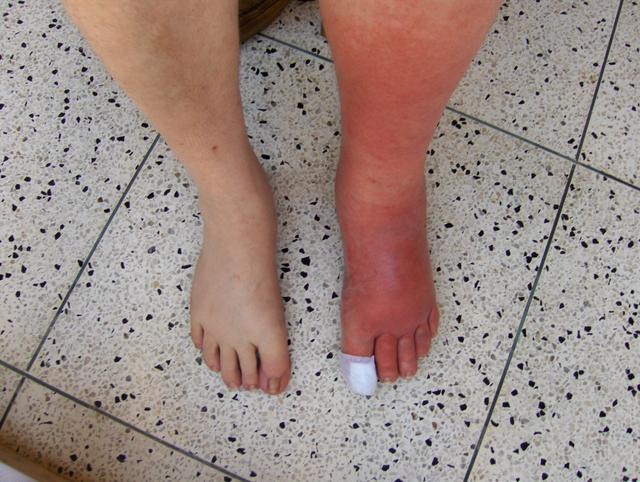
Infections of the skin
Causes
Bacterial
Main article: Skin and skin structure infection
Bacterial skin infections affected about 155 million people and cellulitis occurred in about 600 million people in 2013. Bacterial skin infections include:
- Cellulitis, a diffuse inflammation of connective tissue with severe inflammation of dermal and subcutaneous layers of the skin. Further, cellulitis can be classified based into purulent and non-purulent cellulitis, based on the most likely causative agent and the symptoms presentation. Purulent cellulitis is often caused by Staphylococcus aureus, including both methicillin-sensitive (MSSA) and methicillin-resistant S. aureus (MRSA). Non-purulent cellulitis is most often associated with group A beta-hemolytic streptococci, such as Streptococcus pyogenes. In rare cases, the infection can progress into necrotizing fasciitis, a serious and potentially fatal infection.
- Erysipelas, a bacterial infection which primarily affects superficial dermis, and often involves superficial lymphatics. Unlike cellulitis, it does not affect deeper layers of the skin. It is primarily caused by the Group A beta-hemolytic streptococci, with Streptococcus pyogenes being the most common pathogen.
- Folliculitis, a skin condition in which hair follicle, located in the dermal layer of the skin, becomes infected and inflamed. It is predominantly caused by bacterial infections, especially Staphylococcus aureus, leading to superficial bacterial folliculitis. Other causative agents of folliculitis include fungi (most commonly Malassezia species), viruses (such as herpes simplex virus), and mites (Demodex species).
- Impetigo, a highly contagious ABSSSI (acute bacterial skin and skin structure infection) common among pre-school children, primarily associated with the pathogens S. aureus and S. pyogenes. Impetigo has a characteristic appearance with yellow (honey-coloured), crusted lesions occurring around mouth, nose, and chin. It is estimated that at any given time it affects 140 million people globally. Impetigo can be further classified into bullous and nonbullous forms. Nonbullous impetigo is the most common form, representing approximately 70% of diagnosed cases. The remaining 30% of cases represent bullous form, which is primarily caused by S. aureus. In rare instances, bullous impetigo can spread and lead to Staphylococcal Scalded Skin Syndrome (SSSS), a potentially life-threatening infection.
Fungal
Fungal skin infections, sometimes referred to as dermatomycoses, may present as either a superficial or deep infection of the skin, hair, and/or nails. Mycetoma are a broad group of fungal infections that characteristically originate in the skin and subcutaneous tissues of the foot. If not treated appropriately and in a timely fashion mycetoma infections can extend to deeper tissues like bones and joints causing osteomyelitis. Extensive osteomyelitis can necessitate surgical bone resections and even lower limb amputation. As of 2010, they affect about one billion people globally. Some examples of common fungal skin infections include:
- Dermatophytosis, also known as ringworm, is a superficial fungal infection of the skin caused by several different species of fungi. The fungal genera which cause skin infections in humans include Trichophyton, Epidermophyton, and Microsporum. Although dermatophytosis is fairly common fungal skin infection worldwide, it is more prevalent in areas with high humidity and environmental temperature. It is estimated that approximately 20-25% of world population are affected by superficial fungal infections, with dermatophytosis predominating.
- Oral candidiasis, also commonly referred to as oral thrush, is a fungal infection caused mainly by Candida albicans, which affects mucosal membranes of the oral cavity and the tongue. C. albicans accounts for approximately 95% of oral thrush cases. The fungus is part of the normal oral flora and only causes an infection when host immune and microbiota barriers are impaired, providing C. albicans with an opportunity to overgrow. It is estimated that oral candidiasis affects approximately 2 million people every year worldwide.
- Onychomycosis, a fungal infection which predominantly affects toenails. Two most common causative agents of onychomycosis are Trichophyton mentagrophytes and Trichophyton rubrum. Common signs and symptoms include nail discolouration and thickening, nail separation from nail bed, and nail brittleness. Estimated prevalence of onychomycosis in North America is between 8.7% to 13.8%.
Parasitic
Parasitic infestations of the skin are caused by several phyla of organisms, including Annelida, Arthropoda, Bryozoa, Chordata, Cnidaria, Cyanobacteria, Echinodermata, Nemathelminthes, Platyhelminthes, and Protozoa.
Viral
Virus-related cutaneous conditions caused by these obligate intracellular agents derive from both DNA and RNA viruses. Some examples of viral skin infections include:
- Warts, benign proliferative skin lesions that are caused by human papilloma virus (HPV). Warts vary in shape, size, appearance, and location on the body where they occur. For example, plantar warts (verrucae plantaris), occur on the soles of the feet and appear as thick calluses. Other types of warts include genital warts, flat warts, mosaic warts, and periungual warts. Common treatment options include salicylic acid and cryotherapy with liquid nitrogen.
- Chickenpox is a highly contagious skin disease caused by the varicella-zoster virus (VZV). It is characterized by pruritic blister-like rash which may cover entire body, affecting all age groups. Rates of chickenpox are higher in countries which lack adequate immunization programs. In 2014, it has been estimated that global incidence of serious chickenpox infections requiring hospitalizations was 4.2 million.
- Hand, foot, and mouth disease (HFMD), is a common, often self-limiting viral illness which typically affects infants and children, however, it may also occur in adults. It is characterized by low grade fever and maculopapular rash on palms of the hands, soles of the feet, and around mouth. It is caused by the human enteroviruses and coxsackieviruses, a positive-sense single-stranded RNA viruses.
References
References
- (July 2014). "Practice guidelines for the diagnosis and management of skin and soft tissue infections: 2014 update by the infectious diseases society of America". Clinical Infectious Diseases.
- "Guidance Compliance Regulatory Information".
- "International Statistical Classification of Diseases and Related Health Problems 10th Revision".
- In the WHO classification, it is noted that the infection classification "Excludes:... infective dermatitis...". See the WHO classification, op. cit.
- Skin inflammation due to skin infection is called "infective dermatitis". See the WHO classifications, op. cit.
- (August 2015). "Global, regional, and national incidence, prevalence, and years lived with disability for 301 acute and chronic diseases and injuries in 188 countries, 1990-2013: a systematic analysis for the Global Burden of Disease Study 2013". Lancet.
- (November 2018). "Skin and Soft Tissue Infections in the Emergency Department". Emergency Medicine Clinics of North America.
- (July 2016). "Cellulitis: A Review". JAMA.
- (September 2020). "Necrotizing fasciitis: A comprehensive review". Nursing.
- (September 2018). "Skin Infections". Primary Care.
- (2021). "StatPearls". StatPearls Publishing.
- (November 2020). "[Malassezia folliculitis]". Ugeskrift for Laeger.
- (October 19, 2017). "Impetigo".
- (2007). "Robbins Basic Pathology". Saunders Elsevier.
- (2020). "Impetigo". Advanced Emergency Nursing Journal.
- (April 2020). "Impetigo/Staphylococcal Scalded Skin Disease". Pediatrics in Review.
- (October 2021). "Staphylococcal Scalded Skin Syndrome and Bullous Impetigo". Medicina.
- (March 2019). "Mycetoma: reviewing a neglected disease". Clinical and Experimental Dermatology.
- (21 September 2015). "Eumycetoma Osteomyelitis of the Calcaneus in a Child: A Radiologic-Pathologic Correlation following Total Calcanectomy". Case Reports in Pathology.
- (December 2012). "Years lived with disability (YLDs) for 1160 sequelae of 289 diseases and injuries 1990-2010: a systematic analysis for the Global Burden of Disease Study 2010". Lancet.
- (December 2021). "Pathogenesis, Immunology and Management of Dermatophytosis". Journal of Fungi.
- (April 2020). "Recent advances in the diagnosis of dermatophytosis". Journal of Basic Microbiology.
- (January 2020). "Oral Candidiasis: A Disease of Opportunity". Journal of Fungi.
- (March 2019). "Therapeutic tools for oral candidiasis: Current and new antifungal drugs". Medicina Oral, Patologia Oral y Cirugia Bucal.
- (October 2017). "Global and Multi-National Prevalence of Fungal Diseases-Estimate Precision". Journal of Fungi.
- (2020). "Onychomycosis: An Updated Review". Recent Patents on Inflammation & Allergy Drug Discovery.
- (September 2020). "Onychomycosis: a review". Journal of the European Academy of Dermatology and Venereology.
- (January 2010). "Mite-transmitted dermatoses and infectious diseases in returning travelers". Journal of Travel Medicine.
- (November 2010). "The role of human papillomavirus in common skin conditions: current viewpoints and therapeutic options". Cutis.
- (August 2011). "Treatment of nongenital cutaneous warts". American Family Physician.
- (November 2020). "Treatment of cutaneous viral warts in children: A review". Dermatologic Therapy.
- (February 2018). "Plantar Warts: Epidemiology, Pathophysiology, and Clinical Management". The Journal of the American Osteopathic Association.
- (April 2018). "Varicella-zoster virus infection: natural history, clinical manifestations, immunity and current and future vaccination strategies". The New Microbiologica.
- (2022-03-23). "About Chickenpox {{!}} CDC".
- (August 2017). "Varicella vaccination - the global experience". Expert Review of Vaccines.
- (March 2018). "Hand, foot and mouth disease: current knowledge on clinical manifestations, epidemiology, aetiology and prevention". European Journal of Clinical Microbiology & Infectious Diseases.
- (October 2019). "Hand-Foot-and-Mouth Disease: Rapid Evidence Review". American Family Physician.
This article was imported from Wikipedia and is available under the Creative Commons Attribution-ShareAlike 4.0 License. Content has been adapted to SurfDoc format. Original contributors can be found on the article history page.
Ask Mako anything about Skin infection — get instant answers, deeper analysis, and related topics.
Research with MakoFree with your Surf account
Create a free account to save articles, ask Mako questions, and organize your research.
Sign up freeThis content may have been generated or modified by AI. CloudSurf Software LLC is not responsible for the accuracy, completeness, or reliability of AI-generated content. Always verify important information from primary sources.
Report