From Surf Wiki (app.surf) — the open knowledge base
Skatestopper
Skate-deterrent device
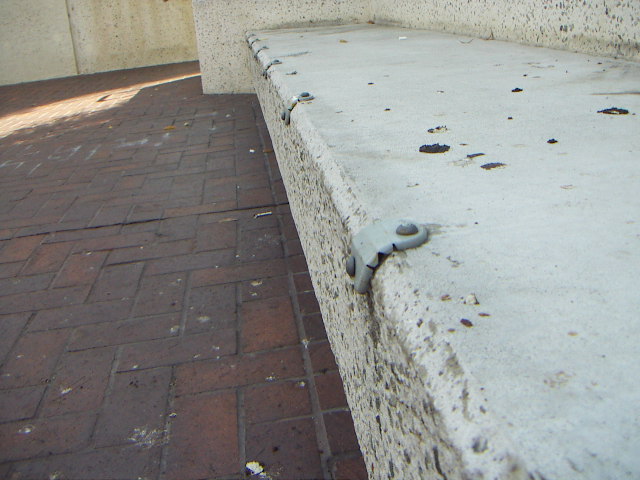
Skate-deterrent device
Skatestoppers are skate-deterrent or anti-skate devices placed on urban terrain features, such as benches and handrails, to discourage skateboarders from grinding on the surfaces where they have been installed. They are a form of hostile architecture.
The name Skatestopper is a registered trademark of Intellicept of El Cajon, California, but in some skateboarding circles it has become a genericized term referring to any anti-skate device.

Design
The most basic skatestopper design is an L-shaped bracket affixed at intervals along a grind-able structure. Early designs were made from nylon
Criticism
Some view skatestoppers as an obstacle to be overcome. The presence of skatestoppers can actually encourage skateboarders to stay in a location longer.
References
References
- Abbate, Vince. (June 28, 2007). "The trucks stop here". Chici Community publishing, INC.
- "Apply for a Trademark. Search a Trademark".
- "Inclusive Cities Observatory, Skateboarding in Tacoma: Youth Reclaim Public Space through Dialogue and Cooperative Planning".
- Dougherty, Conor. (December 5, 2003). "Success is a mixed blessing for San Diegan whose invention has pushed boards off the curb". Copley Press.
- Mersom, Daryl. (2015-10-07). "Bristol skateboarders take on 'skatestopper' defensive architecture". The Guardian.
This article was imported from Wikipedia and is available under the Creative Commons Attribution-ShareAlike 4.0 License. Content has been adapted to SurfDoc format. Original contributors can be found on the article history page.
Ask Mako anything about Skatestopper — get instant answers, deeper analysis, and related topics.
Research with MakoFree with your Surf account
Create a free account to save articles, ask Mako questions, and organize your research.
Sign up freeThis content may have been generated or modified by AI. CloudSurf Software LLC is not responsible for the accuracy, completeness, or reliability of AI-generated content. Always verify important information from primary sources.
Report