From Surf Wiki (app.surf) — the open knowledge base
Sink
Bowl-shaped plumbing fixture
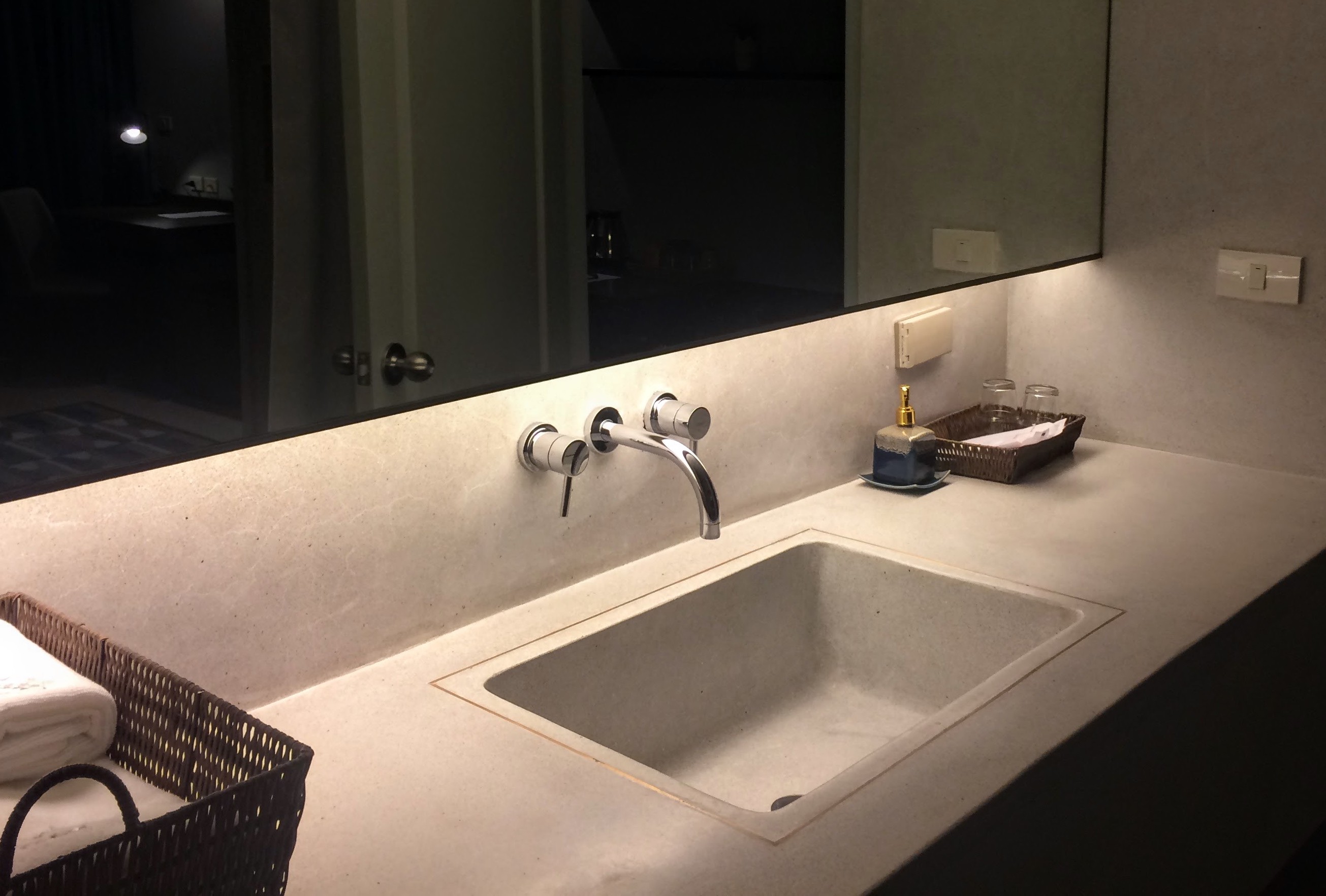
Bowl-shaped plumbing fixture
A sink (also known as basin in the UK) is a bowl-shaped plumbing fixture for washing hands, dishwashing, and other purposes. Sinks have a tap (faucet) that supplies hot and cold water and may include a spray feature to be used for faster rinsing. They also include a drain to remove used water; this drain may itself include a strainer and/or shut-off device and an overflow-prevention device. Sinks may also have an integrated soap dispenser. Many sinks, especially in kitchens, are installed adjacent to or inside a counter.
History
The washstand was a bathroom sink made in the United States in the late 18th century. The washstands were small tables on which were placed a pitcher and a deep bowl, following the English tradition. Sometimes the table had a hole where the large bowl rested, which led to the making of dry sinks. From about 1820 to 1900, the dry sink evolved by the addition of a wooden cabinet with a trough built on the top, lined with zinc or lead.
Materials

Other materials used for sinks include soapstone, fire clay, granite, cast iron, quartz, porcelain, and copper.
Styles
Butler's sink
butlerA butler's sink is a rectangular ceramic sink with a rounded rim which is set into a work surface. There are generally two kinds of butler's sinks: the London sink and the Belfast sink. In 2006, both types of sinks usually were 62 cm across and 46 cm front-to-back, with a depth of 22.5 cm. London sinks were originally shallower than Belfast sinks. One plumbing guide in 1921 suggested that the Belfast sink was 38 cm deep. The primary difference both in the past and today between a Belfast and London sink is that the Belfast sink is fitted with an overflow weir which prevented water from spilling over the sink's edge by draining it away and down into the wastewater plumbing.
Vessel sink
vessel A vessel sink is a free-standing sink, generally finished and decorated on all sides, that sits directly on the surface of the furniture on which it is mounted. These sinks have become increasingly popular with bathroom designers because of the large range of materials, styles, and finishes that can be shown to good advantage.
References
Bibliography
- Fletcher, Banister Flight, Sir. Architectural Hygiene. London: Sir I. Pitman & Sons, 1921.
References
- 0094-0178
- (11 September 2010). "Usage of Stainless Steel Kitchen Sink".
- (23 November 2024). "Why Is My Stainless Steel Sink Rusting?". Riley Addison.
- (15 February 2008). "הלבשת אמבטיה".
- Jensen, Eric. (2024-03-19). "The Most Common Sinks Materials - Pros and Cons Before You Purchase in 2024".
- Blower, 2006, p. 232.
- Blower, 2006, p. 232-233.
- Fletcher, 1921, p. 96.
- Blower, 2006, p. 233.
- "Vessel Sinks: Bathroom Style to Spare".
This article was imported from Wikipedia and is available under the Creative Commons Attribution-ShareAlike 4.0 License. Content has been adapted to SurfDoc format. Original contributors can be found on the article history page.
Ask Mako anything about Sink — get instant answers, deeper analysis, and related topics.
Research with MakoFree with your Surf account
Create a free account to save articles, ask Mako questions, and organize your research.
Sign up freeThis content may have been generated or modified by AI. CloudSurf Software LLC is not responsible for the accuracy, completeness, or reliability of AI-generated content. Always verify important information from primary sources.
Report