From Surf Wiki (app.surf) — the open knowledge base
Simferopol
Second-largest city on the Crimean Peninsula

Second-largest city on the Crimean Peninsula
| Field | Value | |||
|---|---|---|---|---|
| official_name | Simferopol | |||
| native_name | ||||
| nickname | Город пользы | |||
| The City of Usefulness(translation) | ||||
| translit_lang1 | Ukrainian | |||
| translit_lang1_type1 | National | |||
| translit_lang1_info1 | Simferopol | |||
| translit_lang1_type2 | ALA-LC | |||
| translit_lang1_info2 | Simferopol′ | |||
| translit_lang1_type3 | BGN/PCGN | |||
| translit_lang1_info3 | Simferopol’ | |||
| translit_lang1_type4 | Scholarly | |||
| translit_lang1_info4 | Simferopol′ | |||
| settlement_type | City | |||
| image_skyline | {{multiple image | total_width=280px | perrow=2/2/2/1 | border=infobox |
| image1 | Simferopol 04-14 img27 train station square.jpg | |||
| image2 | Simferopol 04-14 img20 MGorky Crimean Theatre.jpg | |||
| image3 | Simferopol 04-14 img26 Botanical Garden.jpg | |||
| image4 | 01-101-0175_вул._Курчатова,_4.JPG | |||
| image5 | 2022. Троицкий собор DSC 2096.jpg | |||
| image6 | Simferopol 04-14 img06 University.jpg | |||
| image7 | Simferopol. Pedestrian street in the city center (Karl Marx St.).jpg | |||
| image_caption | The railway station, Academic Drama Theater, , Kebir-Jami,, the State Medical University, Karl Marx Street | |||
| image_flag | Simferopol flag.svg | |||
| image_shield | COA Simferopol.svg | |||
| shield_size | 110px | |||
| mapsize1 | 250px | |||
| map_caption1 | Simferopol (red) on a map of Crimea. | |||
| pushpin_map | Ukraine#Ukraine Crimea | |||
| subdivision_type | Country | |||
| subdivision_name | (occupied by Russia) | |||
| subdivision_type1 | Autonomous republic | |||
| subdivision_name1 | Crimea (de jure) | |||
| subdivision_type2 | Raion | |||
| subdivision_name2 | Simferopol Raion (de jure) | |||
| subdivision_type3 | Federal subject | |||
| subdivision_name3 | Crimea (de facto) | |||
| subdivision_type4 | Municipality | |||
| subdivision_name4 | Simferopol Municipality (de facto) | |||
| parts | ||||
| p1 | ||||
| p2 | ||||
| p3 | ||||
| government_footnotes | (de facto) | |||
| leader_title | ||||
| leader_name | Mikhail Afanasev (de facto) | |||
| established_title | Founded | |||
| established_date | 15 century | |||
| area_total_km2 | 107 | |||
| population_as_of | 2014 | |||
| population_total | 332,317 | |||
| population_density_km2 | 3183.17 | |||
| population_demonym | Simferopolitan | |||
| utc_offset | +3 | |||
| coordinates | ||||
| elevation_m | 350 | |||
| postal_code_type | Postal code | |||
| postal_code | 295000—295490 | |||
| area_code | +7 3652 | |||
| blank_name | Licence plate | |||
| blank_info | AK(UA) 82(Rus) | |||
| blank1_name | Sister cities | |||
| blank1_info | Heidelberg, Kecskemét, Salem, Bursa, Eskişehir, Ruse, Nizhny Novgorod | |||
| website | (Russian administration) | |||
| mapframe | yes | |||
| mapframe-zoom | 11 | |||
| mapframe-wikidata | yes | |||
| footnotes | United Nations General Assembly Resolution 68/262 | |||
The City of Usefulness(translation) | mapframe-zoom = 11 | mapframe-wikidata = yes
Founded in 1784 as Simferopol, a Russian city. The settlement was previously known by the Crimean Tatar name Aqmescit.
Simferopol ( ), also known as Aqmescit, is the second-largest city on the Crimean Peninsula. The city, along with the rest of Crimea, is internationally recognized as part of Ukraine, but controlled by Russia. It is considered the capital of the Autonomous Republic of Crimea.
Since 2014 it has been under the de facto control of Russia, which annexed Crimea that year and regards Simferopol as the capital of the Republic of Crimea.
Simferopol is an important political, economic and transport hub of the peninsula, and serves as the administrative centre of both Simferopol Municipality and the surrounding Simferopol District. Its population was
After the 1784 annexation of the Crimean Khanate by the Russian Empire, the Russian empress decreed the foundation of a city named Simferopol on the location of the Crimean Tatar town of Aqmescit ("White Mosque").
Etymologies
The name Simferopol ( ; ) comes from Sympheropoli (). The spelling Symferopil (Симферопіль) is also used.
In Crimean Tatar, the name of the city is Aqmescit (or in Cyrillic, , from Aq "white", and mescit "mosque"). But aq does not refer to the colour of the mosque, but rather to its location in cosmology. The Turkic peoples give a colour designation to the cardinal points, and white is the west. Thus, the exact translation of the name of the town is "the Western Mosque."
In English, the name was often given as Akmechet or Ak-Mechet (e.g. in the 1911 Encyclopædia Britannica). This was a transliteration from the Russian spelling of Crimean Tatar word Акмечет, Ак-Мечеть, where ''mechet''' (мечеть) is the Russian word for "mosque".
History
Early history
Archaeological evidence in the shows the presence of ancient people living in the territory of modern Simferopol. The Scythian Neapolis, known by its Greek name, is also located in the city, which is the remnants of an ancient capital of the Crimean Scythians who lived in the territory from the 3rd century BC to the 4th century AD.
Later, the Crimean Tatars founded the town of Aqmescit. For some time, Aqmescit was the residence of the Qalğa-Sultan, the second most important position in the Crimean Khanate after the Khan himself. The area of the city once known as Aqmescit is today called Old Simferopol.
Russian Empire
In 1784 modern Ukrainian Simferopol was founded after the annexation of the Crimean Khanate to the Russian Empire by Catherine II of Russia. The name Simferopol is in Greek, Συμφερόπολις (Simferopolis) and literally means "the city of usefulness." The tradition of Greek place names in newly acquired southern territories began with the Greek Plan of Russian Empress Catherine the Great. In 1802, Simferopol became the administrative centre of the Taurida Governorate. During the Crimean War of 1854–1856, the Russian Imperial Army reserves and a hospital were stationed in the city. After the war, more than 30,000 Russian soldiers were buried in the city's vicinity.
20th-century wars
In the 20th century, Simferopol was once again affected by wars and conflicts in the region. At the end of the Russian Civil War, the headquarters of General Pyotr Wrangel, leader of the anti-Bolshevik White Army, were located there. On 13 November 1920, the Red Army captured the city and on 18 October 1921, Simferopol became the capital of the Crimean Autonomous Soviet Socialist Republic.
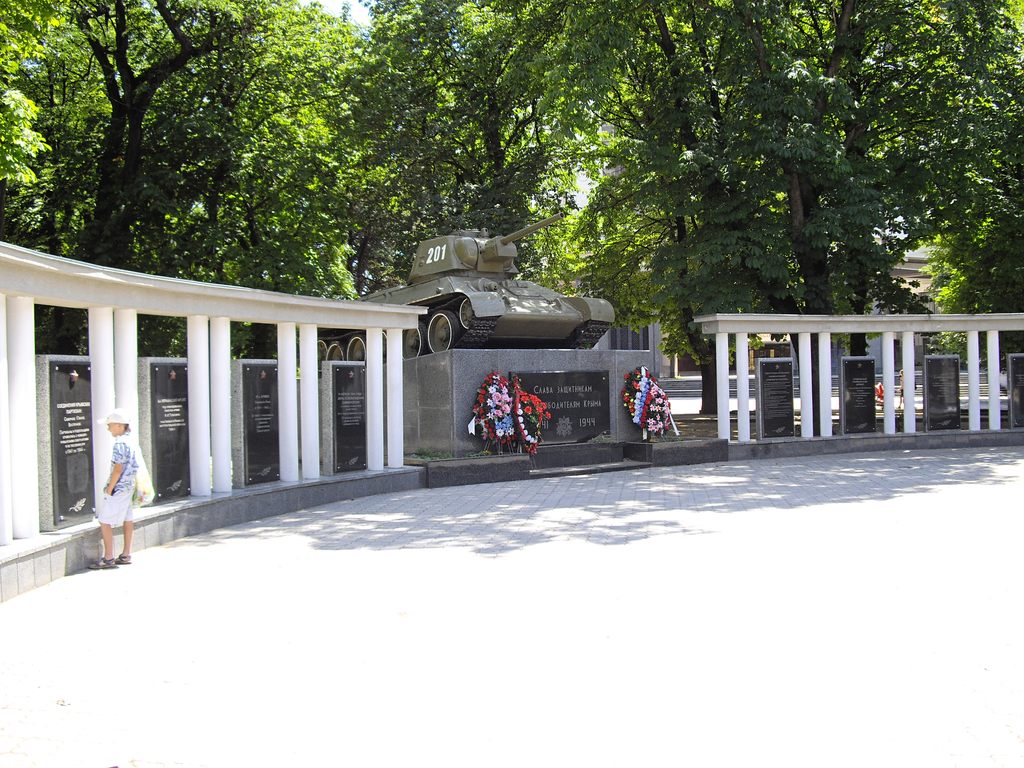
During World War II, Simferopol was occupied by Nazi Germany from 1 November 1941 to 13 April 1944. Retreating NKVD police shot a number of prisoners on 31 October 1941 in the NKVD building and the city's prison. Germans perpetrated one of the largest war-time massacres in Simferopol, killing in total over 22,000 locals—mostly Jews, Russians, Krymchaks, and Romani. On one occasion, starting 9 December 1941, the Einsatzkommando 11b, which was under the command of Werner Braune, whose main unit and superior were Einsatzgruppe D and Otto Ohlendorf, respectively, command killed an estimated 14,300 Simferopol residents, mostly Jewish.
In April 1944 the Red Army liberated Simferopol. On 18 May 1944 the Crimean Tatar population of the city, along with the whole Crimean Tatar nation of Crimea, was forcibly deported to Central Asia as collective punishment for the perceived collaboration of Tatars with Nazi Germany.
Ukraine
On 26 April 1954, Simferopol, together with the rest of the Crimean Oblast, was transferred from the Russian Soviet Federative Socialist Republic to the Ukrainian Soviet Socialist Republic by Soviet Premier Nikita Khrushchev.
An asteroid, discovered in 1970 by Soviet astronomer Tamara Mikhailovna Smirnova, is named after the city (2141 Simferopol).
Following a referendum on 20 January 1991, the Crimean Oblast was upgraded to an Autonomous Soviet Socialist Republic on 12 February 1991 by the Supreme Soviet of the Ukrainian SSR. Simferopol became the capital of the Crimean Autonomous Soviet Socialist Republic.
After the collapse of the Soviet Union in 1991, Simferopol became the capital of the Autonomous Republic of Crimea within newly independent Ukraine. Today, the city has a population of 340,600 (2006) most of whom are ethnic Russians, with the rest being Ukrainian and Crimean Tatar minorities.
After the Crimean Tatars were allowed to return from exile in the 1990s, several new Crimean Tatar suburbs were constructed, as many more Tatars returned to the city compared to number exiled in 1944. Land ownership between the current residents and returning Crimean Tatars is a major area of conflict today with the Tatars requesting the return of lands seized after their deportation.
Russian annexation
After Russia occupied and formally annexed Crimea on 18 March 2014, Simferopol was named the capital of a new federal subject of the Russian Federation encompassing the majority of the peninsula by decree of Russian president Vladimir Putin, with the exception of Sevastopol, which became a federal сity.
Prior to the seizure of the city by Russia, a mass protest was organised by the city's Crimean Tatars in support of Crimea remaining as part of Ukraine.
Geography
Location
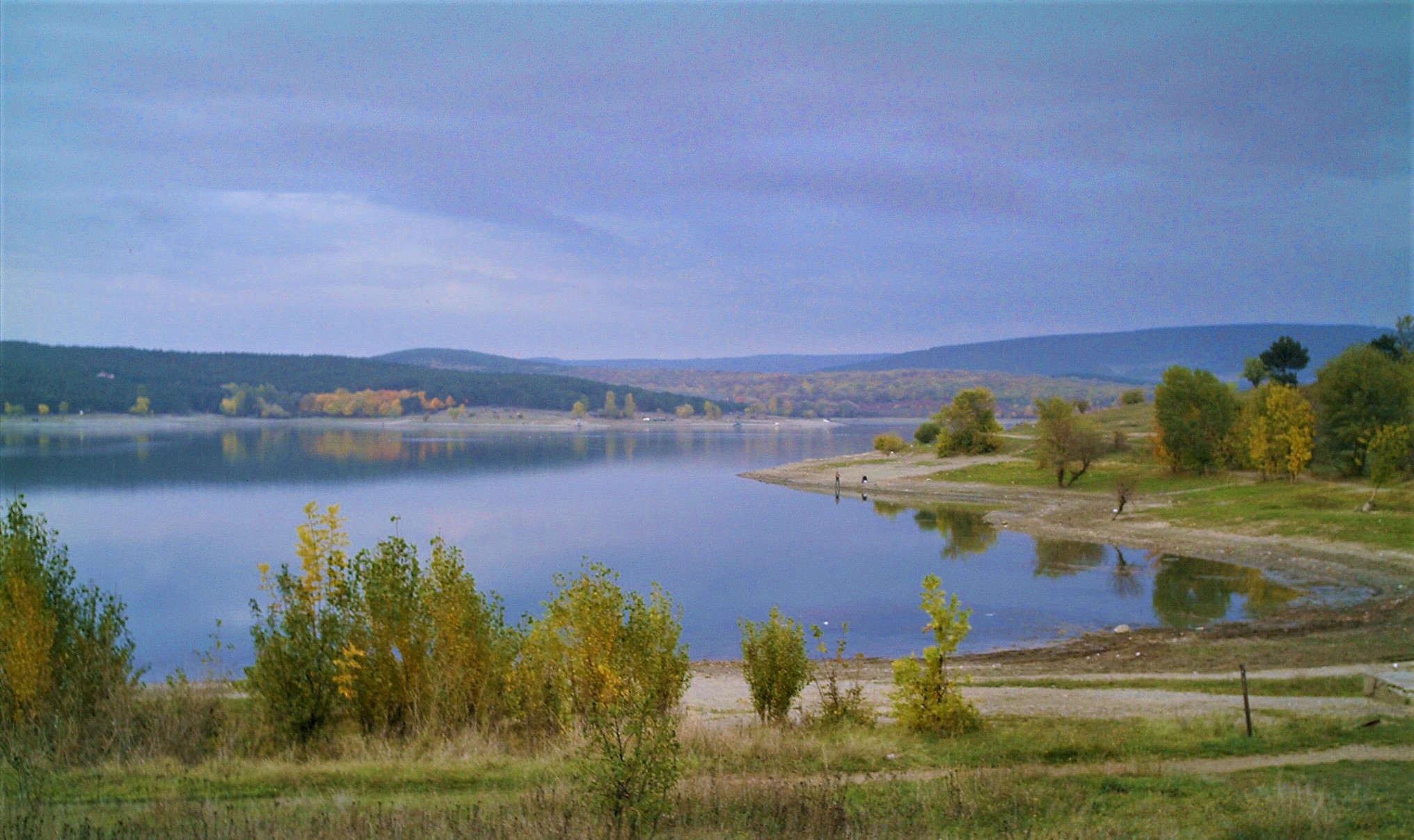
Simferopol is located in the south-central Crimean Peninsula. The city lies on the Salhir River near the artificial Simferopol Reservoir, which provides the city with clean drinking water. The Simferopol Reservoir's earth dam is the biggest in Europe.
Climate
The city experiences a humid subtropical climate (Köppen: Cfa), near the boundary of the humid continental climate (Köppen: Dfa). The average temperature in January is 0.4 C and 23 C in July. The average rainfall is 501 mm per year, and there is a total of 2,529 hours of sunshine per year. | Jan record high C = 20.8 | Feb record high C = 21.9 | Mar record high C = 28.7 | Apr record high C = 31.5 | May record high C = 34.2 | Jun record high C = 37.7 | Jul record high C = 39.3 | Aug record high C = 39.5 | Sep record high C = 37.2 | Oct record high C = 33.3 | Nov record high C = 28.0 | Dec record high C = 25.4 | year record high C = 39.5 | Jan record low C = -26.0 | Feb record low C = -30.3 | Mar record low C = -18.4 | Apr record low C = -11.1 | May record low C = -8.4 | Jun record low C = 0.7 | Jul record low C = 3.6 | Aug record low C = 3.8 | Sep record low C = -5.1 | Oct record low C = -11.4 | Nov record low C = -21.7 | Dec record low C = -23.2 | year record low C = -30.3 | Jan snow depth cm = 1 | Feb snow depth cm = 2 | Mar snow depth cm = 1 | Apr snow depth cm = 0 | May snow depth cm = 0 | Jun snow depth cm = 0 | Jul snow depth cm = 0 | Aug snow depth cm = 0 | Sep snow depth cm = 0 | Oct snow depth cm = 0 | Nov snow depth cm = 0 | Dec snow depth cm = 1 | year snow depth cm = 2 | access-date = 8 November 2021}} | archive-url = https://web.archive.org/web/20250420124541/https://www.ncei.noaa.gov/data/oceans/archive/arc0216/0253808/6.6/data/0-data/Region-6-WMO-Normals-9120/Ukraine/CSV/Simferopol_33955.csv | archive-date = 20 April 2025 | access-date = 20 April 2025}}{{cite web | access-date = 17 July 2021}}
Politics and administrative divisions
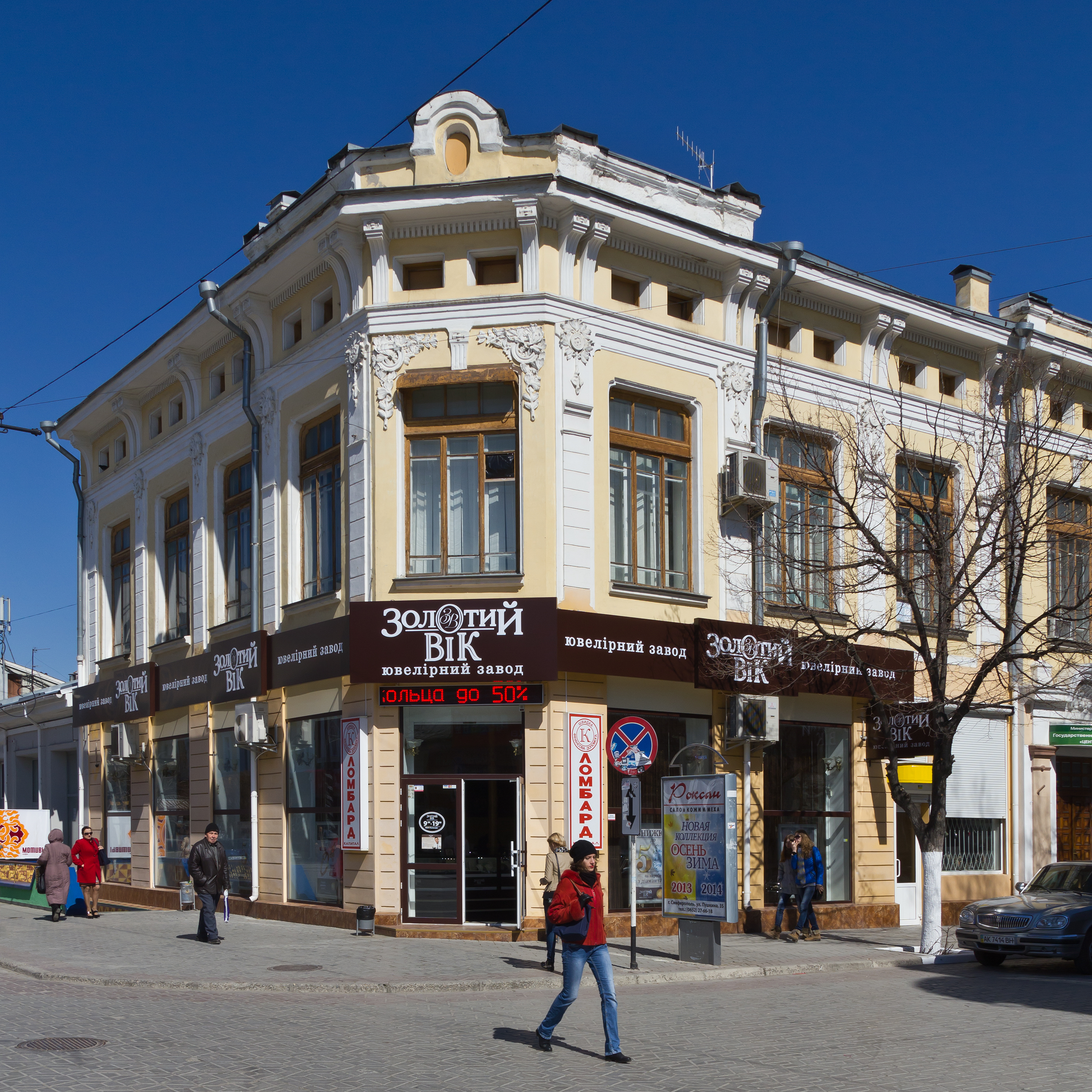
As the capital of Crimea, Simferopol houses its political structure including the Supreme Council of Crimea and the Council of Ministers. Simferopol is also the administrative centre of the Simferopol Raion (district), but is directly subordinate to the Crimean authorities rather than to the district authorities housed in the city itself.
The city of Simferopol is administratively divided into three urban districts (Zaliznychnyi, Kyivskyi and Tsentralnyi), four urban-type settlements (Ahrarne, Aeroflotskyi, Hresivskyi, Komsomolske) and the village of Bitumne.
Viktor Ageev became city mayor on 11 November 2010 and was then elected chairman of the Simferopol City Council on 29 September 2014.
Igor Lukashyov was installed as the head of Simferopol City administration (i.e. local executive) after Russia annexed the region in 2014. He served in this position until his dismissal on 9 November 2018.
Transportation
Simferopol has a major railway station, which serves millions of tourists each year. In December 2014 Ukraine cut the railway line to Crimea at the border with mainland Ukraine (Kherson Oblast). Currently, the station serves only a commuter (regional) passenger train and the Moscow – Simferopol train every day.
The city is also connected via the Simferopol International Airport, which was constructed in 1936. Zavodskoye Airport is situated southwest of Simferopol.
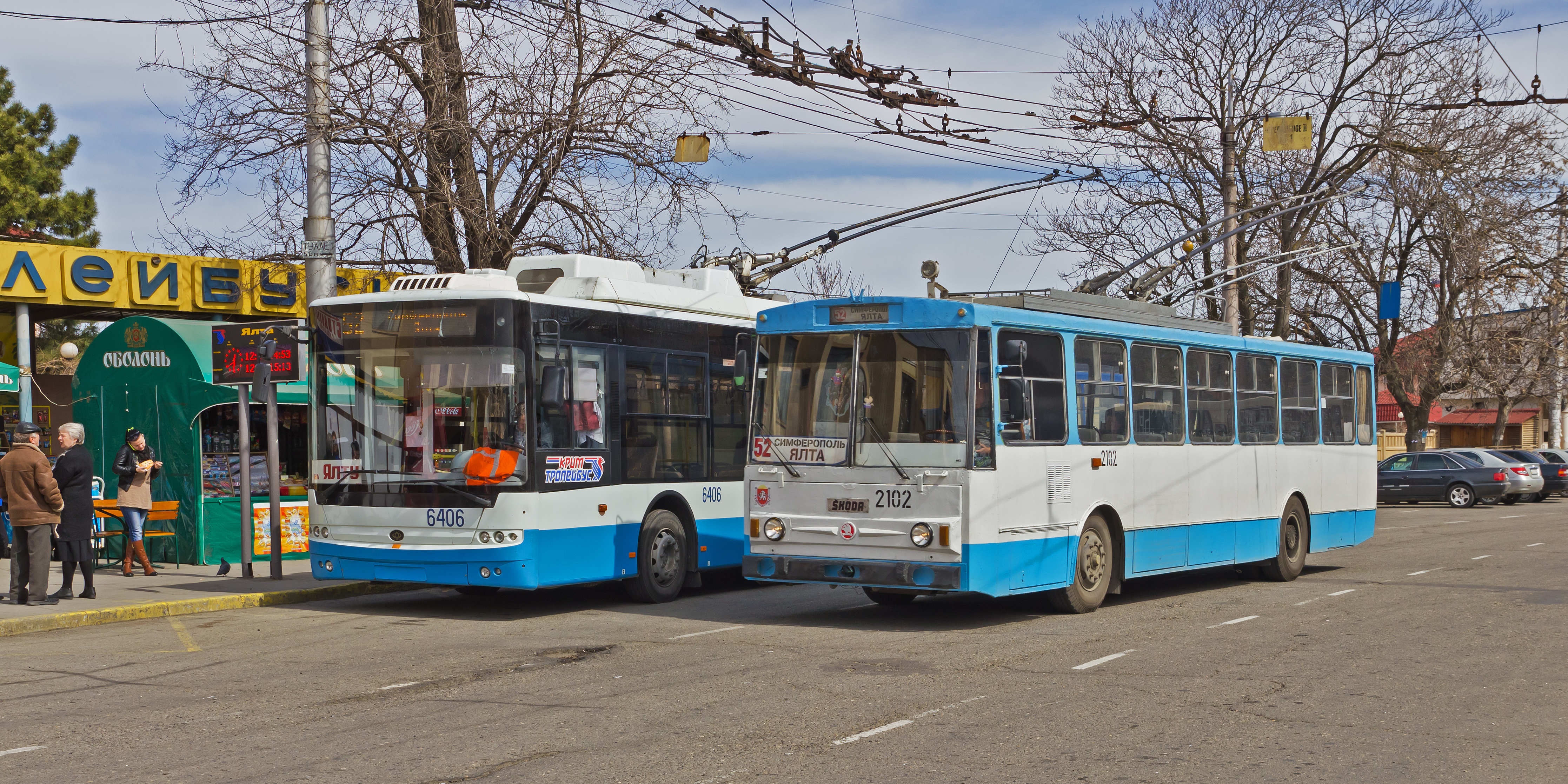
The city has several main bus stations, with routes towards many cities, including Sevastopol, Kerch, Yalta, and Yevpatoriya. The Crimean Trolleybus connects Simferopol to the city of Yalta on Crimean Black Sea coast. The line is the longest trolleybus line in the world with a total length of 86 km (since 2014 again 96 km).
The streets of Simferopol have a rare house numbering – the odd numbers are on the right side of the road, looking in the direction in which the numbers increase.
Demographics
|1897 | 49078 |1923 | 70203 |1926 | 86145 |1939 | 142634 |1959 | 187632 |1970 | 301505 |1979 | 301505 |1989 | 343565 |1992 | 374000 |1998 | 341000 |2001 | 343644 |2003 | 343536 |2004 | 342523 |2005 | 341599 |2006 | 340644 |2007 | 339577 |2008 | 337830 |2009 | 337139 |2010 | 336588 |2011 | 336330 |2012 | 335582 |2013 | 337285 |2014 | 338319 At the last census in 2014, the population of Simferopol was 338,319, the highest of any city in the Republic of Crimea and second only to Sevastopol within the Crimean peninsula.
Economy
When it existed, Crimea Air had its head office on the grounds of Simferopol Airport. A new 19-gate terminal for the airport finished construction in 2018. The terminal was designed in the shape of a wave by Samoo Architects & Engineers, after their successful bid as part of an international competition.
Industry
Simferopol is home to a number of industrial plants, including the following:
- Fiolent (two locations), producer of power tools and other electrical systems
- Simferopol chemical industry plants
- PO Foton
- SEM SElktroMash SELMZ
- Plastotekhnika and else plastics related
- Santekhprom SSTP
- PEK PromElektroKontakt and PromSchitKontakt, ChPO Sfera IzmertelnPribor, SELTZ ElectroTechnical Plant
- Pnevmatika, other pneumatics tires etc. related industry
- Monolit SMZKon, TsSI Tavrida SKMKZ, Slava Truda SCMNG, SiMZ Motor Plants
- Chornomornaftogaz
- Digital Valley (Tsifrovaya Dolina): silicon industry, computers, wafers and microelectronics, it, other related. It will located (most likely) near the airport for convenience.
Education
The largest collection of higher education institutions in Crimea is located in Simferopol. Among them is the largest university in Simferopol and Crimea, the Taurida V.Vernadsky National University, which was founded in 1917. Crimea State Medical University named after S. I. Georgievsky, also located in Simferopol, is one of the most prominent medical schools of Ukraine. The Crimean Medical University is situated on the plot, where in 1855 a nursery garden was planted by the founder of the Nikita Botanical Gardens Ch.Ch.Steven (1781–1863). In 1863–66 a school for girls was built here and in 1931 a medical institute was opened. On the same plot P.Krzhizhanovsky built a three-storey hostel for medical students after the design in 1934. The building with clear geometric masses was completed in 1938. A new federal university campus was opened 4 August 2014.
Sports
Simferopol is home to the football club FC TSK Simferopol which plays in the Crimean Premier League. It was formed as a Russian club in 2014, following the 2014 Crimean Conflict, to replace the Ukrainian club Tavriya Simferopol which had been the first winners of the Ukraine Premier League, and also won the Ukrainian Cup in 2010.
Houses of worship
- Kebir-Jami Mosque, Simferopol
Notable people
Art and entertainment
- Alexei Stepanov (1858–1923), russian genre painter, illustrator, and art teacher
- Nicolai Ivanovich Kravchenko (1867–1941), battle painter, journalist, and writer
- Rachel Devirys (1890–1983), film actress
- Max Alpert (1899–1980), photographer who worked on the front lines during World War 2.
- Andrei Abrikosov (1906–1973), stage and film actor
- Zara Levina (1906–1976), pianist and composer
- Bob Sredersas (1910–1982), art collector
- Georges Vitaly (1917–2007), theatre director, actor, and manager
- Roman Filippov (1936–1992), theatre and film actor
- Valery Sigalevitch (born 1950), classical concert pianist
- Denis Bouriakov (born 1981), principal flautist of the Los Angeles Philharmonic
- Dorofeeva (born 1990), singer and fashion designer
- Diana Tishchenko (born 1990), classical violinist
Science and academia
- Evgenii Wulff (1885–1941), biologist, botanist, and plant geographer
- Viktor Grebennikov (1927–2001), scientist, naturalist, entomologist, and paranormal researcher
- Sergey Mergelyan (1928–2008), mathematician and scientist
- Yuri Manin (1937–2023), mathematician known for his work in algebraic & diophantine geometry
- Valeri F. Venda (born 1937), psychologist, engineer, and designer
- Oleg Kotov (born 1965), cosmonaut
- Gennady Samokhin (born 1971), speleologist
- Evhen Tsybulenko (born 1972), professor of international law
Politics and activism
_cropped.jpg)
- Anna Kuliscioff (1857–1925), revolutionary, feminist, and Marxist socialist militant
- Adolph Joffe (1883–1927), revolutionary, politician, and diplomat
- Musa Mamut (1931–1978), deported Crimean Tatar who self-immolated in protest
- Andriy Senchenko (born 1959), politician and a former member of the Ukrainian parliament
- Yelyzaveta Bohutska (born 1964), public activist and member of the Ukrainian parliament
- Reşat Amet (1975–2014), Crimean Tatar activist
- Oleg Sentsov (born 1976), filmmaker, writer, and political activist
- Serhiy Kokurin (1978–2014), military officer who was the first soldier killed in the Russo-Ukrainian War
- Andrey Kozenko (born 1981), former statesman and politician
- Pavlo Kazarin (born 1983), journalist and political commentator
- Olexandr Kolchenko (born 1989), left-wing activist, ecologist, and archaeologist
- Leonid Pilunsky (1947-2021), politician (Rukh) and former member of the Verkhovna Rada of Crimea
- Tamila Tasheva (born 1985), politician (Holos) and former Presidential representative of Ukraine in Crimea
Religion and literature
- Saint Luke of Simferopol (1877–1961), surgeon and Archbishop of Simferopol
- Ilya Selvinsky (1899–1968), poet, dramatist, memoirist, and essayist
Sport
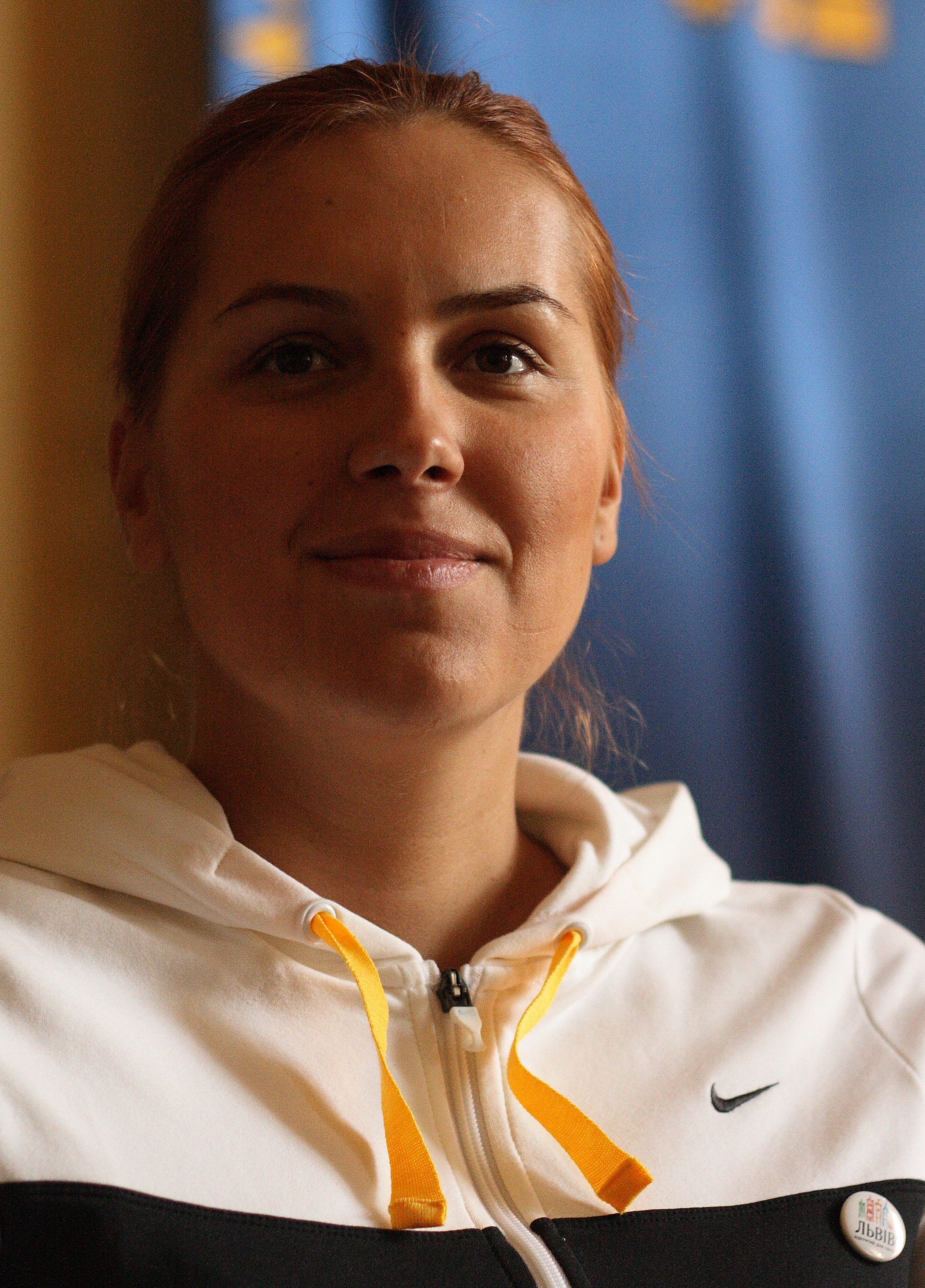
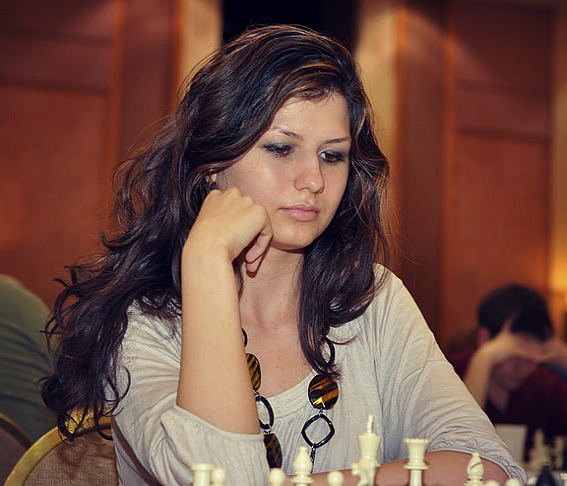
- Oleksandr Usyk (born 1987), heavyweight boxer and Olympic gold medallist
- Anatoliy Zayayev (1931–2012), former football player and coach
- Kateryna Serebrianska (born 1977), individual rhythmic gymnast and Olympic gold medallist
- Lyudmila Blonska (born 1977), heptathlete
- Serhiy Dotsenko (born 1979), boxer and Olympic silver medallist
- Yana Klochkova (born 1982), swimmer and five-time Olympic medalist
- Andriy Hryvko (born 1983), cyclist for Astana
- Sergey Karjakin (born 1990), chess grandmaster who qualified for the title at the age of 12 years and 7 months
- Alisa Melekhina (born 1991), chess master
- Hanna Rizatdinova (born 1993), individual rhythmic gymnast and Olympic bronze medallist
- Natalia Popova (born 1993), competitive figure skater and Olympian
- Gleb Bakshi (born 1995), boxer and Olympic bronze medallist
- Daniil Khlusevich (born 2001), professional footballer for Spartak Moscow
International relations
Twin towns – Sister cities
Simferopol is currently twinned with:
- USA Salem, Oregon, United States (1986)
- GER Heidelberg, Germany (1991)
- HUN Kecskemét, Hungary (2006)
- TUR Tepebaşı, Turkey (2007)
- TUR Bursa, Turkey
- RUS Irkutsk, Russia (2008)
- RUS Moscow, Russia (2008)
- RUS Novocherkassk, Russia (2008)
- RUS Omsk, Russia (2008)
- BUL Ruse, Bulgaria (2008)
- RUS Nizhny Novgorod, Russia (2016)
Namegiving
The reconnaissance ship Simferopol of the Ukrainian Navy ist named after the city.
Notes
References
References
- link. (2 April 2014)
- "Map from 1918 showing the name "Symferopil"".
- {{Cite EB1911
- "Simferopol".
- "Simferopol". Vacation in Crimea.
- (20 July 2006). "Russian cities with Greek names". Sevastopolskaya gazeta.
- Kirimal, Edige. "Complete Destruction of National Groups as Groups". International Committee for Crimea.
- "Simferopol". simferopol.ws.
- Das Personenlexikon zum Dritten Reich. Wer war was vor und nach 1945. Fischer Taschenbuch Verlag, Zweite aktualisierte Auflage, Frankfurt am Main 2005, page 72
- Mark A. Green. "Crimean Tatars and Russification". Wilson Center.
- Schmadel, Lutz D.. (2003). "Dictionary of Minor Planet Names". Springer Verlag.
- (8 January 2006). "Day in history – 20 January". [[RIA Novosti]].
- (31 March 2006). "Tatars push to regain their historic lands in Crimea". Today's Zaman.
- (21 March 2014). "Russian President Vladimir Putin signs laws completing annexation of Crimea".
- (2014-02-26). "Russia puts military on high alert as Crimea protests leave one man dead".
- Kottek, M.. (2006). "World Map of the Köppen-Geiger climate classification updated". Meteorol. Z..
- "City of Simferopol Autonomous Republic of Crimea". [[Verkhovna Rada.
- "Биография".
- (10 November 2018). "Russia-Installed Head Of Crimea's Capital Removed".
- "Welcome to the International Airport "Simferopol"". [[Simferopol International Airport]].
- "The longest trolleybus line in the world!". blacksea-crimea.com.
- "Cities & towns of Ukraine".
- "World Airline Directory." ''[[Flight International]]''. 27 March – 2 April 2001. [http://www.flightglobal.com/pdfarchive/view/2001/2001%20-%201045.html?search=%22Air%20Ukraine%22 57].
- "Новый терминал аэропорта Симферополь".
- "Main page". Vernadskiy Tavricheskiy National University.
- "Twinning". City of Heidelberg.
This article was imported from Wikipedia and is available under the Creative Commons Attribution-ShareAlike 4.0 License. Content has been adapted to SurfDoc format. Original contributors can be found on the article history page.
Ask Mako anything about Simferopol — get instant answers, deeper analysis, and related topics.
Research with MakoFree with your Surf account
Create a free account to save articles, ask Mako questions, and organize your research.
Sign up freeThis content may have been generated or modified by AI. CloudSurf Software LLC is not responsible for the accuracy, completeness, or reliability of AI-generated content. Always verify important information from primary sources.
Report