From Surf Wiki (app.surf) — the open knowledge base
Sigil
Magical symbol

Magical symbol
A sigil () is a type of symbol used in magic. The term usually refers to a pictorial signature of a spirit (such as an angel, demon, or deity). In modern usage, especially in the context of chaos magic, a sigil refers to a symbolic representation of the practitioner's desired outcome.
History
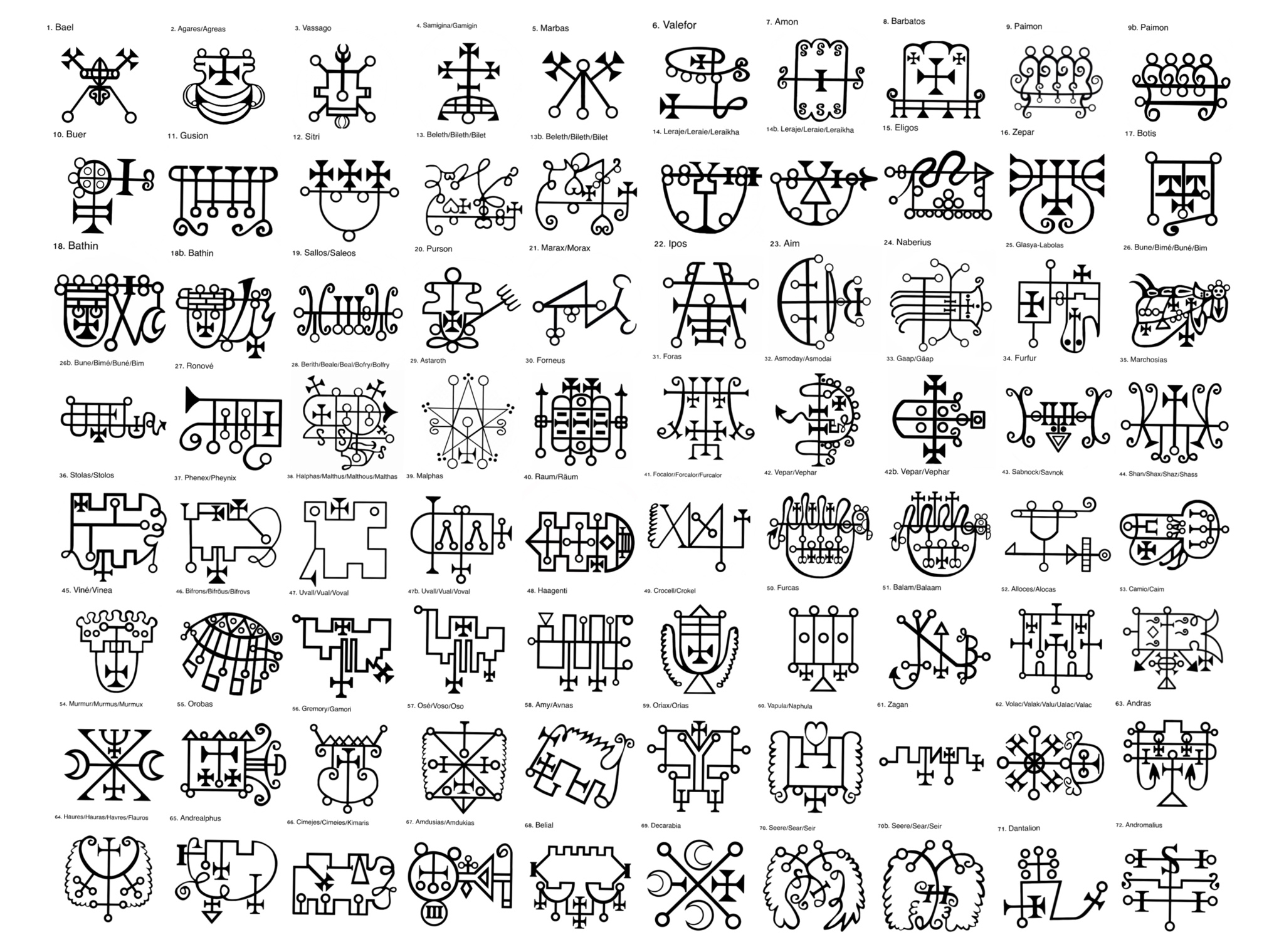
The term sigil derives from the Latin sigillum (pl. sigilla), meaning "seal". In medieval magic, the term sigil was commonly used to refer to occult signs which represented various angels and demons which the practitioner might summon.
''The Lesser Key of Solomon''
Magical training books called grimoires often listed pages of such sigils. A particularly well-known list is in The Lesser Key of Solomon, in which the sigils of the 72 princes of the hierarchy of hell are given for the magician's use. Such sigils are considered by some to be the equivalent of the true name of the spirit and thus granted the magician a measure of control over the beings.
Methods of construction
A common method of creating the sigils of certain spirits was to use kameas, a special use case of magic squares—the names of the spirits were converted to numbers, which were then located on the magic square. The locations were then connected by lines, forming an abstract figure.
The word sigil [...] has a long history in Western magic. The members of the [Hermetic Order of the Golden Dawn
Austin Osman Spare
English artist and occultist [Austin Osman Spare (1886–1956) developed his own unique method of creating and using sigils, which has had a lasting effect on modern occultism. Spare did not agree with medieval practice of using these, arguing that such supernatural beings were simply complexes in the unconscious, and could be actively created through the process of sigilization.
Spare's technique became a cornerstone of chaos magic. It also influenced artist Brion Gysin, who experimented with combining Spare's sigil method with the traditional form of magic squares:
Chaos magic

In chaos magic, following Spare, sigils are commonly created in a well-ordered fashion by writing an intention, then condensing the letters of the statement down to form a monogram. The chaos magician then uses the gnostic state to "launch" or "charge" the sigil—essentially bypassing the conscious mind to implant the desire in the unconscious. To quote Ray Sherwin:
After charging the sigil, it is considered necessary to repress all memory of it. In the words of Spare, there should be "a deliberate striving to forget it".
In modern chaos magic, when a complex of thoughts, desires, and intentions gains such a level of sophistication that it appears to operate autonomously from the magician's consciousness, as if it were an independent being, then such a complex is referred to as a servitor. When such a being becomes large enough that it exists independently of any one individual, as a form of "group mind", then it is referred to as an egregore.
Later chaos magicians have expanded on the basic sigilization technique. Grant Morrison coined the term hypersigil to refer to an extended work of art with magical meaning and willpower, created using adapted processes of sigilization. Their comic book series The Invisibles was intended as such a hypersigil. Morrison has also argued that modern corporate logos like "the McDonald's Golden Arches, the Nike swoosh and the Virgin autograph" are a form of viral sigil:
Corporate sigils are super-breeders. They attack unbranded imaginative space. They invade Red Square, they infest the cranky streets of Tibet, they etch themselves into hairstyles. They breed across clothing, turning people into advertising hoardings... The logo or brand, like any sigil, is a condensation, a compressed, symbolic summoning up of the world of desire which the corporation intends to represent... Walt Disney died long ago but his sigil, that [[Disney logo
References
Citations
Works cited
References
- (2003). "The Chambers Dictionary". Chambers.
This article was imported from Wikipedia and is available under the Creative Commons Attribution-ShareAlike 4.0 License. Content has been adapted to SurfDoc format. Original contributors can be found on the article history page.
Ask Mako anything about Sigil — get instant answers, deeper analysis, and related topics.
Research with MakoFree with your Surf account
Create a free account to save articles, ask Mako questions, and organize your research.
Sign up freeThis content may have been generated or modified by AI. CloudSurf Software LLC is not responsible for the accuracy, completeness, or reliability of AI-generated content. Always verify important information from primary sources.
Report