From Surf Wiki (app.surf) — the open knowledge base
Sidney Poitier
Bahamian-American actor, filmmaker, diplomat (1927–2022)

Bahamian-American actor, filmmaker, diplomat (1927–2022)
| Field | Value | ||||
|---|---|---|---|---|---|
| honorific_suffix | |||||
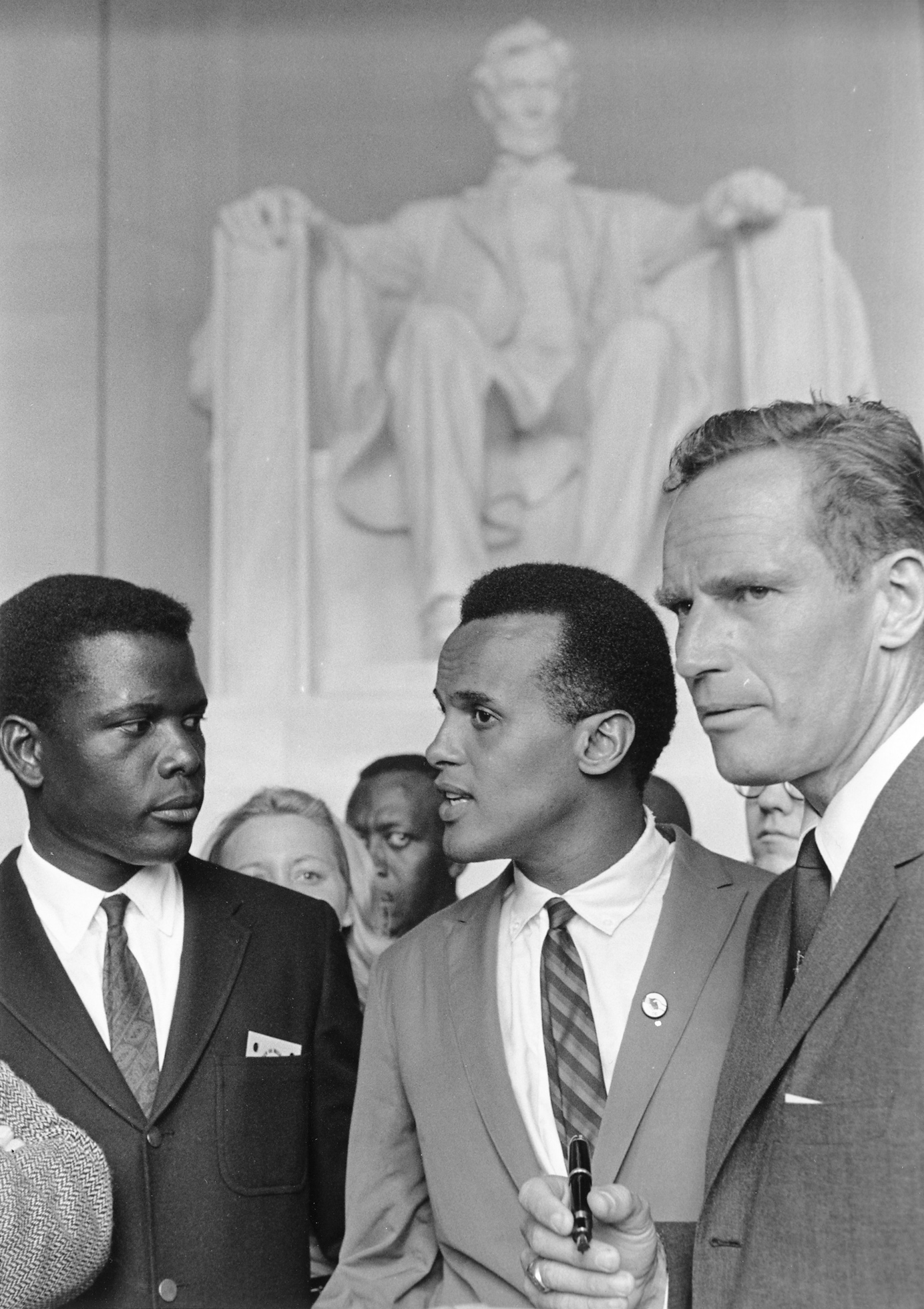
| image | Sidney Poitier 1968.jpg | ||||
| caption | Poitier in 1968 | ||||
| birth_date | |||||
| birth_place | Miami, Florida, U.S. | ||||
| death_date | |||||
| death_place | Beverly Hills, California, U.S. | ||||
| nationality | |||||
| occupation | {{flatlist | ||||
| spouse | {{plainlist | ||||
| * {{marriage | Juanita Hardy | 1950 | 1965 | end | divorced}} |
| partner | Diahann Carroll (1959–1968) | ||||
| children | 6, including Sydney Tamiia | ||||
| years_active | 1946–2009 | ||||
| works | Full list | ||||
| awards | Full list | ||||
| module | {{Infobox officeholder | embed=yes | |||
| office | Ambassador of the Bahamas | ||||
| suboffice | Ambassador to Japan | ||||
| subterm | 1997–2007 | ||||
| suboffice2 | Ambassador to UNESCO | ||||
| subterm2 | 2002–2007 | ||||
| module2 | {{Infobox military person | embed=yes | |||
| allegiance | |||||
| branch | United States Army | ||||
| battles | World War II | ||||
| serviceyears | 1943–1944 |
- Actor
- film director
- activist
- diplomat
Sidney Poitier ( ; February 20, 1927 – January 6, 2022) was a Bahamian-American actor, film director, activist, and diplomat. In 1964, he was the first black actor and first Bahamian to win the Academy Award for Best Actor. Among his other accolades are two competitive Golden Globe Awards, a BAFTA Award and a Grammy Award, in addition to nominations for two Emmy Awards and a Tony Award. In 1999, he was ranked number 22 among the "American Film Institute's 100 Stars". Poitier was one of the last surviving stars from the Golden Age of Hollywood.
Poitier's family lived in the Bahamas, then still a Crown colony, but he was born in Miami, Florida, while they were visiting, which granted him U.S. citizenship. He grew up in the Bahamas, but moved to Miami at age 15, and to New York City when he was 16. He joined the American Negro Theatre, gaining his breakthrough film role as a high school student in the film Blackboard Jungle (1955). Poitier gained fame for his leading roles in films such as The Defiant Ones (1958), for which he won the Silver Bear for Best Actor and became the first African American to be nominated for an Academy Award for Best Actor. In 1964, he won the Academy Award and the Golden Globe for Best Actor for Lilies of the Field (1963).
Poitier broke ground playing strong leading African American male roles in films such as Porgy and Bess (1959), A Raisin in the Sun (1961), and A Patch of Blue (1965). He acted in three films in 1967, films which addressed race and race relations: To Sir, with Love; Guess Who's Coming to Dinner, and In the Heat of the Night, the latter of which earned him Golden Globe and BAFTA Award nominations. In a poll the next year he was voted the US's top box-office star. Poitier made his directorial film debut with Buck and the Preacher (1972), followed by A Warm December (1973), Uptown Saturday Night (1974), and Stir Crazy (1980). He later starred in Shoot to Kill (1988) and Sneakers (1992).
Poitier was granted an honorary knighthood by Queen Elizabeth II in 1974. His honors include the Golden Globe Cecil B. DeMille Award in 1982, the Kennedy Center Honor in 1995, Screen Actors Guild Life Achievement Award in 1999, and the Honorary Academy Award in 2002. In 2009, he was awarded the Presidential Medal of Freedom by President Barack Obama. In 2016, he was awarded the BAFTA Fellowship for outstanding lifetime achievement in film. From 1997 to 2007, he was the Bahamian Ambassador to Japan.
Early life
Sidney Poitier was born on February 20, 1927, in Miami, Florida. He was the youngest of seven children born to Evelyn () and Reginald James Poitier, Afro-Bahamian farmers who owned a farm on Cat Island. The family would travel to Miami to sell tomatoes and other produce to wholesalers. His father also worked as a cab driver in Nassau. Poitier was born unexpectedly in Miami while his parents were there on business; his birth was two months premature, and he was not expected to survive, but his parents remained in Miami for three months to nurse him to health. Poitier grew up in the Bahamas, then a British Crown colony. His birth in the United States entitled him to US citizenship.
Although there were few Poitiers of French ancestry in the Bahamas, some believe that the Poitier ancestors had migrated from Haiti, and were probably among the runaway slaves who established maroon communities throughout the Bahamas, including Cat Island.
Poitier lived with his family on Cat Island until he was ten, when they moved to Nassau. There he was exposed to the modern world, where he saw his first automobile and first experienced electricity, plumbing, refrigeration, and motion pictures. He was raised Catholic but later became an agnostic with views closer to deism.
At age fifteen, in 1942, he was sent to Miami to live with his brother's large family, but Poitier found it impossible to adjust to the racism in Jim Crow era Florida. At sixteen, he moved to New York City, looking to become an actor, holding a string of jobs as a dishwasher in the meantime. After failing his first audition with the American Negro Theatre due to his inability to fluently read the script, an elderly Jewish waiter sat with him every night for several months, helping him to improve his reading by using the newspaper. During World War II, in November 1943, he lied about his age (he was only 16 at the time) and enlisted in the Army. He was assigned to a Veterans' Administration hospital in Northport, New York, and was trained to work with psychiatric patients. Poitier became upset with how the hospital treated its patients and feigned mental illness to obtain a discharge. Poitier confessed to a psychiatrist that he was faking his condition, but the doctor was sympathetic and granted his discharge under Section VIII of Army regulation 615–360 in December 1944.
After leaving the Army, he worked as a dishwasher until a successful audition landed him a role in an American Negro Theatre production, the same company he failed his first audition with.
Career
1947–1957: Early work and blacklist
Poitier joined the American Negro Theater but was rejected by audiences. Contrary to what was expected of negro actors at the time, Poitier's tone deafness made him unable to sing. Determined to refine his acting skills and rid himself of his noticeable Bahamian accent, he spent the next six months dedicating himself to achieving theatrical success. He modeled his legendary speech pattern after radio personality Norman Brokenshire. On his second attempt at the theater, he was noticed and given a leading role in the Broadway production of Lysistrata, through which, though it ran a failing four days, he received an invitation to understudy for Anna Lucasta. Poitier would later befriend Harry Belafonte at the American Negro Theater.
In 1947, Poitier was a founding member of the Committee for the Negro in the Arts (CNA), an organization whose participants were committed to a left-wing analysis of class and racial exploitation. Among his other CNA-related activities, in the early 1950s he was a Vice Chair of the organization. In 1952, he was one of several narrators in a pageant written by Alice Childress and Lorraine Hansberry for the Negro History Festival put on by the leftist Harlem monthly newspaper Freedom.
His participation in such events and CNA generally, along with his friendships with other leftist Black performers, including Canada Lee and Paul Robeson, led to his subsequent blacklisting for a few years. Even associating with Poitier added to the basis for blacklisting Alfred Palca, the writer and producer of one of Poitier's earliest films, the 1954 Go Man Go. Poitier never did sign a loyalty oath, despite being asked in connection with his prospective role in Blackboard Jungle (1955).
By late 1949, Poitier had to choose between leading roles on stage and an offer to work for Darryl F. Zanuck in the film No Way Out (1950). His performance with Ruby Dee and Maude Simmons in No Way Out, as a doctor treating a white bigot (played by Richard Widmark, who became a friend), was noticed and led to more roles, each considerably more interesting and more prominent than those most African-American actors of the time were offered. In 1951, he traveled to South Africa with the African-American actor Canada Lee to star in the film version of Cry, the Beloved Country. Poitier's distinction continued in his role as Gregory W. Miller, a member of an incorrigible high-school class in Blackboard Jungle (1955). But it was his performance in Martin Ritt's 1957 film Edge of the City that the industry could not ignore.
Poitier enjoyed working for director William Wellman on Good-bye, My Lady (1956). Poitier later praised Wellman for inspiring his thoughtful approach to directing when he found himself taking the helm from Joseph Sargent on Buck and the Preacher in 1971.
1958–1969: Breakthrough and stardom
In 1958 he starred alongside Tony Curtis in director Stanley Kramer's The Defiant Ones. The film was a critical and commercial success with the performances of both Poitier and Curtis being praised. The film landed eight Academy Award nominations including Best Picture and Best Actor nominations for both stars, making Poitier the first African-American actor to be nominated in a lead role. Poitier did win the British Academy Film Award for Best Foreign Actor.
Poitier acted in the first production of A Raisin in the Sun alongside Ruby Dee on the Broadway stage at the Ethel Barrymore Theatre in 1959. The play was directed by Lloyd Richards. The play introduced details of Black life to the overwhelmingly White Broadway audiences, while director Richards observed that it was the first play to which large numbers of Black people were drawn. The play was a groundbreaking piece of American theater, with Frank Rich, critic from The New York Times, writing in 1983 that A Raisin in the Sun "changed American theater forever". For his performance Poitier earned a Tony Award for Best Actor in a Play nomination. That same year he starred in the film adaptation of Porgy and Bess (1959) with Dorothy Dandridge. For his performance, Poitier received a 1960 Golden Globe Award nomination for Best Actor in a Motion Picture Musical or Comedy.
In 1961, Poitier starred in the film adaptation of A Raisin in the Sun for which he received another Golden Globe Award nomination. Also in 1961, Poitier starred in Paris Blues alongside Paul Newman, Joanne Woodward, Louis Armstrong, and Diahann Carroll. The film dealt with the American racism of the time by contrasting it with Paris's open acceptance of Black people. For this role, he won the Academy Award for Best Actor and became the first African-American to win the award in a leading role. His satisfaction at this honor was undermined by his concerns that this award was more of the industry congratulating itself for having him as a token and it would inhibit him from asking for more substantive considerations afterward. Poitier worked relatively little over the following year; he remained the only major actor of African descent and the roles offered were predominantly typecast as a soft-spoken appeaser.
In 1964, Poitier recorded an album with the composer Fred Katz called Poitier Meets Plato, in which Poitier recites passages from Plato's writings. He also performed in the Cold War drama The Bedford Incident (1965) alongside the film's producer Richard Widmark, the Biblical epic film The Greatest Story Ever Told (1965) alongside Charlton Heston and Max von Sydow, and A Patch of Blue (1965) co-starring Elizabeth Hartman and Shelley Winters.
In 1967, he was the most successful draw at the box office, the commercial peak of his career, with three popular films, To Sir, with Love, and In the Heat of the Night, and Guess Who's Coming to Dinner. Although these three films seemingly shared little similarity, they all, albeit not overtly, dealt with the black and white divide. In To Sir, with Love, Poitier plays a teacher at a secondary school in the East End of London. The film deals with social and racial issues in the inner city school. The film was met with mixed response; however, Poitier was praised for his performance, with the critic from Time writing, "Even the weak moments are saved by Poitier, who invests his role with a subtle warmth."
In Norman Jewison's mystery drama In the Heat of the Night, Poitier played Virgil Tibbs, a police detective from Philadelphia who investigates a murder in the Deep South in Mississippi alongside a cop with racial prejudices played by Rod Steiger. The film was a critical success with Bosley Crowther of The New York Times calling it "the most powerful film I have seen in a long time." Roger Ebert placed it at number ten on his top ten list of 1967 films. Art Murphy of Variety felt that the excellent Poitier and outstanding Steiger performances overcame noteworthy flaws, including an uneven script. Poitier received a Golden Globe Award and British Academy Film Award nomination for his performance.
In Stanley Kramer's social drama Guess Who's Coming to Dinner, Poitier played a man in a relationship with a White woman played by Katharine Houghton. The film revolves around her bringing him to meet with her parents played by Katharine Hepburn and Spencer Tracy. The film was one of the rare films at the time to depict an interracial romance in a positive light, as interracial marriage historically had been illegal in most states of the United States. It was still illegal in 17 states—mostly Southern states—until June 12, 1967, six months before the film was released. The film was a critical and financial success. In his film review, Roger Ebert described Poitier's character as "a noble, rich, intelligent, handsome, ethical medical expert" and that the film "is a magnificent piece of entertainment. It will make you laugh and may even make you cry." To win his role as Dr. Prentice in the film, Poitier had to audition for Tracy and Hepburn at two separate dinner parties.
Poitier began to be criticized for being typecast as over-idealized African-American characters who were not permitted to have any sexuality or personality faults, such as his character in Guess Who's Coming to Dinner. Poitier was aware of this pattern himself but was conflicted on the matter. He wanted more varied roles; but he also felt obliged to set an example with his characters, by challenging old stereotypes, as he was the only major actor of African descent being cast in leading roles in the American film industry at the time. For instance, in 1966, he turned down an opportunity to play the lead in an NBC television production of Othello with that spirit in mind. Despite this, many of the films in which Poitier starred during the 1960s would later be cited as social thrillers by both filmmakers and critics. Such films included For Love of Ivy in which he modifies the over-idealized African American as Jack Parks, a trucking company executive, who also operates an illegal casino.
1970–1989: Transition to directing
In the Heat of the Night featured his most successful character, Virgil Tibbs, a Philadelphia, Pennsylvania, detective whose subsequent career was the subject of two sequels: They Call Me Mister Tibbs! (1970) and The Organization (1971).
In 1972, he made his feature film directorial debut, the Western Buck and the Preacher, in which Poitier also starred, alongside Harry Belafonte and Ruby Dee. Poitier replaced the original director, Joseph Sargent. The following year he directed his second feature, the romantic drama A Warm December. Poitier also starred in the film alongside Esther Anderson.
Along with Barbra Streisand and Paul Newman, Poitier formed First Artists Production Company so actors could secure properties and develop movie projects for themselves. Working with First Artists, Poitier directed several financially successful comedy films, including three in which he also starred: Uptown Saturday Night (1974) with Bill Cosby and Harry Belafonte; and Let's Do It Again (1975) and A Piece of the Action (1977), both with Cosby. His most successful comedy was Stir Crazy (1980; not a First Artists production), starring Richard Pryor and Gene Wilder, which for many years was the highest-grossing film directed by a person of African descent.

In 1985, he directed Fast Forward and, in 1990, he reunited with Cosby directing him in the family comedy Ghost Dad. In 1988, he starred in Shoot to Kill with Tom Berenger.
1990–2022: Later work
In 1992, he starred in Sneakers with Robert Redford and Dan Aykroyd. In 1997, he co-starred in The Jackal with Richard Gere and Bruce Willis.
In the 1990s, he starred in several well received television movies and miniseries such as Separate but Equal (1991), To Sir, with Love II (1996), Mandela and de Klerk (1997), and The Simple Life of Noah Dearborn (1999). He received Emmy nominations for his work in Separate but Equal and Mandela and de Klerk, as well as a Golden Globe nomination for the former. He won a Grammy Award for Best Spoken Word Album in 2001.
In 2002, Poitier received the 2001 Honorary Academy Award for his overall contribution to American cinema. In his victory speech, Washington saluted Poitier by saying "I'll always be chasing you, Sidney. I'll always be following in your footsteps. There's nothing I would rather do, sir."
With the death of Ernest Borgnine in 2012, Poitier became the oldest living recipient of the Academy Award for Best Actor. On March 2, 2014, Poitier appeared with Angelina Jolie at the 86th Academy Awards to present the Best Director Award. He was given a standing ovation and Jolie thanked him for all his Hollywood contributions, stating: "We are in your debt." In 2021, the academy dedicated the lobby of the new Academy Museum of Motion Pictures in Los Angeles as the "Sidney Poitier Grand Lobby" in his honor. Poitier was a lifelong activist for racial and social justice. He declined film roles he considered based on offensive racial stereotypes.
Board and diplomatic service
From 1995 to 2003, Poitier was a member of the board of directors of the Walt Disney Company. In April 1997, Poitier was appointed ambassador from the Bahamas to Japan, a position he held until 2007. From 2002 to 2007, he was concurrently the ambassador of the Bahamas to UNESCO.
Personal life

Poitier was first married to Juanita Hardy from April 29, 1950, until 1965.
Though Poitier became a resident of Mount Vernon in Westchester County, New York, in 1956, they raised their family in Stuyvesant, New York, in a house on the Hudson River.
In 1959, Poitier began a nine-year affair with actress Diahann Carroll.
On January 23, 1976, he married Joanna Shimkus, a Canadian actress who starred with Poitier in The Lost Man in 1969, and they remained married until his death.
Poitier had four daughters with his first wife: Beverly, Pamela, Sherri, and Gina.
He had two daughters with his second wife: Anika and Sydney Tamiia.
Poitier had eight grandchildren and three great-grandchildren.
When Hurricane Dorian hit the Bahamas in September 2019, Poitier's family had 23 missing relatives.
Death
On January 6, 2022, Poitier died at his home in Beverly Hills, California, at the age of 94. His death was confirmed by Fred Mitchell, the Minister of Foreign Affairs of the Bahamas. According to a copy of his death certificate obtained by TMZ, the cause of death was cardiopulmonary failure, with Alzheimer's disease and prostate cancer listed as underlying causes.
Upon Poitier's death, many people released statements honoring him, including then-President Joe Biden, who wrote in part: "With unflinching grandeur and poise – his singular warmth, depth, and stature on-screen – Sidney helped open the hearts of millions and changed the way America saw itself." Former president Barack Obama paid tribute to Poitier, calling him "a singular talent who epitomized dignity and grace". Michelle Obama, Bill Clinton and Hillary Clinton also released statements.
Many people in the entertainment industry also paid tribute to Poitier, including Martin Scorsese who wrote, "For years, the spotlight was on Sidney Poitier. He had a vocal precision and physical power and grace that at moments seemed almost supernatural." Harry Belafonte, Morgan Freeman, Viola Davis, Whoopi Goldberg, Lupita Nyong'o, Halle Berry, Ava DuVernay, Oprah Winfrey, Octavia Spencer, Jeffrey Wright, Giancarlo Esposito, Quincy Jones, Michael Eisner, Ron Howard and others also paid tribute. Broadway paid tribute when its theaters dimmed their lights on January 19, 2022, at 7:45 pm ET.
The Ebertfest film festival announced it would be dedicating its 2022 event to the memory of Poitier and Gilbert Gottfried.
Acting credits and accolades
Main article: Sidney Poitier filmography, List of awards and nominations received by Sidney Poitier

Poitier became the first Black actor to win the Academy Award for Best Actor for Lilies of the Field (1963). He also received a Grammy Award, two Golden Globe Awards, and a British Academy Film Award. In 1994, Poitier received a star on the Hollywood Walk of Fame. In 1981, he received the Golden Globe Cecil B. DeMille Award and in 2016 he received the BAFTA Fellowship. In 2022, he was inducted into the National Multicultural Western Heritage Museum.
In 1995, he received the Kennedy Center Honor and in 2009, Poitier was awarded the Presidential Medal of Freedom from Barack Obama. He was also named an honorary Knight Commander of the Order of the British Empire by Queen Elizabeth II in 1974. In 1986, he gave the Commencement Address to the University of Miami graduating class and was given the Honorary Degree of Doctor of Fine Arts.
Legacy

Poitier was described as an icon in his obituary by USA Today. Laura Jacobs for Vanity Fair hailed Poitier as the "Martin Luther King Jr. of the movies". Several film historians and journalists have called him Hollywood's first African-American film star. The New York Times noted after his death that Poitier was instrumental for the diversity of Hollywood and "paved the way for Black actors in film".
While presenting Poitier the Honorary Academy Award in 2002, Denzel Washington said of Poitier: "Before Sidney, African American actors had to take supporting roles in major studio films that were easy to cut out in certain parts of the country. But you couldn't cut Sidney Poitier out of a Sidney Poitier picture".
For his role in diversifying Hollywood and for his role in paving the way for further Black actors, he was described as one of "the most important figures of 20th century Hollywood". The former US president Barack Obama said Poitier had "[advanced] the nation's dialogue on race and respect" and "opened doors for a generation of actors". Sidney, a documentary film about Poitier's life and legacy by Reginald Hudlin, was released on September 23, 2022.
Works
Poitier wrote three autobiographical books:
- This Life (1980), winner of the Coretta Scott King Award (1981)
- The Measure of a Man: A Spiritual Autobiography (2000)
- Life Beyond Measure: Letters to My Great-Granddaughter (2008)
Two biographies of Poitier have been published:
- Sidney Poitier: Man, Actor, Icon (2004) by historian Aram Goudsouzian.
- Sidney Poitier Black and White: Sidney Poitier's Emergence in the 1960s as a Black Icon (2020) by Philip Powers.
His life has been documented in the visual arts:
- Sidney Poitier: One Bright Light (2000)
- Sidney Poitier, un outsider à Hollywood (2008)
- Sidney (2022)
Notes
References
References
- "NLS Other Writings: Say How, M-P".
- Kaufman, Dave. (April 14, 1964). "Sidney Poitier First Black Ever To Receive 'Best Actor' Oscar".
- "Sidney Poitier". Golden Globes.
- "The 6th annual screen actors guild awards".
- (January 7, 2022). "What Was Sidney Poitier's Net Worth Upon His Death at Age 94?".
- (January 7, 2022). "Legendary Actor Sidney Poitier Dead at 94".
- "Actor, civil rights pioneer, Sidney Poitier dies – DW – 01/07/2022".
- Goodykoontz, Bill. (February 25, 2014). "Oscar win proved Sidney Poitier was second to none".
- {{IMDb name. 1627
- (January 7, 2022). "Sidney Poitier, groundbreaking actor and Hollywood legend, dead at 94".
- "Top Ten Money Making Stars". Quigley Publishing Co..
- "Award of Honorary Knight Commander of the British Empire (KBE) to Sidney Poitier, actor... | The National Archives". Discovery.nationalarchives.gov.uk.
- (January 12, 2016). "Sidney Poitier to be Honoured with BAFTA Fellowship". BAFTA.
- (January 29, 2010). "''Sidney Poitier awards: Academy of Motion Picture Arts and Sciences'' awards database". [[Academy of Motion Picture Arts and Sciences]].
- McCann, Ruth. (September 13, 2009). "Sidney Poitier, Sen. Ted Kennedy Among 16 Who Receive Medal of Freedom". The Washington Post.
- (January 7, 2022). "Legendary Actor Sidney Poitier Dead at 94". NBC.
- Grimes, William. (January 7, 2022). "Sidney Poitier, Who Paved the Way for Black Actors in Film, Dies at 94". The New York Times.
- Poitier, Sidney. (1980). "This Life". Knopf (US), Random House (Canada).
- Goudsouzian, Aram. (April 25, 2004). "Sidney Poitier". The New York Times.
- "Tavis Smiley interviews Sidney Poitier". [[PBS]].
- Goudsouzian, Aram, ''Sidney Poitier: Man, Actor, Icon'' (2004), p. 8.
- Goudsouzian, Aram. (2004). "Sidney Poitier: Man, Actor, Icon". University of North Carolina Press.
- "Bio – Sidney Poitier".
- "Sidney Poitier".
- Poitier, Sidney. ''The Measure of a Man: A Spiritual Autobiography''. (2000). New York. [[HarperCollins]].
- Winfrey, Oprah. (October 15, 2000). "Oprah Talks to Sidney Poitier". [[The Oprah Winfrey Show]].
- Poitier, Sidney. (2009). "Life Beyond Measure: Letters to My Great-Granddaughter". HarperCollins.
- Poitier, Sidney. (2009). "Life Beyond Measure". HarperCollins.
- James, Frank. (May 20, 2009). "Sidney Poitier's Reflections Of Dignity". NPR.
- (February 17, 2009). "Sidney Poitier Biography and Interview". [[American Academy of Achievement]].
- Goudsouzian, Aram (2004), ''Sidney Poitier: Man, Actor, Icon'', University of North Carolina Press, {{ISBN. 978-0-8078-2843-4, p. 44.
- (January 9, 2022). "Sidney Poitier: The 2013 "Sunday Morning" interview".
- (1988). "Sidney Poitier". Chelsea House Publishers.
- Poitier, Sidney. ''The Measure of a Man'' (2000). New York: HarperCollins Publishers.
- Chenrow, Fred. (1974). "Reading Exercises in Black History". The Continental Press, Inc..
- Missourian; ''Sidney Poitier''; pp. 69, 133.
- Poitier, Sidney. (2000). "The Measure of a Man". Harper.
- "How the American Negro Theatre Shaped the Career of the Iconic Harry Belafonte".
- (2015). "The Cambridge Encyclopedia of Stage Actors and Acting". [[Cambridge University Press]].
- "Finding a New Home in Harlem: Alice Childress and the Committee for the Negro in the Arts". [[University of Massachusetts Boston]].
- Washington, Mary. (2014). "The other blacklist : the African American literary and cultural left of the 1950s". Columbia University Press.
- Perry, Imani. (2018). "Looking for Lorraine : the radiant and radical life of Lorraine Hansberry". Beacon Press.
- Goudsouzian, Aram. (2004). "Sidney Poitier: Man, Actor, Icon". University of North Carolina Press.
- Weber, Bruce. (August 20, 1997). "Four Decades After He Was Blacklisted, A Writer-Producer Finally Gets Credit". [[The New York Times]].
- (April 7, 1991). "The Prime Time of Sidney Poitier". [[The Washington Post]].
- "No Way Out". TCM.
- (November 21, 2021). "'No Way Out' and the Best of "Social Message" Film Noir". Film School Rejects.
- Grant, Nicholas. (January 1, 2014). "Crossing the Black Atlantic: The Global Antiapartheid Movement and the Racial Politics of the Cold War". [[Duke University Press]].
- Geier, Thom. (January 7, 2022). "10 Essential Sidney Poitier Movies, From 'Blackboard Jungle' to 'To Sir, With Love' (Photos)". Yahoo.
- Powers, Philip. (2020). "Sidney Poitier Black and White: Sidney Poitier's Emergence in the 1960s as a Black Icon". 1M1 Digital.
- Sharf, Zack. (January 7, 2022). "Sidney Poitier's Best Films: 13 Movies Now Streaming Online".
- Thompson, Bosley Crowtherhoward. (September 25, 1958). "Screen: A Forceful Social Drama; ' The Defiant Ones' Has Debut at Victoria". The New York Times.
- (January 1, 1958). "The Defiant Ones".
- Alter, Rebecca. (January 7, 2022). "Sidney Poitier, Trailblazing Oscar Winner and Activist, Dead at 94". Vulture.
- "A Raisin In the Sun". NPR.
- Rich, Frank. (October 5, 1983). "Theater: 'Raisin in Sun,' Anniversary in Chicago". The New York Times.
- "Porgy and Bess". Hollywood Foreign Press Association.
- McGreevy, Nora. (January 7, 2022). "How Sidney Poitier Rewrote the Script for Black Actors in Hollywood".
- "Sidney Poitier". Golden Globes.
- "Paris Blues". TMC.
- "Lilies of the Field". TCM.
- Fisher, Luchina. (January 7, 2022). "Sidney Poitier, 1st Black man to win best actor Oscar, dies at 94". ABC News.
- Harris, Mark. (2008). "Pictures at a Revolution: Five Films and the Birth of a New Hollywood". Penguin Press.
- Harris 2008, pp. 81–2.
- Goudsouzian, Aram, ''Sidney Poitier: Man, Actor, Icon'', The University of North Carolina Press, 2004, p. 395.
- "The Bedford Incident (1965)". TMC.
- "The Greatest Story Ever Told". TMC.
- "A Patch of Blue". TMC.
- Watson, Walter Ray. (January 7, 2022). "Sir, we loved you: Sidney Poitier dies at 94". NPR.
- (December 31, 2020). "Sidney Poitier Black and White: Sidney Poitier's Emergence in the 1960s as a Black Icon". 1M1 Digital Pty Ltd.
- (June 30, 1967). "Cinema: Class War".
- (August 9, 1967). "'Heat of Night' Scores With Crix; Quick B.O. Pace".
- Ebert, Roger. (December 15, 2004). "Ebert's 10 Best Lists: 1967 to Present". [[Chicago Sun-Times]].
- Ebert, Roger. (December 31, 1967). "The Best 10 Movies of 1967". Chicago Sun-Times.
- Murphy, A.D.. (June 21, 1967). "In The Heat Of The Night".
- "Sidney Poitier's BAFTA wins and nominations".
- Ebert, Roger. (January 25, 1968). "Guess Who's Coming to Dinner".
- Powers, Philip, "Sidney Poitier Black and White", 1M1 Digital, Sydney, 2020, p.210
- Harris 2008, p. 161.
- (2013). "TLA Film and Video Guide 2000–2001: The Discerning Film Lover's Guide". St. Martin's Press.
- (2008). "Leonard Maltin's 2009 Movie Guide". Penguin.
- (March 10, 2004). "Etension of Remarks: A Tribute to Ms. Beulah "Beah" Richards". Government Printing Office.
- (February 14, 2017). "Get Out's Jordan Peele Brings the 'Social Thriller' to BAM". [[The Village Voice]].
- Nye, Doug. (January 18, 2001). "Sidney Poitier's "Tibbs Trilogy" Out On DVD". Knight Ridder.
- "Buck and the Preacher". TMC.
- "Buck and the Preacher". AFI.
- "A Warm December". TMC.
- Hollie, Pamela G.. (December 23, 1979). "First Artists Star-Crossed Child of the 1960s". New York Times.
- "Uptown Saturday Night". Black Classic Movies.
- George Alexander. (December 2000). "Fade to Black: Black filmmakers make the most profitable movies, but still fight for dollars and respect".
- Canby, Vincent. (February 15, 1985). "FILM: FAST FORWARD,' BY POITIER". The New York Times.
- Vadala, Nick. (February 4, 2015). "Report: Sidney Poitier 'disgusted' with Bill Cosby over sexual assault allegations". The Philadelphia Inquirer.
- Ebert, Roger. (February 12, 1988). "Shoot to Kill Review".
- Cryer, Vanessa. (December 19, 2021). "Sneakers: Robert Redford and River Phoenix nerd out in 1992's prescient, high-tech caper". The Guardian.
- Schulz, Rick. (January 7, 2022). "Sidney Poitier, Oscar Winner Who Helped Tear Down Racial Barriers, Dies at 94".
- (May 7, 1999). "The Simple Life of Noah Dearborn".
- "Sidney Poitier". Television Academy.
- (November 23, 2020). "Sidney Poitier – Artist".
- O'Neil, Tom (New York, 2003), "Movie Awards: The Ultimate, Unofficial Guide to the Oscars. Golden Globes, Critics, Guild and Indi Honors", Berkley Publishing Group, p. 761.
- Moraski, Lauren. (July 10, 2012). "Ernest Borgnine's death makes Sidney Poitier the oldest living best actor Oscar winner". CBS News.
- Kessler, Felix. (January 7, 2022). "Beloved Hollywood actor Sidney Poitier dies at 94".
- (January 7, 2022). "Sidney Poitier death: First Black man to win Best Actor Oscar dies aged 94". Yahoo News.
- Feinberg, Scott. (August 30, 2021). "Academy Museum Dedicates Grand Lobby to Sidney Poitier".
- Farrell, Rita K.. (August 12, 2004). "Actor Takes Center Stage as Disney Trial Grinds On". The New York Times.
- [http://www.thebiographychannel.co.uk/biographies/sidney-poitier.html Sidney Poitier Biography] {{webarchive. link. (July 24, 2015 AETN UK. The Biography Channel. 2005–11. Retrieved July 23, 2015.)
- (December 7, 2021). "New play about Sidney Poitier in development for Broadway run".
- Rascoe, Nichelle. (January 18, 2018). "A Timeline of Black History in Westchester".
- "Stuyvesant Outdoor Adventures". Stuyvesant Outdoor Adventures.
- Armstrong, Louis. (August 4, 1980). "Guess Who's Coming to Terms at Last with His Kids, Racial Politics and Life? Sidney Poitier".
- (September 6, 1970). "Miss Beverly Marie Poitier Bride of William J. Q. Mould". The New York Times.
- (August 6, 2014). "Poitier-Henderson Holds Book Signing". WLBT 3.
- Feuer, Alan. (February 12, 2005). "Hundreds Mourn Ossie Davis in Harlem". The New York Times.
- (April 9, 1988). "Daughters of King, Malcolm X Also Have a Message". Los Angeles Times.
- (January 7, 2022). "What to Know About Sidney Poitier's Late Daughter, Gina, Who Died at 57".
- Shaw, Dan. (May 21, 1994). "Chronicle". The New York Times.
- Bianculli, David. (August 9, 1969). "Advice For UPN: Get Rid Of 'Abby'". Daily News.
- "News : Press Item : Bahamas International Film Festival".
- (September 8, 2019). "Hurricane Dorian: more than 23 members of Sidney Poitier's family missing". The Telegraph.
- (January 6, 2021). "Sidney Poitier: Hollywood trailblazer dies aged 94". BBC News.
- (January 7, 2022). "Sidney Poitier, Black acting pioneer, dies aged 94". [[The Guardian]].
- (January 18, 2022). "Sidney Poitier Death Certificate Revealed". TMZ.
- Johnson, Ted. (January 7, 2022). "Joe Biden Says Sidney Poitier 'Changed The Way America Saw Itself'; Barack Obama Praises "Singular Talent" – Update".
- Brisco, Elise. "'Legacy to behold': Joe Biden, Denzel Washington, Martin Scorsese honor trailblazer Sidney Poitier".
- Tangcay, Jazz. (January 7, 2022). "Hollywood Honors Sidney Poitier: 'One of the Greatest Actors of His Generation'".
- Reneau, Annie. (January 8, 2022). "'To Sir, With Love': The world bids farewell to actor and civil rights icon Sidney Poitier".
- (January 18, 2022). "How Sidney Poitier inspired me to be excellent and among the stars".
- "Broadway Dims Its Lights in Memory of Academy Award Winner Sidney Poitier January 19".
- (April 15, 2022). "Ebertfest 2022 Announces Complete Lineup, Will Be Dedicated to Sidney Poitier and Gilbert Gottfried".
- Grimes, William. (January 7, 2022). "Sidney Poitier, Who Paved the Way for Black Actors in Film, Dies at XX". The New York Times.
- "BAFTA: Sidney Poitier".
- (February 17, 2010). "Video: Sidney Poitier Accepts the 20th AFI Life Achievement Award in 1992". AFI.
- (October 25, 2019). "Sidney Poitier". Hollywood Walk of Fame.
- "Cecil B. DeMille Award Winners: Every Star Who's Ever Earned the Golden Globes' Big Honor". People.
- (January 26, 2016). "Sir Sidney Poitier: BAFTA Fellowship in 2016". BAFTA.
- "Hall of Fame Inductees".
- Cass, Connie. (September 5, 1995). "Kennedy Center Honors Neil Simon, B.B. King, Sidney Poitier". Associated Press.
- (August 12, 2009). "Presidential Medal of Freedom". CBS.
- (January 7, 2022). "Sidney Poitier: Hollywood trailblazer dies aged 94". BBC News.
- "Honorary Degree Recipients". University of Miami.
- Yasharoff, Hannah. (January 7, 2022). "Trailblazing star Sidney Poitier, first Black man to win best actor Oscar, dies at 94". USA Today.
- Jacobs, Laura. (February 1, 2017). "Sidney Poitier, 1967, and One of the Most Remarkable Runs in Hollywood History".
- Grimes, William. (January 7, 2022). "Sidney Poitier, Who Paved the Way for Black Actors in Film, Dies at 94". [[The New York Times]].
- (January 7, 2022). "Sidney Poitier, Hollywood's First Major Black Movie Star, Dies At 94". NDTV.
- Byrge, Duane. (January 7, 2022). "Sidney Poitier, Regal Star of the Big Screen, Dies at 94".
- Howard, Adam. (January 7, 2022). "Sidney Poitier has many legacies, but his acting should not be lost among them".
- Bose, Swapnil Dhruv. (January 7, 2022). "Sidney Poitier: The man who changed the face of Hollywood forever".
- Johnson, Ted. (January 7, 2022). "Barack Obama Pays Tribute To Sidney Poitier: 'Epitomized Dignity And Grace'".
- Matthew Carey, [https://deadline.com/video/sidney-poitier-documentary-trailer-release-apple-tv-plus-producer-oprah-winfrey-director-reginald-hudlin-video/ "Watch 'Sidney' Trailer, Documentary On Late Film Legend Sidney Poitier Produced By Oprah Winfrey"]. ''[[Deadline Hollywood]]'', August 16, 2022.
- "Coretta Scott King Book Awards - All Recipients, 1970-Present {{!}} Coretta Scott King Roundtable".
- "Sidney Poitier, UN Outsider A Hollywood". Toronto Film Fest.
This article was imported from Wikipedia and is available under the Creative Commons Attribution-ShareAlike 4.0 License. Content has been adapted to SurfDoc format. Original contributors can be found on the article history page.
Ask Mako anything about Sidney Poitier — get instant answers, deeper analysis, and related topics.
Research with MakoFree with your Surf account
Create a free account to save articles, ask Mako questions, and organize your research.
Sign up freeThis content may have been generated or modified by AI. CloudSurf Software LLC is not responsible for the accuracy, completeness, or reliability of AI-generated content. Always verify important information from primary sources.
Report