From Surf Wiki (app.surf) — the open knowledge base
Shower gel
Liquid products used for cleaning the body
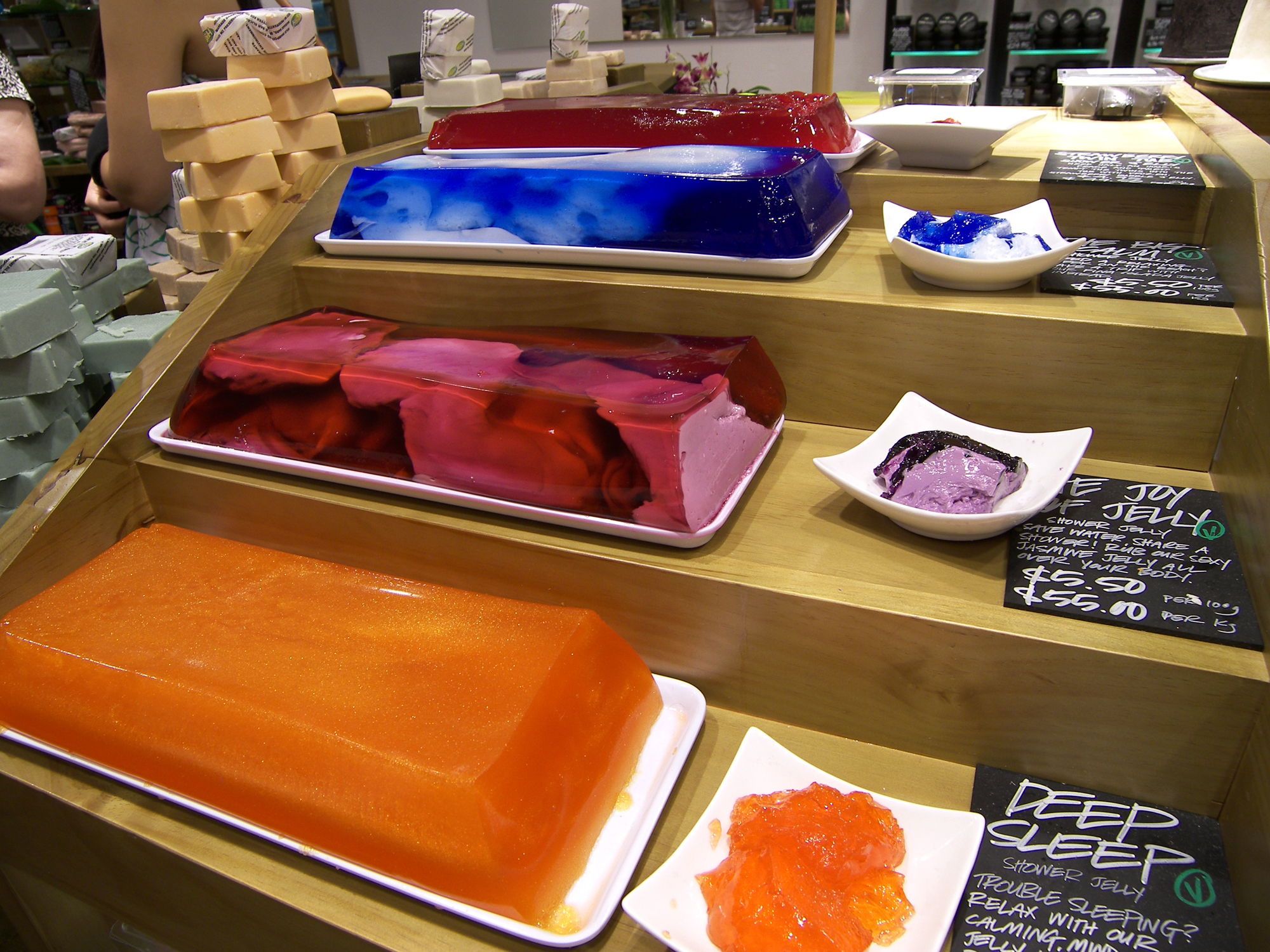
Liquid products used for cleaning the body
Shower gel (also called body wash) is a specialized liquid product used for cleaning the body during showers. Not to be confused with liquid soaps, shower gels, in fact, do not contain saponified oil. Instead, it uses synthetic detergents derived from either petroleum or plant sources.
Body washes and shower gels have a lower pH value than the traditional soap, which is also known to feel less drying to the skin. In certain cases, sodium stearate is added to the chemical combination to create a solid version of the shower gel.
History
Shower gel is a derivative invention of the liquid soap, which first appeared in the 1800s. In 1865, William Shepphard patented the formula behind the liquid soap, but the product gained eventual popularity with the rise of Palmolive soap in 1898, by B.J. Johnson.
Over time, the formula was adjusted to be less harsh and more skin suitable. This eventually led to tailored body products such as shower gel. The switch from traditional bar soaps to liquid soaps picked up in the 1950's due to modernized fragrance and packaging options and convenience.
Safety, ingredients, and the environment
Shower gels are known to contain water, a surfactant (typically Sodium laureth sulfate), moisturizers, and fragrance. Some ingredients are known to cause irritation, allergic reactions, and/or harm to the environment. A 2024 article details the toxicological risks linked with the chemicals in the beauty and personal care products observed. This resulted in the cosmetics industry's transition into cleaner formulations and sustainable packaging. A 2022 study on sustainability in cosmetics also spotlights the shift to becoming eco-friendly as some manufacturers now offer refill stations and sustainable packaging.
Properties
The main difference between the two soap products lie in its surfactants - compounds known to lower the surface tension between substances, which helps in the emulsification and the washing away of oily dirt. The surfactants of shower gels do not come from saponification, that is by reacting a type of oil or fat with lye. Instead, it uses synthetic detergents for surfactants derived from either plant-based sources or petroleum. This gives the product a lower pH value than soap and might also feel less drying to the skin. Some people have likened the effect to feeling less squeaky clean, however.
Surfactants can make up as much as 50 percent of the shower gel content, with the remaining proportion being made up of a combination of water and ingredients to thicken, preserve, emulsify, add fragrance, and color. Multiple surfactants are often used to achieve desired product qualities. A primary surfactant can provide good foaming ability and cleaning effectiveness, while a secondary surfactant can add qualities of mildness to prevent irritation or over-drying of the skin. To prevent shower gel ingredients from separating, emulsifiers such as diethanolamine are added. Conditioning agents may also be added to moisturize the skin during and after product use. They are also available in different colours and scents. Ingredients, like scent in the form of essential oils or fragrance oils and colorant in the form of water-soluble dyes are common in shower gels.
Microbeads were commonly used in shower gels until recently. Microbeads are tiny spheres of plastic that were added to a variety of cosmetic products for their exfoliating qualities. They are too small to filter out of water systems and end up in waterways and oceans, potentially passing toxins to animal life and humans. Following the legislative actions of other countries, the United States passed the Microbead-Free Waters Act in 2015, which bans microbeads in the U.S. incrementally starting in 2017, with full implementation set for 2019. It has been banned from production and use in cosmetics in the U.S. since July 1, 2017, and in the UK since October 1, 2018.
Shower gels for men may contain the ingredient menthol, which gives a cooling and stimulating sensation on the skin, and some men's shower gels are also designed specifically for use on the hair and body. Shower gels contain milder surfactant bases than shampoos, and some also contain gentle conditioning agents in the formula. This means that shower gels can also be used as an effective and acceptable substitute to shampoo, even if they are not labelled as a hair and body wash. Washing hair with shower gel should give approximately the same result as using a moisturising shampoo.
Culture and usage
In the Western Hemisphere, shower gel has largely replaced traditional bar soap. Alternatively, in other regions, bar soap is still popular due to cost, accessibility, and tradition. Some brands use advertising to appeal to customers regionally by showcasing local popular scents or skin concerns. The brand "Fa" by Henkel is an example of this as it is marketed across over 100 countries today.
Marketing
Like shampoo and bubble bath products, many are marketed directly towards children. These often feature scents intended to appeal to children, such as fruit scents, or cookies or cotton candy scents. Many bottles feature popular characters from children's television or movies.
Shower gels are also often marketed based on gender preferences. Women targeted products tend to highlight moisturizing ingredients, fruity or floral scents, and light or bright colored packaging, while those designed for men tend to use darker packaging and fresh or "sporty" scents.
Future direction
Due to rising concern with chemicals and the demand for "clean" beauty products, manufacturers are reformulating and relabeling products. Competitors are advertising soap bars as "all natural", and under resourced areas are reverting back to bar soaps due to the lower price tags. Market research predicts growth, but tentative success caused by ingredients, sustainability, and price.
References
References
- "On This Day – August 22: The first patent for liquid soap was issued to William Sheppard on this day in 1865- Learn Chemistry".
- "The Cleanest Inventions: Soaps and Detergents". ThoughtCo.
- (2024-08-09). "The World of Soap Bars in the 1950s".
- "History of Liquid Soap and Shower Gel".
- Alnuqaydan, Abdullah M.. (2024-08-26). "The dark side of beauty: an in-depth analysis of the health hazards and toxicological impact of synthetic cosmetics and personal care products". Frontiers in Public Health.
- (2022). "The use of sustainable surfactants in personal care products: Environmental and health perspectives". Elsevier.
- Pai, Deanna. (November 23, 2016). "Please Help Me Understand Why You Still Use Bar Soap".
- "Try these 11 expert tips for a better shower; your skin will thank you". NBC News.
- (27 January 2018). "Why you shouldn't actually want to be squeaky-clean after a shower".
- Hornsey, Sally. (2014). "How to Make Your Own Soap". Constable & Robinson.
- Flick, Ernest. (1992). "Cosmetic and Toiletry Formulations, Second Edition, Volume 2". Noyes Publications.
- Boyd, Christopher. (4 August 2014). "EXAMINE THE CHEMISTRY OF BODY WASH".
- (19 September 2012). "Cosmetic Formulations – Body Wash".
- Guarnieri, Anne-Marie. (January 6, 2014). "Bar soap vs. shower gel: A brief look at the history of how we bathe".
- DeWeerdt, Sarah. (20 June 2017). "Tiny biodegradable spheres could replace plastic microbeads".
- Han, Esther. (2016-08-16). "Microbeads are leaching toxic chemicals into fish, sparking public health fears".
- Bailey Bischoff Staff. (18 April 2018). "How the world made macro strides in curbing microbeads.". Christian Science Monitor.
- Millar, Katherine. (2020). "Gendered Scents: Marketing and the Symbolism of Hygiene Products". Journal of Consumer Culture.
- "Body Wash and Shower Gel Market Size, Forecast".
This article was imported from Wikipedia and is available under the Creative Commons Attribution-ShareAlike 4.0 License. Content has been adapted to SurfDoc format. Original contributors can be found on the article history page.
Ask Mako anything about Shower gel — get instant answers, deeper analysis, and related topics.
Research with MakoFree with your Surf account
Create a free account to save articles, ask Mako questions, and organize your research.
Sign up freeThis content may have been generated or modified by AI. CloudSurf Software LLC is not responsible for the accuracy, completeness, or reliability of AI-generated content. Always verify important information from primary sources.
Report