From Surf Wiki (app.surf) — the open knowledge base
Shoulder angel
Plot device used for an effect in fictional works
_MET_DP837921.jpg)
Plot device used for an effect in fictional works
A shoulder angel is a plot device used for dramatic and/or humorous effect in fiction, mainly in animation and comic books/strips. The angel represents conscience and is often accompanied by a shoulder devil representing temptation. They are a useful convention for depicting the inner conflict of a character.
Iconography
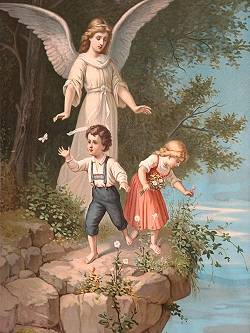
The shoulder angel often uses the iconography of a traditional angel, with wings, a robe, a halo, and sometimes a harp. The shoulder devil likewise usually looks like a traditional devil with reddish skin, horns, barbed tail, a trident, and in some cases, cloven hooves. Often, both resemble their host, though sometimes they will resemble other characters in the story who are responsible or mischievous. In Western culture the idea develops the Christian concept of a personal guardian angel, who was sometimes considered to be matched by a personal devil who countered the angel's efforts, especially in popular medieval dramas like the 15th century The Castle of Perseverance. In both this and Christopher Marlowe's play The Tragical History of Doctor Faustus, of about 1592, the "Good Angel" and "Bad Angel" offer competing advice (Act 2, scene 1, etc.) to the hero.
Origins
Early Christianity
The non-canonical early Christian book The Shepherd of Hermas, of around A.D. 140–150, has a reference to the idea of two angels: "There are two angels with a man—one of righteousness, and the other of iniquity". These angels in turn descend into a person's heart, and attempt to guide a person's emotions. Hermas is told to understand both angels, but to only trust the Angel of Righteousness. The concept is similar to ideas of personal tutelary spirits that are very common in many ancient and traditional cultures.
Christian folklore
In some Christian folklore, each person has a dedicated guardian angel whose task is to follow the person and try to prevent them from coming to harm, both physical and moral. At the same time each person is assailed by devils, not usually considered as single and dedicated to a single person in the same way as the guardian angel, who try to tempt the person into sin. Both angels and devils are often regarded as having the ability to access the person's thoughts, and introduce ideas.
Ancient Judaism

]]
In the ancient midrash, Genesis Rabbah, the concept appears in connection with Isaac's deathbed blessing for Jacob (see figure and caption, right.)
Modern representations

In several modern fictional stories, a character can be marked as especially evil or mischievous by receiving similarly bad advice from both shoulder figures, having a second shoulder devil instead of the angel, or being persuaded by the devil to kick the angel out.
References
References
- "The Shepherd of Hermas (Roberts-Donaldson translation)".
- Sixth commandment, chapter 2, ''[[The Shepherd of Hermas]]''
- Anderson, John Edward. (2011). "Jacob and the Divine Trickster". Eisenbrauns.
- Anderson 2011 apud Zakovitch, "Inner-Biblical Interpretation," 118; on Genesis Rabbah 65 19
- "Bereshit Rabbah 65:19".
This article was imported from Wikipedia and is available under the Creative Commons Attribution-ShareAlike 4.0 License. Content has been adapted to SurfDoc format. Original contributors can be found on the article history page.
Ask Mako anything about Shoulder angel — get instant answers, deeper analysis, and related topics.
Research with MakoFree with your Surf account
Create a free account to save articles, ask Mako questions, and organize your research.
Sign up freeThis content may have been generated or modified by AI. CloudSurf Software LLC is not responsible for the accuracy, completeness, or reliability of AI-generated content. Always verify important information from primary sources.
Report