From Surf Wiki (app.surf) — the open knowledge base
Shopping list
List of items to purchase
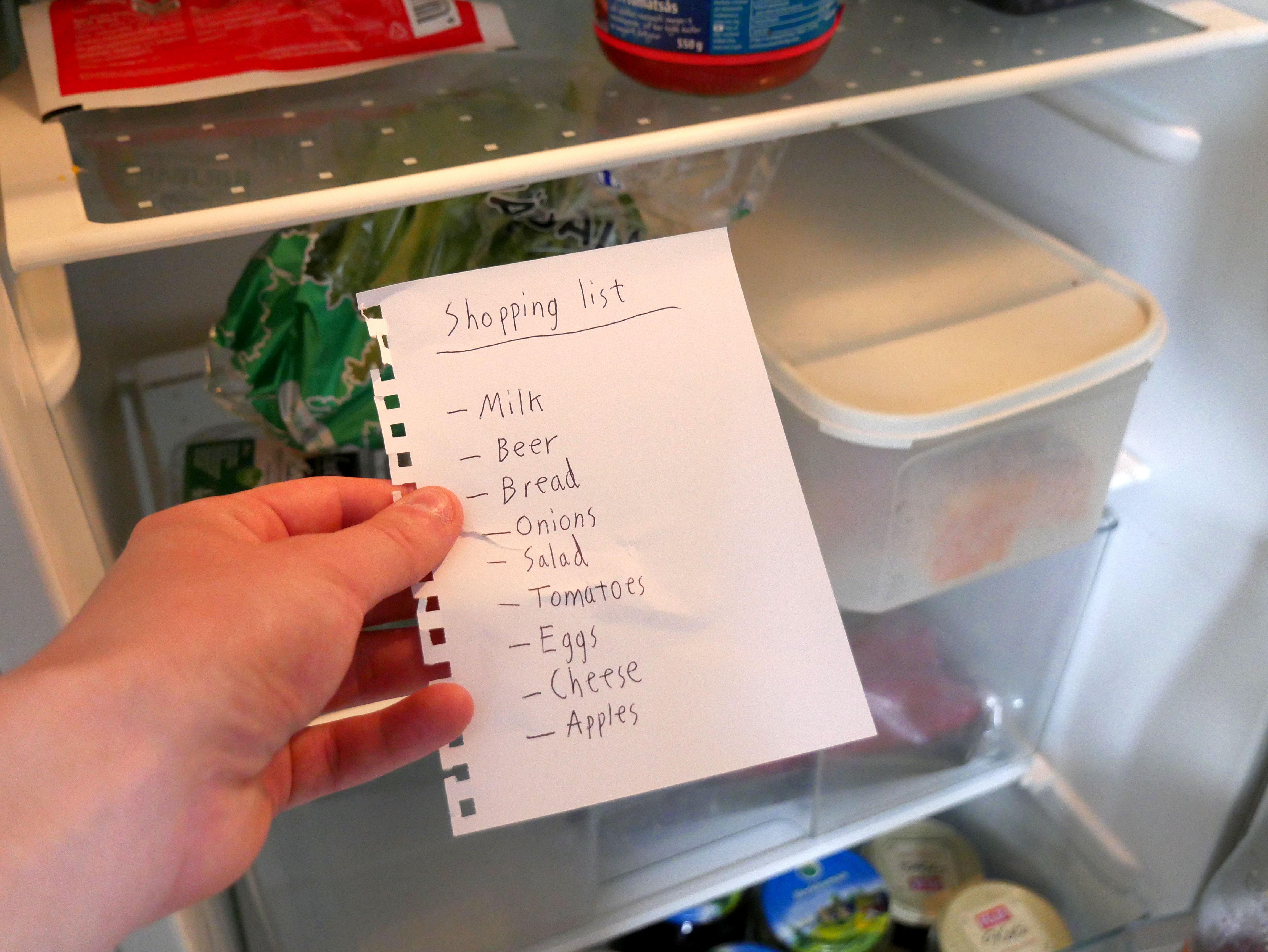
List of items to purchase

A shopping list is a list of items that an individual intends to purchase. Consumers often prepare grocery lists for purchases on their next store visit. There are surviving examples of Roman and Bible-era shopping lists.
The shopping list may take the form of a simple scrap of paper or a more elaborate format. Magnetic notepads are commonly used to maintain shopping lists within the household, often affixed to refrigerators or other metal surfaces. but any magnetic clip with scraps of paper can be used to achieve the same result. Additionally, certain shopping carts are equipped with small clipboards designed to hold written shopping lists during use.
Psychology
Use of shopping lists may be correlated to personality types. There are "demographic differences between list and non list shoppers; the former are more likely to be female, while the latter are more likely to be childless." Remembering a shopping list is a standard experiment in psychology. Shopping with a list is a commonly employed behavioral weight loss guideline designed to reduce food purchases and therefore food consumption. Studies are divided on the effectiveness of this technique.
Some studies show approximately 40% of grocery shoppers use shopping lists, while other studies show 61–67% use lists. Of the items listed, 80% were purchased. However, listed items only accounted for 40% of total items purchased. Use of shopping lists clearly impact shopping behaviour: "Written shopping lists significantly reduce average expenditure."
References
References
- (5 March 2001). "Roman shopping list deciphered".
- O'Grady, Cathleen. (2016-04-15). "Ancient shopping lists point to widespread Bible-era literacy". Ars Technica.
- Thomas, W., & Garland, R.. (November–December 1998). "Grocery shopping: Why take a list to the supermarket?". University of Otago.
- Giuliana Mazzoni. (1997). "Remembering the Grocery Shopping List: a Study on Metacognitive Biases". Appl Cogn Psychol.
- (1985). "Relationship of hunger, use of a shopping list and obesity to food purchases". Int J Obes.
- (1988). "Effects of a behavioral weight-loss program food purchases: instructions to shop with a list". Int J Obes.
- "thestar.com | The Star | Canada's largest daily".
- [http://smib.vuw.ac.nz:8081/www/ANZMAC1998/Cd_rom/Thomas102.pdf Art Thomas and Ron Garland, Grocery shopping: Why take a list to the supermarket?] {{webarchive. link. (2007-07-02)
- (1999). "Shopping Lists as an External Memory Aid for Grocery Shopping: Influences on List Writing and List Fulfillment". Journal of Consumer Psychology.
- (2004). "Grocery shopping: list and non-list usage". Marketing Intelligence & Planning.
- (1993). "Supermarket shopping lists: their effect on consumer expenditure". International Journal of Retail & Distribution Management.
This article was imported from Wikipedia and is available under the Creative Commons Attribution-ShareAlike 4.0 License. Content has been adapted to SurfDoc format. Original contributors can be found on the article history page.
Ask Mako anything about Shopping list — get instant answers, deeper analysis, and related topics.
Research with MakoFree with your Surf account
Create a free account to save articles, ask Mako questions, and organize your research.
Sign up freeThis content may have been generated or modified by AI. CloudSurf Software LLC is not responsible for the accuracy, completeness, or reliability of AI-generated content. Always verify important information from primary sources.
Report