From Surf Wiki (app.surf) — the open knowledge base
Shona language
Bantu language spoken in Zimbabwe and Mozambique
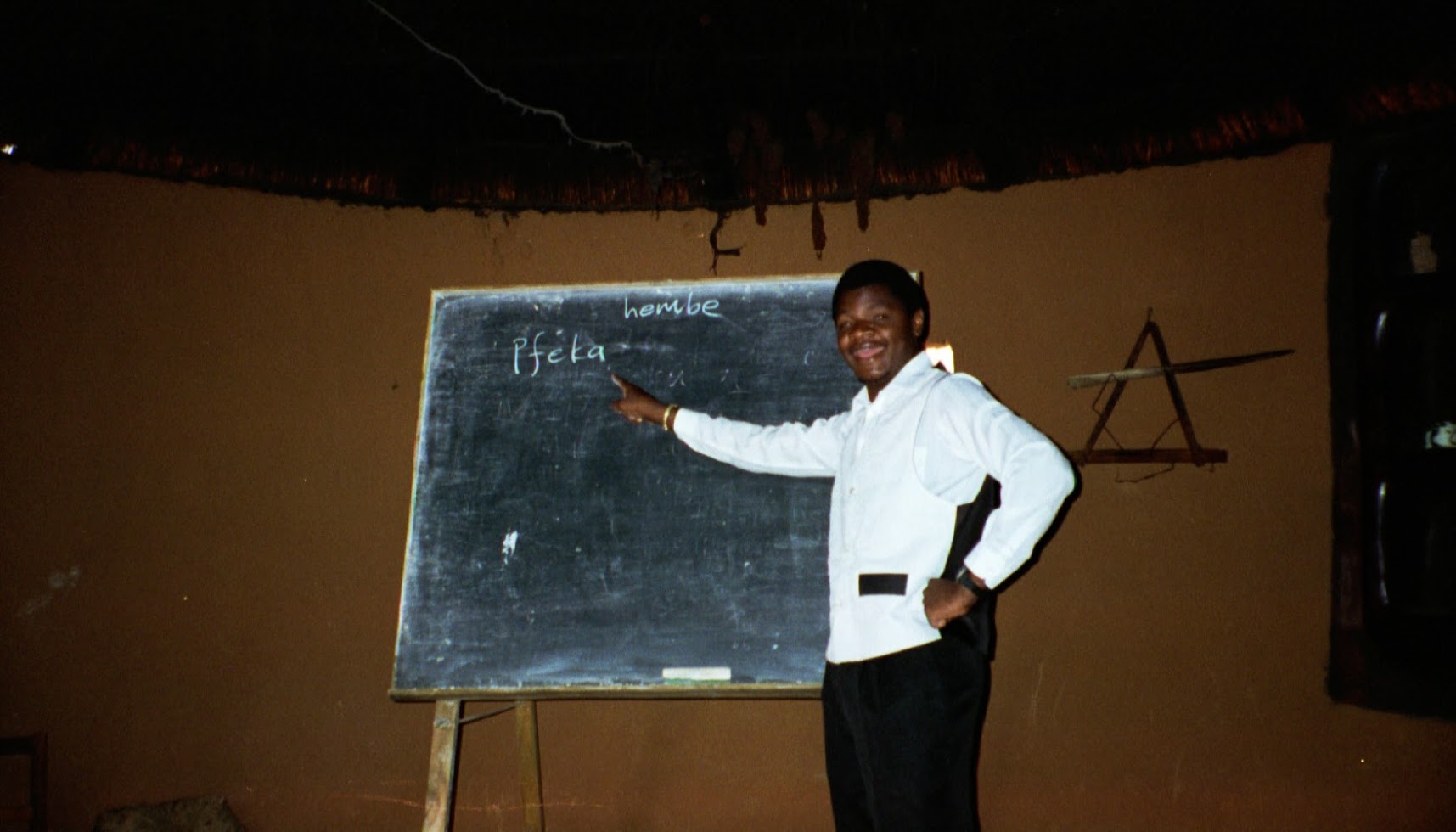
Bantu language spoken in Zimbabwe and Mozambique
| Field | Value | |
|---|---|---|
| name | Shona | |
| nativename | chiShona | |
| states | {{Plainlist | |
| * Mozambique<ref name | "e28" | |
| region | Southern Africa | |
| speakers | L1: million | |
| date | 2010–2023 | |
| ref | ||
| speakers2 | L2: million (2023) | |
| Total: million (2010–2023) | ||
| speakers_label | Speakers | |
| familycolor | Niger-Congo | |
| fam2 | Atlantic–Congo | |
| fam3 | Volta-Congo | |
| fam4 | Benue–Congo | |
| fam5 | Bantoid | |
| fam6 | Southern Bantoid | |
| fam7 | Bantu | |
| fam8 | Shona languages (S.10) | |
| dia1 | Korekore | |
| dia2 | Zezuru | |
| dia3 | Manyika | |
| dia4 | Karanga | |
| dia5 | Ndau | |
| iso1 | sn | |
| iso2 | sna | |
| lc1 | sna | |
| ld1 | Shona | |
| lc2 | twl | |
| ld2 | Tavara | |
| lc3 | mxc | |
| ld3 | Manyika | |
| lc4 | twx | |
| ld4 | Tewe (Manyika) | |
| glotto | core1255 | |
| glottoname | Core Shona | |
| glotto2 | tawa1270 | |
| glottoname2 | Tawara | |
| guthrie | S.7–10 | |
| nation | Zimbabwe | |
| minority | Mozambique | |
| lingua | 99-AUT-a = | |
| script | Latin script (Shona alphabet) | |
| Shona Braille | ||
| Ditema tsa Dinoko | ||
| notice | IPA | |
| ethnicity | Shona |
- Zimbabwe
- Mozambique Total: million (2010–2023) Shona Braille Ditema tsa Dinoko
Shona ( ; endonym: chiShona ) is a Bantu language spoken by the Shona people of Zimbabwe and Mozambique. The term is variously used to collectively describe all the Central Shonic varieties (comprising Zezuru, Manyika, Korekore and Karanga or Ndau) or specifically Standard Shona, a variety codified in the mid-20th century. By the broader definition, the language is spoken by over 14 million people.
The larger group of historically related languages—called Shona or Shonic languages by linguists—also includes Ndau (Eastern Shona) and Kalanga (Western Shona). In Guthrie's classification of Bantu languages, zone S.10 designates the Shonic group.
Similar languages
Shona is closely related to Ndau, Kalanga and is related to Tonga, Chewa, Tumbuka, Tsonga and Venda.
Ndau and Kalanga are former dialects of Shona but became independent languages in 2013 because their grammar is very slightly less similar to those of Korekore, Zezuru and Manyika.
Shona is also similar to Swahili and Tswana.
Instruction
Shona is a written standard language with an orthography and grammar that was codified during the early 20th century and fixed in the 1950s. In the 1920s, the Rhodesian administration was faced with the challenge of preparing schoolbooks and other materials in the various languages and dialects and requested the recommendation of South African linguist Clement Doke. The language is now described through monolingual and bilingual dictionaries (chiefly Shona – English).
The first novel in Shona, Solomon Mutswairo's Feso, was published in 1957. Subsequently, hundreds of novels, short story collections and poetry volumes in Shona have appeared. Shona is taught in the schools, but after the first few grades it is not the general medium of instruction for subjects other than Shona grammar and literature.
Varieties
The last systematic study of varieties and sub-varieties of the Central Shona dialect continuum was that done by Clement Doke in 1930, so many sub-varieties are no longer functional and should be treated with caution.
According to information from Ethnologue:
-
S14 Karanga (Chikaranga). Spoken in southern Zimbabwe, near Masvingo. It is also mostly spoken in the Midlands province, most notably in Gutu, Masvingo, Mberengwa and Zvishavane districts. Some people refer it as Vhitori. :Subdialects: Duma, Jena, Mhari (Mari), Ngova, Venda (not the Venda language), Govera.
-
S12 Zezuru (Chizezuru, Bazezuru, Bazuzura, Mazizuru, Vazezuru, Wazezuru). Spoken in Mashonaland east and central Zimbabwe, near Harare. The standard language. Standard Shona is based on Zezuru, and this has led to the decline and possible extinciton of other related languages now referred to as "Shona dialects". :Subdialects: Shawasha, Gova, Mbire, Tsunga, Kachikwakwa, Harava, Nohwe, Njanja, Nobvu, Kwazvimba (Zvimba).
-
S11 Korekore (Northern Shona, Goba, Gova, Shangwe). Spoken in northern Zimbabwe, Mvurwi, Bindura, Mt Darwin, Guruve, Chiweshe, Centenary. :Subdialects: Gova, Tande, Tavara, Nyongwe, Pfunde, Shangwe.
Languages with partial intelligibility with Central Shona, of which the speakers are considered to be ethnically Shona, are the S15 Ndau language, spoken in Mozambique and Zimbabwe, and the S13 Manyika language, spoken in eastern Zimbabwe, near Mutare specifically Chipinge. Ndau literacy material has been introduced into primary schools. Maho (2009) recognizes Korekore, Zezuru, Manyika, Karanga, and Ndau as distinct languages within the Shona cluster.
Phonology
Shona allows only open syllables. Consonants belong to the next syllable. For example, mangwanani ("morning") is syllabified as ; Zimbabwe is . Shona is written with a phonemic orthography, with only slightly different pronunciation or grammatical differences according to variety. Shona has two tones, a high and a low tone, but these tones are not indicated in the standard writing system.
Vowels
Shona has a simple 5-vowels system: . This inventory is quite common cross-linguistically, with similar systems occurring in Greek, Spanish, Tagalog, Swahili and Japanese. Each vowel is pronounced separately even if they fall in succession. For example, Unoenda kupi? ("Where do you go?") is pronounced .
Consonants
The consonant sounds of Shona are:
| Bilabial | Labio- | |||||||||||||||||||||||
|---|---|---|---|---|---|---|---|---|---|---|---|---|---|---|---|---|---|---|---|---|---|---|---|---|
| dental | Alveolar | Palatal | Velar | Glottal | plain | whistled | Plosive | voiceless | breathy | implosive | prenasalized | Affricate | voiceless | breathy | prenasalized | Fricative | voiceless | breathy | prenasalized | Nasal | plain | breathy | Trill | Approximant |
Whistled sibilants
Shona and other languages of Southern and Eastern Africa include whistling sounds, (this should not be confused with whistled speech).
Shona's whistled sibilants are the fricatives "sv" and "zv" and the affricates "tsv" and "dzv".
| Sound | example | translation | notes | sv | tsv | svw | zv | dzv | zvw | nzv | zvc | svc | |
|---|---|---|---|---|---|---|---|---|---|---|---|---|---|
| masvosvobwa | "shooting stars" | "sv" can be represented by , from the Extensions to the International Phonetic Alphabet | |||||||||||
| masvosve | "ants" | ||||||||||||
| tsvaira | "sweep" | (Standard Shona) | |||||||||||
| masvavembasvwi | "schemer" | (Shangwe, Korekore dialect) | |||||||||||
| zvizvuvhutswa' | "gold nuggets" | (Tsunga, Zezuru dialect) | |||||||||||
| akadzva | "he/she was unsuccessful" | ||||||||||||
| huzvweverere | "emotions" | (Gova, Korekore dialect) | |||||||||||
| nzvenga | "to dodge" | (Standard Shona) | |||||||||||
| muzvcazi | "the Milky Way" | Dental clicks. Only found in Ngova, Karanga dialect. | |||||||||||
| chisvcamba | "tortoise" |
Whistled sibilants stirred interest among the Western public and media in 2006, due to questions about how to pronounce the name of Morgan Tsvangirai, the leader of the Movement for Democratic Change – Tsvangirai in Zimbabwe. The BBC Pronunciation Unit recommended the pronunciation "chang-girr-ayi" .
Special characters
- ' - the apostrophe can be used after the character "n" to create a sound similar to the "-ng" from the English word "ping". An example word is n'anga, which is the word for a traditional healer.
Alphabet
- A - a -
- B - ba -
- Bh - bha -
- Ch (Č) - cha -
- D - da -
- Dh (Ď) - dha -
- E - e -
- F - fa -
- G - ga -
- H - ha -
- I - i -
- J - ja -
- K - ka -
- M - ma -
- N - na -
- Nh (Ň) - nha -
- O - o -
- P - pa -
- R - ra -
- S - sa -
- Sh (Š) - sha -
- T - ta -
- U - u -
- V - va -
- Vh - vha -
- W - wa -
- Y - ya -
- Z - za -
- Zh (Ž) - zha - The letters "L", "Q", and "X" are not used in Shona and are used only in loanwords.
Letter combinations

- bv -
- dz -
- dzv -
- dy -
- mb -
- mbw -
- mh -
- mv -
- nd -
- ng -
- nj -
- ny -
- nz -
- nzv -
- pf -
- sv -
- sw -
- ts -
- tsv -
- ty -
- zv -
Old alphabet
From 1931 to 1955, Unified Shona was written with an alphabet developed by linguist Clement Martyn Doke. This included these letters:
:ɓ (b with hook), :ɗ (d with hook), :ŋ (n with leg), :ȿ (s with swash tail), :ʋ (v with hook), :ɀ (z with swash tail).
In 1955, these were replaced by letters or digraphs from the basic Latin alphabet. For example, today is used for and is used for .
Grammar
Noun classes (mupanda)
Shona nouns are grouped by noun class (mupanda) based on:
- Meanings (Zvaanoreva) e.g. words found in class 1 and 2 describe a person: munhu ("person") is in mupanda 1 and musikana ("girl") is in mupanda 2.
- Prefix (Chivakashure) e.g. words in class 1 have prefix mu-, class 8 zvi-, class 10 dzi-, class 11 ru-, etc. Empty prefix units refer to words that do not require a prefix
- Singular and plural forms (Uwandu neushoma) e.g. words found in class 8 are plurals of class 7: zvikoro ("schools") in class 8 is the plural form of chikoro ("school") in class 7.
- Agreement (Sungawirirano) e.g. words in class 5 have accordance of the marker -ri- with pronouns and modifiers: garwe iri ("this crocodile"), dombo iri ("this stone"), gudo iri ("this baboon"); iri means 'this'.
| Noun class | Muenzaniso weIzwi | ||||
|---|---|---|---|---|---|
| ("word example") | Word construction | ||||
| Prefix+body=word | English translation | Prefix | Body | ||
| 1 | mu | mukomana | mu- | -komana | "boy" |
| 1a | – | baba | -baba | "father" | |
| 2 | va | vakomana | va- | -komana | "boys" |
| 2a | va | vasahwira | va- | -sahwira | "best friend" |
| 2a | vana | vanatezvara | vana- | -tezvara | "father-in-law" |
| 2b | a | atete | a- | -tete | "aunt" |
| 3 | mu | muti | mu- | -ti | "tree" |
| 4 | mi | miti | mi- | -ti | "trees" |
| 5 | ri | rize | ri- | -ze | "scorpion" |
| 6 | ma | marize | ma- | -ze | "scorpions" |
| 7 | chi | chingwa | chi- | -ngwa | "bread" |
| 8 | zvi | zvingwa | zvi- | -ngwa | "bread" |
| 9 | i | imba | i- | -mba | "house" |
| 10 | dzi | dzimba | dzi- | -mba | "houses" |
| 11 | ru | rwizi | ru- | -izi | "river" |
| 12 | ka | kambwa | ka- | -mbwa | "that little dog" |
| 13 | tu | tumbwa | tu- | -mbwa | "those little dogs" |
| 14 | u | upfu | u- | -pfu | "mealie meal" |
| 15 | ku | kuenda | ku- | -enda | "going" |
| 16 | pa | pamba | pa- | -mba | "home" |
| 17 | ku | kumusha | ku- | -musha | "rural home" |
| 17a | – | zasi | -zasi | "below" | |
| 18 | mu | mumunda | mu- | -munda | "in the farm" |
| 19 | svi | svimbudzi | svi- | -mbudzi | "goat" |
| 21 | zi | zigomana | zi- | -gomana | "big boy" |
Sample text in Shona
Vanhu vese vanoberekwa vakasununguka uyewo vakaenzana pahunhu nekodzero dzavo. Vanhu vese vanechipo chokufunga nekuziva chakaipa nechakanaka saka vanofanira kubatana nomweya wohusahwira.
Translation
All human beings are born free and equal in dignity and rights. They are endowed with reason and conscience and should act towards one another in a spirit of brotherhood.
(Article 1 of the Universal Declaration of Human Rights)
References
Bibliography
- Biehler, E. (1950) A Shona dictionary with an outline Shona grammar (revised edition). The Jesuit Fathers.
- Brauner, Sigmund (1995) A grammatical sketch of Shona : including historical notes. Köln: Rüdiger Koppe.
- Carter, Hazel (1986) Kuverenga Chishóna: an introductory Shona reader with grammatical sketch (2nd edition). London: SOAS.
- Doke, Clement M. (1931) Report on the unification of the Shona dialects. Stephen Austin Sons.
- Mutasa, David (1996) The problems of standardizing spoken dialects: the Shona experience, Language Matters, 27, 79
- Lafon, Michel (1995), Le shona et les shonas du Zimbabwe, Harmattan éd., Paris
- D. Dale:
- Basic English – Shona dictionary, Afro Asiatic Languages Edition, Sept 5, 2000,
- Duramazwi: A Shona - English Dictionary, Afro Asiatic Languages Edition, Sept 5, 2000,
References
- {{e28. sna
- Haberland, Eike. (May 3, 1974). "Perspectives Des Études Africaines Contemporaines: Rapport Final D'un Symposium International". Deutsche UNESCO-Kommission.
- Laurie Bauer, 2007, ''The Linguistics Student's Handbook'', Edinburgh
- Ryan K. Shorsed. "Just put your lips together and blow? The whistled fricatives of Southern Bantu". University of California.
- Clement M. Doke. (1932). "Report on the unification of Shona dialects". [[JSTOR]].
- Ndambakuwa, Victor. "Shona word n'anga in the Shona Dictionary".
- "Dzidzai Shona pa Kombiyuta - The Shona Alphabet".
This article was imported from Wikipedia and is available under the Creative Commons Attribution-ShareAlike 4.0 License. Content has been adapted to SurfDoc format. Original contributors can be found on the article history page.
Ask Mako anything about Shona language — get instant answers, deeper analysis, and related topics.
Research with MakoFree with your Surf account
Create a free account to save articles, ask Mako questions, and organize your research.
Sign up freeThis content may have been generated or modified by AI. CloudSurf Software LLC is not responsible for the accuracy, completeness, or reliability of AI-generated content. Always verify important information from primary sources.
Report