From Surf Wiki (app.surf) — the open knowledge base
Shoeburyness
Suburb of Southend-on-Sea, Essex, England

Suburb of Southend-on-Sea, Essex, England
| Field | Value |
|---|---|
| official_name | Shoeburyness |
| country | England |
| region | East of England |
| static_image_name | File:Shoebury Ness from the air - geograph.org.uk - 3069061.jpg |
| static_image_caption | Shoeburyness from the air |
| population | 22,275 |
| population_ref | (2018 mid-census) |
| os_grid_reference | TQ941851 |
| label_position | top |
| post_town | SOUTHEND-ON-SEA |
| postcode_area | SS |
| postcode_district | SS3 |
| dial_code | 01702 |
| constituency_westminster | Southend East and Rochford |
| unitary_england | Southend-on-Sea |
| lieutenancy_england | Essex |
| coordinates |
Shoeburyness ( ), or simply Shoebury, is a coastal town in the City of Southend-on-Sea, in the ceremonial county of Essex, England; it lies 3 mi east of the city centre. It was formerly a separate town until it was absorbed into Southend in 1933.
In Saxon times, the area was called Shoebury. Sometime between 1086 and the thirteenth century, it was divided into two parishes: North Shoebury and South Shoebury. The two villages remained small rural settlements until the 1850s, when a barracks was established in the parish of South Shoebury, later becoming MoD Shoeburyness. A garrison town, known as Shoeburyness, grew around the barracks, taking its name from the ness on the coast at the southern end of the parish. Shoeburyness railway station opened in 1884, as the eastern terminus of the London, Tilbury and Southend Railway.
The parish of South Shoebury was made an urban district in 1894, which was renamed Shoeburyness in 1895. The urban district of Shoeburyness and parish of North Shoebury were both abolished in 1933, being absorbed into the county borough of Southend-on-Sea. Development during the twentieth century saw the formerly separate settlements of Shoeburyness and North Shoebury absorbed into the built-up area of Southend.
History
The first record of occupation in Shoebury has been found from the Mesolithic period, with Neolithic and Bronze Age stone tools and Beaker pottery having also been discovered.
The Saxons re-established a settlement in the 6th century, which at this point that the name Shoebury, or in Anglo-Saxon Scobrih, or in Danish, Scabivig was first documented. A Camp was built by the Dane Hastein in circa 894, but little remains as the Artillery Barracks were built over part of the site.
The parish church of South Shoebury, St. Andrew was originally constructed in the 12th century under the control of Prittlewell Priory, with the West Tower being added in the 15th century and the South porch in the 16th century. The church was restored during the 19th century by renown architect Sir Charles Nicholson. The manor house, known as South Shoebury Hall, is a medieval timber-framed house with an 18th-century brick frontage and other alterations. South Shoebury has also been called under is parish name of Shoebury Magna (in Latin Magna Shoberi) or Greater Shoebury.

South Shoebury was prone to flooding and Marsh fever, and in 1530 the parish had to sell St Andrew's bells to pay for repairs to the sea defences. and in 1899 the land owner, Colonel Burges handed the Common to the Shoeburyness Urban District Council for the recreation and benefit of the inhabitants of South Shoebury and others.
By 1851, the population of South Shoebury stood at 158, but just ten years later the census had shown the population had grown to 1,502. The growth in population was caused by the opening of nearby brickfields by the Knapping family, and the construction of the Artillery Barracks that was the start of Shoebury Garrison. Prior to the Garrison's arrival the land had been home to several warrens, after the Normans had introduced rabbits to the area. In comparison, North Shoebury's population in 1894 was just 184. The village of South Shoebury had been built up around the High Street and Rampart Street, but it was not until the 1920s and 1930s that the town grew, with the area known as Cambridge Town being established. The area was named after a local public house called the Duke of Cambridge. The town was described by the military historian Patrick Barry as
It was home to the last recorded case of indigenous malaria in the British Isles during the 1930s.
The brickfields use to run two narrow railways, that crossed the High Street without a level crossing, to transfer their goods to Thames Barges at East Beach, which took the bricks to London, which up to World War II brought refuse back that was used to power the brick kilns, pumping out nasty fumes. The council was created in 1894, separating the civil and ecclesiastical side of the parish, until it was absorbed into Southend Borough in 1933 which also absorbed the former North Shoebury parish.
In between the two World Wars, Shoeburyness became a popular holiday resort, with a blacksmiths sitting next to the beach until the 1930s being a regular source of entertainment. In 1928, the Southend Recorder reported that tents stretched from the Common to Thorpe Hall Avenue, while in the same year local landmark Uncle Toms Cabin was built on the Common.
At the beginning of the Second World War, the depositing of a magnetic ground mine in the mud at the mouth of the Thames by the Luftwaffe was observed at Shoeburyness. Various sinkings of ships near the English coast in the preceding months were thought by many to be due to U-boat torpedoes, though the Admiralty suspected magnetic mines were being used. The heroic recovery of an intact mine on 23 November 1939, by Lieutenant Commanders Ouvry and Lewis from HMS Vernon made it possible for the Navy to study it and devise countermeasures to neutralise it; among these were the degaussing cables installed in merchant ships in Allied and British fleets, and, of course, wooden minesweepers. East Beach is the site of a defence boom, built in 1944, to prevent enemy shipping and submarines from accessing the River Thames. This replaced an earlier, similar boom built 100 yd east.
After the war, artillery and other regiments continued to be garrisoned at Shoebury until 1976 when the garrison headquarters closed.
Up and to the early 1980s, the Shoeburys were still two distinct villages, separated by farm land. Before any development took place, Essex County Council Archaeology Section of the Planning Department and Southend Museum started the North Shoebury Project in 1980 under the guidance of John Wymer, whose digs established that the area had continuous human habitation from the Mesolithic period. The planned store became an Asda supermarket, which opened in 1981, while one of the former farm barns became the Parsons Barn public house. This was joined by the Bishopsteignton housing development, that was completed between 1981 and 1988. The site was the former farm of listed building, the White House, which had been sold in 1919 to Southend Estates Company. Following the closure of the Old Ranges in 1998 the old garrison land and buildings were sold, and in 2000 redevelopment of the site to housing started.
Description
_girls_at_the_Royal_Artillery_Experimental_Unit,_at_Shoeburyness_in_Essex,_using_the_Window_Position_Finder_to_sight_shell_bursts_in_the_air_or_water,_1943._TR744.jpg)
Shoeburyness sits on the Thames Estuary and is at the far east of the district of Southend-on-Sea, bordered to the west by Thorpe Bay at Maplin Way and to the North by Great Wakering which is part of Rochford District.
The MoD Shoeburyness site at Pig's Bay is situated nearby and the facility is run by the company QinetiQ. The Garrison site is now part of a conservation area set up by Southend City Council.
Shoeburyness has two beaches: East Beach and Shoebury Common Beach, both Blue Flag beaches.

East Beach is a sandy/pebbly beach around a quarter of a mile long and is sandwiched between the Pig's Bay MoD site and the former Shoeburyness Artillery barracks. Access to the large gravel/grass pay-and-display car park is via Rampart Terrace. The beach is closed when there is live fire at the MOD site.

Shoebury Common Beach is bounded to the east by the land formerly occupied by the Shoeburyness Artillery barracks and by Thorpe Bay to the west. Shoebury Common Beach is the site of many beach huts located on both the promenade and the beach. A Coastguard watch tower at the eastern end of the beach keeps watch over the sands and mudflats while listening out for distress calls over the radio. A cycle path skirts around the sea-front linking the East Beach to Shoebury Common Beach, and thence into Southend and onto Chalkwell, in Westcliff-on-Sea.

Shoeburyness does not have an actual town centre. There are parades of shops in West Road, Ness Road and The Renown. The town is served by two supermarkets, Asda and Lidl.
Shoeburyness has several industrial estates, with Towerfield Road, Vanguard Way and Campfield Road serving the area.
The town is served by five doctors surgeries and three dentists, with its nearest hospital located at Southend University Hospital.
Governance
There is only one tier of local government covering Shoeburyness, being the unitary authority of Southend-on-Sea City Council. Shoeburyness is split into West Shoebury and Shoeburyness wards, which are both represented by three councillors.
Shoebury was listed in the Domesday Book of 1086, having a population of 33 and lying in the Rochford Hundred. When parish and district councils were established in December 1894, the parish of North Shoebury was included within the Rochford Rural District whilst the parish of South Shoebury was made an urban district. One of the first actions of the new urban district council was to request a change in the council's name from South Shoebury to Shoeburyness. The change of name took effect in January 1895. The name of the civil parish containing the urban district continued to be called "South Shoebury". In 1931 the parish had a population of 6720. In 1933 both Shoeburyness Urban District Council (which managed the South Shoebury civil parish) and North Shoebury civil parishes were abolished and absorbed into the County Borough of Southend on Sea, except for a more rural eastern part of the old North Shoebury parish which was transferred to the parish of Great Wakering.
Shoeburyness is part of the Southend East and Rochford constituency; the current serving MP is Bayo Alaba.
Climate
Shoeburyness is known to be the driest town in England, with an average precipitation of 527mm/20.8in per annum. For comparison, New York City receives well above twice this amount.
|Jan record high C = 15.5 |Feb record high C = 18.2 |Mar record high C = 19.7 |Apr record high C = 25.4 |May record high C = 28.1 |Jun record high C = 31.0 |Jul record high C = 33.0 |Aug record high C = 33.2 |Sep record high C = 28.6 |Oct record high C = 28.0 |Nov record high C = 18.0 |Dec record high C = 15.6 |year record high C = 33.2 |Jan record low C = -11.6 |Feb record low C = -9.2 |Mar record low C = -5.5 |Apr record low C = -5.7 |May record low C = -0.7 |Jun record low C = 2.5 |Jul record low C = 5.9 |Aug record low C = 5.3 |Sep record low C = 2.2 |Oct record low C = -4.3 |Nov record low C = -6.0 |Dec record low C = -9.1 |year record low C = -11.6
Transport
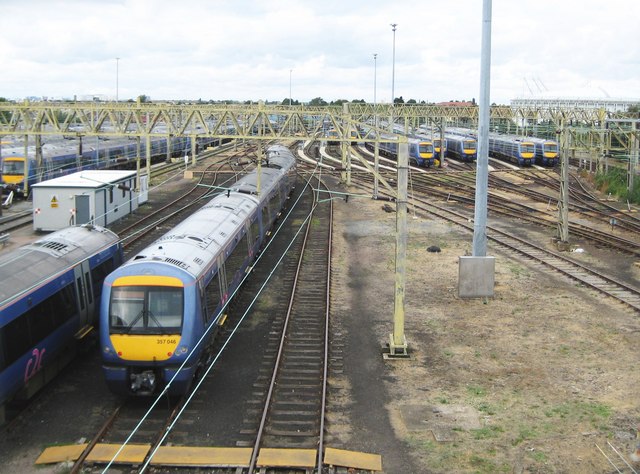
The eastern terminus of the London, Tilbury and Southend line is at Shoeburyness railway station. c2c operates regular services to in the City of London, via and . Shoeburyness Depot is the easternmost railway depot on the line.
The A13 links the town with east London; it provides a direct link to the M25 motorway.
Shoeburyness is served by Arriva Herts & Essex, First Essex and Stephensons of Essex bus companies; routes connect the town with Southend, Leigh-on-Sea and Rayleigh.
Education
Shoeburyness High School is the only secondary school in the town and includes a sixth form. Primary education is provided by St George's Catholic Primary School, Friars Primary School, Hinguar Primary School & Nursery, Richmond Avenue Primary and Nursery School, and Thorpedene Primary School & Nursery. The latter four schools also offer nursery education.
Leisure
Shoeburyness Leisure Centre in Delaware Road provides a swimming pool, gym and indoor courts. Shoeburyness formerly had an operating cinema, The Palace in Ness Road which opened in 1913 and closed in 1955.
Gunners Park and Shoebury Ranges is a 25-hectare nature reserve managed by the Essex Wildlife Trust (EWT). Other parks include Shoeburyness Park, Friars Park, Bishopsteignton Park, Shoebury Common and St. Mary's Nature Reserve. A skate park is located in Anson Chase.
Conservation
Shoebury Garrison is one of Southend's 14 listed conservation areas, being first designated in 1981 before a further extension in 2004.{{cite web|url=https://www.britishlistedbuildings.co.uk/england/shoeburyness-ward-southend-on-sea|title= Listed Buildings in Shoeburyness Ward, Southend-on-Sea – British Listing Buildings.co.uk|access-date=19 October 2017}} Historic England have listed a total of 44 properties between Grade II and Grade II*, with both parish churches amongst this list. The majority of the listings are on the former garrison site, including the Cart and Wagon Shed heritage and community centre.
Pig's Bay

Pig's Bay is a coastal area in the east of Shoeburyness. The main entrance to the site is at Blackgate Road, Shoeburyness. This is also the gateway to the island of Foulness, the third largest island off the coast of England.
The bay is the site of MoD Shoeburyness, a military installation established in 1849 and which is still used as a firing range. The Bay is home to Shoeburyness Boom, a World War II and Cold War defensive boom that is a Scheduled Monument.
One of the other uses of the site is the storage and scrapping of old railway vehicles. It has its own private railway network, stretching for around six miles; it is linked to one of the sidings at Network Rail's Shoeburyness c2c electric multiple unit depot by means of two unmanned level crossings across Shoeburyness High Street and Blackgate Road respectively.
The front Class 43 locomotive of the passenger train involved in the 1997 Southall rail crash – when an InterCity 125 collided with a freight train, killing seven people – was scrapped here. It was cut up by Serco three years after the incident, once the inquiry had been completed.
In popular culture
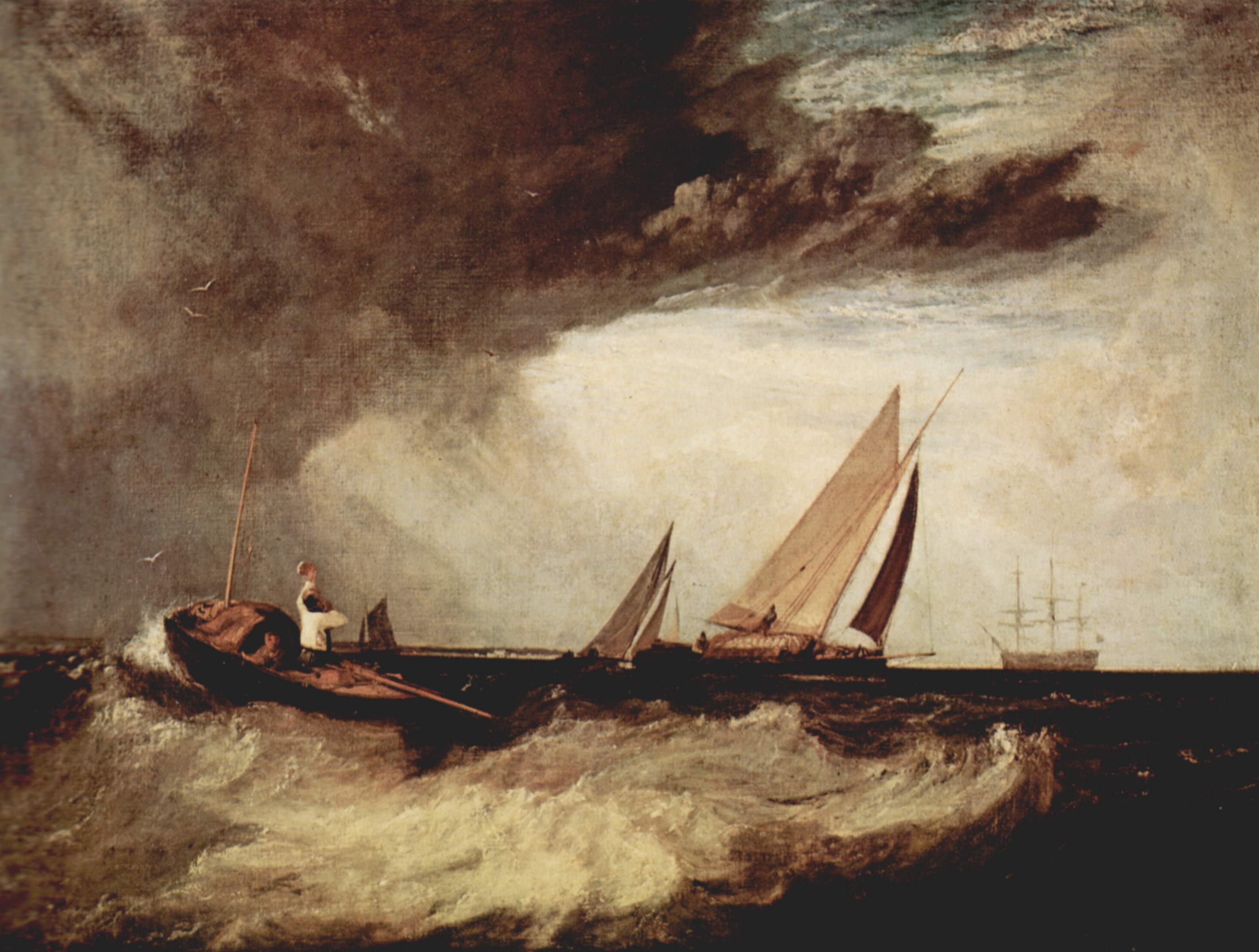
The English painter J.M.W. Turner depicted the fishermen of Shoeburyness in his oil painting Shoeburyness Fishermen Hailing a Whitstable Hoy. The painting was exhibited in 1809, and was part of a series Turner made of the Thames estuary between 1808 and 1810. The painting has been in the collection of the National Gallery of Canada since 1939.
In the fifth Temeraire novel Victory of Eagles (2008) by Naomi Novik, Shoeburyness is the setting of a fictitious climactic battle in which Wellesley and Nelson drive Napoleon out of England in early 1808.
Shoeburyness is home to "the commuter", protagonist in the eponymous song and music video by Ceephax Acid Crew.
Shoeburyness is one of the better-known entrants in Douglas Adams' and John Lloyd's 1990 spoof dictionary The Deeper Meaning of Liff. It is defined as "the vague feeling of uncomfortableness caused by sitting on a bus seat still warm from someone else's bottom."
Shoeburyness is referenced in the Billy Bragg song "A13 Trunk Road to the Sea" and in the Ian Dury song "Billericay Dickie".
Shoeburyness was featured in the Viral Marketing for the Universal Pictures 2022 American science fiction action film sequel Jurassic World Dominion, with a number of the featured videos on the DinoTracker website filmed in the area doubling for locations around the world.
Notable people
- Larry Gains (1900 – 1983), Canadian black boxer, former World Coloured Heavyweight Champion, lived and trained at Shoebury Hotel
- Tony Holland (1940–2007), BBC screenwriter, was born in Shoeburyness
- David Nelson (VC) (1887-1918), student and instructor at the Royal Artillery School of Gunnery, Shoeburyness
- Godfrey Rampling (1909–2009), English athlete, resident.
References
References
- (1923). "An Inventory of the Historical Monuments in Essex, Volume 4, South east". His Majesty's Stationery Office.
- (1848). "White's Directory of Essex".
- "History - Domesday Days".
- "Shoebury".
- Archbishop of Canterbury. (1956). "Registrum Roberti Winchelsey Cantuariensis Archiepiscopi A. D. 1294-1313 Volume 52".
- Philip Benton. (1888). "The History of Rochford Hundred, (together with the Parishes Comprised Within the Union,)". Unicorn Press.
- "Is the Peace, Tranquillity and Beauty of Shoebury Common under Threat from the Council's Proposals?".
- Ruth Stockley. (2013). "In the Matter of an Application to Register Land Known as Shoebury Common Road, Shoebury, Southend-On-Sea, Essex as a Town or Village Green".
- (19 April 2021). "The almost forgotten Manor – Suttons".
- "GB Historical GIS / University of Portsmouth, History of South Shoebury, in Southend on Sea and Essex. Map and description".
- Judith Williams. (1 December 2006). "Shoeburyness. A History". Phillimore.
- (1894–1895). "North Shoebury".
- The Federation of Essex Women's Institute. (19 October 1988). "The Essex Village Book". Published jointly by Countryside Books and the FEWI.
- Patrick Barry. (1865). "Shoeburyness and the guns: a philosophical discourse".
- Malcolm E. Falkus. (1 Jan 1988). "Always under Pressure: A History of North Thames Gas since 1949". Springer.
- "Shoeburyness Urban District Council".
- Winston S. Churchill, ''The Second World War'', vol. 1, ''The Gathering Storm'' (Boston: Houghton Mifflin, 1948), p. 505.
- Simpson, James. (23 November 2014). "How Britain Beat Germany's Magnetic Sea Mines".
- Gordon, Dee. (3 February 2014). "The Secret History of Southend-on-Sea". History Press.
- Ross Davies. (2012). "Retail and Commercial Planning (RLE Retailing and Distribution)". Routledge.
- (1995). "Excavations at North Shoebury Settlement and Economy in South-east Essex, 1500BC-AD1500". Essex County Council Archaeology Section, Planning Department in conjunction with the Scole Archaeological Committee.
- (1982). "Archaeological Digs in Essex". Essex Journal.
- "Parsons Barn".
- Ian Yearsley. (15 April 2016). "Southend in 50 Buildings".
- "MOD Shoeburyness". Qinetiq.
- Troy Planning & Design. (November 2020). "AREA PROFILE: SHOEBURYNESS".
- "MOD Shoeburyness". Qinetiq.
- "Blue flags awarded to a dozen sunny Anglia beaches". ITV News.
- "Shoebury East Beach".
- "Shoebury Common Beach".
- (30 December 2022). "HM Coastguard Southend respond to Shoebury submerged car".
- "WHERE TO RIDE IN SOUTHEND".
- (10 November 2021). "Shoeburyness: West Road Christmas lights switch on". Evening Echo.
- "Commercial Opportunity - Ness Road, Shoeburyness".
- "THE RENOWN, SHOEBURYNESS".
- "Asda Shoeburyness".
- (4 February 2021). "Lidl reveals opening date for new store on Campfield Road, Shoebury". Evening Echo.
- "Southend Local Plan. 3.8 Shoeburyness".
- "Ward Maps".
- Ian Yearsley. (15 September 2022). "Secret City of Southend".
- (1895). "Annual Report of the Local Government Board".
- (18 January 1895). "Shoeburyness Urban District Council: Change of name". Essex County Chronicle.
- "Relationships and changes South Shoebury CP/AP through time". A Vision of Britain through Time.
- "Population statistics South Shoebury CP/AP through time". [[A Vision of Britain through Time]].
- Yearsley. I. (2016). "Southend in 50 Buildings".
- link. (1 October 2007 , visionofbritain.org.uk; accessed 18 November 2017.)
- https://secretldn.com/driest-place-in-the-uk/#:~:text=Well%2C%20rather%20ironically%2C%20the%20driest,the%201991-2020%20climate%20period. 26 August 2024
- "Shoeburyness Climatic Averages 1991–2020". Met Office.
- "Monthly Temperature Extremes".
- (18 May 2025). "Timetable". c2c.
- "Shoeburyness bus services".
- "The Best Primary Schools in Shoeburyness".
- "The Best Schools in SS3 (Southend-on-Sea)".
- "Shoeburyness Leisure Centre".
- "Palace Cinema".
- "Gunners Park and Shoebury Ranges". Essex Wildlife Trust.
- "Shoebury Garrison Conservation Area – Southend-on-Sea Borough Council".
- "Shoeburyness".
- "Pig's Bay, Southend on Sea".
- (12 February 1957). "Explosions, Shoeburyness And Foulness (Damage)".
- "Cold War defence boom, Pig's Bay, Shoeburyness".
- "Passenger Carriages Pressed Steel Co. Class 117 DMU Trailer Composite with Lavatory (TCL)".
- (1960). "The Shoeburyness Military Tramways Byelaws". Her Majesty's Principal Secretary of State for the War Department.
- "QXA DB 977144 - MTA Brake Force Runner". Departmentals.com.
- [http://www.gallery.ca/en/see/collections/artwork.php?mkey=1897 Shoeburyness Fishermen Hailing a Whitstable Hoy, before 1809], National Gallery of Canada website; retrieved 18 June 2013.
- [http://www.tate.org.uk/art/artworks/turner-shoeburyness-fisherman-hailing-a-whitstable-hoy-the-pilot-boat-the-red-cap-tw0879 Shoeburyness Fisherman Hailing a Whitstable Hoy], Tate.org.uk; retrieved 18 June 2013.
- (18 May 2016). "The Temeraire Reread: Victory of Eagles".
- [https://www.youtube.com/watch?v=ZHFL8WY-_cI#t=3m29s "The Commuter"] by Ceephax Acid Crew (2010) on YouTube; accessed 18 November 2017.
- "Billy Bragg – A13 Trunk Road to the Sea".
- "Ian Dury – Billericay Dickie".
- "Jurassic World Dominion Dinotracker".
- (19 May 2022). "The residents of Shoeburyness, U.K. ignored DPW warnings of growing prehistoric predator activity in their area. Unfortunately, their pets paid the price.".
- England, Sophie. (25 June 2022). "Jurassic World marketing campaigns filmed in Southend".
- (3 October 2024). "Shoebury Hotel blue plaque plans for boxer Larry Gains". Evening Echo.
- Ace, Juliet. (3 December 2007). "Tony Holland". The Guardian.
- "Personnel".
- (20 October 2023). "Long-awaited centre opens near Southend".
- Southend Borough Council. (5 March 2022). "Southend-on-Sea: Shoebury Garrison Conservation Area Appraisal".
This article was imported from Wikipedia and is available under the Creative Commons Attribution-ShareAlike 4.0 License. Content has been adapted to SurfDoc format. Original contributors can be found on the article history page.
Ask Mako anything about Shoeburyness — get instant answers, deeper analysis, and related topics.
Research with MakoFree with your Surf account
Create a free account to save articles, ask Mako questions, and organize your research.
Sign up freeThis content may have been generated or modified by AI. CloudSurf Software LLC is not responsible for the accuracy, completeness, or reliability of AI-generated content. Always verify important information from primary sources.
Report