From Surf Wiki (app.surf) — the open knowledge base
Shivajinagar, Pune

| Field | Value |
|---|---|
| name | Shivaji Nagar |
| other_name | Bhambwade, Bhamburde |
| settlement_type | Neighbourhood |
| image_skyline | {{Photomontage |
| photo1a | WIP of facade of Shivajinagar metro station in Pune.jpg |
| photo2a | COEP Main building.JPG |
| photo2b | Fergusson College Main.jpg |
| spacing | 2 |
| space | 2 |
| position | center |
| color_border | white |
| color | white |
| size | 270 |
| foot_montage | Clockwise from top: Shivaji Nagar Metro Station, Fergusson College, COEP Building. |
| pushpin_map | |
| pushpin_label_position | right |
| pushpin_map_caption | Location in Maharashtra, India |
| coordinates | |
| subdivision_type | Country |
| subdivision_name | India |
| subdivision_type1 | State |
| subdivision_type2 | District |
| subdivision_name1 | Maharashtra |
| subdivision_name2 | Pune |
| established_title | |
| government_type | Pune Municipal Corporation |
| unit_pref | Metric |
| population_density_km2 | auto |
| demographics_type1 | Languages |
| demographics1_title1 | Official |
| timezone1 | IST |
| utc_offset1 | +5:30 |
| postal_code_type | PIN |
| postal_code | 411 005 |
| registration_plate | MH 12, MH 14 |
| blank1_name_sec1 | Lok Sabha Constituency |
| blank1_info_sec1 | Pune |
| blank2_name_sec1 | Vidhan Sabha Constituency |
| blank2_info_sec1 | Shivajinagar |
| demographics1_info1 | Marathi & English |
Shivajinagar (also known as Bhambwade, Bhamburde) is an inner suburb of the city of Pune, India.
History
Shivajinagar has a very long history, with the 8th-century, Rashtrakuta-era Pataleshwar cave temple being the oldest manmade structure in Pune.
The neighbourhood was earlier a village known as Bhambwade, with the name changing over time to Bhamburde. During the Maratha and British periods, Bhamburde's Patil (Village chief) came from the Shirole Patil family, members of which also served in the Maratha Army. In the Peshwa era, a handmade paper factory was located in the village.
Later, in the 19th century, Jangali Maharaj, a Sufi saint revered mainly by Hindus, settled down here. A temple with his tomb (samadhi) is located today in Shivajinagar and a major road in the locality is named after him.
The Inamdar and Patil of Bhamburde, Rajaram Naroji Shirole Patil, leased 37 acres of land at the foot of Hanuman Tekdi (hill) for 99 years to the Deccan Education Society in 1885. The society's best-known institution, Fergusson College, was built on this land.
In the early 20th century, Wadarvadi, one of the oldest and biggest slums in Pune today, came up on unused land belonging to the Shirole Patil family close to the Chaturshrungi Temple and at the foot of Hanuman Tekdi, near today's Senapati Bapat Road. Wadarvadi is inhabited mainly by the formerly nomadic Waddar community.
A statue of Shivaji was installed in the locality in 1928. The Shri Shivaji military preparatory school was later established nearby.
After Indian Independence in 1947, Bhamburde was renamed Shivajinagar after Shivaji.
Geography
Shivajinagar is situated on the West bank of the Mutha River with the older parts of Pune on the east side of the river. The area is surrounded on its Western side by the Vetal and Hanuman Hills. The village deity (Gramdaivat) is the temple of Rokdoba (God Hanuman) in Shivajinagar Gaothan. The Gaothan also has a temple of God Shri Ram.
Transport

The Mumbai – Pune old national highway begins from Shivajinagar which links Pune to Mumbai. MSRTC lt operates a bus station that connects Pune to almost all cities in Maharashtra as well in neighboring states. Shivajinagar is well connected to other parts of the city by local PMPML buses. Shivajinagar has Shivaji Nagar railway station. Pune to Lonavla suburban trains and few long-distance trains make a stop here at Shivajinagar and Pune railway stations.
Institutions
The area is home to many central, state and local government offices. These include
- Pune District Court
- Pune Municipal Corporation
- India Meteorological Department - Pune regional office. Popularly known as Shimla office.
- All India Radio - Akashwani Bhavan, Pune
- Cognizant Company
- ICC Tower.
- Bank Of India Zonal Office, Pune
Educational institutions
The area has a number of renowned educational institutions with a long history such as Fergusson college, Modern College of Arts, Commerce and Science Shivajinagar, College of engineering and agricultural college.
Universities and colleges
- Indian Law Society's Law College
- Savitribai Phule Pune University- erstwhile "University of Pune"
- Marathwada Mitra Mandal College of Commerce
- Fergusson College
- Brihan Maharashtra College of Commerce
- Symbiosis College
- Modern College
- Hotel Management College
- College of Engineering
- Agricultural College
- GIPE - abbreviated for Gokhale Institute of Politics And Economics
Schools
- Bharat English School (Pune)
- Modern School (Pune)|Modern School
- Bharatiya Vidya Bhavan
- Vidya Bhavan High School and Junior College
- Symbiosis International School
- Shri Shivaji Preparatory Military School (Pune).
Places of interest
Shivajinagar has many places dedicated to culture, religion, sports, shopping, eating out, and recreation. The area is popular for its many eateries, and cafes, especially with younger generation.
Places of worship

- Ajitnath Jain Temple
- Pataleshwar Caves
- Rokdoba Temple
- Shri Ram Temple
- Jangli Maharaj Tomb (Samadhi) Temple
- Chaturshrungi Temple
- Vetal Temple
Museums, parks, sports, and theater
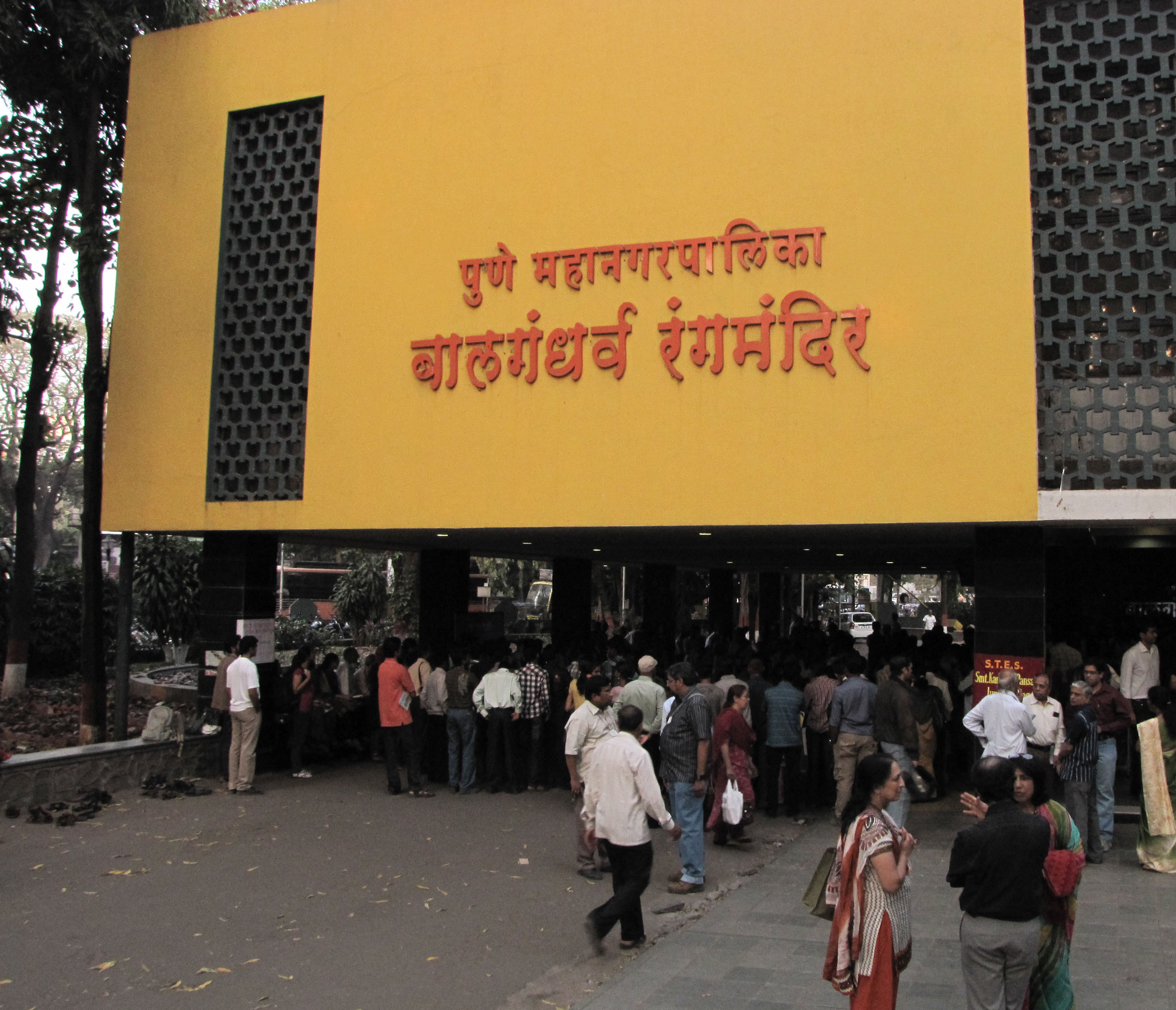
- Mahatma Phule Museum of Industry.
- Bal Gandharva Ranga Mandir - The premier theatre in Pune for staging Marathi drama.
- Deccan Gymkhana - Oldest Sports Club and Housing Society in the area.
- Chhatrapati Sambhaji Udyan - A Park along the Mutha river bank.
- Vetal Hill and Hanuman Hill - Protected nature reserves on hills.
- City Pride Mangala Cinema Theatre.
- City Pride Theatre and Mall.
- Rahul 70 mm Cinema Theatre
- E-Square Theatre and Mall.
Shopping
- The Pavilion Mall.
- Pune Central Mall.
Food
References
References
- Joglekar, P.P.. (2006). "A New Look at Ancient Pune Through Salvage Archaeology (2004-2006)". Bulletin of the Deccan College Research Institute.
- Ratna N. Rao. (1990). "Social Organisation in an Indian Slum: Study of a Caste Slum". Mittal Publications.
- Ghori, S. A. K., and A. Rahman. "Paper technology in medieval India." Indian journal of history of science 1.2 (1966): 133-149.
- Khizer, M.M., 1991. Sufism and social Integration. Sufism and Inter-tR" Understanding, p.94.[http://drasgharaliengineer.csss-isla.com/wp-content/uploads/2017/10/Sufism.pdf#page=93]
- Limaye, P.M., 1935. History of the Deccan Education Society, 1880-1935. MK Joshi, Secretary, Deccan Education Society, Poona.
- (2001). "Singing to the Jinas: Jain Laywomen, Maṇḍaḷ Singing, and the Negotiations of Jain Devotion". Oxford University Press.
This article was imported from Wikipedia and is available under the Creative Commons Attribution-ShareAlike 4.0 License. Content has been adapted to SurfDoc format. Original contributors can be found on the article history page.
Ask Mako anything about Shivajinagar, Pune — get instant answers, deeper analysis, and related topics.
Research with MakoFree with your Surf account
Create a free account to save articles, ask Mako questions, and organize your research.
Sign up freeThis content may have been generated or modified by AI. CloudSurf Software LLC is not responsible for the accuracy, completeness, or reliability of AI-generated content. Always verify important information from primary sources.
Report