From Surf Wiki (app.surf) — the open knowledge base
Shiv (weapon)
Improvised knife-like weapon
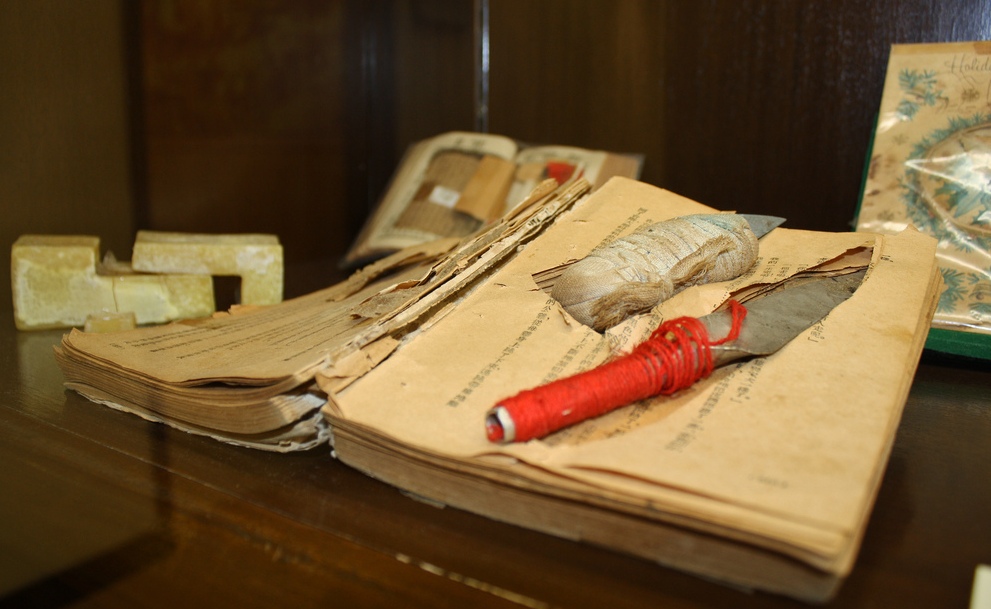
Improvised knife-like weapon
A shiv (also chiv or shivvie) or shank is an improvised pointed or bladed weapon resembling a knife that is commonly associated with prison inmates.
The word shiv is recorded from the 1670s (in the spelling chive) as cant for "knife." The exact spelling shiv is recorded in underworld slang from 1915. The cant word probably derives from the Romani word chiv "blade" (compare Romani chivomengro "knifeman"). The derived verb to shiv means "to stab (someone) with a shiv," and a shivver is an archaic term for a criminal who attacks victims with a knife.
Since weapons are prohibited in prisons, the intended mode of concealment is central to a shiv's construction. An especially thin handle, for instance, makes it easier to conceal in available cracks or crevices in the prison's construction, or in stacks of objects, such as books, permitted to the prisoners; however, this can also render the shiv difficult to grip and wield. Routine body searches in prison make it difficult to conceal a shiv on one's person on a continuous basis. As well as the prison authorities, it is also desirable to conceal possession of a shiv from members of rival prison populations.
In the United States
.jpg)
The word shank is American prison slang for an improvised stabbing weapon. Shanks can be made in various ways: a razor blade stuck into the melted end of a toothbrush; a metal bucket handle filed into a sharp point; or simply a hank of chicken wire twisted back on itself.
The term apparently originates from the fact that in the 19th century men's boots were (and most work boots still are) often equipped with a shank (that is, a central rib providing arch support) of steel, which could be extracted and improvised into a weapon. This threat was well known to prison guards in the 19th century, as shown by this description from 1882:
In Guiteau's day the reported slang term was cheeser; but the slang noun shank was in use by 1989.
In the Federal Bureau of Prisons, weapons, sharpened instruments, and knives are considered contraband and their possession is punishable as a highest severity-level prohibited act.
In Britain
In Britain, the word shiv may also be spelled chiv, and the word shank appears unknown.
In the 1950s, British criminal Billy Hill described his use of a "chiv":
References
References
- {{Cite American Heritage Dictionary. shank
- {{Cite Merriam-Webster. shank
- {{Cite American Heritage Dictionary. shiv
- {{OEtymD. shiv
- [[Tom Dalzell]]. (2009). "The Routledge Dictionary of Modern American Slang and Unconventional English".
- "Inmate discipline program". Federal Bureau of Prisons.
- [[Duncan Campbell (journalist, born 1944). (2008-07-29). "Billy Hill biography remembers one of Britain's best known gangsters". The Guardian.
- {{cite court. (1989). link
- (1881-09-03). "Guiteau Flourishing a Knife". The National Police Gazette.
- (1882-06-30). "Guiteau's Jail Experience". The Evening Star.
This article was imported from Wikipedia and is available under the Creative Commons Attribution-ShareAlike 4.0 License. Content has been adapted to SurfDoc format. Original contributors can be found on the article history page.
Ask Mako anything about Shiv (weapon) — get instant answers, deeper analysis, and related topics.
Research with MakoFree with your Surf account
Create a free account to save articles, ask Mako questions, and organize your research.
Sign up freeThis content may have been generated or modified by AI. CloudSurf Software LLC is not responsible for the accuracy, completeness, or reliability of AI-generated content. Always verify important information from primary sources.
Report