From Surf Wiki (app.surf) — the open knowledge base
Shinjuku Station
Major railway and metro station in Tokyo, Japan

Major railway and metro station in Tokyo, Japan
| Field | Value | ||
|---|---|---|---|
| name | Shinjuku Station | ||
| native_name | 新宿駅 | ||
| native_name_lang | ja | ||
| image | JRE Shinjuku-STA South.jpg | ||
| alt | Shinjuku Station | ||
| caption | The south side of Shinjuku Station in November 2022 | ||
| address | Shinjuku and Shibuya wards, Tokyo | ||
| country | Japan | ||
| coordinates | |||
| operator | |||
| *{{ric | JR East | name | y}} |
| *{{ric | Tokyo Metro | name | y}} |
| *{{ric | Toei Subway | name | y}} |
| connections | |||
| status | |||
| opened | |||
| map_type | Japan Tokyo Yamanote loop#Japan Tokyo wards#Japan | ||
| map_dot_label | Shinjuku Station |
- [[File:KeioRailway logo.svg|32px]] Keio Corporation
- [[File:OdakyuGroup logo2.svg|16px]] Odakyu Electric Railway
- Shinjuku Expressway Bus Terminal
- Shinjuku Highway Bus Terminal
Shinjuku Station is a major railway station in Tokyo, Japan, that serves as the main connecting hub for rail traffic between central/eastern Tokyo (the special wards) and Western Tokyo on the inter-city rail, commuter rail, and subway lines. The station straddles the boundary between the Shinjuku and Shibuya special wards. In Shinjuku, it is in the Nishi-Shinjuku and Shinjuku districts; in Shibuya, it is in the Yoyogi and Sendagaya districts.
The station was used by an average of 3.59 million people per day in 2018, making it the world's busiest railway station by far (and registered as such with Guinness World Records). The main East Japan Railway Company (JR East) station and the directly adjacent private railways have a total of 35 platforms, an underground arcade, above-ground arcade and numerous hallways with another 17 platforms (52 total) that can be accessed through hallways to five directly connected stations without surfacing outside. The entire above/underground complex has well over 200 exits.
History
Shinjuku Station opened in 1885 as a stop on Nippon Railway's Akabane-Shinagawa line (now part of the Yamanote Line). The kanji "新宿" shin juku literally stand for "new (relay-)station". Shinjuku was still a quiet community at the time and the station was not heavily trafficked at first. When the Kobu Railway (now a part of the Chūō Main Line) opened between Shinjuku and Tachikawa Station in 1889, farms were still present near the station. The Keiō Line connected to the station from the west in 1915. Around this period, the east side of the station, where the , a former Shukuba existed, was bustling with people. When the 1923 Great Kantō earthquake happened, the area located in the east side of the station received relatively small damage compared to Nihonbashi. Since the station was a convenient place to travel, many stores relocated near the station after the earthquake. Odakyu Electric Railway opened the Odakyū Odawara Line from Shinjuku to Odawara in 1927. As the platforms of the station were at the west side of the station, traffic in the west exit increased, although it did not compare to that of the east exit.
Japanese government urban planner Kensaburo Kondo designed a major revamp of the station in 1933, which included a large public square on the west side completed in 1941. Kondo's plan also called for extending the Tokyu Toyoko Line to a new underground terminal on the west side of the station and constructing an east–west underground line that would be served by the Seibu Railway and the Tokyo Kosoku Railway (forerunner of Tokyo Metro), while the Keio and Odakyu lines would use above-ground terminals to the west of the JR station. These plans were suspended upon the onset of World War II but influenced the current layout of the station area. During World War II, American bombings damaged the substation Keio used to power the railway line, resulting in reduced voltage. This prevented Keio services from using the bridges at the former Kōshū Kaidō. The Keio Shinjuku Station's platforms were forced to relocate to the west side of the station as a result.

The Seibu Shinjuku Line was extended from Takadanobaba Station to Seibu Shinjuku Station in 1952. Seibu Shinjuku was built as a temporary station pending a planned redevelopment of the east side of Shinjuku Station, which was to feature a large station building that would house a new Seibu terminal on its second floor. Seibu abandoned its plan to use the building due to a lack of space for trains longer than six cars; the building is now known as Lumine Est and retains some design features originally intended to accommodate the Seibu terminal (in particular, a very high ceiling on the first floor and a very low ceiling on the second floor). In the late 1980s, Seibu planned to build an underground terminal on the east side of Shinjuku but indefinitely postponed the plan in 1995 due to costs and declining passenger growth.
On 8 August 1967, a freight train carrying jet fuel bound for the U.S. air bases at Tachikawa and Yokota collided with another freight train and caught fire on the Chūō Rapid tracks. The incident stoked ongoing political controversy in Japan regarding the Vietnam War. The station was a major site for student protests in 1968 and 1969, the height of civil unrest in postwar Japan. On 21 October 1968, 290,000 marchers participated in International Anti-War Day, taking over Shinjuku station and forcing trains to stop. In May and June 1969, members of the antiwar group Beheiren carrying guitars and calling themselves "folk guerrillas" led weekly singalongs in the underground plaza outside the west exit of the station, attracting crowds of thousands. Participants described it as a "liberated zone" and a "community of encounter." In July, riot police cleared the plaza with tear gas and changed signs in the station to read "West Exit Concourse" instead of "West Exit Plaza."
There have been plans at various points in history to connect Shinjuku to the Shinkansen network, and the 1973 Shinkansen Basic Plan, still in force, specifies that the station should be the southern terminus of the Jōetsu Shinkansen line to Niigata. While construction of the Ōmiya-Shinjuku link never started and the Jōetsu line presently terminates in Tokyo Station, the right of way, including an area underneath the station, remains reserved.
On 5 May 1995, the Aum Shinrikyo doomsday cult attempted a chemical terrorist attack by setting off a cyanide gas device in a toilet in the underground concourse, barely a month after the gas attack on the Tokyo subway which killed 13, left 6,252 people with non-fatal injuries, severely injured 50 people, and caused 984 cases of temporary vision problems. This time the attack was thwarted by staff who extinguished the burning device.
The station facilities on the Marunouchi Line were inherited by Tokyo Metro after the privatization of the Teito Rapid Transit Authority (TRTA) in 2004.
Station numbering was introduced to the Odakyu terminal in 2014 with Shinjuku being assigned station number OH01.
A major expansion of the JR terminal was completed in April 2016, adding a 32-story office tower, bus terminal, taxi terminal, and numerous shops and restaurants.
Station numbering was introduced to the JR East platforms in 2016 with Shinjuku being assigned station numbers JB10 for the Chūō-Sobu line, JS20 for the Shonan-Shinjuku line, JA11 for the Saikyō line, JC05 for the Chuo line rapid, and JY17 for the Yamanote line. At the same time, JR East assigned the station a 3-letter code to its major transfer stations; Shinjuku was assigned the code "SJK".
In 2020, the east–west free passageway was opened, shortening the time required for pedestrians to pass between the east and west exits by 10 minutes. A major redevelopment of the station and the surrounding area began in July 2021 with the aim of improving pedestrian flow and making it easier and faster to cut through the east and west sides of the station. Construction is expected to continue until 2047.
Keiō Shinjuku Station
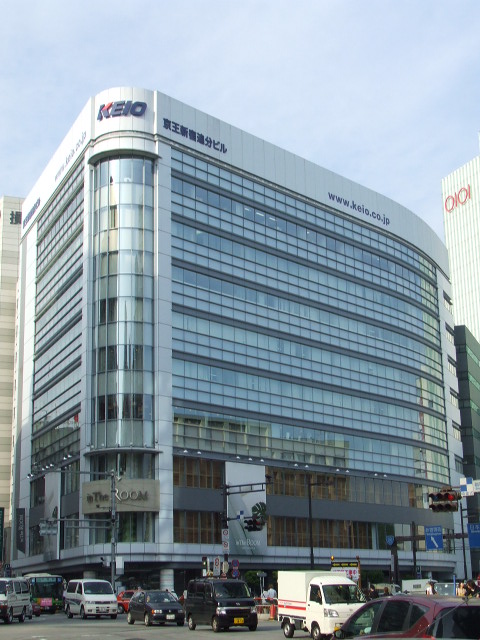
When the Keio Line extended to Shinjuku in 1915, its terminal was located several blocks east of the government railway (presently JR) station. The terminal was first named Shinjuku-Oiwake Station and was on the street near the Isetan department store. In 1927, the station was moved from the street to a newly built terminal adjacent to the original station. The station building housed a department store. The station name was changed to Yotsuya-Shinjuku Station in 1930 and again to Keiō Shinjuku Station in 1937.
The tracks from the terminal were on the Kōshū Kaidō highway, which crosses the Yamanote Line and the Chūō Line in front of the south entrance of Shinjuku Station by a bridge. The Keiō Line had a station for access to Shinjuku Station, named Teishajō-mae Station and renamed in 1937 Shōsen Shinjuku Ekimae Station.
In July 1945, the terminal of the Keiō Line was relocated to the present location, though on the ground level, on the west side of Shinjuku Station. Keiō Shinjuku Station and Shōsen Shinjuku Ekimae Station were closed. This was because the trains faced difficulty in climbing up the slopes of the bridge over the governmental railway after one of the nearby transformer substations was destroyed by an air raid. The site of Keiō Shinjuku Station near Shinjuku-Sanchōme subway station is now occupied by two buildings owned by Keiō: Keiō Shinjuku Sanchōme Building and Keiō Shinjuku Oiwake Building.
Lines
Shinjuku is served by the following railway systems:
- ****:
- Chūō Main Line (Limited Express)
- Chūō Line (Rapid)
- Chūō-Sōbu Line
- Saikyō Line
- Shōnan–Shinjuku Line
- Yamanote Line
- [[File:KeioRailway logo.svg|32px]] Keio Corporation:
- Keio Line
- Keio New Line
- [[File:OdakyuGroup logo2.svg|16px]] Odakyu Electric Railway:
- Odakyu Odawara Line
****:
****:
Station facilities
JR East
Shinjuku Station
- ()
- (Chūō Main Line)
(limited service)
The station is centered around facilities servicing the East Japan Railway Company (JR East) lines. These consist of eight ground-level island platforms (16 tracks) on a north–south axis, connected by two overhead and two underground concourses. Most JR services here are urban and suburban mass transit lines, although many limited express services to Kōfu and Matsumoto on the Chūō Main Line and to Nikkō and Kinugawa Onsen via joint operations with the private Tōbu Railway also begin and end at this station, including Narita Express services to and from Narita International Airport. The JR section alone handles an average of 1.5 million passengers a day.
File:JRE-Shinjuku-STA East-Gate.jpg|East gates in July 2021 File:JRE-Shinjuku-STA West-Gate.jpg|West gates in July 2021 File:JRE-Shinjuku-STA Connecting-passage.jpg|Internal concourse in July 2021 File:JRE-Shinjuku-STA Central-east-Gate.jpg|Central East gates in November 2021 File:JRE-Shinjuku-STA Central-West-Gate.jpg|Central West gates in September 2021 File:JRE-Shinjuku-STA South-Gate.jpg|Central South gates in November 2021 File:JR Shinjuku Station South East Gates (20210410).jpg|South East gates in April 2021 File:JRE-Shinjuku-STA Koshu-Kaido-Gate.jpg|Koshu Kaido gates in September 2021 File:JRE-Shinjuku-STA MIRAINA-TOWER-Gate.jpg|Miraina Tower gates in September 2021 File:JRE-Shinjuku-STA New-South-Gate.jpg|New South gates in September 2021
File:JRE-Shinjuku-STA Home1-2.jpg|JR East platforms 1 and 2 File:JRE-Shinjuku-STA Home3-4.jpg|JR East platforms 3 and 4 File:JRE-Shinjuku-STA Home5-6.jpg|JR East platforms 5 and 6 File:JRE-Shinjuku-STA Home7-8.jpg|JR East platforms 7 and 8 File:JRE-Shinjuku-STA Home9-10.jpg|JR East platforms 9 and 10 File:JRE-Shinjuku-STA Home11-12.jpg|JR East platforms 11 and 12 File:JRE-Shinjuku-STA Home13-14.jpg|JR East platforms 13 and 14 File:JRE-Shinjuku-STA Home15-16.jpg|JR East platforms 15 and 16 File:JR Shinjuku station track map 2010.svg|Station layout
Odakyu
Shinjuku Station
- Ground level (platforms 1–6)
- Underground (platforms 7–10)
The terminus for the private Odakyu Odawara Line is parallel to the JR platforms on the west side and handles an average of 490,000 passengers daily. This is a major commuter route stretching southwest through the suburbs and out towards the coastal city of Odawara and the mountains of Hakone. The ten platforms are built on two levels beneath the Odakyu department store; three express service tracks (six platforms) on the ground level and two tracks (four platforms) on the level below. Each track has platforms on both sides in order to completely separate boarding and alighting passengers.
Chest-high platform screen doors were added to platforms 4 and 5 in September 2012.
Ground level
Underground level
File:OER Shinjuku station South.jpg|South gate File:Odakyu-Shinjuku-STA West-ground-Gate.jpg|West gate File:Odakyu-Shinjuku-STA Home1.jpg|Ground level platform 1 File:Odakyu-Shinjuku-STA Home2-3.jpg|Ground level platforms 2 and 3 File:Odakyu-Shinjuku-STA Home4-5.jpg|Ground level platforms 4 and 5 File:Odakyu-Shinjuku-STA Home6.jpg|Ground level platform 6 File:Shinjuku-Sta-Odakyu-B1-Platform.JPG|Underground platforms
Keio/Toei Subway (Toei Shinjuku Line)
Shinjuku Station
- [[File:KeioRailway logo.svg|18px]] Keio Corporation
- [[File:Number prefix Keio-line.svg|18px]] Keiō Line
- [[File:Number prefix Keio-line.svg|18px]] Keiō New Line
- Toei Shinjuku Line \\*3*2*1 \\PENDEa\PENDEa\PENDEa(RG)!~MASKrr \\PSTR\PSTR\PSTR(R) \\PSTR\PSTR\PSTR(R) \\PSTR\PSTR\PSTR(R) \\PSTR\PSTR\PSTR(R) \\kvSTR-c2\d!~kvSTR3~r\kvSTR3~l\kvSTR3~l d\vCONTgfaq\vÜSTq\d-STRq!~kvSTRr+1~r\d-STRq!~kvSTRr+1~l\d-STRq\kvSTRr+1~l!~kvSTRc4\d!~kvSTRc4~~ ~~ ~~← **}}
Keio operates two sections of Shinjuku Station, the traditional Keio Line stub terminal and a separate through station connecting the Keio New Line with the Toei Shinjuku Line. In 2019, 788,567 passengers used the Keio complex daily (Keio and Keio New Lines), which makes it among the busiest among the non-JR Group railways of Japan.
Keio Line
The Keio Line concourse is located to the west of the Odakyu line concourse, two floors below ground level under the Keio department store. It consists of three platforms stretching north to south. An additional thin platform between Platforms 2 and 3 is used for alighting only. This suburban commuter line links Shinjuku to the city of Hachiōji to the west. Chest-high platform edge doors were introduced on the Keio Line platforms in March 2014. The doors are different colours for each platform; the doors on Platform 2 are green.
File:Keio-Shinjyuku-STA West-Gate.jpg|West gates File:Keio-Shinjyuku-STA RUMINE-Gate.jpg|Lumine gates File:Keio-Shinjuku-STA Keio-Department-Store-Gate.jpg|Keio Department Store gates File:Keio-Shinjyuku-STA Hiroba-Gate.jpg|Hiroba gates (exit only) File:Keio-Shinjyuku-STA Home1-2.jpg|Platforms 1 and 2 File:Keio-Shinjyuku-STA Home2-3.jpg|Platforms for getting off File:Keio-Shinjyuku-STA Home3.jpg|Platform 3
Keio New Line and Toei Shinjuku Line
The shared facilities for the Toei Shinjuku subway line and the Keiō New Line are distinctively called Keiō New Line Shinjuku Station and consist of two platforms stretching east–west five floors beneath the Kōshū Kaidō avenue to the southwest of the JR section. The concourse is managed by Keio Corporation but is in a separate location from the main Keio platforms. Further south (and deeper underground) are the two north-to-south Toei Ōedo subway line platforms.
File:Keio newline shinjukusta shintoshin gate.JPG|Ticket gates for Keio New Line and Toei Shinjuku Line, 2010 File:Keio newline sinjukusta platform.JPG|Island platform for Keio New Line and Toei Shinjuku Line, 2010
Toei Subway (Toei Oedo Line)
Shinjuku Station
Toei Ōedo Line's two underground platforms stretch north–south to the south of the Toei Shinjuku Line and Keio New Line facilities. This is on the 7th basement floor of Tokyo prefectural road 414(Yotsuya-Tsunohazu Ave.).
Tokyo Metro
Shinjuku Station
Tokyo Metro's two Marunouchi Line underground platforms stretch east–west to the north of the JR and Odakyu facilities, directly below the Metro Promenade underground mall.
Commercial facilities

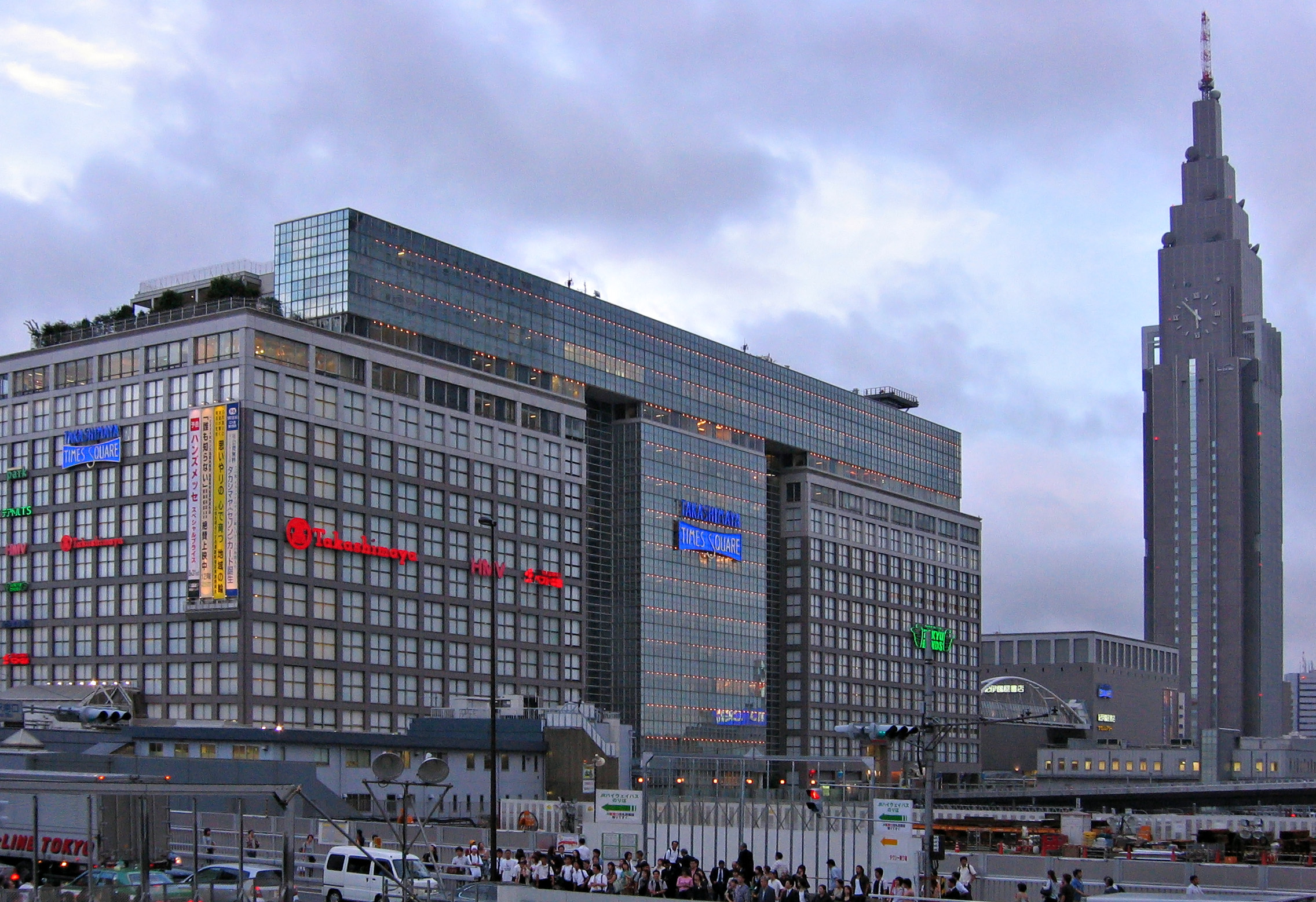
Many department stores and shopping malls are built directly into the station, some operated by the railroads. These include:
- Lumine Est – above JR's east exit
- Odakyu department store – above the Odakyu line concourse (Closed down in October 2022.)
- Odakyu Mylord – above the southern end of the Odakyu line concourse
- Lumine 1 shopping mall – above the Keio Line concourse
- Lumine 2 shopping mall – above JR's south and Lumine exits
- Keio Department store – above the Keio Line concourse
- Keio Mall – underground mall to the southwest of the Keio Line concourse
- Odakyu Ace – underground malls beneath the bus terminal by the west exit.
In addition to the above, the Metro Promenade, which is an underground mall owned by Tokyo Metro, extends eastwards from the station beneath Shinjuku-dori avenue, all the way to the adjacent Shinjuku-sanchōme station with 60 exits along the way. The Metro Promenade in turn connects to Shinjuku Subnade, another underground shopping mall, which leads onto Seibu Railway's Seibu-Shinjuku station.
Shinjuku Station is connected by underground passageways and shopping malls to
- Nishi-shinjuku Station (Tokyo Metro Marunouchi Line)
- Seibu-Shinjuku Station (Seibu Shinjuku Line)
- Shinjuku-nishiguchi Station (Toei Ōedo Line)
- Shinjuku-sanchōme Station (Tokyo Metro Marunouchi Line, Tokyo Metro Fukutoshin Line, and Toei Shinjuku Line)
- Tochōmae Station (Toei Ōedo Line)
Nearby non-connected stations (within 500 meters of an underground passageway or station) include
- Shinjuku-gyoemmae Station
- Yoyogi Station
- Higashi-shinjuku Station
- Okubo Station
- Shin-Okubo Station
- Minami-Shinjuku Station
Bus terminals
There is a bus terminal at the west exit servicing both local and long-distance buses and a JR Highway Bus terminal at the New South Gates.
On April 4, 2016, the new bus terminal and commercial facilities nearby the south exit, named (Shinjuku Expressway Bus Terminal), opened for service. Considerable numbers of coaches and airport buses depart from this new terminal.
Passenger statistics
The figures below are the official number of passengers entering and exiting (except for JR East) each day released by each train operator. The figure for JR East only includes entering passengers.
| Operator | Number | Fiscal year | Source | Note | ||||||||||
|---|---|---|---|---|---|---|---|---|---|---|---|---|---|---|
| JR East | 751,018 (boarding only) | 2013 | url=http://www.jreast.co.jp/passenger/index.html | script-title=ja:各駅の乗車人員 (2013年度) | trans-title=Station passenger figures (Fiscal 2013) | publisher=East Japan Railway Company | location=Japan | language=ja | access-date=August 31, 2014 | archive-date=May 6, 2001 | archive-url=https://web.archive.org/web/20010506032321/http://www.jreast.co.jp/passenger/index.html | url-status=live }} | Boarding passengers only. The busiest station in Japan. | |
| Odakyu | 494,184 | 2013 | url=http://www.odakyu.jp/company/business/railways/users/ | script-title=ja:1日平均乗降人員 | trans-title=Average daily station usage figures | publisher=Odakyu Electric Railway | access-date=September 12, 2014 | language=ja | archive-date=March 5, 2016 | archive-url=https://web.archive.org/web/20160305052332/http://www.odakyu.jp/company/business/railways/users/ | url-status=live }} | The busiest Odakyu station | ||
| Keio | 730,849 | 2013 | url=http://www.keio.co.jp/group/traffic/railroading/passengers/index.html | script-title=ja:1日の駅別乗降人員 | trans-title=Average daily station usage figures | year=2013 | language=ja | location=Japan | publisher=Keio Corporation | access-date=August 31, 2014 | archive-date=February 2, 2013 | archive-url=https://web.archive.org/web/20130202181834/http://www.keio.co.jp/group/traffic/railroading/passengers/index.html | url-status=live }} | The busiest Keio station, the sum of the ridership of the Keiō New Line and Keiō Line. |
| Tokyo Metro | 227,366 | 2013 | url=http://www.tokyometro.jp/corporate/enterprise/passenger_rail/transportation/passengers/index.html | script-title=ja:各駅の乗降人員ランキング | trans-title=Station usage ranking | publisher=Tokyo Metro | access-date=August 31, 2014 | language=ja | archive-date=February 13, 2018 | archive-url=https://web.archive.org/web/20180213023703/http://www.tokyometro.jp/corporate/enterprise/passenger_rail/transportation/passengers/index.html | url-status=live }} | The 6th busiest Tokyo Metro station | ||
| Toei | Shinjuku Line | 266,869 | 2013 | url=http://www.kotsu.metro.tokyo.jp/subway/kanren/passengers.html | script-title=ja:各駅乗降人員一覧 | trans-title=Station usage figures | publisher=Tokyo Metropolitan Bureau of Transportation | access-date=September 9, 2014 | language=ja | archive-date=March 4, 2016 | archive-url=https://web.archive.org/web/20160304031418/http://www.kotsu.metro.tokyo.jp/subway/kanren/passengers.html | url-status=live }} | ||
| Oedo Line | 133,075 | 2013 | 64,701 entries and 68,374 exits |
Average number of passengers per day by fiscal year for the JR East station (1913–1935)
| Fiscal year | Daily average | ||||||
|---|---|---|---|---|---|---|---|
| 1913 | title=日本国有鉄道停車場一覧 | publisher=Japanese National Railways | year=1985 | isbn=4-533-00503-9 | location=Japan | page=480 | trans-title=JNR Station Directory}} |
| 1915 | 4,684 | ||||||
| 1920 | 14,358 | ||||||
| 1925 | 40,061 | ||||||
| 1930 | 71,555 | ||||||
| 1935 | 66,230 |
Average number of passengers per day by fiscal year for the JR East station (1953–2000)
| Fiscal year | Daily average | |||||||||
|---|---|---|---|---|---|---|---|---|---|---|
| 1953 | 133,435 | |||||||||
| 1955 | 153,313 | |||||||||
| 1960 | 305,236 | |||||||||
| 1965 | 389,700 | |||||||||
| 1970 | 472,841 | |||||||||
| 1971 | 614,419 | |||||||||
| 1975 | 652,642 | |||||||||
| 1980 | 625,707 | |||||||||
| 1984 | 648,659 | |||||||||
| 1990 | 709,490 | |||||||||
| 1991 | 741,421 | |||||||||
| 1992 | 735,192 | |||||||||
| 1993 | 741,342 | |||||||||
| 1994 | 740,063 | |||||||||
| 1995 | 743,710 | |||||||||
| 1996 | 767,800 | |||||||||
| 1997 | 765,518 | |||||||||
| 1998 | 756,551 | |||||||||
| 1999 | 756,772 | |||||||||
| 2000 | script-title=ja:各駅の乗車人員 (2000年度) | trans-title=Station passenger figures (Fiscal 2000) | url=http://www.jreast.co.jp/passenger/2000.html | access-date=January 2, 2013 | publisher=East Japan Railway Company | location=Japan | language=ja | archive-date=October 9, 2014 | archive-url=https://web.archive.org/web/20141009023233/http://www.jreast.co.jp/passenger/2000.html | url-status=live }} |
Average number of passengers per day by fiscal year for the JR East station (2001–present)
| Fiscal year | Daily average | |||||||||
|---|---|---|---|---|---|---|---|---|---|---|
| 2001 | 745,153 | |||||||||
| 2002 | 748,515 | |||||||||
| 2003 | 746,293 | |||||||||
| 2004 | 742,183 | |||||||||
| 2005 | url=http://www.jreast.co.jp/passenger/2005.html | script-title=ja:各駅の乗車人員 (2005年度) | trans-title=Station passenger figures (Fiscal 2005) | publisher=East Japan Railway Company | location=Japan | language=ja | access-date=January 2, 2013 | archive-date=October 9, 2014 | archive-url=https://web.archive.org/web/20141009222358/http://www.jreast.co.jp/passenger/2005.html | url-status=live }} |
| 2006 | 757,013 | |||||||||
| 2007 | 785,801 | |||||||||
| 2008 | 766,020 | |||||||||
| 2009 | 748,522 | |||||||||
| 2010 | url=http://www.jreast.co.jp/passenger/2010.html | script-title=ja:各駅の乗車人員 (2010年度) | trans-title=Station passenger figures (Fiscal 2010) | publisher=East Japan Railway Company | location=Japan | language=ja | access-date=January 2, 2013 | archive-date=October 6, 2014 | archive-url=https://web.archive.org/web/20141006175258/http://www.jreast.co.jp/passenger/2010.html | url-status=live }} |
| 2011 | url=http://www.jreast.co.jp/passenger/2011.html | script-title=ja:各駅の乗車人員 (2011年度) | trans-title=Station passenger figures (Fiscal 2011) | publisher=East Japan Railway Company | location=Japan | language=ja | access-date=August 31, 2014 | archive-date=October 8, 2014 | archive-url=https://web.archive.org/web/20141008165126/http://www.jreast.co.jp/passenger/2011.html | url-status=live }} |
| 2012 | url=http://www.jreast.co.jp/passenger/2012.html | script-title=ja:各駅の乗車人員 (2012年度) | trans-title=Station passenger figures (Fiscal 2012) | publisher=East Japan Railway Company | location=Japan | language=ja | access-date=August 31, 2014 | archive-date=October 7, 2014 | archive-url=https://web.archive.org/web/20141007220750/http://www.jreast.co.jp/passenger/2012.html | url-status=live }} |
| 2013 | 751,018 | |||||||||
| 2014 | 748,157 | |||||||||
| 2015 | 760,043 | |||||||||
| 2016 | 769,307 | |||||||||
| 2017 | 778,618 | |||||||||
| 2018 | 789,366 | |||||||||
| 2019 | 775,386 | |||||||||
| 2020 | 477,073 | |||||||||
| 2021 | 522,178 |
Cultural references
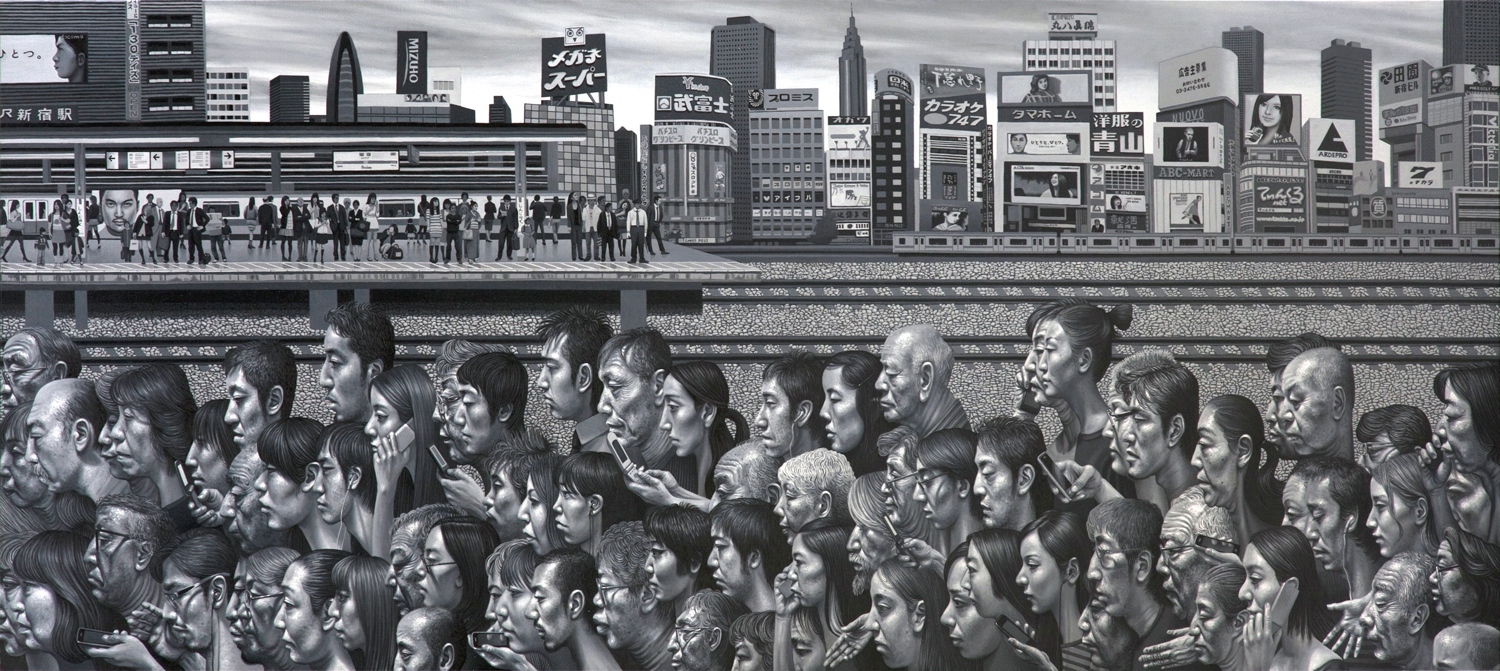
The station and other parts of the Toei Ōedo Line are referenced in the Digimon Adventure franchise. Contemporary British painter Carl Randall (who spent ten years living in Tokyo as an artist) depicted the station area in his large oil painting Shinjuku, exhibited at the National Portrait Gallery in London in 2013.
References
References
- "Busiest station".
- (2021-12-29). "巨大ターミナル「新宿」を迷路駅にした数奇な歴史".
- (November 23, 2012). "西武新宿駅はなぜ遠いのか 幻の東口乗り入れ計画". The Nikkei.
- (2014). "Fire Across the Sea: The Vietnam War and Japan 1965-1975". Princeton University Press.
- Konaka Yotaro, "Shinjuku: Community of Encounter," Japan Quarterly, 38 no.3 (1991), 301–310.
- (2006-07-08). "「営団地下鉄」から「東京メトロ」へ".
- (24 December 2013). "2014年1月から駅ナンバリングを順次導入します!".
- Kusamichi, Yoshikazu. (28 December 2013). "小田急グループ、鉄道から海賊船まで通しの駅番号…2014年1月から順次導入".
- "新宿駅が生まれ変わります". East Japan Railway Company.
- (6 April 2016). "⾸都圏エリアへ 「駅ナンバリング」を導⼊します".
- Kusamachi, Yoshikazu. (7 April 2016). "JA・JK・JT・AKB…JR東日本、首都圏で駅ナンバリングなど導入へ".
- (July 19, 2020). "East-West Passageway Opens at JR Shinjuku Station". Nippon.com.
- Steen, Emma. (March 15, 2022). "Shinjuku Station is getting a ¥72.8 billion makeover to make it easier to navigate". Time Out Tokyo.
- "Number of passengers by station (best 100)". JR East.
- link. (September 12, 2012). Tetsudo.com. Asahi Interactive, Inc.
- "1日の駅別乗降人員|京王グループ".
- "Keio Railway Map & Reading Station Signs - Keio Corporation". keio.co.jp.
- link. (March 13, 2014). Japan Railfan Magazine Online. Koyusha Co., Ltd.
- [http://shinjuku-busterminal.co.jp/ Buster Shinjuku] {{Webarchive. link. (April 6, 2016 Shinjuku-busterminal.co.jp)
- link. East Japan Railway Company
- link. Odakyu Electric Railway
- link. (2013). Keio Corporation
- link. Tokyo Metro
- link. Tokyo Metropolitan Bureau of Transportation
- (1985). "日本国有鉄道停車場一覧". Japanese National Railways.
- link. East Japan Railway Company
- "JR東日本:各駅の乗車人員(2001年度)".
- "JR東日本:各駅の乗車人員(2002年度)".
- "JR東日本:各駅の乗車人員(2003年度)".
- "JR東日本:各駅の乗車人員(2004年度)".
- link. East Japan Railway Company
- "JR東日本:各駅の乗車人員(2006年度)".
- "JR東日本:各駅の乗車人員(2007年度)".
- "JR東日本:各駅の乗車人員(2008年度)".
- "JR東日本:各駅の乗車人員(2009年度)".
- link. East Japan Railway Company
- link. East Japan Railway Company
- link. East Japan Railway Company
- "各駅の乗車人員 2014年度 ベスト100:JR東日本".
- "各駅の乗車人員 2015年度 ベスト100:JR東日本".
- "各駅の乗車人員 2016年度 ベスト100:JR東日本".
- "各駅の乗車人員 2017年度 ベスト100:JR東日本".
- "各駅の乗車人員 2018年度 ベスト100:JR東日本".
- "各駅の乗車人員 2019年度 ベスト100:JR東日本".
- "各駅の乗車人員 2020年度 ベスト100|企業サイト:JR東日本".
- "各駅の乗車人員 2021年度 ベスト100|企業サイト:JR東日本".
- "Odaiba Memorial – Shinjuku".
- "Odaiba Memorial – Hikarigaoka".
- (2016). "BBC World Service: World Update. 'Carl Randall - Painting the faces in Japan's crowded cities'.". BBC.
- (2016). "BBC News. 'Painting the faces in Japan's crowded cities'.". BBC News - Arts & Entertainment.
- (2013). "BP Portrait Award 2013". The National Portrait Gallery, London.
- (2016). "'Shinjuku painting'.". Carl Randall artist website.
This article was imported from Wikipedia and is available under the Creative Commons Attribution-ShareAlike 4.0 License. Content has been adapted to SurfDoc format. Original contributors can be found on the article history page.
Ask Mako anything about Shinjuku Station — get instant answers, deeper analysis, and related topics.
Research with MakoFree with your Surf account
Create a free account to save articles, ask Mako questions, and organize your research.
Sign up freeThis content may have been generated or modified by AI. CloudSurf Software LLC is not responsible for the accuracy, completeness, or reliability of AI-generated content. Always verify important information from primary sources.
Report