From Surf Wiki (app.surf) — the open knowledge base
Shingle beach
Beach composed of gravel
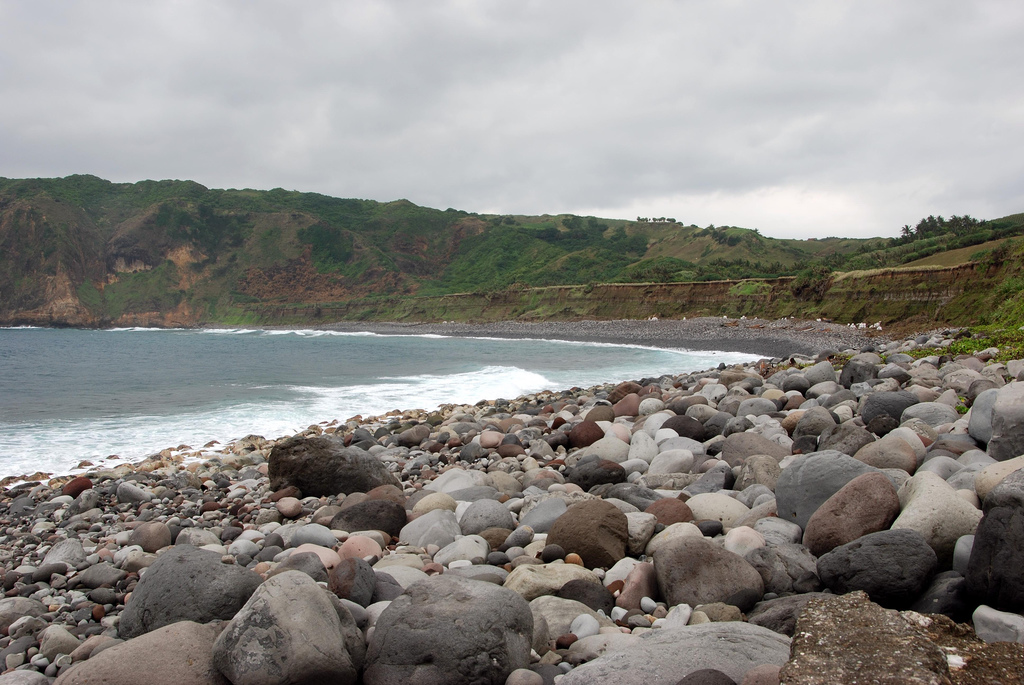
Beach composed of gravel

A shingle beach, also known as either a cobble beach or gravel beach, is a commonly narrow beach that is composed of coarse, loose, well-rounded, and waterworn gravel, called shingle. The gravel (shingle) typically consists of smooth, spheroidal to flattened, pebbles, cobbles, and sometimes small boulders, generally in the 2 to size range. Shingle beaches typically have a steep slope on both their landward and seaward sides. Shingle beaches form in wave-dominated locations where resistant bedrock cliffs provide gravel-sized rock debris. They are also found in high latitudes and temperate shores where the erosion of Quaternary glacial deposits provide gravel-size rock fragments. This term is most widely used in Great Britain.

While this type of beach is most commonly found in Europe, examples are also found in Bahrain, North America, and a number of other world regions, such as the west coast of New Zealand's South Island, where they are associated with the shingle fans of braided rivers. Though created at shorelines, post-glacial rebound can raise shingle beaches as high as 200 m above sea level, as on the High Coast in Sweden.
The ecosystems formed by this association of rock and sand allow colonization by a variety of rare and endangered species.
Formation
Shingle beaches are typically steep, because the waves easily flow through the coarse, porous surface of the beach, decreasing the effect of backwash erosion and increasing the formation of sediment into a steeply sloping beach.
Tourism
Shingle beaches are rare, made up of thousands of smooth rocks with varying geological qualities. The ocean naturally smooths the various rocks over time with crashing waves. Shingle beaches are popular for the varying rock types that can be found.
References
References
- Neuendorf, Klaus K.E. Mehl, James P., Jr. Jackson, Julia A., 2011. ''Glossary of Geology'' (5th Edition). American Geosciences Institute. {{ISBN. 978-1-68015-178-7
- Narayana, A. C., 2016. ''Coastal landforms''. in Kennish, M.J., ed., pp. 143–157, ''Encyclopedia of Estuaries''. Springer: Dordrecht, The Netherlands. {{ISBN. 978-94-017-8800-7
- McGraw-Hill, 2002. ''McGraw-Hill Dictionary of Earth Science'' (2nd edition). The McGraw-Hill Companies, New York. {{ISBN. 978-0-262-51832-1
- [https://news.bbc.co.uk/2/hi/science/nature/2956600.stm ''UK's rare shingle beaches at risk'', Alex Kirby, BBC News Online, June 3, 2003]
- Easterbrook, Don J. Surface Processes and Landforms. 1999 Prentice-Hall Inc. Upper Saddle River, NJ
This article was imported from Wikipedia and is available under the Creative Commons Attribution-ShareAlike 4.0 License. Content has been adapted to SurfDoc format. Original contributors can be found on the article history page.
Ask Mako anything about Shingle beach — get instant answers, deeper analysis, and related topics.
Research with MakoFree with your Surf account
Create a free account to save articles, ask Mako questions, and organize your research.
Sign up freeThis content may have been generated or modified by AI. CloudSurf Software LLC is not responsible for the accuracy, completeness, or reliability of AI-generated content. Always verify important information from primary sources.
Report