From Surf Wiki (app.surf) — the open knowledge base
Shina (word)
Largely archaic name for China

Largely archaic name for China
| Field | Value |
|---|---|
| title | Shina |
| c | 支那 |
| w | |
| p | Zhīnà |
| bpmf | ㄓ ㄋㄚˋ |
| gr | Jynah |
| y | Jīnàh |
| j | |
| h | |
| poj | Chi-ná |
| wuu | Tsy na |
| kanji | 支那 |
| katakana | シナ |
| romaji | Shina |
Shina is a largely archaic name for China. Its use in Japanese originally had a neutral connotation, but the word came to be perceived as derogatory by Chinese people during the course of the First and Second Sino-Japanese Wars. As a result, it fell into disuse after World War II and is now viewed as offensive, with the standard Japanese name for China being replaced by .
During the 2019–2020 Hong Kong protests, the word was used as a form of protest against the Chinese government but also as a xenophobic remark against mainland Chinese.
Origins and early usage
The Sanskrit word चीन (sa), meaning "China", was transcribed into various forms including 支那 (Zhīnà), 芝那 (Zhīnà), 脂那 (Zhīnà) and 至那 (Zhìnà). Thus, the term Shina was initially created as a transliteration of sa, and this term was in turn brought to Japan with the spread of Chinese Buddhism. Some scholars believe that the Sanskrit sa, like Middle Persian fa and Latin Sina, is derived from the name of the state of Qin, which founded a dynasty ({{linktext|秦}}, Old Chinese: och) that ruled China from 221 to 206 BC, and so Shina is a return of Qin to Chinese in a different form.
The Sanskrit term for China eventually spread into China, where its usage was closely related to Buddhism. A Tang dynasty (618–907) poem titled Ti Fan Shu (題梵書, literally "topic of a Sanskrit book") by Emperor Xuanzong of Tang uses the term in Chinese 支那 (Zhīnà) to refer to China, which is an early use of the word in China: |《題梵書》 鶴立蛇形勢未休, 五天文字鬼神愁。 支那弟子無言語, 穿耳胡僧笑點頭。 |"zh" ("Topic of a Sanskrit book") Whether the situation is straight-up or winding is unclear. Texts from India have the ghosts and gods worried. The disciples in Zhina are speechless. The monk with pierced ears nodded with a smile.
Early modern usage
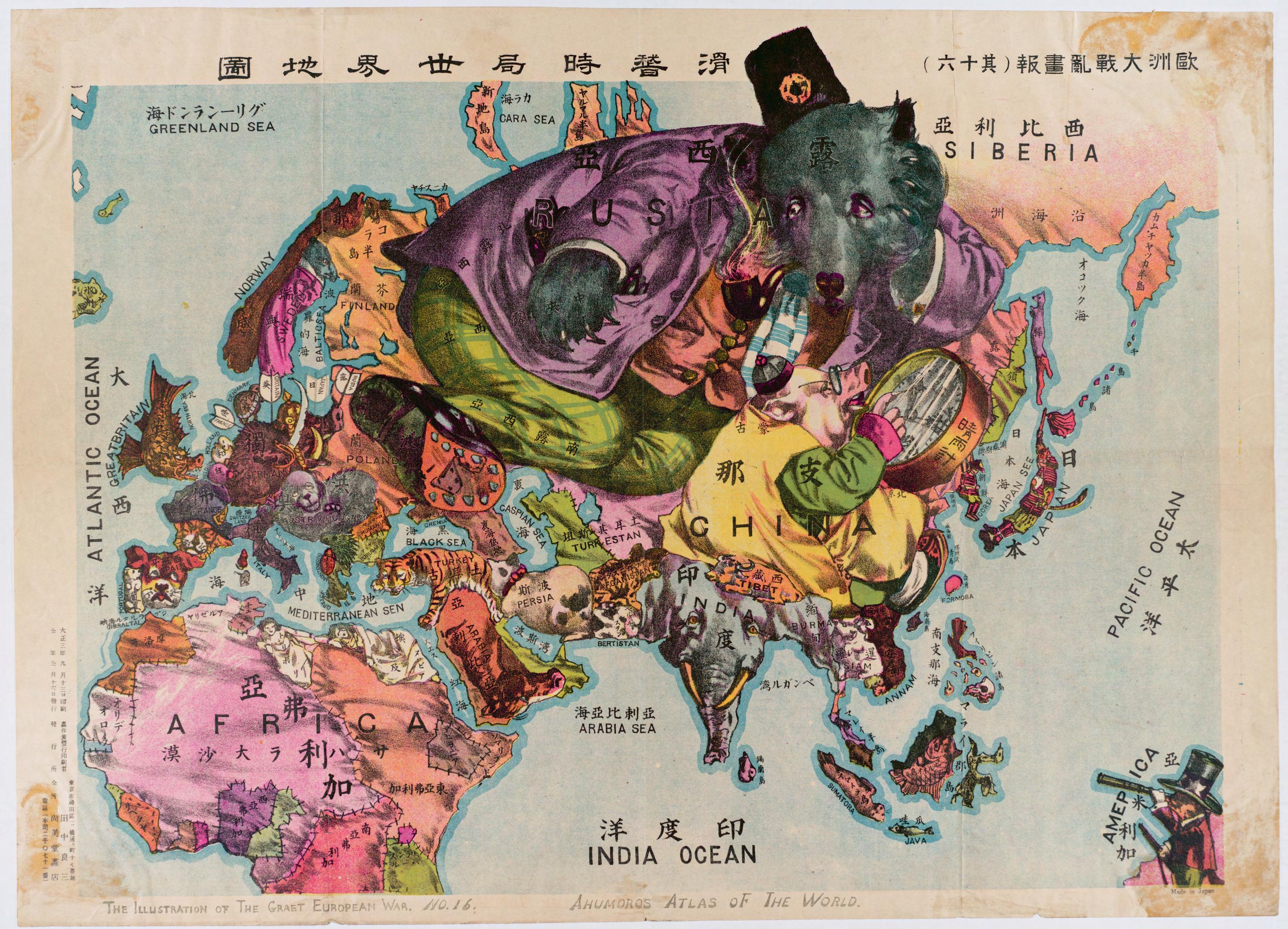


The Latin term for China was Sinae, plural of Sina. When Arai Hakuseki, a Japanese scholar, interrogated the Italian missionary Giovanni Battista Sidotti in 1708, he noticed that Sinae, the Latin plural word Sidotti used to refer to China, was similar to Shina, the Japanese pronunciation of 支那. Then he began to use this word for China regardless of dynasty. Since the Meiji Era, Shina had been widely used as the translation of the Western term "China". For instance, "sinology" was translated as "ja" (支那學).
At first, it was widely accepted that the term Shina or Zhina had no political connotations in China. Before the Chinese Republican era, the term Shina was one of the names proposed as a "generalized, basically neutral Western-influenced equivalent for 'China. Chinese revolutionaries, such as Sun Yat-sen, Song Jiaoren, and Liang Qichao, used the term extensively, and it was also used in literature as well as by ordinary Chinese. The term "transcended politics, as it were, by avoiding reference to a particular dynasty or having to call China the country of the Qing". With the overthrow of the Qing in 1911, however, most Chinese dropped Shina as foreign and demanded that Japan replace it with the Japanese reading of the Chinese characters used as the name of the new Republic of China , with the short form .
Nevertheless, the term continued to be more-or-less neutral. A Buddhist school called Zhīnà Nèixuéyuàn (支那內學院) was established as late as in 1922 in Nanjing. In the meantime, Shina was used as commonly in Japanese as "China" in English. Derogatory nuances were expressed by adding extra adjectives, e.g. or using derogatory terms like .
Despite interchangeability of Chinese characters, Japan officially used the term from 1913 to 1930 in Japanese documents, while Zhōnghuá mínguó (中華民國) was used in Chinese ones. Shina kyōwakoku was the literal translation of the English "Republic of China" while ja was the Japanese pronunciation of the official Chinese characters of Zhōnghuá mínguó. The Republic of China unofficially pressed Japan to adopt the latter but was rejected.
Japan rejected the terms ja and its short form 中國 (ja) for four reasons:
- A term referring to China as the "Middle kingdom" or the "center of the world" was deemed arrogant
- Western countries used "China"
- Shina had been the common name in Japan for centuries
- Japan already has a Chūgoku region, in the west of its main island Honshu.
The name ja was officially adopted by Japan in 1930, but Shina was still commonly used by the Japanese throughout the 1930s and 1940s.
Post-war derogatory connotations

The Second Sino-Japanese War fixed the impression of the term Shina as offensive among Chinese people. In 1946, the Republic of China demanded that Japan cease using Shina.
In China, the term Shina has become linked with the Japanese invasion and Japanese war crimes, and has been considered an offensive ethnic slur ever since.
In modern Japan, the term refers to the Republic of China, while refers to the People's Republic of China; the terms use the same Chinese characters (with Japanese shinjitai simplifications) used officially in both the People's Republic of China and the Republic of China. Likewise, in most cases, words previously containing Shina have been altered; for example, the term for sinology was changed from to or , and the name for the Second Sino-Japanese War has changed from terms such as and to .
Writing Shina in Japanese is considered socially unacceptable and subject to kotobagari, especially the kanji form; if Shina is used, it is now generally written in katakana (シナ) rather than with the kanji (支那), which in Japanese serves as a way to spell offensive words ( English "f*ck"). As such, the term has survived in a few non-political compound words in Japanese, and even (rarely) in Chinese. For example, the South and East China Seas are called and , respectively, in Japanese (prior to World War II, the names were written as 南支那海 and 東支那海). Shinachiku (支那竹 or simply シナチク), a ramen topping made from dried bamboo, also derives from the term Shina, but in recent years the word has replaced this as a more politically correct name. Some terms that translate to words containing the "Sino-" prefix in English retain Shina within them, for example シナ・チベット語族 (Sino-Tibetan languages) and シナントロプス・ペキネンシス (Sinanthropus pekinensis, also known as Peking Man). Meanwhile, one of the Chinese names for Indochina is yìndù zhīnà ().
Even so, it is still sometimes seen in written forms such as Shina soba, an alternative name for ramen, a dish which originates from China. Many Japanese are not fully aware of Chinese feelings towards the term, and generally find Shina merely old-fashioned and associated with the early and mid-20th century, rather than derogatory and racist. This difference in conception can lead to misunderstandings. The term is a slur when used toward Ryukyuans by mainland Japanese people.
Sinologist Joshua A. Fogel mentioned that, "Surveying the present scene indicates much less sensitivity on the part of Chinese to the term Shina and growing ignorance of it in Japan". He also criticized Shintaro Ishihara, a right-wing nationalist politician who went out of his way to use the expression ja (支那人) and called him a "troublemaker". He elaborated further:
Current usage
In Japan
Japanese Canadian historian Bob Tadashi Wakabayashi mentioned that there are two classes of postwar Japanese that have continued to use derogatory terms like Shina: poorly educated and/or elderly persons who grew up with the term go on using these from force of habit.
Some right-wing Japanese appeal to etymology in trying to ascribe respectability to the continued use of Shina, since the term Shina has non-pejorative etymological origins. Wakabayashi disagreed: "The term Jap also has non-pejorative etymological origins, since it derives from Zippangu (ジパング) in Marco Polo's Travels... If the Chinese today say they are hurt by the terms Shina or Shinajin, then common courtesy enjoins the Japanese to stop using these terms, whatever the etymology or historical usage might be."
In Hong Kong
During the Japanese occupation of Hong Kong, the Japanese government classified Hong Kong residents as Shinajin (支那人), as the term was used to refer to all who were ethnically Chinese. Hongkongers that were considered useful to the Japanese government, as well as prominent local figures such as bankers and lawyers, were recorded in a census document called the "Hong Kong Shinajin Magnate Survey" (). In 2016, a Hong Kong reporter was called ja by Japanese nationalist politician Shintaro Ishihara.
In Hong Kong, the Cantonese pronunciation of Shina (Jyutping: yue, Yale: yue; approximated in English-language sources as yue) is used in a derogative sense under the backdrop of ongoing tensions between Hong Kong and mainland China, even in official capacity, for example by Hong Kong localist politicians Yau Wai-ching and Sixtus Leung during their controversial oath swearing as elected members of the Hong Kong legislature.
On 15 September 2012, a Hong Kong online community organized a protest against mainlanders and parallel traders. During the protest, some demonstrators chanted "Cheena people get out!" On 24 September 2013, the Hong Kong political group Hongkongers Priority breached the front entrance of the Chinese People's Liberation Army Forces Hong Kong Building, the first such incident since the handover of Hong Kong. Billy Chiu, the leader of Hongkongers Priority, later announced on social media that Hongkongers Priority had successfully broken into the "Cheena Army Garrison". In October 2015, an HKGolden netizen remade the South Korean song "Gangnam Style", with lyrics calling mainland Chinese "locusts" and "Cheena people", titled "Disgusting Cheena Style" ().
Inside Hong Kong university campuses, mainland Chinese students were referred to as "Cheena dogs" and "yellow thugs" by local students. On 18 September 2019, the 88th anniversary of the Japanese invasion of northeast China, a celebration poster was put up on the Democracy Wall of the University of Hong Kong, glorifying the Japanese invasion while advocating for democracy in Hong Kong. Hong Kong journalist Audrey Li noted the xenophobic undertone of the widespread right-wing nativism movement, in which the immigrant population and tourists are used as scapegoats for social inequality and institutional failure.
Scholars have noted that negative attitudes toward mainland Chinese, including expressions that may constitute hate speech or discrimination, have emerged within certain segments of Hong Kong society. Wong argues that such attitudes are partly shaped by a perceived sense of cultural and economic distinction, which he links to Hong Kong’s historical development and its experience during the Cold War, as well as lingering nostalgia toward the period of British colonial rule. During periods of heightened political tension, frustration with the Chinese central government has at times been redirected toward ordinary mainland Chinese individuals, contributing to social hostility at the interpersonal level. With the growth of tribalism and competing forms of nationalism in both Hong Kong and mainland China, several scholars argue that mutual suspicion and xenophobia have been reinforced on both sides, contributing to a cycle of reciprocal hostility. Some critics of Hong Kong's pro-democracy movement contend that instances of ethnic hostility among a minority of its supporters have received comparatively limited media attention, arguing that coverage often emphasizes a binary narrative of democracy versus authoritarianism.
References
References
- "读诗杂记;唐明皇称呼中国为"支那"的一首诗".
- Douglas R. Reynolds. ''China, 1898–1912: The Xinzheng Revolution and Japan.''(Cambridge, Mass.: Harvard University Press 1993 {{ISBN. 0674116607), pp. 215–16 n. 20.
- Joshua A. Fogel, [http://www.sino-platonic.org/complete/spp229_shina_china.pdf "New Thoughts on an Old Controversy: Shina as a Toponym for China"], Sino-Platonic Papers, 229 (August 2012)]
- (19 October 2016). "Police officer dispatched from Osaka insults protesters in Okinawa".
- Bob Tadashi Wakabayashi, "The Nanking Atrocity, 1937–38: Complicating the Picture" (2007), Berghahn Books, pp. 395-398
- "香港和日本─亞洲城市現代化 的相互影響 1841 至 1947 年". 國史研究通訊.
- "石原慎太郎不爽香港记者提问:请"支那人"冷静些".
- Huang, Zheping. (14 October 2016). "I'm no China cheerleader, but Hong Kong lawmakers' use of a racial slur was offensive and unnecessary".
- Wu, Alice. (16 October 2016). "Vulgar Legco rebels must be suffering from deep self-hatred".
- (25 October 2016). "Hong Kong Legco president makes U-turn on oath-taking by localists". South China Morning Post.
- (3 November 2016). "Gov't argues in court that Youngspiration duo 'declined' to take their oaths as lawmakers – Hong Kong Free Press HKFP".
- (3 November 2016). "港宣誓事件司法覆核開庭 港府律師:未要求釋法". Apple Daily.
- (28 December 2013). "中国驻港军营首遭示威者冲击引网民大哗".
- (27 December 2013). "个位数港人冲击驻港部队军营 遭到解放军制止驱逐".
- (25 October 2012). "支那STYLE擺明歧視".
- Li, Audrey. (11 October 2019). "The xenophobic undercurrents of the Hong Kong protests".
- (23 October 2016). "岭大夜鬼嘈亲内地生投诉反被骂「支那狗」".
- Kuo, Frederick. (18 June 2019). "The Hong Kong conundrum".
- (2015). "Discrimination against the mainland Chinese and Hong Kong's defense of local identity". China's New 21st Century Realities: Social Equity in a Time of Change.
- (2014). "What melts in the "Melting Pot" of Hong Kong?". Asiatic: IIUM Journal of English Language and Literature.
- "香港與內地的融合".
This article was imported from Wikipedia and is available under the Creative Commons Attribution-ShareAlike 4.0 License. Content has been adapted to SurfDoc format. Original contributors can be found on the article history page.
Ask Mako anything about Shina (word) — get instant answers, deeper analysis, and related topics.
Research with MakoFree with your Surf account
Create a free account to save articles, ask Mako questions, and organize your research.
Sign up freeThis content may have been generated or modified by AI. CloudSurf Software LLC is not responsible for the accuracy, completeness, or reliability of AI-generated content. Always verify important information from primary sources.
Report