From Surf Wiki (app.surf) — the open knowledge base
Shiba Inu
Japanese dog breed

Japanese dog breed
| Field | Value | |
|---|---|---|
| altname | {{plainlist | |
| image | Taka_Shiba.jpg | |
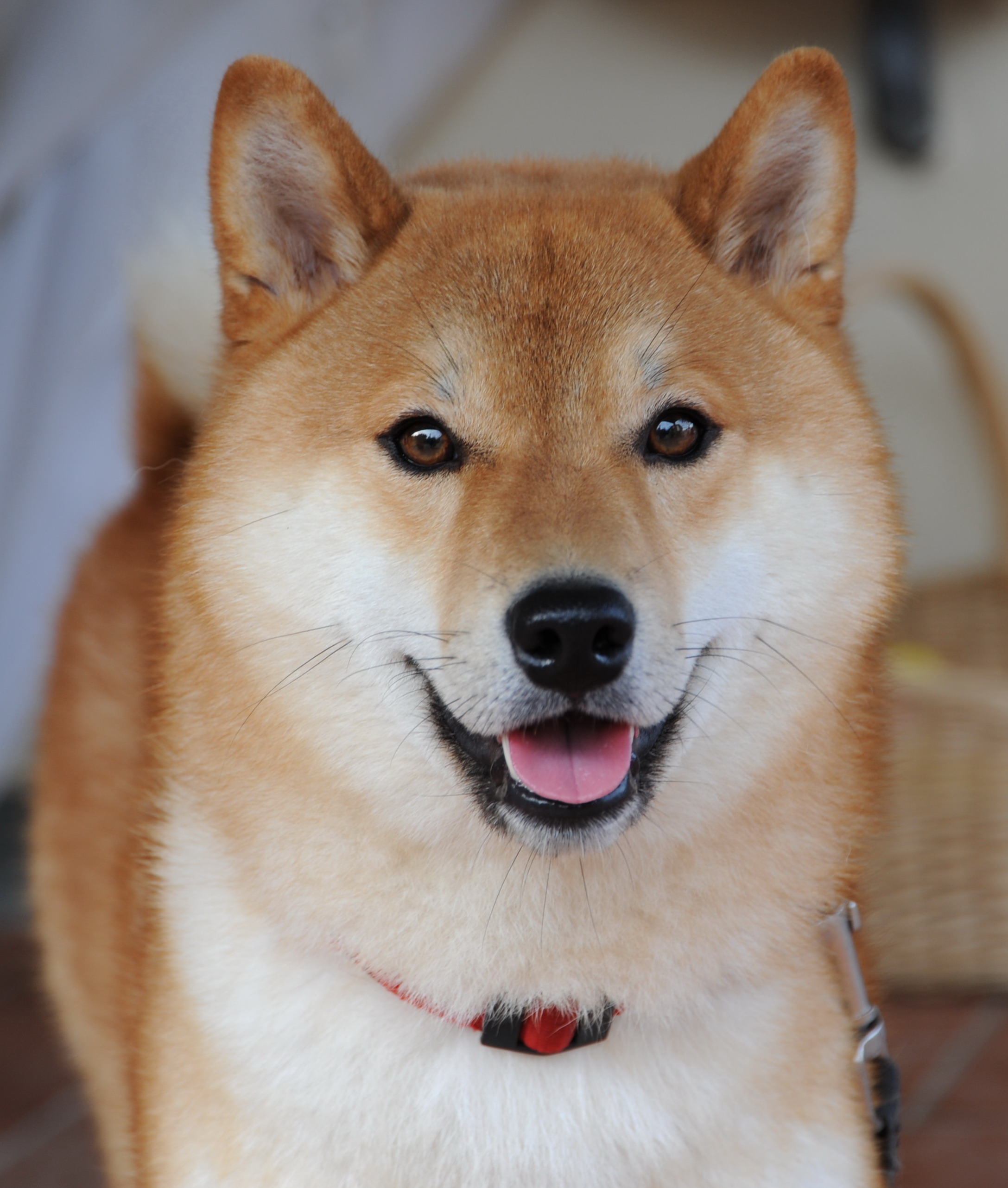
| image_caption | Standard/Red Coloured Shiba Inu Dog | |
| name | Shiba Inu | |
| nickname | ||
| country | Japan | |
| <!-- ---Traits--- --> | maleweight | 10 kg |
| femaleweight | 8 kg | |
| maleheight | 35 to | |
| femaleheight | 33 to | |
| coat | double | |
| color | Red, black and tan, cream, sesame, black sesame, red sesame | |
| litter_size | 3 puppies on average | |
| <!-----Kennel club standards-----> | kc2_name | American Kennel Club |
| kc2_std | https://images.akc.org/pdf/breeds/standards/ShibaInu.pdf | |
| kc_name | Japan Kennel Club | |
| kc_std | https://www.jkc.or.jp/archives/world_dogs/2576 |
- Japanese Shiba Inu
- Japanese Brushwood Dog
- Small Brushwood Dog
- Shiba}}
The Shiba Inu is a breed of hunting dog from Japan. A small-to-medium breed, it is the smallest of the six original dog breeds native to Japan. The Shiba Inu was originally bred for hunting. Its name literally translates to "brushwood dog", as it is used to flush game.
The Shiba Inu is a small, alert, and agile dog that copes well with mountainous terrain and hiking trails.
Appearance
The breed's standard colors are red, sesame, black sesame, red sesame (sashige), black and tan, or cream. All have a cream to white ventral color, known as urajiro. Urajiro literally translates to "underside white". The urajiro is required in the following areas on all coat colors: on the sides of the muzzle, on the cheeks, inside the ears, on the underjaw and upper throat, inside of legs, on the abdomen, around the vent and the ventral side of the tail. On reds: commonly on the throat, fore chest, and chest. On blacks and sesames: commonly as a triangular mark on both sides of the fore chest.
Other than the urajiro areas, the cream color is considered a "major fault" by both the Japan Kennel Club and American Kennel Club. It is not intentionally bred in a show dog, as the required markings are not discernible. However, a cream coat is acceptable according to The Kennel Club (UK) breed standard.
Shiba Inu have a double coat, the topcoat is stiff with guard hairs and the undercoat is soft and plush. Although less common, Shiba Inu can also be long-haired as a result of inheriting the recessive gene from both parents.
File:Shiba Inu 600.jpg|A sesame Shiba Inu File:Shiba inu blacktan.jpg|A black and tan Shiba Inu with Urajiro Markings File:Redshibaurajiro.jpg|A red Shiba Inu with visible Urajiro markings on the muzzle, cheeks, ears and throat
Temperament
The Shiba Inu is considered an alert, affectionate, and independent breed with high intelligence but also somewhat stubborn and strong-willed.
The terms "spirited boldness", "good nature", and "alertness" have subtle interpretations that have been the subject of much commentary.

A survey of experts classified the Shiba Inu as having "high aggression, high reactivity and medium trainability". A possible explanation for this and other observed behaviour is that the Shiba Inu is more closely related to the wolf than domesticated dogs from other countries. Due to the high intelligence of the breed it requires a lot of exercise and stimulation. Insufficient exercise may lead to anxiety which leads to undesirable behaviours, notably the "shiba scream". The Shiba Inu has a reputation for being "aloof" and early socialization as a puppy is key for the dog to get along with other people and animals.
A survey in Japan found the Shiba Inu to be more likely to engage in destructive behaviour, refusal to walk whilst on a lead, engage in mounting behaviour, and tail chasing. The Shiba Inu was also found to be less likely to bark at noises whilst inside the house.
History

The Shiba Inu has been identified as a basal breed that predates the emergence of the modern breeds in the 19th century. Dogs with a similar appearance to the Shiba Inu were represented in dogū made during the prehistoric Jōmon period of Japanese history.
The Shiba Inu was bred to hunt and flush small game, such as birds and rabbits. Shiba lived in the mountainous areas of the Chūbu region. During the Meiji Restoration, western dog breeds were imported and crosses between these and native Japanese breeds became popular. From 1912 to 1926, almost no pure Shiba remained. From around 1928, hunters and intellectuals began to show interest in the protection of the remaining pure Shiba.
Despite efforts to preserve the breed, the Shiba nearly became extinct during World War II These bloodlines were the Shinshu Shiba from Nagano Prefecture, the Mino Shiba from the former Mino Province in the south of present-day Gifu Prefecture, and the San'in Shiba from Tottori and Shimane Prefectures.
The Shinshu Shibas possessed a solid undercoat, with a dense layer of guard hairs, and were small and red in color. The Mino Shibas tended to have thick, prick ears, and possessed a sickle tail, rather than the common curled tail found on most modern Shibas. The San'in Shibas were larger than most modern Shibas, and tended to be black, without the common tan and white accents found on modern black-and-tan shibas.
When the study of Japanese dogs was formalized in the early and mid-20th century, these three strains were combined into one overall breed, the Shiba Inu. The first Japanese breed standard for the Shiba, the Nippo Standard, was published in 1934. In December 1936, the Shiba Inu was recognized as a Natural Monument of Japan through the Cultural Properties Act, largely due to the efforts of Nippo (Nihon Ken Hozonkai), the Association for the Preservation of the Japanese Dog.
In 1954, a military family brought the first Shiba Inu to the United States. It is now primarily kept as a pet in Japan and across the world. According to the American Kennel Club, the Shiba Inu is the number one companion dog in Japan. In the United States the breed ranked 42nd place in registrations for 2024 with the American Kennel Club.
Health
A study in Japan on patella luxation in small breeds found the Shiba Inu to have the second highest rate of the condition, with 35% of the Shiba Inus surveyed being affected. Three genes belonging to the breed were associated with glaucoma, as found in an analysis of DNA sequencing. Another study from Japan reviewing cases of dogs presented for ophthalmologic examination found the Shiba Inu to make up 33% of all glaucoma cases whilst only making up 2.7% of the total population used in the study. Pyometra, a uterine infection of intact bitches, is slightly more common in the Shiba Inu. The Shiba Inu is predisposed to canine atopic dermatitis. An auto-immune disease common in Akitas Vogt-Koyanagi-Harada-like syndrome is known to occur in the Shiba Inu.
Lifespan
A review of cemetery data in Japan found that the Shiba Inu had a life expectancy of 15.5 years, greater than any other breed. A 2024 UK study found a life expectancy of 14.6 years for the breed compared to an average of 12.7 for purebreeds and 12 for crossbreeds.
Sanin Shiba Inu
The Sanin Shiba Inu is a variety of Shiba Inu. It comes from the Inaba Inu of Tottori Prefecture and the Sekishu Inu of Shimane Prefecture, and both are endangered due to the increase of western dogs. In the early Showa period, Masumi Ozaki, a former landowner in Tottori prefecture, started preservation breeding to prevent the loss of local breeds.
However, as World War II grew more intense, the breeding projects became difficult to maintain. Due to the use of dogs for fur by the military, the number of dogs decreased from 50 to 20. In 1947, the two breeds were bred together to create the foundation stock of the Sanin Shiba Inu. The numbers were still low but the dogs were protected by the Ozaki family, who carried on the preservation activities.
Despite the end of the war, more threats to the breeds emerged in the 1950s and 60s, two outbreaks of distemper occurred in Tottori prefecture, killing many dogs. In addition, the Great Tottori Fire discouraged preservation efforts even more.
Said to be the father of the breed is Ishi go Shimane Yamashita, a Shiba Inu born in Shimane prefecture
In popular culture
Despite not being a popular dog breed outside of Japan, the Shiba Inu has become popular on the Internet. Doge is an Internet meme from 2013 characterized by Kabosu, a Shiba Inu, and broken English. A cryptocurrency, Dogecoin, is named after this meme, and its logo bears an image of Kabosu. Another cryptocurrency is also named Shiba Inu after the breed. Another Shiba Inu dog that went viral was a dog known as Cheems. He went viral during the COVID-19 pandemic and gained worldwide attention. Cheems died during cancer surgery on August 18, 2023 at the age of 12½ years. In December 2024, a man by the name of Kantaro Inagaki began to document his walks across Japan with a shiba inu named San-chan. San-chan became the internet's newest viral Shiba Inu, and their social media continues to amass millions of views and followers.
The breed is often referred to as Shibe in memes. According to Jamie Cohen, an assistant professor of media studies at Queens College of the City University of New York, the Shiba Inu breed has had a significant presence in online culture since at least 2010.
References
References
- NHK Publishing. (24 May 2016)
- "Dog Owners Guide: Shiba Inu".
- "Shiba Inu Breed Standard". [[American Kennel Club]].
- "Shiba inu".
- "Urajiro". National Shiba Club of America.
- (February 27, 2019). "柴". Japan Kennel Club.
- "Japanese Shiba Inu Breed Standard". The Kennel Club Limited.
- "Shiba Inu".
- "National Shiba Club of America".
- "Shiba Inu".
- (1990). "The Japanese Shiba Inu: A detailed study of the Shiba".
- (2006). "A Comparison of the Behavioral Profiles of Purebred Dogs in Japan to Profiles of those in the United States and the United Kingdom". Japanese Society of Veterinary Science.
- (2004-05-21). "Genetic Structure of the Purebred Domestic Dog". American Association for the Advancement of Science.
- "Shiba Inu".
- "Shiba 101 – Colorado Shiba Inu Rescue".
- (2019). "Prevalence of 25 canine behavioral problems and relevant factors of each behavior in Japan". Japanese Society of Veterinary Science.
- Larson, G. (2012). "Rethinking dog domestication by integrating genetics, archeology, and biogeography". Proc. Natl. Acad. Sci. U.S.A..
- (2004). "世界初!犬種豆柴の血統書を発行!". Japan Kennel Club.
- "世界の犬 : 5G 原始的な犬・スピッツ : し: 柴 – SHIBA". Japan Kennel Club.
- (2019-12-28). ""Sanin Shiba Inu" protects and conveys Tottori, overcoming the crisis".
- (2021-02-13). "Cuteness spreads in the blink of an eye, Sanin Shiba Inu, overcoming the crisis and becoming popular".
- "Shiba Inu Dog Breeds".
- (1997). "The Total Shiba". Alpine Publications.
- Atkinson, Maureen. (1998). "The Complete Shiba Inu". [[Howell Book House]].
- "Shiba Inu Dog Breed Information". American Kennel Club.
- Holden, Jacey. "Shiba Inus".
- "The Most Popular Dog Breeds of 2024". American Kennel Club.
- (2019). "Evidence of genetic contribution to patellar luxation in Toy Poodle puppies". Japanese Society of Veterinary Science.
- (2013-09-11). "Dogs and Humans Share a Common Susceptibility Gene SRBD1 for Glaucoma Risk". Public Library of Science (PLoS).
- (2006). "Incidence of Canine Glaucoma with Goniodysplasia in Japan: A Retrospective Study". Japanese Society of Veterinary Science.
- "Shiba Inu". Animal Health Clinic, Fargo.
- "Shiba Inu". Jolly Road Veterinary Hospital.
- (2020). "Association analysis of non-synonymous polymorphisms of interleukin-4 receptor-α and interleukin-13 genes in canine atopic dermatitis". Japanese Society of Veterinary Science.
- (2014-06-01). "Fluoxetine (SSRI) treatment of canine atopic dermatitis: a randomized, double-blind, placebo-controlled, crossover trial". Polish Academy of Sciences Chancellery.
- (2009). "Genome-wide association analysis of canine atopic dermatitis and identification of disease related SNPs". Springer Science and Business Media LLC.
- "The detail information of Vogt-Koyanagi-Harada-like syndrome". National Genomics Data Center, China National Center for Bioinformation.
- (2018). "Estimating the life expectancy of companion dogs in Japan using pet cemetery data". J Vet Med Sci.
- (2024-02-01). "Longevity of companion dog breeds: those at risk from early death". Springer Science and Business Media LLC.
- (2008). "Genetic Diversity and Relationship among Three Varieties of the Shiba Inu Revealed by Microsatellite Markers". The Journal of Animal Genetics.
- (2019-09-19). "Pinned ears, shining eyes ... "Sanin Shiba Inu" running with cheeks, mellow with cuteness".
- "Shiba Inu pedigree".
- (19 August 2023). "Famous Meme Dog Cheems Dead at 12". TMZ.com.
- Pinner, Joe. (2025-10-17). "The Shiba Inu That Saved the World".
- Thorsberg, Christian. (2022-08-06). "Good doge: How the internet adopted the Shiba Inu and gave it a forever home".
This article was imported from Wikipedia and is available under the Creative Commons Attribution-ShareAlike 4.0 License. Content has been adapted to SurfDoc format. Original contributors can be found on the article history page.
Ask Mako anything about Shiba Inu — get instant answers, deeper analysis, and related topics.
Research with MakoFree with your Surf account
Create a free account to save articles, ask Mako questions, and organize your research.
Sign up freeThis content may have been generated or modified by AI. CloudSurf Software LLC is not responsible for the accuracy, completeness, or reliability of AI-generated content. Always verify important information from primary sources.
Report