From Surf Wiki (app.surf) — the open knowledge base
Sherwani
Attire of the Muslim Aristocracy of the Indian Sub-Continent
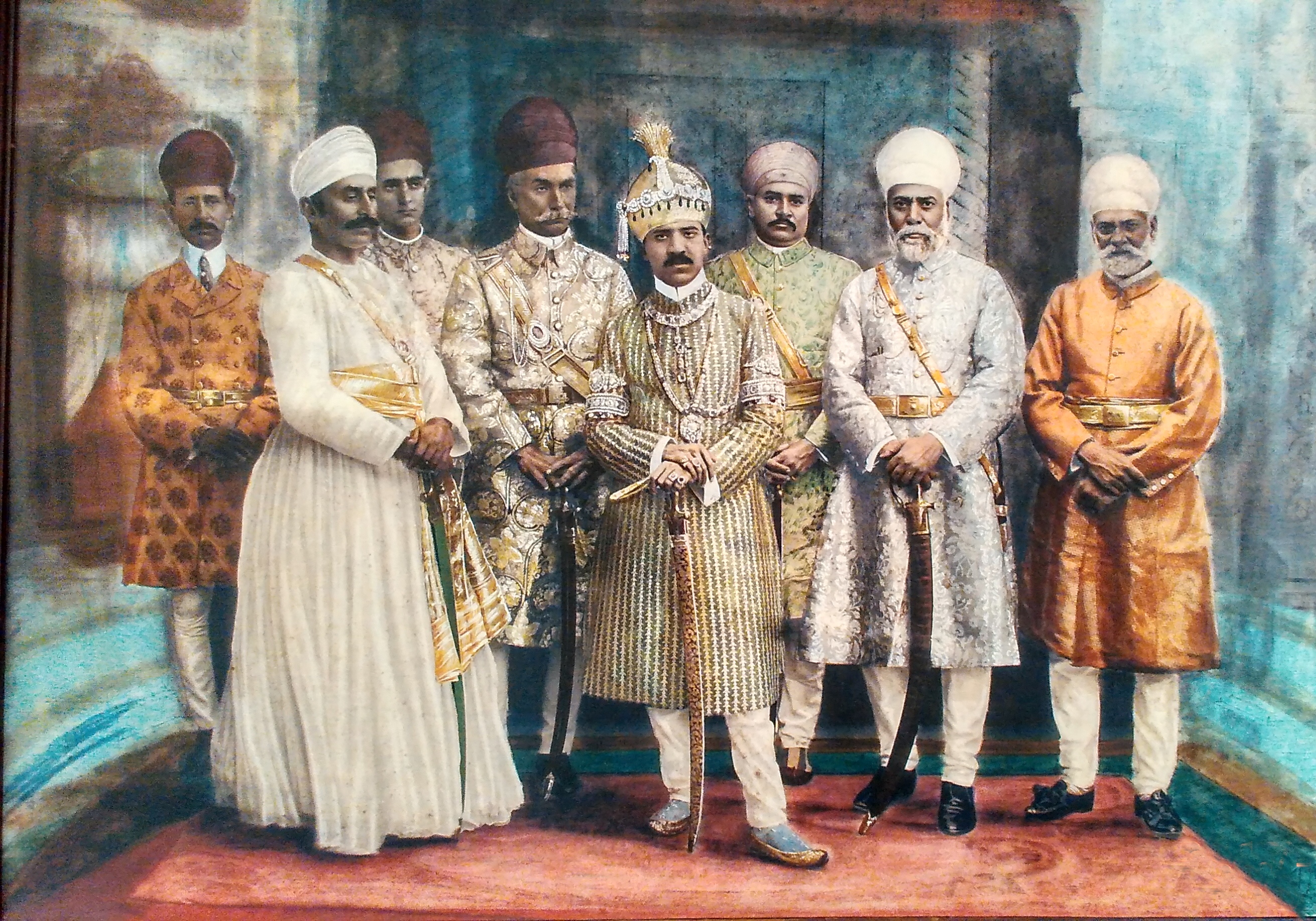
Attire of the Muslim Aristocracy of the Indian Sub-Continent
A sherwani is a long-sleeved outer coat worn by men in South Asia. Like the Western frock coat, it is fitted, with some waist suppression; it falls to below the knees and is buttoned down the front. It can be collarless, have a shirt-style collar, or a stand-up collar in the style of the Mandarin collar. It evolved in the Indian subcontinent in the 19th-century as a result of the outer garment of the late Mughal period, the angarkha—itself evolved from the Persian cape, balaba—being given a western style with a button-down front.
Etymology
The name of the attire is plausibly derived from Shirvan or Sherwan, a region of present-day Azerbaijan, due to the folk dress of that area (Chokha) which resembles the sherwani. Therefore, the garment may also be a Mughalized derivative of the Caucasian dress due to the ethnocultural linkages of Turco-Persian affinity during the Middle Ages.
History

The sherwani originated in the early 19th century. It was originally associated with Muslim aristocracy during the period of British rule. According to Emma Tarlo, the sherwani evolved from a Persian cape (balaba or chapkan), which was gradually given a more Indian form (angarkha), and finally developed into the sherwani, with buttons down the front, following European fashion. It originated in 19th century British India as the European style court dress of regional Mughal nobles of northern India. It appeared first at Lucknow in the 1820s. It was gradually adopted by the rest of the royalty and aristocracy of the Indian subcontinent, and later by the general population, as a more evolved form of occasional traditional attire.
Description

The sherwani evolved from a Persian cape (balaba or chapkan) and was developed into the sherwani, with buttons down the front, following European fashion.
Use
The sherwani is now famous as a wedding outfit, and it has always been popular as an outfit which can be worn on formal occasions. The sherwani signified the dignity and etiquette of the nobility, and it used to be the court dress of the nobles of Turkish and Persian origin. It is the national dress of Pakistan for men. A sherwani carries a regal feel.
India
Main article: Achkan
In India, the achkan has been generally worn, which is much shorter than the sherwani. The achkan was worn on formal occasions in winter, especially by those from Rajasthan, Punjab, Delhi, Jammu, Uttar Pradesh and Hyderabad. The achkan was adopted from Muslim nobles by upper-class Hindus. The achkan is generally associated with the Hindus while the sherwani was historically and is still favored by Muslims. The two garments have significant similarities, though sherwanis typically are more flared at the hips. The achkan later evolved into the Nehru Jacket, which is now popular in India. In India, the achkan or sherwani is generally worn in combination with the churidar as the lower garment. File:Nehru Roerich.jpg|Jawaharlal Nehru (left) wearing an achkan with churidar. File:Rajput Sherwani 2014-04-23 04-27.JPG|Achkan sherwani and churidar (lower body) worn by Arvind Singh Mewar and his kin during a Hindu wedding in Rajasthan, India.
Bangladesh
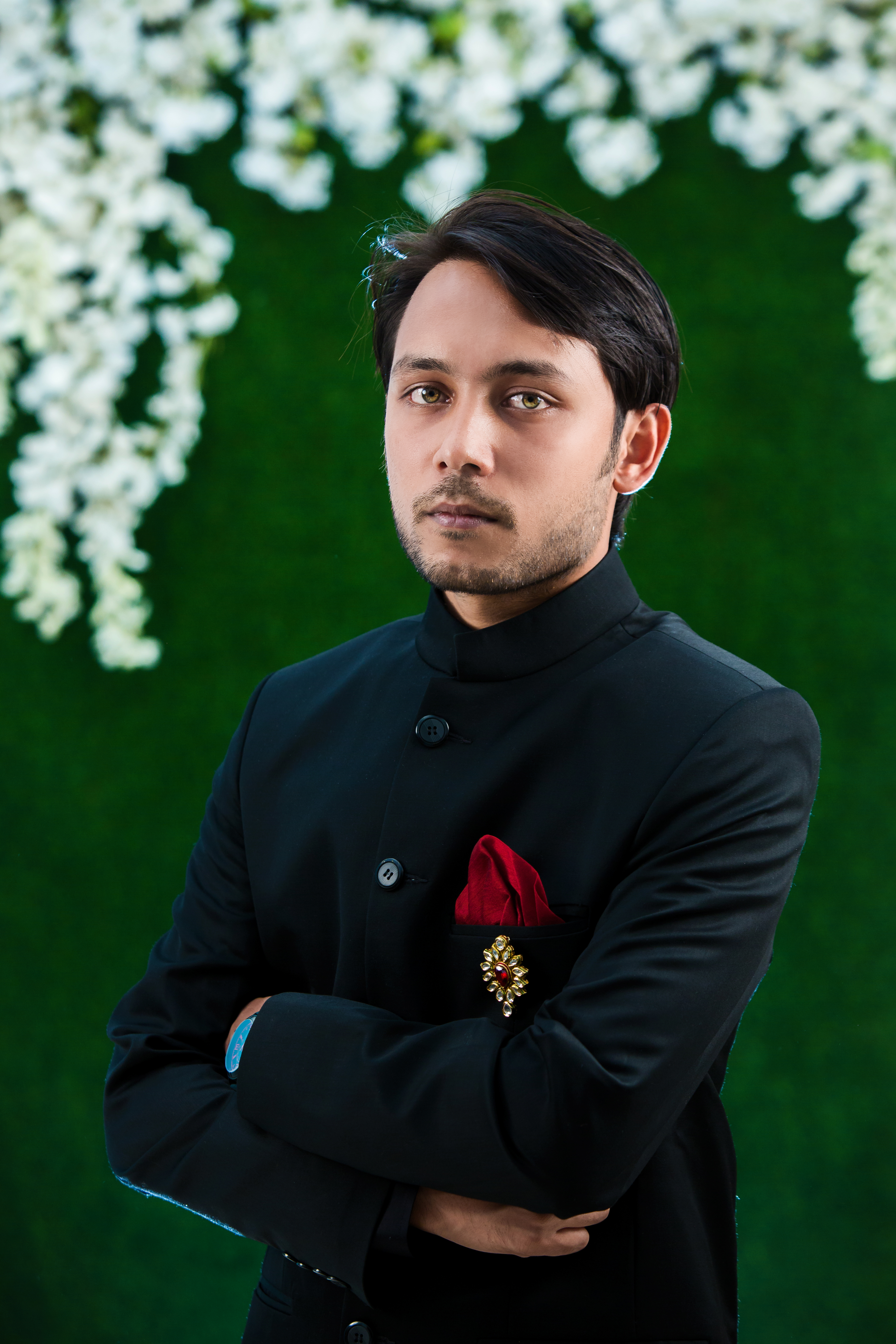
In Bangladesh, the sherwani is worn by people on formal occasions such as weddings and Eid.
Pakistan

After the independence of Pakistan, Muhammad Ali Jinnah frequently wore the sherwani. Following him, most people and government officials in Pakistan such as the President and Prime Minister started to wear the formal black sherwani over the shalwar kameez on state occasions and national holidays.
File:Muhammad Ali Jinnah sitting on the Chair of Governer General wearing a Sherwani.jpg|Muhammad Ali Jinnah, founder of Pakistan, is sitting on the Chair of Governor General, sometimes referred as Pakistan's Throne, wearing Sherwani.
Sri Lanka
In Sri Lanka, Sherwani was generally worn as the formal uniform of Mudaliyars and early Tamil legislators during the British colonial period.
Modern sherwanis
Sherwanis are mostly worn in Pakistan, India and Bangladesh. These garments usually feature detailed embroidery or patterns. One major difference between sherwani-wearing habits is the choice of lower garment: while in India it is mainly worn with churidars or pyjamas, in Pakistan and Bangladesh it is mainly worn with a shalwar.
Pakistani journalist, filmmaker and activist, Sharmeen Obaid-Chinoy appeared in sherwani when she won the Academy Award for Best Documentary Short Film in 2012 and 2015.
References
References
- Tarlo, Emma. (1996). "Clothing Matters: Dress and Identity in India". University of Chicago Press.
- Tarlo, Emma. (1996). "Clothing Matters: Dress and Identity in India". University of Chicago Press.
- (2019-12-22). "Sherwani {{!}} Meaning of Sherwani by Lexico".
- Condra, Jill. (2013-04-09). "Encyclopedia of National Dress: Traditional Clothing around the World [2 volumes]". Bloomsbury Publishing USA.
- Jhala, Angma Dey. (2015-10-06). "Royal Patronage, Power and Aesthetics in Princely India". Routledge.
- Tarlo, Emma. (1996). "Clothing Matters: Dress and Identity in India". Hurst.
- (29 January 1988). "The Social Life of Things: Commodities in Cultural Perspective". Cambridge University Press.
- "The Traditional Dress: Sherwani".
- "What is a Sherwani?".
- "Shifting Sands: Costume in Rajasthan".
- Mahajan, V. D.. (2007). "History of Medieval India". S. Chand Publishing.
- (2014). "Global Textile Encounters". Oxbow Books.
- "Nehru's style statement".
- "Altogether book". Vikas Publishing House.
- "Nehru's style statement".
- Ahmed, Akbar S.. (1997). "Jinnah, Pakistan and Islamic Identity: The Search for Saladin". Psychology Press.
- "The Traditional Dress: Sherwani".
- Marcus, Lauren. (2013-12-01). "Sources: Encyclopedia of National Dress: Traditional Clothing Around the World". Reference & User Services Quarterly.
- "Pakistan's Oscar triumph for acid attack film Saving Face". Nosheen Abbas.
- "Oscar-winning Pakistani Filmmaker Inspired by Canada".
- Clark, Alex. (14 February 2016). "The case of Saba Qaiser and the film-maker determined to put an end to 'honour' killings". The Guardian.
- (24 January 2012). "Sharmeen Obaid-Chinoy is Pakistan's First Oscar Nominee".
- "Sharmeen Obaid-Chinoy fights to end honour killings with her film A Girl in the River".
This article was imported from Wikipedia and is available under the Creative Commons Attribution-ShareAlike 4.0 License. Content has been adapted to SurfDoc format. Original contributors can be found on the article history page.
Ask Mako anything about Sherwani — get instant answers, deeper analysis, and related topics.
Research with MakoFree with your Surf account
Create a free account to save articles, ask Mako questions, and organize your research.
Sign up freeThis content may have been generated or modified by AI. CloudSurf Software LLC is not responsible for the accuracy, completeness, or reliability of AI-generated content. Always verify important information from primary sources.
Report