From Surf Wiki (app.surf) — the open knowledge base
Shaivism
Hindu tradition that worships Shiva
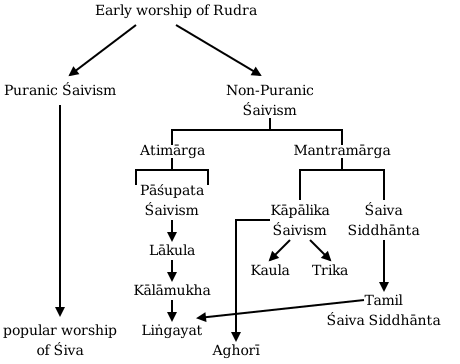
Hindu tradition that worships Shiva
| Field | Value | |
|---|---|---|
| title | Shaivism | |
| image | [[File:Worship AS.jpg | 200px]] |
| caption | Shiva (above) is the primary God in Shaivism. |
Shaivism (; ) is one of the major Hindu religious traditions, which worships Shiva as the supreme being. It is the second-largest Hindu sect, after Vaishnavism, constituting about 385 million Hindus, found widely across South Asia predominantly in India, Sri Lanka, and Nepal. The followers of Shaivism are called Shaivas or Shaivites.
According to Chakravarti, Shaivism developed as an amalgam of pre-Aryan religions and traditions, Vedic Rudra, and post-Vedic traditions, accommodating local traditions and Yoga, puja and bhakti. According to Bisschop, early shaivism is rooted in the worship of the vedic deity Rudra. The earliest evidence for sectarian Rudra-Shiva worship appears with the Pasupata (early CE), possibly owing to the Hindu synthesis, when many local traditions were aligned with the Vedic-Brahmanical fold. The Pāśupata movement rapidly expanded throughout North India, giving rise to different forms of Shaivism, which led to the emergence of various tantric traditions. Both devotional and monistic Shaivism became popular in the 1st millennium CE, rapidly becoming the dominant religious tradition of many Hindu kingdoms. It arrived in Southeast Asia shortly thereafter, leading to the construction of thousands of Shaiva temples on the islands of Indonesia as well as Cambodia and Vietnam, co-evolving with Buddhism in these regions.
Shaivism encompasses a wide range of sub-traditions, from devotional dualistic theism such as Shaiva Siddhanta, to yoga-oriented monistic non-theism, such as Kashmiri Shaivism. Shaivite theology ranges from Shiva being the creator, preserver, and destroyer to being the same as the Atman (Self) within oneself and every living being. It is closely related to Shaktism, and some Shaivas worship in both Shiva and Shakti temples. It is the Hindu tradition that most accepts ascetic life and emphasises yoga, and encourages one to discover and be one with Shiva within.
It has a vast literature, considering both the Vedas and the Agama texts as important sources of theology.
Etymology and nomenclature
Shiva (, ) literally means kind, friendly, gracious, or auspicious. As a proper name, it means "The Auspicious One".
The word Shiva is used as an adjective in the Rig Veda, as an epithet for several Rigvedic deities, including Rudra. The term Shiva also connotes "liberation, final emancipation" and "the auspicious one", this adjective sense of usage is addressed to many deities in Vedic layers of literature. The term evolved from the Vedic Rudra-Shiva to the noun Shiva in the Epics and the Puranas, as an auspicious deity who is the "creator, reproducer and dissolver".
The Sanskrit word or sa means "relating to the god Shiva", while the related beliefs, practices, history, literature and sub-traditions constitute Shaivism.
Origins and history
The origins of Shaivism are unclear and a matter of debate among scholars. According to Chakravarti, it is an amalgam of pre-Vedic cults and traditions and Vedic culture. Gavin flood associates it with the Brahmanization of local traditions. According to Bisschop, early shaivism is rooted in the worship of the vedic deity Rudra.
Indus Valley Civilisation
Main article: Religion of the Indus Valley Civilisation
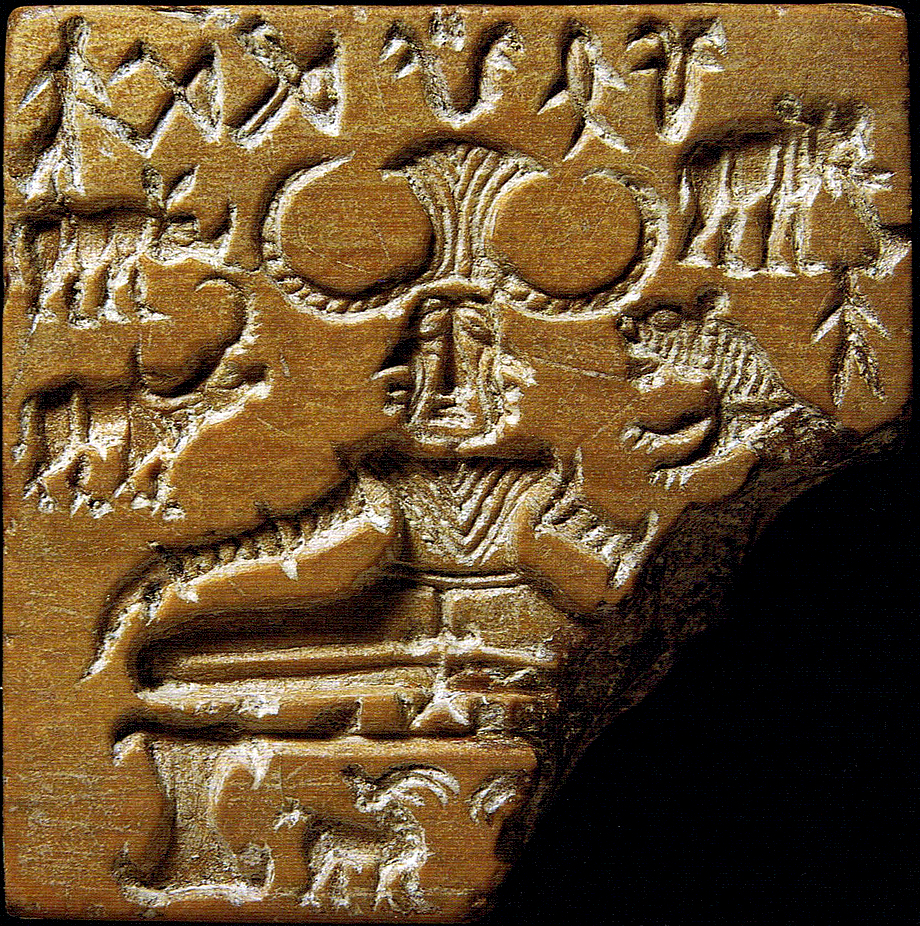
Some trace the origins to the Indus Valley Civilisation, which reached its peak around 2500–2000 BCE. Archeological discoveries show seals that suggest a deity that somewhat appears like Shiva. Of these is the Pashupati seal, which early scholars interpreted as someone seated in a meditating yoga pose surrounded by animals, and with horns. This "Pashupati" (Lord of Animals, Sanskrit **) seal has been interpreted by these scholars as a prototype of Shiva. Gavin Flood characterises these views as "speculative", saying that it is not clear from the seal if the figure has three faces, or is seated in a yoga posture, or even that the shape is intended to represent a human figure.
Other scholars state that the Indus Valley script remains undeciphered, and the interpretation of the Pashupati seal is uncertain. According to Srinivasan, the proposal that it is proto-Shiva may be a case of projecting "later practices into archeological findings". Similarly, Asko Parpola states that other archaeological finds such as the early Elamite seals dated to 3000–2750 BCE show similar figures and these have been interpreted as "seated bull" and not a yogi, and the bull interpretation is likely more accurate.
Vedic elements
The Rigveda (~1500–1200 BCE) has the earliest clear mention of Rudra ("Roarer") in its hymns 2.33, 1.43 and 1.114. Flood notes that Rudra is an ambiguous god, peripheral in the Vedic pantheon, possibly indicating non-Vedic origins. The text also includes a Satarudriya, an influential hymn with embedded hundred epithets for Rudra, that is cited in many medieval era Shaiva texts as well as recited in major Shiva temples of Hindus in contemporary times. Yet, the Vedic literature only presents scriptural theology, but does not attest to the existence of Shaivism.
Emergence of Shaivism
According to Chakravarti, Shaivism developed as an amalgam of pre-Aryan religions and traditions, Vedic Rudra, and post-Vedic traditions, accommodating phallic, bull and serpent cults, the Dravidian Father God and Mother Goddess concept, and Yoga, puja and bhakti.
According to Gavin Flood, "the formation of Śaiva traditions as we understand them begins to occur during the period from 200 BC to 100 AD." Shiva was originally probably not a Brahmanical god, The pre-Vedic Shiva acquired a growing prominence as its cult assimilated numerous "ruder faiths" and their mythologies, and the Epics and Puranas preserve pre-Vedic myths and legends of these traditions assimilated by the Shiva-cult. Shiva's growing prominence was facilitated by identification with a number of Vedic deities, such as Purusha, Rudra, Agni, Indra, , , among others. The earliest evidence for sectarian Rudra-Shiva worship appears with the Pasupata (early CE). The followers of Shiva were gradually accepted into the Brahmanical fold, becoming allowed to recite some of the Vedic hymns.
Patanjali's **, dated to the 2nd century BCE, mentions the term Shiva-bhagavata in section 5.2.76. Patanjali, while explaining Panini's rules of grammar, states that this term refers to a devotee clad in animal skins and carrying an ayah sulikah (iron spear, trident lance) as an icon representing his god.
The Shvetashvatara Upanishad mentions terms such as Rudra, Shiva, and Maheshwaram, but its interpretation as a theistic or monistic text of Shaivism is disputed. The dating of the Shvetashvatara is also in dispute, but it is likely a late Upanishad.
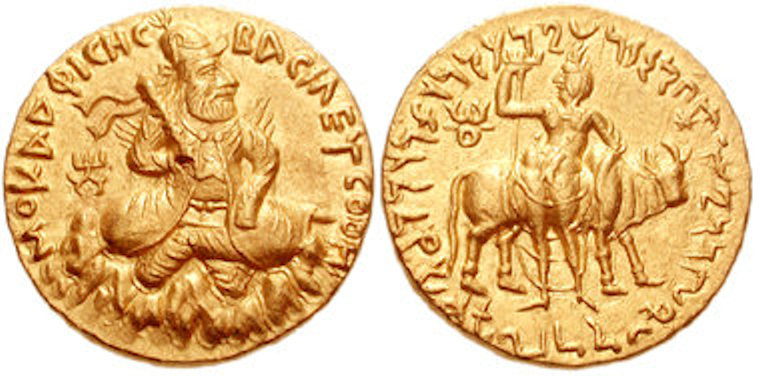
The Mahabharata mentions Shaiva ascetics, such as in chapters 4.13 and 13.140. Other evidence that is possibly linked to the importance of Shaivism in ancient times are in epigraphy and numismatics, such as in the form of prominent Shiva-like reliefs on Kushan Empire era gold coins. However, this is controversial, as an alternate hypothesis for these reliefs is based on Zoroastrian Oesho. According to Flood, coins dated to the ancient Greek, Saka and Parthian kings who ruled parts of the Indian subcontinent after the arrival of Alexander the Great also show Shiva iconography; however, this evidence is weak and subject to competing inferences.
In the early centuries of the common era is the first clear evidence of Pāśupata Shaivism. The inscriptions found in the Himalayan region, such as those in the Kathmandu valley of Nepal suggest that Shaivism (particularly Pāśupata) was established in this region by the 5th century, during the late Guptas era. These inscriptions have been dated by modern techniques to between 466 and 645 CE.
Puranic Shaivism

During the Gupta Empire (c. 320–500 CE) the genre of Purāṇa literature developed in India, and many of these Puranas contain extensive chapters on Shaivism – along with Vaishnavism, Shaktism, Smarta Traditions of Brahmins and other topics – suggesting the importance of Shaivism by then.
The most important Shaiva Purāṇas of this period include the Shiva Purāṇa, the Skanda Purāṇa, and the Linga Purāṇa.
Post-Gupta development

Most of the Gupta kings, beginning with Chandragupta II (Vikramaditya) (375–413 CE) were known as Parama Bhagavatas or Bhagavata Vaishnavas and had been ardent promoters of Vaishnavism. But following the Huna invasions, especially those of the Alchon Huns circa 500 CE, the Gupta Empire declined and fragmented, ultimately collapsing completely, with the effect of discrediting Vaishnavism, the religion it had been so ardently promoting. The newly arising regional powers in central and northern India, such as the Aulikaras, the Maukharis, the Maitrakas, the Kalacuris or the Vardhanas preferred adopting Shaivism instead, giving a strong impetus to the development of the worship of Shiva. Vaishnavism remained strong mainly in the territories which had not been affected by these events: South India and Kashmir.
In the early 7th century, the Chinese Buddhist pilgrim Xuanzang (Huen Tsang) visited India and wrote a memoir in Chinese that mentions the prevalence of Shiva temples all over North Indian subcontinent, including in the Hindu Kush region such as Nuristan. Between the 5th and 11th century CE, major Shaiva temples had been built in central, southern and eastern regions of the subcontinent, including those at Badami cave temples, Aihole, Elephanta Caves, Ellora Caves (Kailasha, cave 16), Khajuraho, Bhuvaneshwara, Chidambaram, Madurai, and Conjeevaram.
Major scholars of competing Hindu traditions from the second half of the 1st millennium CE, such as Adi Shankara of Advaita Vedanta and Ramanuja of Vaishnavism, mention several Shaiva sects, particularly the four groups: Pashupata, Lakulisha, tantric Shaiva and Kapalika. The description is conflicting, with some texts stating the tantric, puranik and Vedic traditions of Shaivism to be hostile to each other while others suggest them to be amicable sub-traditions. Some texts state that Kapalikas reject the Vedas and are involved in extreme experimentation, while others state the Shaiva sub-traditions revere the Vedas but are non-Puranik.
South India
Shaivism was the predominant tradition in South India, co-existing with Buddhism and Jainism, before the Vaishnava Alvars launched the Bhakti movement in the 7th century, and influential Vedanta scholars such as Ramanuja developed a philosophical and organisational framework that helped Vaishnavism expand. Though both traditions of Hinduism have ancient roots, given their mention in the epics such as the Mahabharata, Shaivism flourished in South India much earlier.
The Mantramarga of Shaivism, according to Alexis Sanderson, provided a template for the later though independent and highly influential Pancaratrika treatises of Vaishnavism. This is evidenced in Hindu texts such as the Isvarasamhita, Padmasamhita, and Paramesvarasamhita.

Along with the Himalayan region stretching from Kashmir through Nepal, the Shaiva tradition in South India has been one of the largest sources of preserved Shaivism-related manuscripts from ancient and medieval India. The region was also the source of Hindu arts, temple architecture, and merchants who helped spread Shaivism into southeast Asia in early 1st millennium CE.
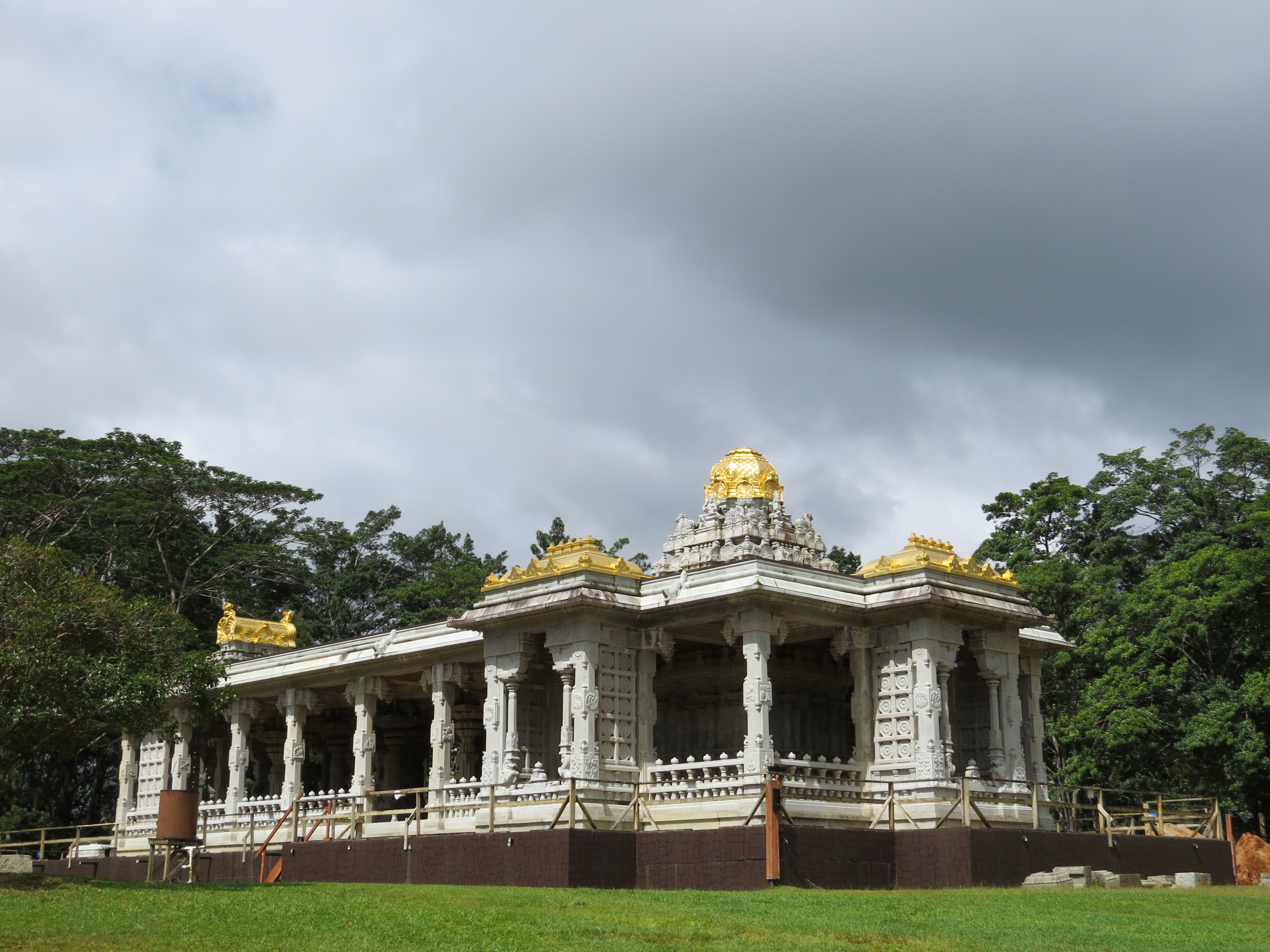
There are tens of thousands of Hindu temples where Shiva is either the primary deity or reverentially included in anthropomorphic or aniconic form (lingam, or svayambhu). Numerous historic Shaiva temples have survived in Tamil Nadu, Kerala, parts of Andhra Pradesh and Karnataka. Gudimallam is the oldest known lingam and has been dated to between 3rd to 1st-century BCE. It is a carved five feet high stone lingam with an anthropomorphic image of Shiva on one side. This ancient lingam is in Chittoor district of Andhra Pradesh.
Southeast Asia

Shaivism arrived in a major way in southeast Asia from south India, and to much lesser extent into China and Tibet from the Himalayan region. It co-developed with Buddhism in this region, in many cases. For example, in the Caves of the Thousand Buddhas, a few caves include Shaivism ideas. The epigraphical and cave arts evidence suggest that Shaiva Mahesvara and Mahayana Buddhism had arrived in Indo-China region in the Funan period, that is in the first half of the 1st millennium CE. In Indonesia, temples at archaeological sites and numerous inscription evidence dated to the early period (400 to 700 CE), suggest that Shiva was the highest god. This co-existence of Shaivism and Buddhism in Java continued through about 1500 CE when both Hinduism and Buddhism were replaced with Islam, and persists today in the province of Bali.
The Shaivist and Buddhist traditions overlapped significantly in southeast Asia, particularly in Indonesia, Cambodia, and Vietnam between the 5th and the 15th century. Shaivism and Shiva held the paramount position in ancient Java, Sumatra, Bali, and neighbouring islands, though the sub-tradition that developed creatively integrated more ancient beliefs that pre-existed. In the centuries that followed, the merchants and monks who arrived in Southeast Asia, brought Shaivism, Vaishnavism and Buddhism, and these developed into a syncretic, mutually supporting form of traditions.
Indonesia
In Balinese Hinduism, Dutch ethnographers further subdivided Siwa (shaivaites) Sampradaya" into five – Kemenuh, Keniten, Mas, Manuba and Petapan. This classification was to accommodate the observed marriage between higher caste Brahmana men with lower caste women.
Beliefs and practices
Shaivism centres around Shiva, but it has many sub-traditions whose theological beliefs and practices vary significantly. They range from dualistic devotional theism to monistic meditative discovery of Shiva within oneself. Within each of these theologies, there are two sub-groups. One sub-group is called Vedic-Puranic, who use the terms such as "Shiva, Mahadeva, Maheshvara and others" synonymously, and they use iconography such as the Linga, Nandi, Trishula (trident), as well as anthropomorphic statues of Shiva in temples to help focus their practices. Another sub-group is called esoteric, which fuses it with abstract Sivata (feminine energy) or Sivatva (neuter abstraction), wherein the theology integrates the goddess (Shakti) and the god (Shiva) with Tantra practices and Agama teachings. There is a considerable overlap between these Shaivas and the Shakta Hindus.
Vedic, Puranik, and esoteric Shaivism
Scholars such as Alexis Sanderson discuss Shaivism in three categories: Vedic, Puranik and non-Puranik (esoteric, tantric). They place Vedic and Puranik together given the significant overlap, while placing Non-Puranik esoteric sub-traditions as a separate category.
_LACMA_M.2011.156.4_(1_of_2).jpg)
- Vedic-Puranik. The majority within Shaivism follow the Vedic-Puranik traditions. They revere the Vedas and the Puranas and hold beliefs that span from dualistic theism, such as Shiva Bhakti (devotionalism), to monistic non-theism dedicated to yoga and a meditative lifestyle. This sometimes involves renouncing household life for monastic pursuits of spirituality. The Yoga practice is particularly pronounced in nondualistic Shaivism, with the practice refined into a methodology such as four-fold upaya: being pathless (anupaya, iccha-less, desire-less), being divine (sambhavopaya, jnana, knowledge-full), being energy (saktopaya, kriya, action-full) and being individual (anavopaya).
- Non-Puranik. These are esoteric, minority sub-traditions wherein devotees are initiated (**) into a specific cult they prefer. Their goals vary, ranging from liberation in current life (mukti) to seeking pleasures in higher worlds (bhukti). Their means also vary, ranging from meditative atimarga or "outer higher path" versus those whose means are recitation-driven mantras. The atimarga sub-traditions include Pashupatas and Lakula. According to Sanderson, the Pashupatas have the oldest heritage, likely from the 2nd century CE, as evidenced by ancient Hindu texts such as the Shanti Parva book of the Mahabharata epic. The tantric sub-tradition in this category is traceable to post-8th to post-11th century depending on the region of Indian subcontinent, paralleling the development of Buddhist and Jain tantra traditions in this period. Among these are the dualistic Shaiva Siddhanta and Bhairava Shaivas (non-Saiddhantika), based on whether they recognise any value in Vedic orthopraxy. These sub-traditions cherish secrecy, special symbolic formulae, initiation by a teacher and the pursuit of siddhi (special powers). Some of these traditions also incorporate theistic ideas, elaborate geometric yantra with embedded spiritual meaning, mantras and rituals.
Shaivism versus other Hindu traditions
Shaivism sub-traditions subscribe to various philosophies, are similar in some aspects and differ in others. These traditions compare with Vaishnavism, Shaktism and Smartism as follows:
| Shaiva Traditions | Vaishnava Traditions | Shakta Traditions | Smarta Traditions | References | ||||||
|---|---|---|---|---|---|---|---|---|---|---|
| Scriptural authority | Vedas, Upanishads and Agamas | Vedas, Upanishads and Agamas | Vedas and Upanishads | |||||||
| Supreme deity | Shiva | Vishnu | Devi | |||||||
| Creator | Shiva | Vishnu | Devi | |||||||
| Avatar | Minor | Key concept | Significant | |||||||
| Monastic life | Recommends | Accepts | Accepts | |||||||
| Rituals, Bhakti | title=Shaivas | url=http://www.philtar.ac.uk/encyclopedia/hindu/devot/shaiv.html | website=Overview Of World Religions | publisher=Philtar | access-date=13 December 2017 | archive-url=https://web.archive.org/web/20170222015505/http://www.philtar.ac.uk/encyclopedia/hindu/devot/shaiv.html | archive-date=22 February 2017 | url-status=live}} | Affirms | Affirms |
| Ahimsa and Vegetarianism | Recommends, Optional | Affirms | Optional | |||||||
| Free will, Maya, Karma | Affirms | Affirms | Affirms | |||||||
| Metaphysics | Brahman (Shiva), Atman (Self) | Brahman (Vishnu), Atman | Brahman (Devi), Atman | |||||||
| Epistemology | ||||||||||
| (Pramana) | 1. Perception | |||||||||
| 2. Inference | ||||||||||
| 3. Reliable testimony | ||||||||||
| 4. Self-evident | 1. Perception | |||||||||
| 2. Inference | ||||||||||
| 3. Reliable testimony | 1. Perception | |||||||||
| 2. Inference | ||||||||||
| 3. Reliable testimony | ||||||||||
| Philosophy | Dvaita, qualified advaita, advaita | Vishishtadvaita, Dvaita, qualified advaita, advaita | Shakti-advaita | |||||||
| Liberation | ||||||||||
| (Soteriology) | Jivanmukta, | |||||||||
| Charya-Kriyā-Yoga-Jnana | Videhamukti, Yoga, | |||||||||
| champions householder life | Bhakti, Tantra, Yoga |
Texts
(post-8th century) Nepal and Himalayan region = 140,000 South India = 8,600 Others (Devanagiri) = 2,000 Bali and SE Asia = Many Over its history, Shaivism has been nurtured by numerous texts ranging from scriptures to theological treatises. These include the Vedas and Upanishads, the Agamas, and the Bhasya. According to Gavin Flood – a professor at Oxford University specialising in Shaivism and phenomenology, Shaiva scholars developed a sophisticated theology, in its diverse traditions. Among the notable and influential commentaries by dvaita (dualistic) theistic Shaivism scholars were the 8th century Sadyajoti, the 10th century Ramakantha, 11th century Bhojadeva. The dualistic theology was challenged by the numerous scholars of advaita (nondualistic, monistic) Shaivism persuasion such as the 8th/9th century Vasugupta, the 10th century Abhinavagupta and 11th century Kshemaraja, particularly the scholars of the Pratyabhijna, Spanda and Kashmiri Shaivism schools of theologians.
Vedas and Principal Upanishads
The Vedas and Upanishads are shared scriptures of Hinduism, while the Agamas are sacred texts of specific sub-traditions. This school's view can be summed as,
The Veda is the cow, the true Agama its milk. |Umapati|Translated by David Smith}}
The * Upanishad* (400–200 BCE) is the earliest textual exposition of a systematic philosophy of Shaivism.
Shaiva minor Upanishads
Shaivism-inspired scholars authored 14 Shiva-focussed Upanishads that are called the Shaiva Upanishads. These are considered part of 95 minor Upanishads in the Muktikā Upanishadic corpus of Hindu literature. The earliest among these were likely composed in 1st millennium BCE, while the last ones in the late medieval era.
The Shaiva Upanishads present diverse ideas, ranging from bhakti-style theistic dualism themes to a synthesis of Shaiva ideas with Advaitic (nondualism), Yoga, Vaishnava and Shakti themes.
| Jabali Upanishad | unknown | Shiva, Pashupata theology, significance of ash and body art |
|---|
Shaiva Agamas
The Agama texts of Shaivism are another important foundation of Shaivism theology. These texts include Shaiva cosmology, epistemology, philosophical doctrines, precepts on meditation and practices, four kinds of yoga, mantras, meanings and manuals for Shaiva temples, and other elements of practice. These canonical texts exist in Sanskrit
The Agamas present a diverse range of philosophies, ranging from theistic dualism to absolute monism. In Shaivism, there are ten dualistic (dvaita) Agama texts, eighteen qualified monism-cum-dualism (bhedabheda) Agama texts and sixty four monism (advaita) Agama texts. The Bhairava Shastras are monistic, while Shiva Shastras are dualistic.
The Agama texts of Shaiva and Vaishnava schools are premised on existence of Atman (Self) and the existence of an Ultimate Reality (Brahman) which is considered identical to Shiva in Shaivism. The texts differ in the relation between the two. Some assert the dualistic philosophy of the individual Self and Ultimate Reality being different, while others state a Oneness between the two. Kashmir Shaiva Agamas posit absolute oneness, that is God (Shiva) is within man, God is within every being, God is present everywhere in the world including all non-living beings, and there is no spiritual difference between life, matter, man and God. While Agamas present diverse theology, in terms of philosophy and spiritual precepts, no Agama that goes against the Vedic literature, states Dhavamony, has been acceptable to the Shaivas.
Traditions
Shaivism is ancient, and over time it developed many sub-traditions. These broadly existed and are studied in three groups: theistic dualism, nontheistic monism, and those that combine features or practices of the two. Sanderson presents the historic classification found in Indian texts, namely Atimarga of the Shaiva monks and Mantramarga that was followed by both the renunciates (sannyasi) and householders (grihastha) in Shaivism. Sub-traditions of Shaivas did not exclusively focus on Shiva, but others such as the Devi (goddess) Shaktism.
Sannyasi Shaiva: Atimarga
The Atimarga branch of Shaivism emphasises liberation (salvation) – or the end of all Dukkha – as the primary goal of spiritual pursuits. It was the path for Shaiva ascetics, in contrast to Shaiva householders whose path was described as Mantramarga and who sought both salvation as well as the yogi-siddhi powers and pleasures in life. The Atimarga revered the Vedic sources of Shaivism, and sometimes referred to in ancient Indian texts as Raudra (from Vedic Rudra).
Pashupata Atimargi
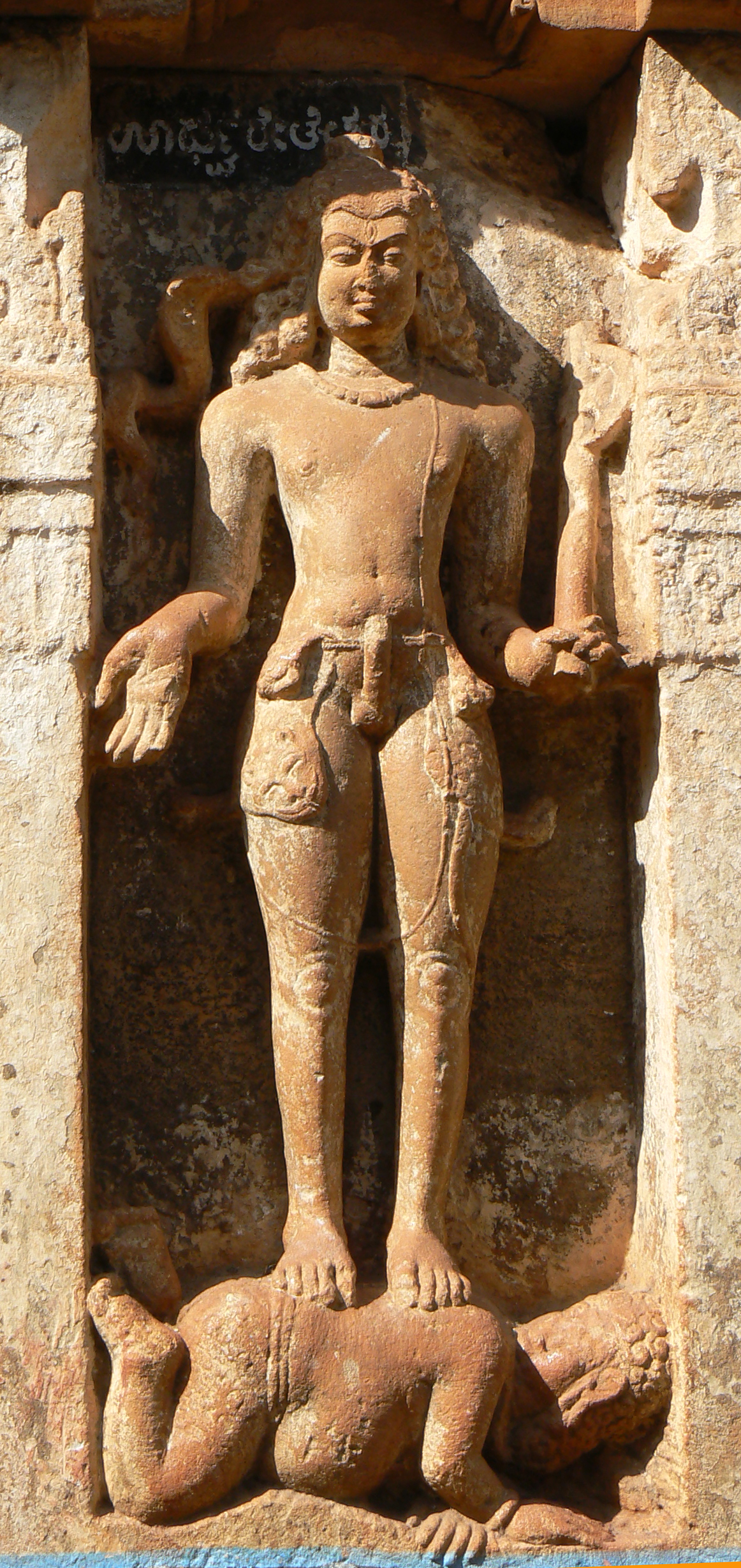
Pashupata: (IAST: **) are the Shaivite sub-tradition with the oldest heritage, as evidenced by Indian texts dated to around the start of the common era. It is a monist tradition, that considers Shiva to be within oneself, in every being and everything observed. The Pashupata path to liberation is one of asceticism that is traditionally restricted to Brahmin males. Pashupata theology, according to Shiva Sutras, aims for a spiritual state of consciousness where the Pashupata yogi "abides in one's own unfettered nature", where the external rituals feel unnecessary, where every moment and every action becomes an internal vow, a spiritual ritual unto itself.
The Pashupatas derive their Sanskrit name from two words: Pashu (beast) and Pati (lord), where the chaotic and ignorant state, one imprisoned by bondage and assumptions, is conceptualised as the beast, and the Atman (Self, Shiva) that is present eternally everywhere as the Pati. The tradition aims at realising the state of being one with Shiva within and everywhere. It has extensive literature, and a fivefold path of spiritual practice that starts with external practices, evolving into internal practices and ultimately meditative yoga, with the aim of overcoming all suffering (Dukkha) and reaching the state of bliss (Ananda).
The tradition is attributed to a sage from Gujarat named Lakulisha (~2nd century CE). He is the purported author of the Pashupata-sutra, a foundational text of this tradition. Other texts include the bhasya (commentary) on Pashupata-sutra by Kaudinya, the Gaṇakārikā, Pañchārtha bhāshyadipikā and Rāśikara-bhāshya. The Pashupatha monastic path was available to anyone of any age, but it required renunciation from four Ashrama (stage) into the fifth stage of Siddha-Ashrama. The path started as a life near a Shiva temple and silent meditation, then a stage when the ascetic left the temple and did karma exchange (be cursed by others, but never curse back). He then moved to the third stage of life where he lived like a loner in a cave or abandoned places or Himalayan mountains, and towards the end of his life he moved to a cremation ground, surviving on little, peacefully awaiting his death.
The Pashupatas have been particularly prominent in Gujarat, Rajasthan, Kashmir and Nepal. The community is found in many parts of the Indian subcontinent. In the late medieval era, Pashupatas Shaiva ascetics became extinct.
Lakula Atimargi
This second division of the Atimarga developed from the Pashupatas. Their fundamental text too was the Pashupata Sutras. They differed from Pashupata Atimargi in that they departed radically from the Vedic teachings, respected no Vedic or social customs. He would walk around, for example, almost naked, drank liquor in public, and used a human skull as his begging bowl for food. The Lakula Shaiva ascetic recognised no act nor words as forbidden, he freely did whatever he felt like, much like the classical depiction of his deity Rudra in ancient Hindu texts. However, according to Alexis Sanderson, the Lakula ascetic was strictly celibate and did not engage in sex.
Secondary literature, such as those written by Kashmiri Ksemaraja, suggest that the Lakula had their canons on theology, rituals and literature on pramanas (epistemology). However, their primary texts are believed to be lost, and have not survived into the modern era.
Grihastha and Sannyasi Shaiva: Mantramarga
"Mantramārga" (Sanskrit: मंत्रमार्ग, "the path of mantras") has been the Shaiva tradition for both householders and monks. It grew from the Atimarga tradition. This tradition sought not just liberation from Dukkha (suffering, unsatisfactoriness), but special powers (siddhi) and pleasures (bhoga), both in this life and next. The siddhi were particularly the pursuit of Mantramarga monks, and it is this sub-tradition that experimented with a great diversity of rites, deities, rituals, yogic techniques and mantras. Both the Mantramarga and Atimarga are ancient traditions, more ancient than the date of their texts that have survived, according to Sanderson. Mantramārga grew to become a dominant form of Shaivism in this period. It also spread outside of India into Southeast Asia's Khmer Empire, Java, Bali and Cham.
The Mantramarga tradition created the Shaiva Agamas and Shaiva tantra (technique) texts. This literature presented new forms of ritual, yoga and mantra. This literature was highly influential not just to Shaivism, but to all traditions of Hinduism, as well as to Buddhism and Jainism. Mantramarga had both theistic and monistic themes, which co-evolved and influenced each other. The tantra texts reflect this, where the collection contains both dualistic and non-dualistic theologies. The theism in the tantra texts parallel those found in Vaishnavism and Shaktism. Shaiva Siddhanta is a major sub-tradition that emphasised dualism during much of its history.
Shaivism has had strong nondualistic (advaita) sub-traditions. Its central premise has been that the Atman (Self) of every being is identical to Shiva, its various practices and pursuits directed at understanding and being one with the Shiva within. This monism is close but differs somewhat from the monism found in Advaita Vedanta of Adi Shankara. Unlike Shankara's Advaita, Shaivism monist schools consider Maya as Shakti, or energy and creative primordial power that explains and propels the existential diversity.
Srikantha, influenced by Ramanuja, formulated Shaiva Vishishtadvaita. In this theology, Atman (Self) is not identical with Brahman, but shares with the Supreme all its qualities. Appayya Dikshita (1520–1592), an Advaita scholar, proposed pure monism, and his ideas influenced Shaiva in the Karnataka region. His Shaiva Advaita doctrine is inscribed on the walls of Kalakanthesvara temple in Adaiyappalam (Tiruvannamalai district).
Shaiva Siddhanta

The Śaivasiddhānta ("the established doctrine of Shiva") is the earliest sampradaya (tradition, lineage) of Tantric Shaivism, dating from the 5th century. The tradition emphasises loving devotion to Shiva, uses 5th to 9th-century Tamil hymns called Tirumurai. A key philosophical text of this sub-tradition was composed by 13th-century Meykandar.
The tradition may have originated in Kashmir where it developed a sophisticated theology propagated by theologians Sadyojoti, Bhaṭṭa Nārāyaṇakaṇṭha and his son Bhaṭṭa Rāmakaṇṭha (c. 950–1000). However, after the arrival of Islamic rulers in north India, it thrived in the south. The philosophy of Shaiva Siddhanta, is particularly popular in south India, Sri Lanka, Malaysia and Singapore.
The historic Shaiva Siddhanta literature is an enormous body of texts. The tradition includes both Shiva and Shakti (goddess), but with a growing emphasis on metaphysical abstraction. Unlike the experimenters of Atimarga tradition and other sub-traditions of Mantramarga, states Sanderson, the Shaiva Siddhanta tradition had no ritual offering or consumption of "alcoholic drinks, blood or meat". Their practices focussed on abstract ideas of spirituality, worship and loving devotion to Shiva as SadaShiva, and taught the authority of the Vedas and Shaiva Agamas. This tradition diversified in its ideas over time, with some of its scholars integrating a non-dualistic theology.
Nayanars

By the 7th century, the Nayanars, a tradition of poet-saints in the bhakti tradition developed in ancient Tamil Nadu with a focus on Shiva, comparable to that of the Vaisnava Alvars. The devotional Tamil poems of the Nayanars are divided into eleven collections together known as Tirumurai, along with a Tamil Purana called the Periya Puranam. The first seven collections are known as the Tevaram and are regarded by Tamils as equivalent to the Vedas. They were composed in the 7th century by Sambandar, Appar, and Sundarar.
Tirumular (also spelled or ), the author of the Tirumantiram (also spelled Tirumandiram) is considered by Tattwananda to be the earliest exponent of Shaivism in Tamil areas. Tirumular is dated as 7th or 8th century by Maurice Winternitz. The Tirumantiram is a primary source for the system of Shaiva Siddhanta, being the tenth book of its canon. The Tiruvacakam by Manikkavacagar is an important collection of hymns.
Tantra Diksha traditions
The main element of all Shaiva Tantra is the practice of diksha, a ceremonial initiation in which divinely revealed mantras are given to the initiate by a Guru.
A notable feature of some "left tantra" ascetics was their pursuit of siddhis (supernatural abilities) and bala (powers), such as averting danger (santih) and the ability to harm enemies (abhicarah). Ganachakras, ritual feasts, would sometimes be held in cemeteries and cremation grounds and featured possession by powerful female deities called Yoginis. The cult of Yoginis aimed to gain special powers through esoteric worship of the Shakti or the feminine aspects of the divine. The groups included sisterhoods that participated in the rites.
Some traditions defined special powers differently. For example, the Kashmiri tantrics explain the powers as anima (awareness than one is present in everything), laghima (lightness, be free from presumed diversity or differences), mahima (heaviness, realise one's limit is beyond one's own consciousness), prapti (attain, be restful and at peace with one's own nature), prakamya (forbearance, grasp and accept cosmic diversity), vasita (control, realise that one always has power to do whatever one wants), isitva (self lordship, a yogi is always free). More broadly, the tantric sub-traditions sought nondual knowledge and enlightening liberation by abandoning all rituals, and with the help of reasoning (yuktih), scriptures (sastras) and the initiating Guru.
Kashmir Shaivism
Main article: Kashmir Shaivism
Kashmir Shaivism is an influential tradition within Shaivism that emerged in Kashmir in the 1st millennium CE and thrived in early centuries of the 2nd millennium before the region was overwhelmed by the Islamic invasions from the Hindu Kush region. The Kashmir Shaivism traditions contracted due to Islam except for their preservation by Kashmiri Pandits. The tradition experienced a revival in the 20th century due especially to influence of Swami Lakshmanjoo and his students.
Kashmir Shaivism has been a nondualistic school, and is distinct from the dualistic Shaiva Siddhānta tradition that also existed in medieval Kashmir. Their extensive texts established the Shaiva theology and philosophy in an advaita (monism) framework. The Siva Sutras of 9th century Vasugupta and his ideas about Spanda have also been influential to this and other Shaiva sub-traditions, but it is probable that much older Shaiva texts once existed.
A notable feature of Kashmir Shaivism was its openness and integration of ideas from Shaktism, Vaishnavism and Vajrayana Buddhism.
Nath
Main article: Nath
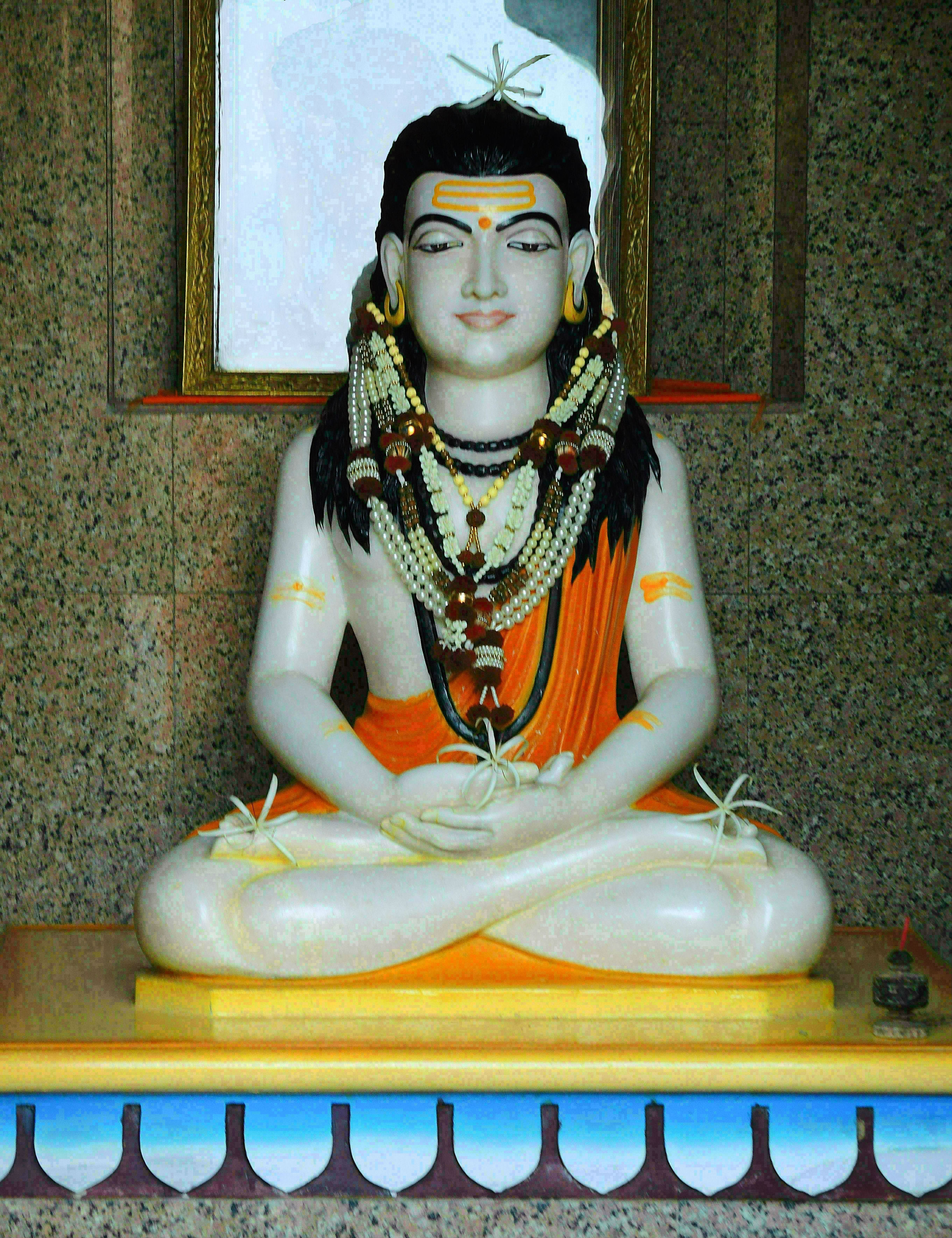
Nath is a Shaiva subtradition that emerged from a much older Siddha tradition based on Yoga. The Nath consider Shiva as "Adinatha" or the first guru, and it has been a small but notable and influential movement in India whose devotees were called "Yogi" or "Jogi", given their monastic unconventional ways and emphasis on Yoga.
Nath theology integrated philosophy from Advaita Vedanta and Buddhism traditions. Their unconventional ways challenged all orthodox premises, exploring dark and shunned practices of society as a means to understanding theology and gaining inner powers. The tradition traces itself to 9th or 10th century Matsyendranath and to ideas and organisation developed by Gorakshanath. They combined both theistic practices such as worshipping goddesses and their historic Gurus in temples, as well monistic goals of achieving liberation or jivan-mukti while alive, by reaching the perfect (siddha) state of realising oneness of self and everything with Shiva.
They formed monastic organisations, and some of them metamorphosed into warrior ascetics to resist persecution during the Islamic rule of the Indian subcontinent.
Lingayatism
Main article: Lingayatism

Lingayatism, also known as Veera Shaivism is a distinct Shaivite religious tradition in India. It was founded by the 12th-century philosopher and statesman Basava and spread by his followers, called Sharanas.
Lingayatism emphasises qualified monism and bhakti (loving devotion) to Shiva, with philosophical foundations similar to those of the 11th–12th-century South Indian philosopher Ramanuja. Large communities of Lingayats are found in the south Indian state of Karnataka and nearby regions. Lingayatism has its own theological literature with sophisticated theoretical sub-traditions.
They were influential in the Hindu Vijayanagara Empire that reversed the territorial gains of Muslim rulers, after the invasions of the Deccan region first by Delhi Sultanate and later other Sultanates. Lingayats consider their scripture to be Basava Purana, which was completed in 1369 during the reign of Vijayanagara ruler Bukka Raya I. Lingayat (Veerashaiva) thinkers rejected the custodial hold of Brahmins over the Vedas and the shastras, but they did not outright reject the Vedic knowledge. The 13th-century Telugu Virashaiva poet Palkuriki Somanatha, the author of the scripture of Lingayatism, for example asserted, "Virashaivism fully conformed to the Vedas and the shastras."
Demography
There are no census data available on demographic history or trends for the traditions within Hinduism. Large Shaivite communities exist in the Southern Indian states of Tamil Nadu, Karnataka, Telangana, Kerala and Andhra Pradesh as well as in Jammu and Kashmir, Himachal Pradesh and Uttrakhand. In North Indian communities, Shaivism is most practiced amongst the Kashmiri Hindus and Paharis of the Himalayan belt. Substantial communities are also found in Punjab,Haryana, Maharashtra and central Uttar Pradesh.

According to Galvin Flood, Shaivism and Shaktism traditions are difficult to separate, as many Shaiva Hindus revere the goddess Shakti regularly. The denominations of Hinduism, states Julius Lipner, are unlike those found in major religions of the world, because Hindu denominations are fuzzy with individuals revering gods and goddesses polycentrically, with many Shaiva and Vaishnava adherents recognising Sri (Lakshmi), Parvati, Saraswati and other aspects of the goddess Devi. Similarly, Shakta Hindus revere Shiva and goddesses such as Parvati, Durga, Radha, Sita and Saraswati important in Shaiva and Vaishnava traditions.
Influence
Shiva is a pan-Hindu god and Shaivism ideas on Yoga and as the god of performance arts (Nataraja) have been influential on all traditions of Hinduism.
Shaivism was highly influential in southeast Asia from the late 6th century onwards, particularly the Khmer and Cham kingdoms of Indochina, and across the major islands of Indonesia such as Sumatra, Java and Bali. This influence on classical Cambodia, Vietnam and Thailand continued when Mahayana Buddhism arrived with the same Indians.
In Shaivism of Indonesia, the popular name for Shiva has been Bhattara Guru, which is derived from Sanskrit Bhattaraka which means "noble lord". He is conceptualised as a kind spiritual teacher, the first of all Gurus in Indonesian Hindu texts, mirroring the Dakshinamurti aspect of Shiva in the Indian subcontinent. However, the Bhattara Guru has more aspects than the Indian Shiva, as the Indonesian Hindus blended their spirits and heroes with him. Bhattara Guru's wife in southeast Asia is the same Hindu deity Durga, who has been popular since ancient times, and she too has a complex character with benevolent and fierce manifestations, each visualised with different names such as Uma, Sri, Kali and others. Shiva has been called Sadasiva, Paramasiva, Mahadeva in benevolent forms, and Kala, Bhairava, Mahakala in his fierce forms.
As Bhakti movement ideas spread in South India, Shaivite devotionalism became a potent movement in Karnataka and Tamil Nadu. Shaivism was adopted by several ruling Hindu dynasties as the state religion (though other Hindu traditions, Buddhism and Jainism continued in parallel), including the Chola, Nayaks(lingayats) and the Rajputs. A similar trend was witnessed in early medieval Indonesia with the Majapahit empire and pre-Islamic Malaya. In the Himalayan Hindu kingdom of Nepal, Shaivism remained a popular form of Hinduism and co-evolved with Mahayana and Vajrayana Buddhism.

Shaktism
The goddess tradition of Hinduism called Shaktism is closely related to Shaivism. In many regions of India, not only did the ideas of Shaivism influence the evolution of Shaktism, but Shaivism also itself was influenced by it and progressively subsumed the reverence for the divine feminine (Devi) as an equal and essential partner of divine masculine (Shiva). The goddess Shakti in eastern states of India is considered the inseparable partner of God Shiva. According to Galvin Flood, the closeness between Shaivism and Shaktism traditions is such that these traditions of Hinduism are at times difficult to separate. Some Shaiva worship in Shiva and Shakti temples.
Smarta Tradition
Shiva is a part of the Smarta Tradition, sometimes referred to as Smartism, which is a tradition within Hinduism. The Smartas are associated with the Advaita Vedanta theology, and their practices include the Panchayatana puja, a ritual that incorporates simultaneous reverence for five deities: Shiva, Vishnu, Surya, Devi and Ganesha. The Smartas thus accept the primary deity of Shaivism as a means to their spiritual goals.
Philosophically, the Smarta tradition emphasises that all idols (murti) are icons of saguna Brahman, a means to realising the abstract Ultimate Reality called nirguna Brahman. The five or six icons are seen by Smartas as multiple representations of the one Saguna Brahman (i.e., a personal God with form), rather than as distinct beings. The ultimate goal in this practice is to transition past the use of icons, then follow a philosophical and meditative path to understanding the oneness of Atman (Self) and Brahman (metaphysical Ultimate Reality) – as "That art Thou".
Panchayatana puja that incorporates Shiva became popular in medieval India and is attributed to 8th century Adi Shankara, but archaeological evidence suggests that this practice long predates the birth of Adi Shankara. Many Panchayatana mandalas and temples have been uncovered that are from the Gupta Empire period, and one Panchayatana set from the village of Nand (about 24 kilometres from Ajmer) has been dated to belong to the Kushan Empire era (pre-300 CE). According to James Harle, major Hindu temples from 1st millennium CE commonly embedded the pancayatana architecture, from Odisha to Karnataka to Kashmir. Large temples often present multiple deities in the same temple complex, while some explicitly include dual representations of deities such as Harihara (half Shiva, half Vishnu).
Vaishnavism
Vaishnava texts reverentially mention Shiva. For example, the Vishnu Purana primarily focuses on the theology of Hindu god Vishnu and his avatars such as Krishna, but it praises Brahma and Shiva and asserts that they are one with Vishnu. The Vishnu Sahasranama in the Mahabharata list a thousand attributes and epithets of Vishnu. The list identifies Shiva with Vishnu.
Reverential inclusion of Shaiva ideas and iconography are very common in major Vaishnava temples, such as Dakshinamurti symbolism of Shaiva thought is often enshrined on the southern wall of the main temple of major Vaishnava temples in peninsular India. Harihara temples in and outside the Indian subcontinent have historically combined Shiva and Vishnu, such as at the Lingaraj Mahaprabhu temple in Bhubaneshwar, Odisha. According to Julius Lipner, Vaishnavism traditions such as Sri Vaishnavism embrace Shiva, Ganesha and others, not as distinct deities of polytheism, but as polymorphic manifestation of the same supreme divine principle, providing the devotee a polycentric access to the spiritual.
Similarly, Shaiva traditions have reverentially embraced other gods and goddesses as manifestation of the same divine. The Skanda Purana, for example in section 6.254.100 states, "He who is Shiva is Vishnu, he who is Vishnu is Sadashiva."
Sauraism (Sun deity)
The sun god called Surya is an ancient deity of Hinduism, and several ancient Hindu kingdoms particularly in the northwest and eastern regions of the Indian subcontinent revered Surya. These devotees called Sauras once had a large corpus of theological texts, and Shaivism literature reverentially acknowledges these. For example, the Shaiva text Srikanthiyasamhita mentions 85 Saura texts, almost all of which are believed to have been lost during the Islamic invasion and rule period, except for large excerpts found embedded in Shaiva manuscripts discovered in the Himalayan mountains. Shaivism incorporated Saura ideas, and the surviving Saura manuscripts such as Saurasamhita acknowledge the influence of Shaivism, according to Alexis Sanderson, assigning "itself to the canon of Shaiva text Vathula-Kalottara.
Yoga movements

Yoga and meditation have been an integral part of Shaivism, and it has been a major innovator of techniques such as those of Hatha Yoga. Many major Shiva temples and Shaiva tritha (pilgrimage) centres, as well as Shaiva texts, depict anthropomorphic iconography of Shiva as a giant statue wherein Shiva is a lone yogi meditating.
In several Shaiva traditions such as the Kashmir Shaivism, anyone who seeks personal understanding and spiritual growth has been called a Yogi. The Shiva Sutras (aphorisms) of Shaivism teach yoga in many forms. According to Mark Dyczkowski, yoga – which literally means "union" – to this tradition has meant the "realisation of our true inherent nature which is inherently greater than our thoughts can ever conceive", and that the goal of yoga is to be the "free, eternal, blissful, perfect, infinite spiritually conscious" one is.
Many Yoga-emphasising Shaiva traditions emerged in medieval India, who refined yoga methods in ways such as introducing Hatha Yoga techniques. One such movement had been the Nath Yogis, a Shaivism sub-tradition that integrated "esoteric traditions drawn from Buddhism, Shaivism, and Hatha Yoga," and influenced 18th century Advaita Vedanta. It was founded by Matsyendranath and further developed by Gorakshanath. The texts of these Yoga emphasising Hindu traditions present their ideas in Shaiva context.{{refn|group=note|For example: [It will] be impossible to accomplish one's functions unless one is a master of oneself. Therefore strive for self-mastery, seeking to win the way upwards. To have self-mastery is to be a yogin (yogitvam). [v. 1–2] [...] Whatever reality he reaches through the Yoga whose sequence I have just explained, he realizes there a state of consciousness whose object is all that pervades. Leaving aside what remains outside he should use his vision to penetrate all [within]. Then once he has transcended all lower realities, he should seek the Shiva level. [v. 51–53] [...] How can a person whose awareness is overwhelmed by sensual experience stabilize his mind? Answer: Shiva did not teach this discipline (sādhanam) for individuals who are not [already] disaffected. [v. 56–57] [...] |Bhatta Narayanakantha, Mrigendratantra (paraphrased)|Transl: Alexis Sanderson}}}}

Hindu performance arts
Shiva is the lord of dance and dramatic arts in Hinduism. This is celebrated in Shaiva temples as Nataraja, which typically shows Shiva dancing in one of the poses in the ancient Hindu text on performance arts called the Natya Shastra.
Dancing Shiva as a metaphor for celebrating life and arts is very common in ancient and medieval Hindu temples. For example, it is found in Badami cave temples, Ellora Caves, Khajuraho, Chidambaram and others. The Shaiva link to the performance arts is celebrated in Indian classical dances such as Bharatanatyam and Chhau.
Buddhism
Buddhism and Shaivism have interacted and influenced each other since ancient times in South Asia, Southeast Asia, and East Asia. Their Siddhas and esoteric traditions, in particular, have overlapped to an extent where Buddhists and Hindus worshipped in the same temple such as in the Seto Machindranath. In southeast Asia, the two traditions were not presented in competitive or polemical terms, rather as two alternate paths that lead to the same goals of liberation, with theologians disagreeing which of these is faster and simpler. Scholars disagree whether a syncretic tradition emerged from Buddhism and Shaivism, or it was a coalition with free borrowing of ideas, but they agree that the two traditions co-existed peacefully.
The earliest evidence of a close relationship between Shaivism and Buddhism comes from the archaeological sites and damaged sculptures from the northwest Indian subcontinent, such as Gandhara. These are dated to about the 1st-century CE, with Shiva depicted in Buddhist arts. The Buddhist Avalokiteshvara is linked to Shiva in many of these arts, but in others Shiva is linked to Bodhisattva Maitreya with him shown as carrying his own water pot like Vedic priests. According to Richard Blurton, the ancient works show that the Bodhisattva of Compassion in Buddhism has many features in common with Shiva in Shaivism. The Shaiva Hindu and Buddhist syncretism continues in the contemporary era in the island of Bali, Indonesia. In Central Asian Buddhism, and its historic arts, syncretism and a shared expression of Shaivism, Buddhism and Tantra themes has been common. This is evident in the Kizil Caves in Xinjiang, where there are numerous caves that depict Shiva in the buddhist shrines through wall paintings
The syncretism between Buddhism and Shaivism was particularly marked in southeast Asia, but this was not unique, rather it was a common phenomenon also observed in the eastern regions of the Indian subcontinent, the south and the Himalayan regions.}} In the pre-Islamic Java, Shaivism and Buddhism were considered very close and allied religions, though not identical religions. This idea is also found in the sculptures and temples in the eastern states of India and the Himalayan region. For example, Hindu temples in these regions show Harihara (half Shiva, half Vishnu) flanked by a standing Buddha on its right and a standing Surya (Hindu Sun god) on left.
On major festivals of Bali Hindus, such as the Nyepi – a "festival of silence", the observations are officiated by both Buddhist and Shaiva priests.
Jainism
Jainism co-existed with Shaiva culture since ancient times, particularly in western and southern India where it received royal support from Hindu kings of the Chaulukya, Ganga and Rashtrakuta dynasties. In late 1st millennium CE, Jainism too developed a Shaiva-like tantric ritual culture with Mantra-goddesses. These Jain rituals were aimed at mundane benefits using japas (mantra recitation) and making offerings into Homa fire.
According to Alexis Sanderson, the link and development of Shaiva goddesses into Jaina goddess is more transparent than a similar connection between Shaivism and Buddhism. The 11th-century Jain text Bhairavapadmavatikalpa, for example, equates Padmavati of Jainism with Tripura-bhairavi of Shaivism and Shaktism. Among the major goddesses of Jainism that are rooted in Hindu pantheon, particularly Shaiva, include Lakshmi and Vagishvari (Sarasvati) of the higher world in Jain cosmology, Vidyadevis of the middle world, and Yakshis such as Ambika, Cakreshvari, Padmavati and Jvalamalini of the lower world according to Jainism.
Shaiva-Shakti iconography is found in major Jain temples. For example, the Osian temple of Jainism near Jodhpur features Chamunda, Durga, Sitala, and a naked Bhairava. While Shaiva and Jain practices had considerable overlap, the interaction between the Jain community and Shaiva community differed on the acceptance of ritual animal sacrifices before goddesses. Jain remained strictly vegetarian and avoided animal sacrifice, while Shaiva accepted the practice.
Temples and pilgrimage
Shaiva Puranas, Agamas and other regional literature refer to temples by various terms such as Mandir, Shivayatana, Shivalaya, Shambhunatha, Jyotirlingam, Shristhala, Chattraka, Bhavaggana, Bhuvaneshvara, Goputika, Harayatana, Kailasha, Mahadevagriha, Saudhala and others. In Southeast Asia Shaiva temples are called Candi (Java), Pura (Bali), and Wat (Cambodia and nearby regions).
Many of the Shiva-related pilgrimage sites such as Varanasi, Amarnath, Kedarnath, Somnath, and others are broadly considered holy in Hinduism. They are called kṣétra (Sanskrit: क्षेत्र). A kṣétra has many temples, including one or more major ones. These temples and its location attracts pilgrimage called tirtha (or tirthayatra).
Many of the historic Puranas literature embed tourism guide to Shaivism-related pilgrimage centres and temples. For example, the Skanda Purana deals primarily with Tirtha Mahatmyas (pilgrimage travel guides) to numerous geographical points, but also includes a chapter stating that a temple and tirtha is ultimately a state of mind and virtuous everyday life.
Major rivers of the Indian subcontinent and their confluence (sangam), natural springs, origin of Ganges River (and pancha-ganga), along with high mountains such as Kailasha with Mansovar Lake are particularly revered spots in Shaivism. as per Śiva Mahāpurāṇa. They are Somnatha, Mallikarjuna, Mahakaleshwar, Omkareshwar, Kedarnatha, Bhimashankar, Visheshvara, Trayambakesvara, Vaidyanatha, Nageshvara, Rameshvara and Grishneshwar. Other texts mention five Kedras (Kedarnatha, Tunganatha, Rudranatha, Madhyamesvara and Kalpeshvara), five Badri (Badrinatha, Pandukeshvara, Sujnanien, Anni matha and Urghava), snow lingam of Amarnatha, flame of Jwalamukhi, all of the Narmada River, and others.
The early Bhakti movement poets of Shaivism composed poems about pilgrimage and temples, using these sites as metaphors for internal spiritual journey.
Notes
References
Sources
- (fourth revised & enlarged edition).
- Third AES reprint edition, 1995.
- .
- Second edition.
- {{Cite book
- Second revised reprint edition. Two volumes. First published 1927 by the University of Calcutta.
References
- Preston, Charles. "List of religious populations {{!}} Largest Religions, Smallest Religions, Lists, Data, & Overview {{!}} Britannica".
- (2013). "The World's Religions in Figures: An Introduction to International Religious Demography". John Wiley & Sons.
- Keay, p.xxvii.
- Jan Gonda. (1975). "Handbook of Oriental Studies. Section 3 Southeast Asia, Religions". BRILL Academic.
- Ganesh Tagare (2002), The Pratyabhijñā Philosophy, Motilal Banarsidass, {{ISBN. 978-81-208-1892-7, pages 16–19
- (2009). "Introduction to Hinduism". Himalayan Academy.
- Tattwananda, p. 54.
- Mariasusai Dhavamony (1999), Hindu Spirituality, Gregorian University and Biblical Press, {{ISBN. 978-88-7652-818-7, pages 31–34 with footnotes
- Mark Dyczkowski (1989), The Canon of the Śaivāgama, Motilal Banarsidass, {{ISBN. 978-81-208-0595-8, pages 43–44
- Macdonell, p. 314.
- Monier Monier-Williams (1899), [http://www.ibiblio.org/sripedia/ebooks/mw/1100/mw__1107.html Sanskrit to English Dictionary with Etymology] {{Webarchive. link. (27 February 2017 , Oxford University Press, pages 1074–1076)
- Gavin Flood (1997), An Introduction to Hinduism, p.152
- For dating as fl. 2300–2000 BCE, decline by 1800 BCE, and extinction by 1500 BCE see: Flood (1996), p. 24.
- For a drawing of the seal see Figure 1 ''in'': Flood (1996), p. 29.
- For translation of ''{{IAST. paśupati'' as "Lord of Animals" see: Michaels, p. 312.
- [[Mark Singleton (yoga teacher). Mark Singleton]] (2010), ''Yoga Body: The Origins of Modern Posture Practice'', Oxford University Press, {{ISBN. 978-0-19-539534-1, pages 25–34
- Asko Parpola(2009), ''Deciphering the Indus Script'', Cambridge University Press, {{ISBN. 978-0521795661, pages 240–250
- Loeschner, Hans (2012) [http://www.sino-platonic.org/complete/spp227_kanishka_stupa_casket.pdf The Stūpa of the Kushan Emperor Kanishka the Great] {{Webarchive. link. (20 December 2016 , ''[[Sino-Platonic Papers]]'', No. 227 (July 2012); page 11)
- Bopearachchi, O. (2007). Some observations on the chronology of the early Kushans. ''Res Orientales'', 17, 41–53
- Perkins, J. (2007). Three-headed Śiva on the Reverse of Vima Kadphises's Copper Coinage. ''South Asian Studies'', 23(1), 31–37
- Laura Giuliano. (2004). "Silk Road Art and Archaeology". Kamakura, Shiruku Rōdo Kenkyūjo.
- George Cardona. (1997). "Pāṇini: A Survey of Research". Motilal Banarsidass.
- [a] Paul Deussen, Sixty Upanishads of the Veda, Volume 1, Motilal Banarsidass, {{ISBN. 978-8120814684, pages 301–304;
[b] R G Bhandarkar (2001), Vaisnavism, Saivism and Minor Religious Systems, Routledge, {{ISBN. 978-8121509992, pages 106–111 - Robert Hume (1921), Shvetashvatara Upanishad, The Thirteen Principal Upanishads, Oxford University Press, pages 400–406 with footnotes
- A Kunst, Some notes on the interpretation of the Ṥvetāṥvatara Upaniṣad, Bulletin of the School of Oriental and African Studies, Vol. 31, Issue 02, June 1968, pages 309–314; {{doi. 10.1017/S0041977X00146531
- D Srinivasan (1997), Many Heads, Arms, and Eyes, Brill, {{ISBN. 978-9004107588, pages 96–97 and Chapter 9
- Stephen Phillips (2009), ''Yoga, Karma, and Rebirth: A Brief History and Philosophy'', Columbia University Press, {{ISBN. 978-0-231-14485-8, Chapter 1
- Michael W. Meister. (1984). "Discourses on Siva: Proceedings of a Symposium on the Nature of Religious Imagery". University of Pennsylvania Press.
- (2016). "Early Strata of Śaivism in the Kathmandu Valley, Śivaliṅga Pedestal Inscriptions from 466–645 CE". Brill Academic Publishers.
- Bakker, Hans (2014). ''The World of the Skandapurāṇa,'' pp. 2-5. BRILL Academic. {{ISBN. 978-90-04-27714-4.
- Ganguli, Kalyan Kumar. (1988). "Sraddh njali, studies in Ancient Indian History. D.C. Sircar Commemoration: Puranic tradition of Krishna". Sundeep Prakashan.
- Dandekar. (1977). "MacMillan Encyclopedia of Religion". MacMillan (Reprinted in 2005).
- (12 March 2020). "The Alkhan: A Hunnic People in South Asia". Barkhuis.
- David N. Lorenzen. (1972). "The Kāpālikas and Kālāmukhas: Two Lost Śaivite Sects". University of California Press.
- [https://whc.unesco.org/en/list/249/ Group of Monuments at Mahabalipuram] {{Webarchive. link. (23 November 2019 , UNESCO World Heritage Sites; Quote: "It is known especially for its rathas (temples in the form of chariots), mandapas (cave sanctuaries), giant open-air reliefs such as the famous 'Descent of the Ganges', and the temple of Rivage, with thousands of sculptures to the glory of Shiva.")
- (2016). "Puja and Piety: Hindu, Jain, and Buddhist Art from the Indian Subcontinent". University of California Press.
- Heather Elgood. (2000). "Hinduism and the Religious Arts". Bloomsbury Academic.
- Heather Elgood. (2000). "Hinduism and the Religious Arts". Bloomsbury Academic.
- Wendy Doniger (2009), An Alternative Historiography for Hinduism, Journal of Hindu Studies, Vol. 2, Issue 1, pages 17–26, Quote: "Numerous Sanskrit texts and ancient sculptures (such as the Gudimallam linga from the third century BCE) define (...)"
- Srinivasan, Doris. (1984). "Unhinging Śiva from the Indus civilization". Cambridge University Press.
- S. J. Vainker. (1990). "Caves of the Thousand Buddhas: Chinese Art from the Silk Route". British Museum Publications for the Trustees of the British Museum.
- Edward L. Shaughnessy. (2009). "Exploring the Life, Myth, and Art of Ancient China". The Rosen Publishing Group.
- [https://www.britannica.com/topic/Balinese-people Balinese people] {{Webarchive. link. (17 April 2019 , Encyclopedia Britannica (2014))
- R. Ghose (1966), Saivism in Indonesia during the Hindu-Javanese period, The University of Hong Kong Press, pages 4–6, 14–16, 94–96, 160–161, 253
- Andrea Acri. (2015). "Buddhist Dynamics in Premodern and Early Modern Southeast Asia". Institute of Southeast Asian Studies.
- James Boon. (1977). "The Anthropological Romance of Bali 1597–1972: Dynamic Perspectives in Marriage and Caste, Politics and Religion". CUP Archive.
- Axel Michaels. (2004). "Hinduism: Past and Present". Princeton University Press.
- Mariasusai Dhavamony. (1999). "Hindu Spirituality". Gregorian Press.
- Jan Gonda. (1970). "Visnuism and Sivaism: A Comparison". Bloomsbury Academic.
- Christopher Partridge. (2013). "Introduction to World Religions". Fortress Press.
- Sanjukta Gupta. (1 February 2013). "Advaita Vedanta and Vaisnavism: The Philosophy of Madhusudana Sarasvati". Routledge.
- Lai Ah Eng. (2008). "Religious Diversity in Singapore". Institute of Southeast Asian Studies, Singapore.
- Mariasusai Dhavamony. (2002). "Hindu-Christian Dialogue: Theological Soundings and Perspectives". Rodopi.
- Stephen H Phillips (1995), Classical Indian Metaphysics, Columbia University Press, {{ISBN. 978-0812692983, page 332 with note 68
- Olivelle, Patrick. (1992). "The Samnyasa Upanisads". Oxford University Press.
- "Shaivas". Philtar.
- (2007). "Lingayat Dharma (Veerashaiva Religion)". Veerashaiva Samaja of North America.
- Prem Prakash. (1998). "The Yoga of Spiritual Devotion: A Modern Translation of the Narada Bhakti Sutras". Inner Traditions.
- Frazier, J.. (2013). "Bhakti in Hindu Cultures". Oxford University Press.
- Frederick J. Simoons. (1998). "Plants of Life, Plants of Death". University of Wisconsin Press.
- K. Sivaraman. (1973). "Śaivism in Philosophical Perspective". Motilal Banarsidass.
- John A. Grimes, A Concise Dictionary of Indian Philosophy: Sanskrit Terms Defined in English, State University of New York Press, {{ISBN. 978-0791430675, page 238
- Eliott Deutsche (2000), in Philosophy of Religion : Indian Philosophy Vol 4 (Editor: Roy Perrett), Routledge, {{ISBN. 978-0815336112, pages 245–248
- McDaniel, June. (2004). "Offering Flowers, Feeding Skulls". Oxford University Press.
- Matthew James Clark. (2006). "The Daśanāmī-saṃnyāsīs: The Integration of Ascetic Lineages into an Order". Brill.
- (2012). "Tantra, Yoga of Ecstasy: the Sadhaka's Guide to Kundalinin and the Left-Hand Path". Maithuna Publications.
- Kim Skoog. (1996). "Living Liberation in Hindu Thought". SUNY Press.
- Rajendra Prasad. (2008). "A Conceptual-analytic Study of Classical Indian Philosophy of Morals". Concept.
- Alexis Sanderson (2014), ''The Saiva Literature'', Journal of Indological Studies, Kyoto, Nos. 24 & 25, pages 1–113
- Sanderson, Alexis. (2013). "The Impact of Inscriptions on the Interpretation of Early Śaiva Literature". Brill Academic Publishers.
- Ganesh Vasudeo Tagare. (2002). "The Pratyabhijñā Philosophy". Motilal Banarsidass.
- Mark S. G. Dyczkowski. (1987). "The Doctrine of Vibration: An Analysis of the Doctrines and Practices Associated with Kashmir Shaivism". State University of New York Press.
- 978-0-521-48234-9, page 116
- For dating to 400–200 BCE see: Flood (1996), p. 86.
- Ayyangar, TRS. (1953). "Saiva Upanisads". Jain Publishing Co. (Reprint 2007).
- Peter Heehs (2002), Indian Religions, New York University Press, {{ISBN. 978-0814736500, pages 60–88
- Olivelle, Patrick. (1998). "Upaniṣads". Oxford University Press.
- Deussen, Paul. (1997). "Sixty Upanishads of the Veda, Volume 1". [[Motilal Banarsidass Publishers]].
- Deussen, Paul. (1997). "Sixty Upanishads of the Veda". Motilal Banarsidass.
- Chester G Starr (1991), A History of the Ancient World, 4th Edition, Oxford University Press, {{ISBN. 978-0195066289, page 168
- Peter Heehs (2002), Indian Religions: A Historical Reader of Spiritual Expression and Experience, New York University Press, {{ISBN. 978-0814736500, pages 85–86
- Deussen, Paul. (1997). "Sixty Upanishads of the Veda". Motilal Banarsidass.
- Ignatius Viyagappa (1980), G.W.F. Hegel's Concept of Indian Philosophy, Gregorian University Press, {{ISBN. 978-8876524813, pages 24-25
- H Glasenapp (1974), Die Philosophie der Inder, Kröner, {{ISBN. 978-3520195036, pages 259–260
- Deussen, Paul. (1997). "Sixty Upanishads of the Veda". Motilal Banarsidass.
- Hattangadi, Sunder. (2000). "बृहज्जाबालोपनिषत् (Brihat-Jabala Upanishad)".
- Deussen, Paul. (1997). "Sixty Upanishads of the Veda". Motilal Banarsidass Publ..
- AM Sastri. (2001). "Dakshinamurti stotra of Sri Sankaracharya and Dakshinamurti Upanishad with Sri Sureswaracharya's Manasollasa and Pranava Vartika". Samata (Original: 1920).
- Hattangadi, Sunder. (2000). "शरभोपनिषत् (Sharabha Upanishad)".
- Beck, Guy. (1995). "Sonic Theology: Hinduism and Sacred Sound". Motilal Banarsidass.
- Ayyangar, TRS. (1953). "Saiva Upanisads". Jain Publishing Co. (Reprint 2007).
- Ayyangar, TRS. (1953). "Saiva Upanisads". Jain Publishing Co. (Reprint 2007).
- Klostermaier, Klaus K.. (1984). "Mythologies and Philosophies of Salvation in the Theistic Traditions of India". Wilfrid Laurier Univ. Press.
- Ayyangar, TRS. (1953). "Saiva Upanisads". Jain Publishing Co. (Reprint 2007).
- Sastri, AM. (1950). "The Śaiva-Upanishads with the commentary of Sri Upanishad-Brahma-Yogin". The Adyar Library, Madras.
- [[Julius Lipner]] (2004), Hinduism: the way of the banyan, in The Hindu World (Editors: Sushil Mittal and Gene Thursby), Routledge, {{ISBN. 0-415-21527-7, pages 27–28
- Grimes, John A. (1996). A Concise Dictionary of Indian Philosophy: Sanskrit Terms Defined in English. State University of New York Press. {{ISBN. link. (7 March 2017)
- Mariasusai Dhavamony (2002), Hindu-Christian Dialogue, Rodopi, {{ISBN. 978-90-420-1510-4, pages 54–56
- and in south Indian languages such as [[Tamil language. Tamil]].Indira Peterson (1992), Poems to Siva: The Hymns of the Tamil Saints, Princeton University Press, {{ISBN. 978-81-208-0784-6, pages 11–18
- DS Sharma (1990), The Philosophy of Sadhana, State University of New York Press, {{ISBN. 978-0-7914-0347-1, pages 9–14
- Richard Davis (2014), Ritual in an Oscillating Universe: Worshipping Siva in Medieval India, Princeton University Press, {{ISBN. 978-0-691-60308-7, page 167 note 21, Quote (page 13): "Some agamas argue a monist metaphysics, while others are decidedly dualist. Some claim ritual is the most efficacious means of religious attainment, while others assert that knowledge is more important."
- Gavin Flood (1996), An Introduction to Hinduism, Cambridge University Press, {{ISBN. 978-0-521-43878-0, pages 162–167
- JS Vasugupta (2012), Śiva Sūtras, Motilal Banarsidass, {{ISBN. 978-81-208-0407-4, pages 252, 259
- Sanderson, Alexis; "Śaivism and the Tantric Traditions." In The World's Religions, edited by S. Sutherland, L. Houlden, P. Clarke and F. Hardy. London: Routledge and Kegan Paul (1988), pp. 665–666, context: pp. 660–704. Reprinted in The World's Religions: The Religions of Asia, edited by F. Hardy. London: Routledge and Kegan Paul (1990), pp. 128–72.
- Cynthia Packert Atherton. (1997). "The Sculpture of Early Medieval Rajasthan". BRILL.
- Sanderson, Alexis; "Śaivism and the Tantric Traditions." In The World's Religions, edited by S. Sutherland, L. Houlden, P. Clarke and F. Hardy. London: Routledge and Kegan Paul (1988), pp. 660–704. Reprinted in The World's Religions: The Religions of Asia, edited by F. Hardy. London: Routledge and Kegan Paul (1990), pp. 128–72.
- Roshen Dalal. (2010). "The Religions of India: A Concise Guide to Nine Major Faiths". Penguin Books.
- See [[Alexis Sanderson]]'s ''Śaivism among the Khmers Part I'', pp. 349—462 in the ''Bulletin de l'École française d'Extrême-Orient'' 90—91 (2003—2004).
- James G. Lochtefeld. (2002). "The Illustrated Encyclopedia of Hinduism: N-Z". The Rosen Publishing Group.
- For Pāśupata as an ascetic movement see: Michaels (2004), p. 62.
- Deussen, Paul. (1997). "Sixty Upanishads of the Veda". Motilal Banarsidass.
- Antonio Rigopoulos (2013), Brill's Encyclopedia of Hinduism, Volume 5, Brill Academic, {{ISBN. 978-9004178960, pages 182-183
- Sanderson, Alexis; the Saiva Age, page 44.
- Flood, Gavin. D. 2006. The Tantric Body. P.120
- Guy L. Beck. (1995). "Sonic Theology: Hinduism and Sacred Sound". Motilal Banarsidass.
- Gavin Flood. (2006). "The Tantric Body: The Secret Tradition of Hindu Religion". I.B.Tauris.
- John Myrdhin Reynolds. (1996). "The Golden Letters: The Three Statements of Garab Dorje, First Dzogchen Master". Shambhala.
- Braj B. Kachru. (1981). "Kashmiri Literature". Otto Harrassowitz Verlag.
- Elaine Fisher. (2017). "Hindu Pluralism: Religion and the Public Sphere in Early Modern South India". University of California Press.
- Elaine Fisher. (2017). "Hindu Pluralism: Religion and the Public Sphere in Early Modern South India". University of California Press.
- [https://archive.org/details/in.ernet.dli.2015.34628 A Topographical List Of The Inscriptions Of The Madras Presindency (collected Till 1915) With Notes And References Volume I], V. Rangacharya, Madras Government Press, pages 47–48
- Sanderson, Alexis; the Saiva Age, page 45.
- This theology presents three universal realities: the ''pashu'' (individual Self), the ''pati'' (lord, Shiva), and the ''pasha'' (Self's bondage) through ignorance, [[karma]] and [[maya (illusion). link. (18 March 2017 , Encyclopedia Britannica (2014))
- {{harvnb. Flood. 2003
- Flood, Gavin. D. 2006. The Tantric Body. p. 34
- S. Arulsamy, ''Saivism – A Perspective of Grace'', Sterling Publishers Private Limited, New Delhi, 1987, pp.1
- Rohan A. Dunuwila. (1985). "Śaiva Siddhānta Theology: A Context for Hindu-Christian Dialogue". Motilal Banarsidass.
- Julia Leslie. (1992). "Roles and Rituals for Hindu Women". Motilal Banarsidass.
- For the emergence of the Nayanars by the 7th century and comparison with [[Vishnu. Vaisnava]] [[Alvars]] see: Flood (1996), 131.
- For eleven collections, with the first seven (the ''Thevaram'') regarded as Vedic, see: Tattwananda, p. 55.
- For dating of Sambandar, Appar, and Sundarar as 7th century see: Tattwananda, p. 55.
- Tattwananda, p. 55.
- Winternitz, p. 588, note 1.
- For the Tirumantiram as the tenth book of the Shaiva Siddhanta canon see Brooks, Douglas Renfrew. "Auspicious Fragments and Uncertain Wisdom", in: Harper and Brown, p. 63.
- Tattwananda, p. 56.
- Gavin Flood. (2007). "An introduction to Hindu tantrism, Lecture 1".
- (1989). "A Trident of Wisdom: Translation of Paratrisika-vivarana". State University of New York Press.
- Stanley D. Brunn. (2015). "The Changing World Religion Map: Sacred Places, Identities, Practices and Politics". Springer.
- (2011). "Saṃvidullāsaḥ: manifestation of divine consciousness: Swami Lakshman Joo, saint-scholar of Kashmir Śaivism, a centenary tribute". D.K. Printworld.
- Flood, Gavin. D. 2006. The Tantric Body. P.61-66
- Jaideva Singh. (1982). "Pratyabhijnahrdayam: The Secret of Self-recognition". Motilal Banarsidass.
- Wallis, Christopher; Tantra Illuminated, Chapter 2, Kashmir Shaivism
- David Peter Lawrence (2012), [http://www.iep.utm.edu/kashmiri/ Kashmiri Shaiva Philosophy] {{Webarchive. link. (12 March 2017 , IEP)
- Flood, Gavin. D. 1996. An Introduction to Hinduism. P.164-167
- [https://www.britannica.com/topic/Natha Natha] {{Webarchive. link. (4 March 2017 , Encyclopedia Britannica (2007))
- Mark Singleton. (2010). "Yoga Body: The Origins of Modern Posture Practice". Oxford University Press.
- Romila Thapar. (2008). "Somanatha". Penguin Books.
- Lorenzen, David N.. (1978). "Warrior Ascetics in Indian History". Journal of the American Oriental Society.
- Carl Olson (2007), The Many Colors of Hinduism: A Thematic-historical Introduction, Rutgers University Press, {{ISBN. 978-0813540689, pages 243–244
- (1973). "Contributions to Asian Studies". Brill Academic.
- Aya Ikegame. (2013). "Princely India Re-imagined: A Historical Anthropology of Mysore from 1799 to the present". Routledge.
- (1981). "Lingayat Religion – Tradition and Modernity in Bhakti Movements, Jayant Lele". Brill Archive.
- Jan Peter Schouten (1995), Revolution of the Mystics: On the Social Aspects of Vīraśaivism, Motilal Banarsidass, {{ISBN. 978-8120812383, pages 2–3
- [https://www.britannica.com/topic/Lingayat Lingayat: Hindu sect] {{Webarchive. link. (2 February 2017 , Encyclopedia Britannica (2015))
- (2002). "Encyclopedia of Modern Asia". Gale.
- Edward P. Rice. (1982). "A History of Kannada Literature". Asian Educational Services.
- Bill Aitken. (1999). "Divining the Deccan". Oxford University Press.
- Leela Prasad (2012), Poetics of Conduct: Oral Narrative and Moral Being in a South Indian Town, Columbia University Press, {{ISBN. 978-0231139212, page 104
- {{harvnb. Velcheru Narayana Rao. Gene H. Roghair. 2014
- [http://www.pewforum.org/2012/12/18/global-religious-landscape-hindu/ The global religious landscape: Hindus] {{Webarchive. link. (9 February 2020 , Pew Research (2012))
- (6 February 2013). "Kashmir Shaivism: From Kashmir to Tamil Nadu". Such.Forumotion.
- "Shaivism in Tamils". Shaivam.org.
- Gavin Flood. (2008). "The Blackwell Companion to Hinduism". John Wiley & Sons.
- [[Julius J. Lipner]] (2009), Hindus: Their Religious Beliefs and Practices, 2nd Edition, Routledge, {{ISBN. 978-0-415-45677-7, pages 40–41, 302–315, 371–375
- K. R. Subramanian. (1 January 1989). "Buddhist Remains in Āndhra and the History of Āndhra Between 225 & 610 A.D.". Asian Educational Services.
- R. Ghose (1966), Saivism in Indonesia during the Hindu-Javanese period, The University of Hong Kong Press, pages 16, 123, 494–495, 550–552
- R. Ghose (1966), Saivism in Indonesia during the Hindu-Javanese period, The University of Hong Kong Press, pages 130–131, 550–552
- Hariani Santiko (1997), [https://www.jstor.org/stable/1178725 The Goddess Durgā in the East-Javanese Period] {{Webarchive. link. (22 August 2018 , Asian Folklore Studies, Vol. 56, No. 2, pp. 209–226)
- R. Ghose (1966), Saivism in Indonesia during the Hindu-Javanese period, The University of Hong Kong Press, pages 15–17
- The Indonesian Hindu texts present the same philosophical diversity of Shaivism traditions found on the subcontinent. However, among the texts that have survived into the contemporary era, the more common are of those of Shaiva Siddhanta (locally also called Siwa Siddhanta, Sridanta).R. Ghose (1966), Saivism in Indonesia during the Hindu-Javanese period, The University of Hong Kong Press, pages 155–157, 462–463
- General, India Office of the Registrar. (1974). "Census of India, 1971: Series 14: Mysore". Manager of Publications.
- Sastri, K.A. Nilakanta. "A Historical Sketch of Saivism", in: Bhattacharyya (1956), Volume IV pages 63 -78.
- For more on the subject of Shaivite influence on Indonesia, one could read N.J.Krom, Inleiding tot de Hindoe-Javaansche Kunst/Introduction to Hindu-Javanese Art, The Hague, Martinus Nijhof, 1923
- Gudrun Bühnemann. (2003). "Mandalas and Yantras in the Hindu Traditions". BRILL Academic.
- Gavin D. Flood. (1996). "An Introduction to Hinduism". Cambridge University Press.
- Diana L. Eck. (1998). "Darśan: Seeing the Divine Image in India". Columbia University Press.
- [https://www.himalayanacademy.com/readlearn/basics/four-sects The Four Denominations of Hinduism] {{Webarchive. link. (28 March 2017 , Basics of Hinduism, Kauai Hindu Monastery)
- James C. Harle. (1994). "The Art and Architecture of the Indian Subcontinent". Yale University Press.
- Frederick Asher. (1981). "Kalādarśana: American Studies in the Art of India". BRILL Academic.
- (2004). "Cultural Interface of India with Asia: Religion, Art and Architecture". National Museum Institute.
- Mikel Burley. (2000). "Haṭha-Yoga: Its Context, Theory, and Practice". Motilal Banarsidass.
- Alexis Sanderson (1999), [http://www.alexissanderson.com/uploads/6/2/7/6/6276908/sanderson_yoga_of_mrgendra.pdf YOGA IN ŚAIVISM] {{Webarchive. link. (19 October 2016 , Oxford University, pages 1-7)
- Paul E Muller-Ortega. (2008). "Theory and Practice of Yoga : 'Essays in Honour of Gerald James Larson". Motilal Banarsidass.
- Lise McKean. (1996). "Divine Enterprise: Gurus and the Hindu Nationalist Movement". University of Chicago Press.
- [http://eprints.soas.ac.uk/17972/1/Nath%20Sampradaya.FP.pdf Nath Sampradaya] {{Webarchive. link. (17 May 2017 , James Mallinson (2011), Brill Encyclopedia of Hinduism, Vol. 3, Brill Academic, pp. 407–428.)
- Alexis Sanderson (1999), Yoga in Śaivism: The Yoga Section of the Mṛgendratantra, University of Oxford, pages 4, 22–25
- Saroj Panthey. (1987). "Iconography of Śiva in Pahāṛī Paintings". Mittal Publications.
- T. A. Gopinatha Rao. (1997). "Elements of Hindu Iconography". Motilal Banarsidass.
- [http://www.artic.edu/aic/collections/artwork/24548 Shiva as Lord of the Dance (Nataraja), Chola period, c. 10th/11th century] {{Webarchive. link. (15 February 2017 The Art Institute of Chicago, United States)
- T. A. Gopinatha Rao. (1997). "Elements of Hindu Iconography". Motilal Banarsidass.
- Gomathi Narayanan (1986), [https://www.jstor.org/stable/40874102 SHIVA NATARAJA AS A SYMBOL OF PARADOX] {{Webarchive. link. (28 September 2018 , Journal of South Asian Literature, Vol. 21, No. 2, page 215)
- Anna Libera Dallapiccola. (2007). "Indian Art in Detail". Harvard University Press.
- David Smith. (2003). "The Dance of Siva: Religion, Art and Poetry in South India". Cambridge University Press.
- Frank Burch Brown. (2014). "The Oxford Handbook of Religion and the Arts". Oxford University Press.
- (2005). "Syncretism in Religion: A Reader". Routledge.
- Nicholas Tarling. (1999). "The Cambridge History of Southeast Asia". Cambridge University Press.
- T. Richard Blurton. (1993). "Hindu Art". Harvard University Press.
- T. Richard Blurton. (1993). "Hindu Art". Harvard University Press.
- Peter Harvey. (1990). "An Introduction to Buddhism: Teachings, History and Practices". Cambridge University Press.
- (2013). "India in the Chinese Imagination: Myth, Religion, and Thought". University of Pennsylvania Press.
- Kumāra, Braja Bihārī. (2007). "India and Central Asia: Classical to Contemporary Periods". Concept Publishing Company.
- Lee, Junghee. (1993). "The Origins and Development of the Pensive Bodhisattva Images of Asia". Artibus Asiae.
- R. Ghose (1966), Saivism in Indonesia during the Hindu-Javanese period, The University of Hong Kong Press, pages 160–165
- J.L. Moens, Het Buddhisme Java en Sumatra in Zijn laatste boeiperiods, T.B.G., pp. 522–539, 550; {{oclc. 10404094, Quote: “He Janardana is the excellent Dewa in the form of Buddha, the Kula Bhairava."
- R. Ghose (1966), Saivism in Indonesia during the Hindu-Javanese period, The University of Hong Kong Press, pages 94–96, 253
- Rk Sahu (2011), [http://odisha.gov.in/e-magazine/Orissareview/2011/Dec/engpdf/28-34.pdf Iconography of Surya in the Temple Art of Odisha] {{Webarchive. link. (10 October 2016 , Orissa Review, Volume 11, page 31)
- Jacob Ensink (1978), Siva-Buddhism in Java and Bali, ''Buddhism in Ceylon and studies on religious syncretism in Buddhist countries'', Vol. 133, Vandenhoeck & Ruprecht, pages 146–177
- Monier Monier-Williams, Sanskrit-English Dictionary with Etymology, Oxford University Press
- (2013). "Candi Indonesia: Seri Jawa: Indonesian-English". Direktorat Jenderal Kebudayaan.
- Fredrik Barth. (1993). "Balinese Worlds". University of Chicago Press.
- Roshen Dalal. (2010). "The Religions of India: A Concise Guide to Nine Major Faiths". Penguin Books.
- Jack M. Clontz. (2016). "Khon Mask : Thailand Heritage". MOCA Bangkok.
- Monier-Williams Sanskrit-English Dictionary, [http://sanskrit.inria.fr/MW/73.html क्षेत्र] {{Webarchive. link. (12 September 2016 "sacred spot, place of pilgrimage".)
- Knut A. Jacobsen (2012), Pilgrimage in the Hindu Tradition: Salvific Space, Routledge, {{ISBN. 978-0415590389
- Geoffrey Waring Maw. (1997). "Pilgrims in Hindu Holy Land: Sacred Shrines of the Indian Himalayas". Sessions Book Trust.
- (2013). "Tagore at Home in the World". SAGE Publications.
- Diana L. Eck. (1998). "Darśan: Seeing the Divine Image in India". Columbia University Press.
- Lochtefeld 2002]], pp. 324-325
- [[#Harding. Harding 1998]], pp. 158-158
- [[#Vivekananda. Vivekananda Vol. 4]]
- {{harvnb. Venugopalam. 2003
- B Sarawati. (1985). "Traditions of Tirthas in India: The Anthropology of Hindu Pilgrimage". N.K. Bose Memorial Foundation.
- Olivelle, Patrick. (1992). "The Samnyasa Upanisads". Oxford University Press.
- Indira Peterson (1983), ''Lives of the wandering singers: Pilgrimage and poetry in Tamil Śaivite hagiography'', History of Religions, University of Chicago Press, Vol. 22, No. 4, pages 338–360
- Indira Peterson (1982), ''[https://www.jstor.org/stable/601112 Singing of a place: pilgrimage as metaphor and motif in the Tēvāram songs of the Tamil Śaivite saints] {{Webarchive. link. (30 March 2017 '', Journal of the American Oriental Society, Vol. 102, No. 1, pages 69–90)
- Ghurye, G.S., 1952. Ascetic Origins. Sociological Bulletin, 1(2), pp.162-184.
- Pensa, Corrado. "Some Internal and Comparative Problems in the Field of Indian Religions." Problems and Methods of the History of Religions. Brill, 1972. 102-122.
This article was imported from Wikipedia and is available under the Creative Commons Attribution-ShareAlike 4.0 License. Content has been adapted to SurfDoc format. Original contributors can be found on the article history page.
Ask Mako anything about Shaivism — get instant answers, deeper analysis, and related topics.
Research with MakoFree with your Surf account
Create a free account to save articles, ask Mako questions, and organize your research.
Sign up freeThis content may have been generated or modified by AI. CloudSurf Software LLC is not responsible for the accuracy, completeness, or reliability of AI-generated content. Always verify important information from primary sources.
Report